


 Zobacz w skali 1:1
 Wyślij
 Udostępnij
 Szczegóły
 Przewodnik

 Pobierz plik obrazu
 Podobne obiekty
 RTG
RTG Pokaz slajdów
 Statystyki
Saint Maurice
 Oil On Panel
- WallArt
- Renaissance Humanism
 1520
1520- Renaissance
 137.0 x 39.0 cm
 Metropolitan Museum of Art
Lucas Cranach the Elder’s monumental depiction of Saint Maurice embodies Renaissance piety and imperial patronage. Part of an altarpiece honoring relics, it reflects the Holy Roman Emperor's ambition and showcases a Black saint symbolizing faith amidst Reformation upheaval.
 Czytaj więcej
Lucas Cranach Starszy – kluczowa postać renesansu niemieckiego! Portrety, sztuka reformacji i mitologia. Odkryj jego bogatą twórczość i wpływ na historię sztuki.
Ręcznie malowana reprodukcja olejowa
Ręcznie malowany obraz olejny na płótnie, wykonany na zamówienie przez naszych artystów w wybranym przez Ciebie wymiarze i oprawie. ( Przełącz na wersję drukowaną Przełącz na wersję cyfrową)




P118B zł10

P118H zł10

P118W zł10

P438Z zł10

P508JH zł12

P508YH zł12

P805H zł10

P805Z zł10

P919BZ zł10

P919G zł10

P919XJ zł10

P959ZH zł10

P968JZ zł12

W106C zł8

W218G zł10

W218JH zł8

W218Y zł10

W307PJ zł10

W316G zł10

W316PJ zł8

W316Y zł10

W398PJ zł8

W4111J zł10

W500HY zł15

W500JH zł15

W692G zł12

W849H zł8

W940BG zł15

W953PJ zł8




Standardowy
na zamówienie
CM
INCH
Wybierz spośród naszych standardowych rozmiarów, które zachowują oryginalne proporcje dzieła sztuki.
Loading sizes...

szerokość
wysokość
Wpisz wymaganą szerokość i wysokość, aby obraz pasował do Twojej ramy lub ściany. Ponieważ jest to dzieło malowane ręcznie, w przypadku rozmiaru o innym proporcji artysta może domalować nieco więcej wokół obrazu lub przyciąć fragmenty — wybór należy do Ciebie. Przed rozpoczęciem pracy prześlemy Ci cyfrową wizualizację do zatwierdzenia. Obraz widoczny na tej stronie nie przedstawia rzeczywistego efektu — jedynie wizualizacja oddaje realny rezultat.
Przykłady możliwych zmian: Zamień twarz na zdjęcie klienta; Dodaj zwierzę domowe (np. zamień kota na psa); Ukryj wiadomość w tle; Zmień krajobraz lub elementy tła.
Po złożeniu zamówienia zespół TopImpressionists.com skontaktuje się z klientem drogą mailową w celu uzyskania instrukcji i prześle wizualizację projektu
Po złożeniu zamówienia zespół TopImpressionists.com skontaktuje się z klientem drogą mailową w celu uzyskania instrukcji i prześle wizualizację projektu
Dostawa na całym świecie () w ciągu 3–4 tygodni zamiast standardowych 5 tygodni. (24 Październik). Bez kompromisów w kwestii jakości.

Bezpłatna ekspresowa wysyłka na cały świat

Wysokiej jakości płótno lniane

Pełne ubezpieczenie transportowe

Gwarancja zwrotu należności celnych i podatków importowych

Gwarancja idealnego odwzorowania barw

100-dniowy okres na zwrot dzieła w przypadku wykrycia wad produkcyjnych

Gwarancja 100% zwrotu pieniędzy

Oferta przy zakupie wielu sztuk
 Opcja ze szkłem jest dostępna wyłącznie w rozmiarach poniżej 110 cm

Saint Maurice
Technika wykonania
Rozmiar reprodukcji
-


Suma do zapłaty
zł 1032
A Vision of Fortitude: The Eternal Presence of Saint Maurice
In the heart of the German Renaissance, amidst the swirling currents of religious transformation and intellectual rebirth, Lucas Cranach the Elder crafted a masterpiece that transcends the boundaries of mere portraiture. Saint Maurice is not simply a depiction of a Roman legionary; it is a profound meditation on faith, duty, and the indomitable human spirit. Painted between 1520 and 1525, this monumental oil on linden panel captures a moment of spiritual stillness within a period of immense historical turbulence. As one gazes upon the saint, there is an immediate sense of encountering a figure who stands as a bulwark against the chaos of his era, offering a timeless resonance that continues to captivate the modern soul.
The composition is anchored by the commanding presence of Maurice himself, clad in meticulously rendered armor that reflects the light with a subtle, metallic luster. Cranach’s technical mastery is on full display here, as he employs chiaroscuro to sculpt the saint's features and the intricate details of his panoply. The interplay of deep shadows and soft highlights imbues the scene with a dramatic intensity, pulling the viewer into the psychological depth of the subject. Beyond the central figure, the landscape unfolds with a sense of epic scale; mountains rise in the distance under a sky heavy with clouds, creating an atmosphere that is both somber and majestic. The inclusion of secondary figures adds layers of narrative complexity, suggesting a world populated by those who witness, and are moved by, the saint's unwavering resolve.
Symbolism and the Spirit of the Reformation
To understand this work is to understand the complex spiritual landscape of 16th-century Germany. As a close associate of Martin Luther, Cranach was uniquely positioned to weave the tensions of the Protestant Reformation into his art. In Saint Maurice, we see the embodiment of righteous resistance. The saint’s refusal to participate in pagan sacrifices serves as a powerful allegory for the era's struggle for religious authenticity and moral integrity. His posture atop a hill is a deliberate symbolic choice, evoking the concept of spiritual ascension and the triumph of divine truth over earthly temptation.
For the discerning collector or interior designer, this painting offers more than just aesthetic beauty; it provides a focal point of profound character. The symbolism of the shield and sword—tools of both war and protection—speaks to the dual nature of faith as both a struggle and a sanctuary. When placed within a curated space, such as a sophisticated study or a grand gallery, this reproduction brings an air of historical gravity and intellectual depth. It is a piece that invites conversation, prompting reflections on the virtues of courage and steadfastness in the face of uncertainty.
An Invitation to Timeless Elegance
Choosing a hand-painted reproduction of Cranach’s work is an investment in the heritage of European art. Every brushstroke in our high-quality recreations is designed to honor the original's texture and emotional weight, ensuring that the luminous quality of the oil on linden panel is preserved. The dramatic landscape and the saint's solemn grandeur make this artwork a versatile choice for various interior styles, from classical traditionalism to contemporary spaces seeking a touch of historical soul.
Whether you are an art enthusiast drawn to the technical brilliance of the German Renaissance or a designer looking to infuse a room with a sense of narrative power, Saint Maurice stands as an unparalleled choice. It is a window into a transformative age, a testament to the enduring power of iconography, and a magnificent addition to any collection dedicated to the pursuit of beauty and meaning.
Pytania i odpowiedzi
Gdzie mogę kupić ręcznie malowaną reprodukcję dzieła „Saint Maurice” autorstwa Lucas Cranach Starszy?
Ręcznie malowane kopie dzieła „Saint Maurice” autorstwa Lucas Cranach Starszy można nabyć na stronie ta strona: ręcznie malowana reprodukcja olejowa na płótnie lnianym, zamawiając je bezpośrednio przez zakładkę Ręcznie malowana reprodukcja.
Ile lat miał(a) Lucas Cranach Starszy, tworząc "Saint Maurice" w 1520 roku?
Gdy w 1520 roku powstało dzieło „Saint Maurice”, Lucas Cranach Starszy – urodzony/a w 1472 – miał/a 48 lat.
Gdzie mogę kupić wydruk „Saint Maurice” autorstwa Lucas Cranach Starszy?
Aby zamówić wydruk dzieła „Saint Maurice” autorstwa Lucas Cranach Starszy, wystarczy przejść na jego stronę Wydruk artystyczny: szlachetna odbitka na płótnie bawełnianym lub archiwalnym papierze płótnopodobnym.
Biografia artysty
A Renaissance Master of Saxony: The Life and Art of Lucas Cranach the Elder
Lucas Cranach the Elder, born in Kronach around 1472, emerged as a pivotal figure during the German Renaissance – an era defined by profound religious and political shifts. His life unfolded against this backdrop, inextricably linking his art to both the burgeoning Protestant Reformation and the influential courts he served. Initially apprenticed to his father, Hans Maler, Cranach’s early artistic development remains somewhat shrouded in mystery, yet discernible influences from South German masters are evident in his evolving style. He quickly distinguished himself not merely as a technically proficient craftsman but as an artist capable of capturing psychological depth alongside meticulous precision – qualities that soon garnered the attention of powerful patrons. In 1504, he entered the service of Frederick III, Elector of Saxony, a relationship that would profoundly shape his career and provide him with both stability and access to influential circles. This appointment as court painter in Wittenberg wasn’t simply about producing decorative works; it positioned Cranach at the very heart of one of Europe's most transformative movements.Patronage, Reformation, and Artistic Innovation
Cranach’s position within the Saxon court proved crucial not only for his livelihood but also for his artistic development. He wasn’t merely documenting events; he actively shaped visual narratives during a time of immense upheaval. His most enduring legacy is undoubtedly his close association with Martin Luther, the central figure of the Protestant Reformation. Cranach created no fewer than eleven portraits of Luther, each offering a unique and nuanced glimpse into the reformer's evolving personality and role within the burgeoning religious movement. These weren’t mere likenesses; they were carefully constructed images designed to project authority, piety, and intellectual strength – qualities deemed essential for a leader challenging the established Catholic order. Beyond portraiture, Cranach played a vital role in disseminating Reformation ideas through his art. He translated theological concepts into visual form, producing woodcuts and paintings that reached a broad audience. His depictions of biblical scenes, notably *The Annunciation to Joachim*, moved away from traditional Catholic iconography, emphasizing direct engagement with scripture and fostering a more personal relationship between the viewer and faith. The vibrant colors, dynamic compositions, and expressive figures in these works reflected the new emphasis on individual piety within the reformed church. Furthermore, Cranach’s mythological paintings – such as depictions of Venus and other classical deities – often carried allegorical meanings relevant to contemporary political and social issues, subtly commenting on the power dynamics of the era.A Workshop Dynasty: Style and Technique
Lucas Cranach the Elder wasn't a solitary artist operating in isolation; he presided over a remarkably productive workshop, employing numerous assistants and apprentices who significantly contributed to his output. This collaborative approach meant that many works attributed to Cranach were actually produced under his direction or by members of his circle. The Cranach workshop became renowned for its distinctive style: elegant figures with elongated proportions, vibrant colors, and meticulous attention to detail. His technique involved a masterful combination of oil painting, woodcut, and engraving – allowing him to reach a broad audience through both original artworks and affordable prints. Stag Hunt of Elector Friedrich III the Wise exemplifies his mastery of Northern Renaissance style; it showcases detailed realism alongside noble symbolism. The composition is dynamic, capturing the energy of the hunt while simultaneously conveying the power and status of the elector. Cranach’s skillful use of light and shadow creates a sense of depth and atmosphere, drawing the viewer into the scene. His portraits are equally compelling, characterized by their psychological insight and refined execution – often revealing subtle expressions and gestures that capture the subject's inner life. The workshop also developed a distinctive approach to color palettes, favoring rich, jewel-toned hues that contributed significantly to the overall visual impact of his works.Portraits of Power and Faith
Cranach’s portraiture is particularly significant in understanding his role within the Saxon court and the Reformation. His depictions of Frederick III, Elector of Saxony, are not simply representations of royal authority; they are carefully constructed images designed to project power, wisdom, and piety – essential qualities for a ruler navigating a complex political landscape. Similarly, his portraits of Martin Luther offer a fascinating glimpse into the reformer’s evolving role as a religious leader and intellectual figure. These paintings weren't merely likenesses; they were strategic representations intended to shape public perception and reinforce Luther’s authority. The *Portrait of Martin Luther* (1529), for example, portrays the reformer in a contemplative pose, emphasizing his intellectual rigor and spiritual devotion. Cranach’s ability to capture both the outward appearance and inner character of his subjects made him one of the most sought-after portraitists of his time. He skillfully employed techniques such as sfumato – a subtle blurring of outlines – to create a sense of depth and realism, while also utilizing color and composition to convey specific emotions and ideas.Legacy and Enduring Influence
Lucas Cranach the Elder died in 1553, leaving behind an extraordinary artistic legacy that continues to resonate today. He was a master of portraiture, a skilled interpreter of religious themes, and a shrewd businessman who understood the power of visual communication. His work not only reflects the cultural and intellectual currents of his time but also helped shape them. The Cranach workshop continued to flourish after his death, ensuring that his style and techniques were perpetuated for generations. His influence can be seen in the works of numerous subsequent artists, and his paintings remain highly sought-after by collectors and museums worldwide. From the iconic portraits of Martin Luther to the captivating mythological scenes, Cranach’s art offers a fascinating window into the world of the German Renaissance – a world marked by both profound spiritual questioning and artistic innovation. His ability to blend religious fervor, political savvy, and artistic talent cemented his place as one of the most important artists of his era, and his contributions continue to inspire and captivate audiences centuries later.
Lucas Cranach Starszy
1472 - 1553 , Niemcy
Najważniejsze informacje
- Artistic Movement Or Style: Renesans Niemiecki
- Artists Or Movements Influenced By This Artist: ['Renesans']
- Artists Who Influenced This Artist: ['Hans Maler']
- Date Of Birth: 1472
- Date Of Death: 1553
- Full Name: Lucas Cranach Starszy
- Nationality: Niemiec
- Notable Artworks:
- Polowanie na jeleni
- Portret
- Ogłoszenie do Joachima
- Place Of Birth: Kronach, Niemcy
Zobacz także powiązane artykuły

Divine Masterpieces: Exploring the Power and Beauty of Saint Artworks
Discover the profound beauty of Saint Artworks. Explore the history, symbolism, and luminous mastery of Renaissance religious masterpieces through an expert art-historical lens.

Mastering Devotion: The Most Iconic Depictions of Saint Jerome in Art History
Explore the profound iconography of Saint Jerome through art history's most iconic masterpieces. From Renaissance serenity to Baroque drama, discover how legendary painters captured divine devotion in breathtaking oil paintings and fine art reproductions.
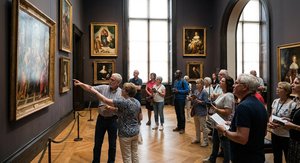
25 Arcydzieł Alte Pinakothek: Historia Sztuki w Twoim Domu | TopImpressionists.com
Odkryj 25 arcydzieł Alte Pinakothek w Monachium! Poznaj historię Rembrandta, Rubensa i Dürera. Reprodukcje obrazów najwyższej jakości dla Twojego wnętrza. Inspiracje i dekoracje ścienne na TopImpressionists.com

Divine Legacy: Exploring the Most Powerful Masterpieces of Saint Peter through Art History
Embark on a sophisticated journey through art history with our exploration of Saint Peter's most powerful masterpieces. Discover the profound emotional depth and technical brilliance of Renaissance and Baroque icons, curated for the discerning classic art enthusiast.

Lucas van Leyden: Innovation & Intimacy in Early Netherlandish Printmaking
Explore the groundbreaking prints of Lucas van Leyden, a Dutch master bridging Gothic detail & Renaissance innovation. Discover his rare works, investment potential, and legacy for discerning collectors.
Odkryj dzieła sztuki uporządkowane według tematów, stylów i cech charakterystycznych.


