

 Podgląd w skali 1:1
 Wyślij jako kartkę
 Udostępnij
 Szczegóły dzieła
 Przewodnik

 Pobierz obraz
 Podobne obiekty
 RTG
RTG Pokaz slajdów
 Statystyki
Crucifixion
 Oil On Canvas
- WallArt
- Renaissance Dutch
 1545
1545- Renaissance
 101.0 x 58.0 cm
 Muzeum Ermitażu
Experience the dramatic realism of Van Heemskerck's 1545 Crucifixion triptych, blending Dutch detail with Italian grandeur; discover this masterpiece today.
 Rozwiń treść
Maerten van Heemskerck (1498-1574) to holenderski malarz renesansowy znany z innowacyjnych portretów i scen religijnych. Odkryj jego arcydzieła, w tym „Samson kruszący filary”, i poznaj jego wpływ na historię sztuki niderlandzkiej.
Giclée / Wydruk artystyczny
Wydruki giclée lub płótna o jakości muzealnej, szybka realizacja i szeroki wybór opcji wykończenia. ( Zamów ręcznie malowaną reprodukcję Przejdź do wersji cyfrowej)




P118B zł10

P118H zł10

P118W zł10

P438Z zł10

P508JH zł12

P508YH zł12

P805H zł10

P805Z zł10

P919BZ zł10

P919G zł10

P919XJ zł10

P959ZH zł10

P968JZ zł12

W106C zł8

W218G zł10

W218JH zł8

W218Y zł10

W307PJ zł10

W316G zł10

W316PJ zł8

W316Y zł10

W398PJ zł8

W4111J zł10

W500HY zł15

W500JH zł15

W692G zł12

W849H zł8

W940BG zł15

W953PJ zł8




Standardowy format
personalizowane
CM
INCH
Wybierz spośród naszych standardowych rozmiarów, które zachowują oryginalne proporcje dzieła sztuki.
Loading sizes...

szerokość
wysokość
Wpisz wymaganą szerokość i wysokość, aby dopasować grafikę do ramy lub ściany. Wydruk można jedynie przyciąć, nigdy nie powiększając go poza oryginalny obraz, dlatego format o innych proporcjach spowoduje utratę części kompozycji. Przed rozpoczęciem druku prześlemy Ci cyfrowy podgląd do zatwierdzenia. Obraz wyświetlany na tej stronie nie pokazuje rzeczywistego przycięcia — jedynie podgląd oddaje ten efekt.
Dostawa na cały świat () w ciągu 2 tygodni zamiast standardowych 4/5 tygodni. (26 Październik)

Bezpłatna ekspresowa wysyłka na cały świat

Wysokiej jakości płótno lniane

Pełne ubezpieczenie przesyłki

Gwarancja zwrotu należności celnych i podatków importowych

Gwarancja wiernego odwzorowania kolorów

100-dniowa polityka zwrotów (tylko w przypadku wad)

Gwarancja 100% zwrotu pieniędzy

Zniżka przy zakupie wielu sztuk
 Opcja ze szkłem jest dostępna wyłącznie w rozmiarach poniżej 110 cm

Crucifixion
Giclée / Wydruk artystyczny
Wymiary reprodukcji
-


Cena całkowita
zł 265
A Window Into Faith: Maerten van Heemskerck’s Crucifixion Triptych
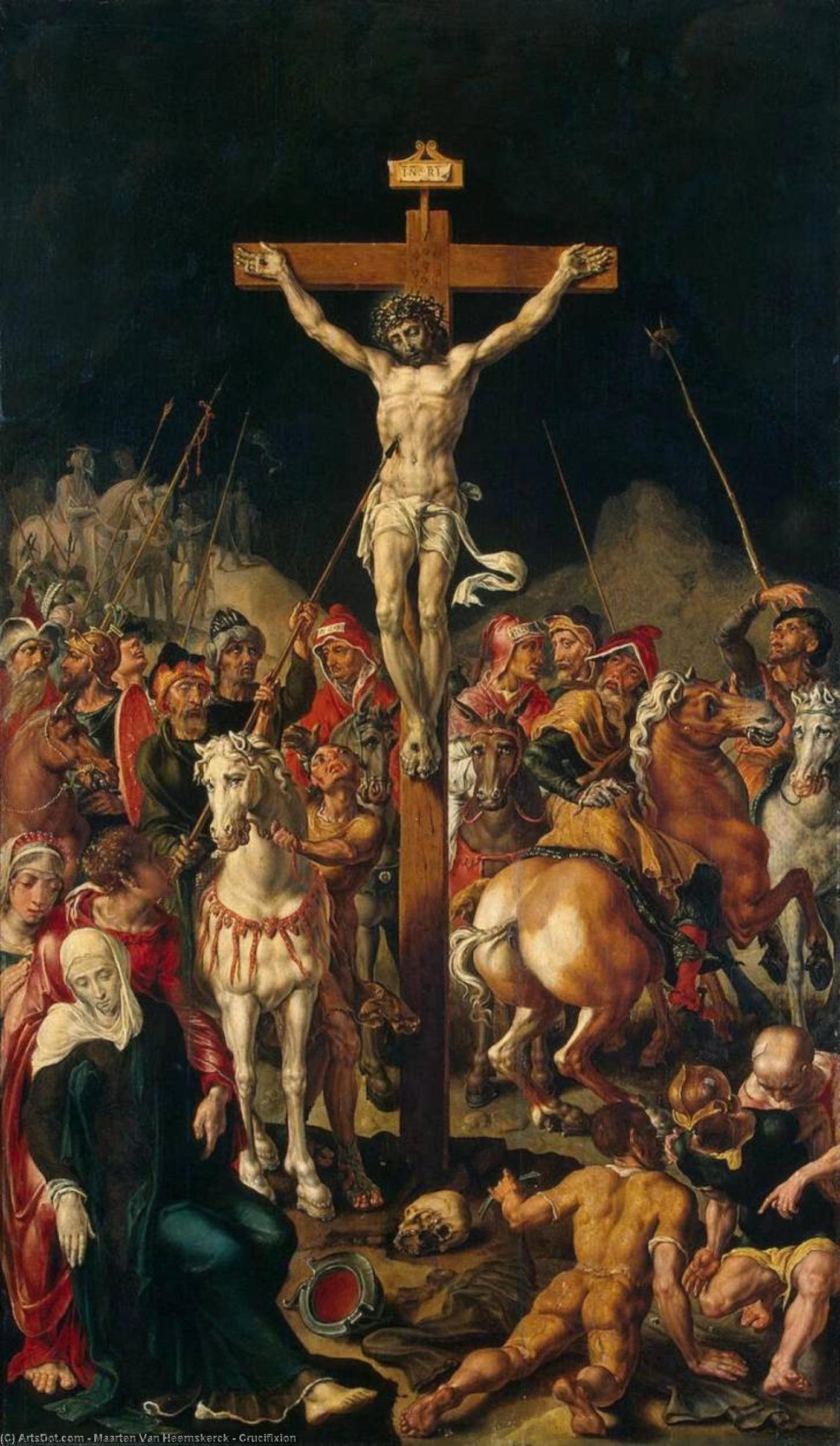
The Crucifixion by Maerten van Heemskerck, completed in 1545, stands as a monumental achievement of the Dutch Renaissance and a testament to the enduring power of religious iconography. More than just a depiction of Christ's suffering – though undeniably poignant – this triptych transcends mere representation, immersing viewers in a meticulously crafted tableau that speaks volumes about humanist ideals and artistic innovation. Painted during a period marked by fervent piety and intellectual curiosity, it embodies the spirit of its time while simultaneously securing its place as one of the most influential artworks of the era.Style and Technique: Bridging Italian Renaissance Grandeur with Dutch Realism
Van Heemskerck skillfully blended elements of Italian Renaissance grandeur with the burgeoning realism characteristic of Dutch art. Influenced by artists like Michelangelo and Raphael, he adopted a pyramidal composition – a technique favored in monumental religious paintings – to convey stability and solemnity. However, unlike many Italian counterparts that prioritized idealized beauty, Van Heemskerck’s approach embraced meticulous detail and naturalistic observation. The artist painstakingly rendered textures—the rough linen of Christ's robe, the weathered stone of the cross—creating a palpable sense of physicality that distinguishes it from more stylized depictions. This careful attention to realism was further enhanced by his masterful use of chiaroscuro – dramatic contrasts between light and shadow – which sculptured form and imbued the scene with emotional depth.Historical Context: Rome Under Charles V and the Reformation’s Influence
The Crucifixion's creation coincided with a pivotal moment in European history: the reign of Charles V, Holy Roman Emperor, and the escalating tensions surrounding the Protestant Reformation. The Habsburg monarch championed Catholicism fiercely, commissioning artworks like this to reaffirm papal authority and bolster religious faith. Yet, Van Heemskerck’s work wasn’t solely driven by political considerations; it reflected a broader humanist preoccupation with human suffering and mortality – themes explored extensively in classical literature and philosophy. The triptych served as part of a larger project to decorate the Porta San Sebastiano in Rome, commemorating Charles V's victory over Protestant forces—a visual declaration of imperial piety amidst religious upheaval.Symbolism: Layers of Meaning Beyond Visual Representation
The Crucifixion’s symbolism is rich and multifaceted. The central panel depicts Jesus Christ crucified on the cross, a universally recognized emblem of sacrifice and redemption. His outstretched arms symbolize humility and acceptance of divine judgment, while his gaze directs upward towards God—a gesture signifying hope and spiritual aspiration. Surrounding him are figures representing Mary Magdalene, Nicodemus, Joseph of Arimathea, and others who witnessed Christ’s death – each embodying compassion and devotion. The inclusion of a horse on the right panel reinforces the imagery of royalty and divine majesty, mirroring the emperor's patronage. Furthermore, the cup positioned at the bottom left corner symbolizes the Eucharist—the sacrament commemorating Jesus’s sacrifice—underscoring the theological significance of the artwork.Emotional Impact: A Profound Reflection on Suffering and Faith
Ultimately, Maerten van Heemskerck’s Crucifixion transcends mere visual spectacle; it evokes a profound emotional response in viewers. The subdued palette – dominated by earthy tones – contributes to an atmosphere of solemn contemplation. Yet, the artist's masterful manipulation of light and shadow intensifies the drama of the scene, conveying the agony of Christ’s torment and eliciting empathy for his suffering. It compels us to confront questions about faith, mortality, and divine compassion—themes that continue to resonate across centuries. The Crucifixion remains a powerful reminder of humanity's capacity for sorrow and its unwavering belief in redemption – an enduring masterpiece that secures its place as one of the most poignant expressions of Renaissance spirituality.Pytania i odpowiedzi
Jaki rozmiar wydruku "Crucifixion" będzie odpowiedni do mojego pokoju?
Zalecane zestawienie dla „Crucifixion” – Maerten Van Heemskerck: wydruk w formacie Medium do Living Room.
Jaki to rodzaj dzieła sztuki: „Crucifixion” – Maerten Van Heemskerck?
„Crucifixion” – Maerten Van Heemskerck jest klasyfikowane jako WallArt. Kategoria ta określa rodzaj dzieła, jakim jest oryginał.
Do jakiego nurtu i epoki zalicza się „Crucifixion” – Maerten Van Heemskerck?
„Crucifixion” – Maerten Van Heemskerck reprezentuje nurt Renaissance Dutch, powstały w epoce Renesans swojego twórcy.
Biografia artysty
wczesne lata i kształcenie
maerten van heemskerck, wybitny holenderski malarz portrecista i twórca scen religijnych, przyszedł na świat 1 czerwca 1498 roku w wiosce heemskerk, w północnej holandii. jego artystyczna wędrówka rozpoczęła się pod okiem corneliusa willemsza w haarlem, po czym nastąpił krótki pobyt w delft u boku jan lucasza. ostatecznie stał się uczniem jan van scorel, przejmując od swojego mistrza styl silnie inspirowany sztuką włoską.najważniejsze momenty w karierze
- twórczość maerten van heemskerck charakteryzuje się nowatorskim połączeniem wpływów niderlandzkich i włoskich, co doskonale widać w jego słynnym portrecie rodzinnym, uznawanym za pierwszy tego rodzaju w długiej tradycji holenderskiego malarstwa rodzinnego.
- jego współpraca z antonio da sangallo młodszym, battista franco oraz francesco de' rossi (il salviati) przy dekoracji porta san sebastiano w rzymie – łuku triumfalnego ku czci karola v – ukazuje jego niezwykłą sprawność i szybkość ręki jako malarza dekoracji ściennych.
- rysunki heemsckercka przedstawiające klasyczną rzeźbę i architekturę, które obecnie znajdują się w dwóch szkicownikach w kupferstichkabinett berlin, stanowią dowód jego niezwykłego talentu w chwytaniu samej esencji sztuki włoskiej.
wybitne dzieła i dziedzictwo
- darczyńca i święta maria magdalena (zobacz w TopImpressionists)
- madonna i święty jan ewangelista (zobacz w TopImpressionists)
- samson kruszący filary świątyni, maarten van heemskerck (zobacz w TopImpressionists)
podsumowanie
maerten van heemskerck wywarł niezaprzeczalny, głęboki wpływ na świat sztuki. jego dzieła, będące dziś częścią licznych kolekcji muzealnych, w tym rijksmuseum, nieustannie inspirują artystów i pasjonatów piękna. aby odkryć więcej jego arcydzieł, odwiedź stronę maerten van heemskerck w TopImpressionists. po głębsze zrozumienie jego życia i twórczości, zapoznaj się z jego biografią na wikipedia.
Maerten Van Heemskerck
1498 - 1574 , Holandia
Krótka nota
- Artistic Movement Or Style: Manieryzm
- Artists Who Influenced This Artist:
- Jan van Scorel
- Antonio da Sangallo Młodszy
- Date Of Birth: 1 czerwca 1498
- Date Of Death: 1 października 1574
- Full Name: Maerten Jacobsz van Heemskerck
- Nationality: Holender
- Notable Artworks:
- Opłakiwanie zmarłego Chrystusa
- Pieter Jan Foppeszoon i jego rodzina
- Chrystus jako Człowiek Boleści
- Place Of Birth: Heemskerk, Holandia
Powiązane artykuły

Golden Light & Dutch Skies: The Timeless Magic of Dutch Golden Age Landscapes
Discover the breathtaking beauty of Dutch Golden Age landscapes. Explore the mastery of light, chiaroscuro, and 17th-century realism through an expert art history lens, celebrating the enduring legacy of the Dutch Masters for discerning collectors and art lovers.

Mastering Light & Shadow: A Journey Through the Dutch Golden Age's Luminous Legacy
Embark on a cultural journey through the Dutch Golden Age. Explore the masterful interplay of light and shadow in 17th-century masterpieces, from Rembrandt to Vermeer, and discover how this era of profound realism continues to inspire fine art collectors today.
Odkryj dzieła sztuki uporządkowane według tematów, stylów i cech charakterystycznych.
