

 Zobacz w skali 1:1
 Wyślij
 Udostępnij
 Szczegóły
 Przewodnik

 Pobierz plik obrazu
 Podobne obiekty
 RTG
RTG Pokaz slajdów
 Statystyki
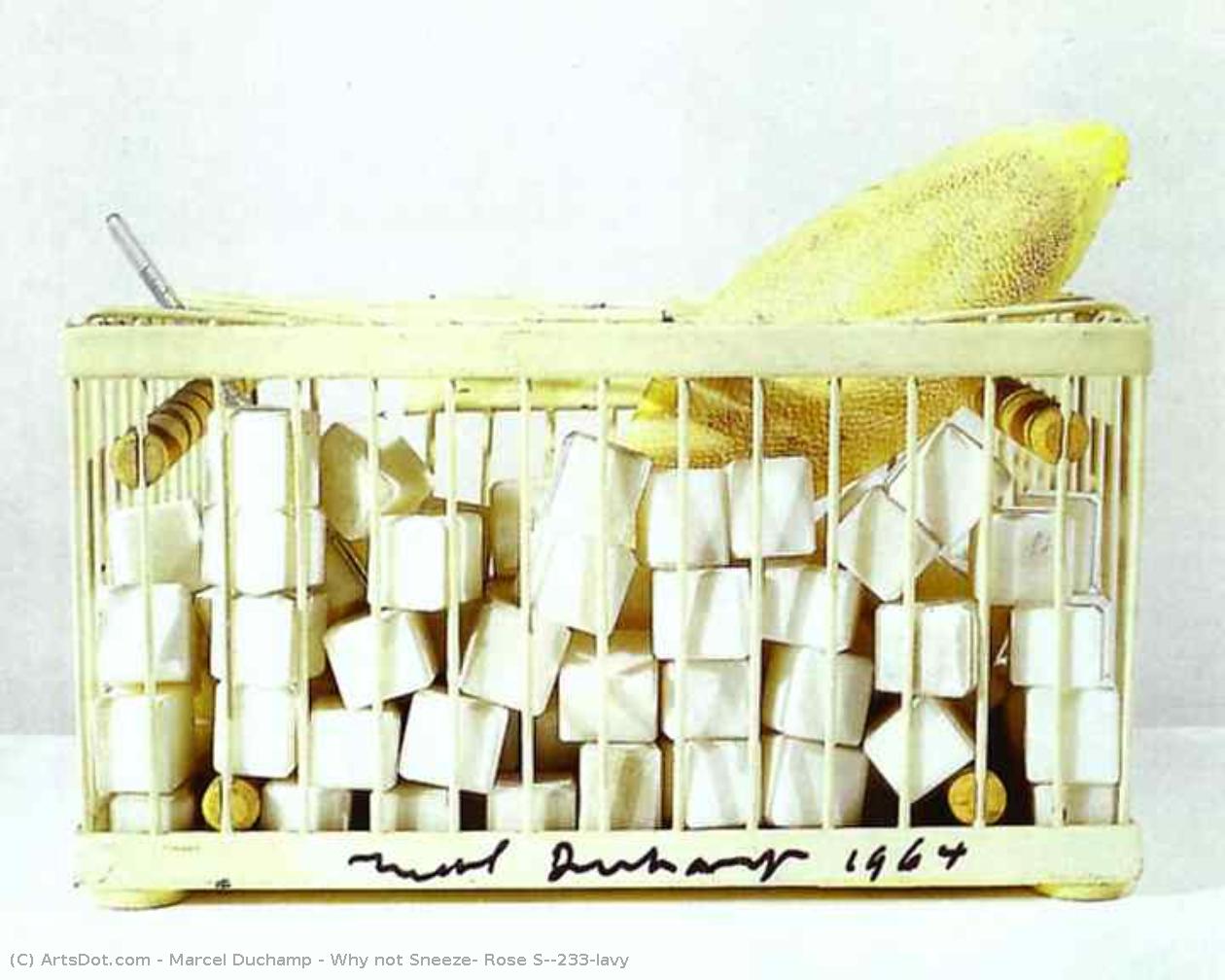
Why not Sneeze, Rose Sélavy
 Acrylic On Canvas
- WallArt
- Dada Gesamtkunstwerk
 1921
1921 12.0 x 22.0 cm
 Tate Modern
 Czytaj więcej
Marcel Duchamp: Rewolucyjny artysta, który rzucił wyzwanie definicji sztuki poprzez dadaizm i readymades, takie jak „Fontanna”. Odkryj jego ikoniczne dzieła oraz filozoficzny wpływ na świat sztuki.
Dzieło sztuki prezentowane na tej stronie podlega ochronie prawem autorskim, co oznacza, że nie mamy prawa do tworzenia ani sprzedaży jego identycznej reprodukcji. Ochrona ta jest egzekwowana na mocy umów międzynarodowych, takich jak Konwencja berneńska oraz przez przepisy prawa krajowego, w tym te określone w Prawo autorskie USA – Tytuł 17.
Jako pełną szacunku i legalną alternatywę oferujemy personalizowane, malowane ręcznie dzieła sztuki inspirowane oryginałem. Nasi wykwalifikowani i profesjonalni artyści starannie analizują styl, nastrój oraz artystyczną esencję pierwowzoru, aby stworzyć nowe, unikalne dzieło, które przywołuje te same emocje – pozostając jednocześnie w pełni oryginalną kreacją.
Metoda ta jest w pełni zgodna z przepisami prawa autorskiego, ponieważ nie polega na kopiowaniu ani powielaniu chronionego dzieła. Stanowi ona kreatywną reinterpretację – nowy obraz, który czerpie inspirację z oryginału, ale nie jest z nim tożsamy.
Ręcznie malowana reprodukcja olejowa
Ręcznie malowany obraz olejny na płótnie, wykonany na zamówienie przez naszych artystów w wybranym przez Ciebie wymiarze i oprawie. ( Przełącz na wersję drukowaną Przełącz na wersję cyfrową)




P118B zł10

P118H zł10

P118W zł10

P438Z zł10

P508JH zł12

P508YH zł12

P805H zł10

P805Z zł10

P919BZ zł10

P919G zł10

P919XJ zł10

P959ZH zł10

P968JZ zł12

W106C zł8

W218G zł10

W218JH zł8

W218Y zł10

W307PJ zł10

W316G zł10

W316PJ zł8

W316Y zł10

W398PJ zł8

W4111J zł10

W500HY zł15

W500JH zł15

W692G zł12

W849H zł8

W940BG zł15

W953PJ zł8




Standardowy
na zamówienie
CM
INCH
Wybierz spośród naszych standardowych rozmiarów, które zachowują oryginalne proporcje dzieła sztuki.
Loading sizes...

szerokość
wysokość
Wpisz wymaganą szerokość i wysokość, aby obraz pasował do Twojej ramy lub ściany. Ponieważ jest to dzieło malowane ręcznie, w przypadku rozmiaru o innym proporcji artysta może domalować nieco więcej wokół obrazu lub przyciąć fragmenty — wybór należy do Ciebie. Przed rozpoczęciem pracy prześlemy Ci cyfrową wizualizację do zatwierdzenia. Obraz widoczny na tej stronie nie przedstawia rzeczywistego efektu — jedynie wizualizacja oddaje realny rezultat.
Przykłady możliwych zmian: Zamień twarz na zdjęcie klienta; Dodaj zwierzę domowe (np. zamień kota na psa); Ukryj wiadomość w tle; Zmień krajobraz lub elementy tła.
Po złożeniu zamówienia zespół TopImpressionists.com skontaktuje się z klientem drogą mailową w celu uzyskania instrukcji i prześle wizualizację projektu
Po złożeniu zamówienia zespół TopImpressionists.com skontaktuje się z klientem drogą mailową w celu uzyskania instrukcji i prześle wizualizację projektu
Dostawa na całym świecie () w ciągu 3–4 tygodni zamiast standardowych 5 tygodni. (22 Październik). Bez kompromisów w kwestii jakości.

Bezpłatna ekspresowa wysyłka na cały świat

Wysokiej jakości płótno lniane

Pełne ubezpieczenie transportowe

Gwarancja zwrotu należności celnych i podatków importowych

Gwarancja idealnego odwzorowania barw

100-dniowy okres na zwrot dzieła w przypadku wykrycia wad produkcyjnych

Gwarancja 100% zwrotu pieniędzy

Oferta przy zakupie wielu sztuk
 Opcja ze szkłem jest dostępna wyłącznie w rozmiarach poniżej 110 cm

Why not Sneeze, Rose Sélavy
Technika wykonania
Rozmiar reprodukcji
-


Suma do zapłaty
zł 1021
A Provocative Pause: Unpacking “Why Not Sneeze, Rose Sélavy”
Marcel Duchamp’s "Why Not Sneeze, Rose Sélavy," painted in 1921, isn't merely a still life; it’s an audacious declaration. This deceptively simple image – a white box containing a yellow banana alongside several cups and spoons – immediately throws the viewer off balance, demanding they reconsider their assumptions about art itself. Duchamp, a pivotal figure in the Dada movement, wasn’t interested in replicating reality or expressing personal emotion through traditional means. Instead, he sought to dismantle established artistic conventions, forcing us to confront the very definition of what constitutes “art” and its role within society.
The painting's genesis lies within Duchamp’s exploration of chance and readymades – everyday objects presented as art without alteration. "Why Not Sneeze" exemplifies this approach perfectly. The choice of a banana, an utterly mundane item, elevates it to the status of subject matter through its placement within the box, transforming it into something worthy of contemplation. The inclusion of the cups and spoons further complicates the scene, suggesting a potential for consumption or ritual – elements deliberately devoid of inherent meaning, yet imbued with a subtle tension.
Dadaist Disruptions: Style and Technique
“Why Not Sneeze” is firmly rooted in the principles of Dadaism, a movement born from the disillusionment following World War I. Rejecting logic and reason, Dada artists embraced absurdity, chance, and anti-art sentiments. Duchamp’s technique reflects this ethos; he employed a precise, almost clinical approach to rendering the objects, using oil paint on canvas with a smooth, matte finish. There's no attempt at illusionistic depth or vibrant color – instead, the focus is entirely on the arrangement of the elements and their juxtaposition. The stark white box acts as a frame, isolating the objects and intensifying their impact.
Interestingly, Duchamp’s process involved a degree of chance. He reportedly placed the banana in the box after it had been emptied, allowing the positioning to be determined by accident. This element of randomness underscores the movement's core belief that art should not be dictated by conscious intention but rather emerge from unexpected encounters and unforeseen circumstances.
Symbolic Whispers: Interpretation and Context
The symbolism within “Why Not Sneeze” is deliberately ambiguous, inviting multiple interpretations. The banana itself has been suggested to represent fertility, sexuality, or even a subtle critique of consumer culture – a small, yellow object placed in an enclosed space, hinting at both abundance and confinement. The cups and spoons could symbolize hospitality, offering, or perhaps the act of consuming – again, devoid of any specific narrative but laden with potential meanings.
Furthermore, the title itself, “Why Not Sneeze?”, is a direct challenge to conventional artistic expectations. Duchamp’s question implies that there are no rules governing art, no prescribed methods for creating it. It's an invitation to embrace spontaneity and reject rigid constraints. The painting can be viewed as a meditation on the absurdity of artistic norms and a playful provocation against established aesthetic values.
A Timeless Dialogue: Emotional Impact and Legacy
Despite its seemingly simple composition, “Why Not Sneeze, Rose Sélavy” possesses a profound emotional impact. It’s unsettling, humorous, and thought-provoking – qualities that have cemented its place as one of the most significant works in modern art history. Duchamp's work continues to resonate today, prompting us to question our own perceptions of beauty, value, and the very nature of artistic expression. A reproduction of this iconic piece offers a unique opportunity to engage with a pivotal moment in art history and contemplate the enduring legacy of Marcel Duchamp’s revolutionary spirit.
Pytania i odpowiedzi
Czy dzieło "Why not Sneeze, Rose Sélavy" jest dostępne jako wysokiej jakości wydruk artystyczny?
Aby zamówić wydruk dzieła „Why not Sneeze, Rose Sélavy” autorstwa Marcel Duchamp, wystarczy przejść na jego stronę Wydruk artystyczny: szlachetna odbitka na płótnie bawełnianym lub archiwalnym papierze płótnopodobnym.
Jaki nastrój i emocje łączą się w "Why not Sneeze, Rose Sélavy"?
W "Why not Sneeze, Rose Sélavy" nastrojowi Playful towarzyszy emocja Playful.
Do którego okresu twórczości Marcel Duchamp należy dzieło "Why not Sneeze, Rose Sélavy"?
„Why not Sneeze, Rose Sélavy” należy do Dada Phase w twórczości Marcel Duchamp. Klasyfikacja ta wiąże dzieło z rozwojem artysty.
Biografia artysty
Rewolucyjny duch: Życie i sztuka Marcela Duchampa
Marcel Duchamp, urodzony w 1887 roku w Blainville-Crevon w Normandii jako Henri-Robert-Marcel Duchamp, był kimś znacznie więcej niż tylko artystą; był filozoficznym prowokatorem, który fundamentalnie odmienił bieg sztuki nowoczesnej. Jego wczesne lata, choć pozornie konwencjonalne – spędzone w rodzinie ceniącej ekspresję artystyczną, gdzie obaj jego bracia podążyli ścieżką udanych karier twórczych – zwiastowały nadchodzący ikonoklazm. Duchamp początkowo podjął formalne szkolenie, opanowując tradycyjne techniki i eksperymentując ze stylami postimpresjonistycznymi. Jednak ta akademicka podstawa nie służyła mu jako cel sam w sobie, lecz stała się trampoliną do kwestionowania samej natury sztuki, jej celu oraz definicji. Nie zadowalało go samo przedstawianie świata; pragnął rzucić wyzwanie temu, jak go postrzegamy i co stanowi o wartości artystycznej. Ta niespokojna ciekawość intelektualna stała się definiującą cechą jego niezwykle płodnej kariery.Od kubizmu do dadaizmu: Odrzucenie konwencji
Artystyczna podróż Duchampa była naznaczona nieustanną ewolucją, świadomym odrzucaniem ustalonych norm. Jego początkowe związki z kubizmem, widoczne w dziełach takich jak Portret graczy w szachy (1911), wykazały zainteresowanie pofragmentowanymi formami i wieloma perspektywami – co stanowiło odejście od tradycyjnej reprezentacji. Jednak szybko wyszedł on poza czysto estetyczne dylematy, dostrzegając, że samo przetasowanie elementów wizualnych nie wystarczy, by odpowiedzieć na głębsze pytania dręczące jego umysł. Horror I wojny światowej podsycił ten niepokój, prowadząc Duchampa ku dadaizmowi – ruchowi zrodzonemu z rozczarowania oraz odrzucenia logiki, rozumu i tradycyjnych wartości artystycznych. To właśnie w ramach dadaizmu Duchamp zaczął prawdziwie demontować konwencjonalne pojęcia sztuki. Nie interesowało go tworzenie pięknych przedmiotów; chciał prowokować do myślenia, podważać założenia i obnażać arbitralność estetycznego osądu. To właśnie w tym okresie narodziła się jego najbardziej radykalna innowacja: „readymade”.Readymades i subwersja sztuki
Wprowadzenie readymadów – zwykłych, wyprodukowanych przemysłowo przedmiotów wybranych i zaprezentowanych jako dzieła sztuki – było najistotniejszym wkładem Duchampa w wiek XX. Nie były to po prostu znalezione obiekty; były to celowe akty artystycznej subwersji. Wybierając codzienny przedmiot, taki jak pisuar (Fontanna, 1917), podpisując go „R. Mutt” i zgłaszając na wystawę artystyczną, Duchamp zakwestionował samą definicję umiejętności warsztatowych i autorstwa. Czy to ręka artysty stworzyła dzieło, czy może to była idea artysty? To pytanie stało się centralnym punktem jego praktyki i położyło fundamenty pod sztukę konceptualną. Inne znaczące readymades, jak L.H.O.O.Q. (1919) – pocztówkowa reprodukcja Mony Lisy z dorysowanym wąsem i bródką – były zabawną, a zarazem celną krytyką historii sztuki i ugruntowanych ikon kulturowych. Dzieła te nie miały być podziwiane za swoje walory estetyczne; ich celem było wywołanie debaty i zmuszenie widzów do przewartościowania uprzedzeń na temat tego, co stanowi sztukę. Duchamp wierzył, że sztuka powinna rezygnować w umyśle, a nie tylko w oku.Dziedzictwo i nieprzemijający wpływ
Wpływ Marcela Duchampa na kolejne pokolenia artystów jest niezmierzony. Fundamentalnie zmienił on nasze rozumienie sztuki, torując drogę takim nurtom jak sztuka konceptualna, minimalizm, pop-art i niezliczonym innym. Jego nacisk na ideę artysty – koncepcję stojącą za dziełem – ponad jego walory estetyczne, wciąż inspiruje twórców do dziś.- Kubizm: Wczesne eksploracje pofragmentowanych form i reprezentacji przestrzennej.
- Dadaizm: Odrzucenie logiki, rozumu i tradycyjnych wartości artystycznych w odpowiedzi na I wojnę światową.
- Sztuka konceptualna: Skupienie na idei stojącej za dziełem sztuki, a nie na jego cechach estetycznych.

Marcel Duchamp
1887 - 1968 , Francja
Najważniejsze informacje
- Artistic Movement Or Style:
- Kubizm
- Dadaizm
- Sztuka konceptualna
- Artists Or Movements Influenced By This Artist: ['Minimalizm']
- Date Of Birth: 28 lipca 1887
- Date Of Death: 2 października 1968
- Full Name: Marcel Duchamp
- Nationality: Francuz
- Notable Artworks:
- Fontanna
- L.H.O.O.Q.
- Duży Szkło
- Boîte-en-valise
- Place Of Birth: Blainville, Francja
Zobacz także powiązane artykuły

Dadaism Unveiled: The Beautiful Chaos of Art's Most Rebellious Movement
Explore the profound rebellion of Dadaism. Discover how this avant-garde movement emerged from the chaos of WWI to redefine art through absurdity, anti-logic, and a legacy that shaped Surrealism and Pop Art. A deep dive into the beautiful chaos of art history for the true enthusiast.

Pop Surrealism Unveiled: The Sophisticated Intersection of Vibrant Pop Art and Dreamlike Subconscious Landscapes
Explore the captivating world of Pop Surrealism. Discover how vibrant Pop Art meets dreamlike subconscious imagery through the works of masters like Jeff Soto and Ryan Heshka. An expert guide for discerning collectors seeking to understand this profound contemporary art movement.
Odkryj dzieła sztuki uporządkowane według tematów, stylów i cech charakterystycznych.


