


 Zobacz w skali 1:1
 Wyślij
 Udostępnij
 Szczegóły
 Przewodnik

 Pobierz plik obrazu
 Podobne obiekty
 RTG
RTG Pokaz slajdów
 Statystyki
Untitled (Stile)
 Akwarela
- Sztuka ścienna
- Botanical Realism
 1873
1873- – XIX wiek
 9.0 x 12.0 cm
Zapraszamy na piękny obraz Mary Vaux Walcott „Untitled (Stile)” - subtelna botaniczna studie przedstawiająca drewniany słupek z bramą i spokojną przestrzeń przyrody. Kolekcja Smithsonian.
 Czytaj więcej
Mary Vaux Walcott – "Audubona Botaniki" – znana z pięknych akwarel dzikich kwiatów, dokumentujących florę Ameryki Północnej dla Smithsonian. Pionierka sztuki i nauki!
Ręcznie malowana reprodukcja olejowa
Ręcznie malowany obraz olejny na płótnie, wykonany na zamówienie przez naszych artystów w wybranym przez Ciebie wymiarze i oprawie. ( Przełącz na wersję drukowaną Przełącz na wersję cyfrową)




P118B zł10

P118H zł10

P118W zł10

P438Z zł10

P508JH zł12

P508YH zł12

P805H zł10

P805Z zł10

P919BZ zł10

P919G zł10

P919XJ zł10

P959ZH zł10

P968JZ zł12

W106C zł8

W218G zł10

W218JH zł8

W218Y zł10

W307PJ zł10

W316G zł10

W316PJ zł8

W316Y zł10

W398PJ zł8

W4111J zł10

W500HY zł15

W500JH zł15

W692G zł12

W849H zł8

W940BG zł15

W953PJ zł8




Standardowy
na zamówienie
CM
INCH
Wybierz spośród naszych standardowych rozmiarów, które zachowują oryginalne proporcje dzieła sztuki.
Loading sizes...

szerokość
wysokość
Wpisz wymaganą szerokość i wysokość, aby obraz pasował do Twojej ramy lub ściany. Ponieważ jest to dzieło malowane ręcznie, w przypadku rozmiaru o innym proporcji artysta może domalować nieco więcej wokół obrazu lub przyciąć fragmenty — wybór należy do Ciebie. Przed rozpoczęciem pracy prześlemy Ci cyfrową wizualizację do zatwierdzenia. Obraz widoczny na tej stronie nie przedstawia rzeczywistego efektu — jedynie wizualizacja oddaje realny rezultat.
Przykłady możliwych zmian: Zamień twarz na zdjęcie klienta; Dodaj zwierzę domowe (np. zamień kota na psa); Ukryj wiadomość w tle; Zmień krajobraz lub elementy tła.
Po złożeniu zamówienia zespół TopImpressionists.com skontaktuje się z klientem drogą mailową w celu uzyskania instrukcji i prześle wizualizację projektu
Po złożeniu zamówienia zespół TopImpressionists.com skontaktuje się z klientem drogą mailową w celu uzyskania instrukcji i prześle wizualizację projektu
Dostawa na całym świecie () w ciągu 3–4 tygodni zamiast standardowych 5 tygodni. (25 Październik). Bez kompromisów w kwestii jakości.

Bezpłatna ekspresowa wysyłka na cały świat

Wysokiej jakości płótno lniane

Pełne ubezpieczenie transportowe

Gwarancja zwrotu należności celnych i podatków importowych

Gwarancja idealnego odwzorowania barw

100-dniowy okres na zwrot dzieła w przypadku wykrycia wad produkcyjnych

Gwarancja 100% zwrotu pieniędzy

Oferta przy zakupie wielu sztuk
 Opcja ze szkłem jest dostępna wyłącznie w rozmiarach poniżej 110 cm

Untitled (Stile)
Technika wykonania
Rozmiar reprodukcji
-


Suma do zapłaty
zł 1032
Mary Vaux Walcott: „Untitled (Stile)” – A Delicate Echo of Rural Tranquility
Mary Vaux Walcott’s “Untitled (Stile),” created in 1873, isn't merely a depiction of a wooden fence; it’s an embodiment of the American naturalist movement’s fascination with meticulous observation and capturing fleeting moments of natural beauty. Held within the Smithsonian American Art Museum’s collection, this watercolor sketch exemplifies Walcott’s signature style—a masterful blend of botanical precision and artistic vision that continues to inspire collectors today.Botanical Detail & Artistic Technique
Walcott's technique is characterized by loose brushwork and textured realism, achieved through translucent washes of color that build depth without resorting to harsh shadows. The artist skillfully renders the weathered wood of the stile and its accompanying gate with remarkable accuracy, capturing the subtle variations in tone and texture—a testament to her dedication to scientific illustration. Like her celebrated works “Phlox” and “Gentian (Gentiana affinis),” this piece showcases Walcott’s unparalleled ability to translate botanical knowledge into captivating visual representations. The soft, muted palette contributes significantly to the overall atmosphere of serenity.A Window Into Victorian Rural Life
“Untitled (Stile)” reflects the broader cultural context of its time—the late 19th century—when scientific exploration and artistic representation intersected to elevate the perception of the natural world. Walcott’s portrayal captures a quintessential scene from rural America, depicting a simple yet evocative tableau that speaks to the enduring appeal of pastoral landscapes. It serves as a poignant reminder of a bygone era characterized by an appreciation for craftsmanship and a profound connection with the environment.Symbolism: Passage & Connection
The stile itself symbolizes transition—a gateway between spaces, mirroring the journey undertaken by Walcott during her expeditions into the Rocky Mountains. More profoundly, it represents a connection to nature—inviting contemplation and fostering feelings of peace and wonder. Just as Audubon meticulously documented avian species, Walcott sought to illuminate the intricacies of plant life through her art, establishing herself as “the Audubon of Botany.”Concluding Reflection
“Untitled (Stile)” stands as a testament to Mary Vaux Walcott’s artistic legacy—a luminous watercolor that transcends its formal constraints to convey an emotional resonance that persists across generations. It's a beautiful reminder that true artistry lies in capturing not just what we see, but also what we feel—the quiet grandeur of the natural world and the enduring power of observation.Pytania i odpowiedzi
Gdzie mogę kupić cyfrowy obraz dzieła „Untitled (Stile)” autorstwa Mary Vaux Walcott?
Cyfrowy obraz dzieła „Untitled (Stile)” autorstwa Mary Vaux Walcott można zakupić na jego stronie Obraz cyfrowy: wysokiej rozdzielczości cyfrowe zdjęcie do pobrania.
Do czego zaleca się wykorzystanie reprodukcji „Untitled (Stile)” autorstwa Mary Vaux Walcott?
Zalecanym zastosowaniem wydruku "Untitled (Stile)" jest Akcent kolorystyczny.
Jaki ładunek emocjonalny niesie ze sobą „Untitled (Stile)” autorstwa Mary Vaux Walcott?
Emocjonalny ton przypisany do „Untitled (Stile)” autorstwa Mary Vaux Walcott to Sielankowy. Podsumowuje on uczucia, jakie wyraża to dzieło.
Biografia artysty
A Life Blossoming in Watercolor: The World of Mary Vaux Walcott
Mary Vaux Walcott, a name synonymous with the delicate beauty and scientific precision of North American wildflowers, was born into a world of quiet refinement in Philadelphia in 1860. Yet, from her earliest years, a vibrant artistic spirit pulsed within her—a gift nurtured by a simple set of watercolor paints at the tender age of eight. This wasn’t merely a childhood pastime; it was the genesis of a lifelong passion, a deep connection with the natural world that would ultimately define her extraordinary career and earn her the affectionate title “the Audubon of Botany.” Her story is not simply one of artistic talent, but also of remarkable resilience, unwavering curiosity, and a pioneering spirit that defied the societal expectations placed upon women in the late 19th century. The responsibility for caring for her father and two younger brothers fell heavily upon young Mary after the untimely death of her mother in 1880—a burden she carried with grace and determination, never allowing it to extinguish the flame of her creative spirit.The Allure of the Rockies: Nature as Muse and Subject
The landscapes of the Canadian Rockies became the very heart and soul of Mary’s artistic journey. These vast, rugged mountains weren't merely a backdrop for her paintings; they were an active laboratory, a place where she meticulously documented the intricate details of alpine flora alongside her brothers. They didn’t simply observe the landscape; they engaged with it deeply—studying mineralogy, charting glacial movements through detailed drawings and photographs, and immersing themselves in the subtle nuances of each wildflower species. This wasn't passive observation; it was a profound engagement with the scientific underpinnings of nature, driven by an insatiable curiosity and a desire to capture its essence with unparalleled accuracy. During these annual summer expeditions, Mary honed her skills as a botanical illustrator, initially at the request of botanists eager for precise depictions of rare and elusive species. Her approach was revolutionary for its time—she rendered plants to scale, showcasing their delicate structures, vibrant colors, and intricate details with an almost obsessive attention to detail. Unlike many floral paintings of the era, which often romanticized or stylized their subjects, Walcott’s work prioritized scientific accuracy alongside artistic expression, creating images that were both beautiful and profoundly informative. Her dedication extended beyond mere representation; she sought to capture not just the outward appearance of a flower but also its unique characteristics and ecological role.A Partnership Forged in Science and Art
In 1914, Mary’s life took an unexpected turn with her marriage to Charles Doolittle Walcott, then Secretary of the Smithsonian Institution—a man deeply committed to scientific exploration and a renowned paleontologist. This union wasn't simply a personal connection; it was a meeting of minds—two individuals united by a shared passion for understanding the natural world. Their marriage fostered a unique partnership where art and science intertwined seamlessly. They continued their annual expeditions to the Canadian Rockies, with Charles pursuing his geological research while Mary dedicated herself to her botanical paintings. These weren’t separate endeavors but complementary pursuits, each enriching the other—Charles's scientific observations providing context for Mary’s artistic interpretations, and Mary’s detailed illustrations offering a visual record of Charles’s discoveries. The Smithsonian Institution became a crucial platform for showcasing Mary’s work, culminating in the publication of *North American Wild Flowers* in 1925—a monumental five-volume collection featuring over 400 of her meticulously crafted illustrations, accompanied by insightful descriptions and scientific observations. This publication cemented her reputation as a leading botanical artist and earned her the enduring moniker “the Audubon of Botany,” acknowledging the parallel between her detailed floral studies and John James Audubon’s iconic depictions of birds.Key Achievements & Recognition
- Pioneering Botanical Illustration: Renowned for her scientifically accurate and artistically exquisite watercolor paintings of wildflowers, setting a new standard for botanical illustration.
- “The Audubon of Botany”: Affectionately known by this title, recognizing the significance of her work in botanical art and its parallels with Audubon’s legacy.
- *North American Wild Flowers* (1925): Publication of a five-volume collection showcasing over 400 of her illustrations, solidifying her reputation as a leading botanical artist.
- First Woman to Summit Mount Stephen: A testament to her adventurous spirit, physical endurance, and pioneering spirit in the field of mountaineering.
- Contributions to Glacial Geology: Documented glacial recession in the Canadian Rockies alongside her brothers, providing valuable data for climate change studies and contributing significantly to scientific understanding.
- Philanthropic Legacy: Bequeathed a substantial sum to the Smithsonian Institution to support scientific research and conservation efforts.
A Lasting Legacy
Mary Vaux Walcott’s influence extends far beyond the beauty of her paintings—she represents a unique synthesis of artistic skill, scientific observation, and adventurous spirit. Her work isn't simply a collection of pretty flowers; it’s a profound celebration of the natural world, revealing its intricate structures, capturing its delicate beauty, and highlighting its vital role in the ecosystem. Her illustrations continue to be valued by both art enthusiasts and botanists alike, serving as invaluable resources for identifying and studying North American flora. Beyond her artistic achievements, Walcott demonstrated a commitment to public service, advocating for improved conditions on Native American reservations and contributing to scientific understanding through her meticulous documentation of the Canadian Rockies. Her story serves as an inspiration—a reminder that passion, dedication, and a deep connection with nature can blossom into a life of remarkable achievement and leave a lasting legacy for generations to come.
Mary Vaux Walcott
1860 - 1940 , Stany Zjednoczone
Najważniejsze informacje
- Artistic Movement Or Style: Botaniczna ilustracja
- Artists Or Movements Influenced By This Artist: ['Maria Sibylla Merian']
- Artists Who Influenced This Artist: ['John James Audubon']
- Date Of Birth: 31 lip 1860
- Date Of Death: 22 aug 1940
- Full Name: Mary Vaux Walcott
- Nationality: Amerykańska
- Notable Artworks:
- Kwiaty jesienne
- Gaillardia aristata
- Rosa bourgeauiana
- Fremontodendron
- Place Of Birth: Filadelfia, USA
Zobacz także powiązane artykuły

Capturing the Light: A Journey Through the Soul of American Impressionism and the Hudson River School
Explore the luminous beauty of American Impressionism and the Hudson River School. Discover a curated journey through light, landscape, and history, celebrating the enduring legacy of masters through exquisite, hand-painted oil reproductions for the discerning art lover.
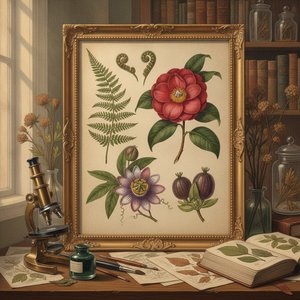
The Timeless Elegance of Victorian Botanical Painting: A Journey Through Nature's Intricate Detail and Scientific Artistry
Discover the exquisite world of Victorian botanical painting, where scientific precision meets profound aesthetic grace. Explore a journey through nature's intricate details, from legendary illustrators to the untamed beauty of Marianne North’s vibrant floral masterpieces.
Odkryj dzieła sztuki uporządkowane według tematów, stylów i cech charakterystycznych.


