
 Podgląd w skali 1:1
 Wyślij jako kartkę
 Udostępnij
 Szczegóły dzieła
 Przewodnik

 Pobierz obraz
 Podobne obiekty
 RTG
RTG Pokaz slajdów
 Q&A
Q&A Statystyki
The Herald newspaper

- 43.0 x 57.0 cm


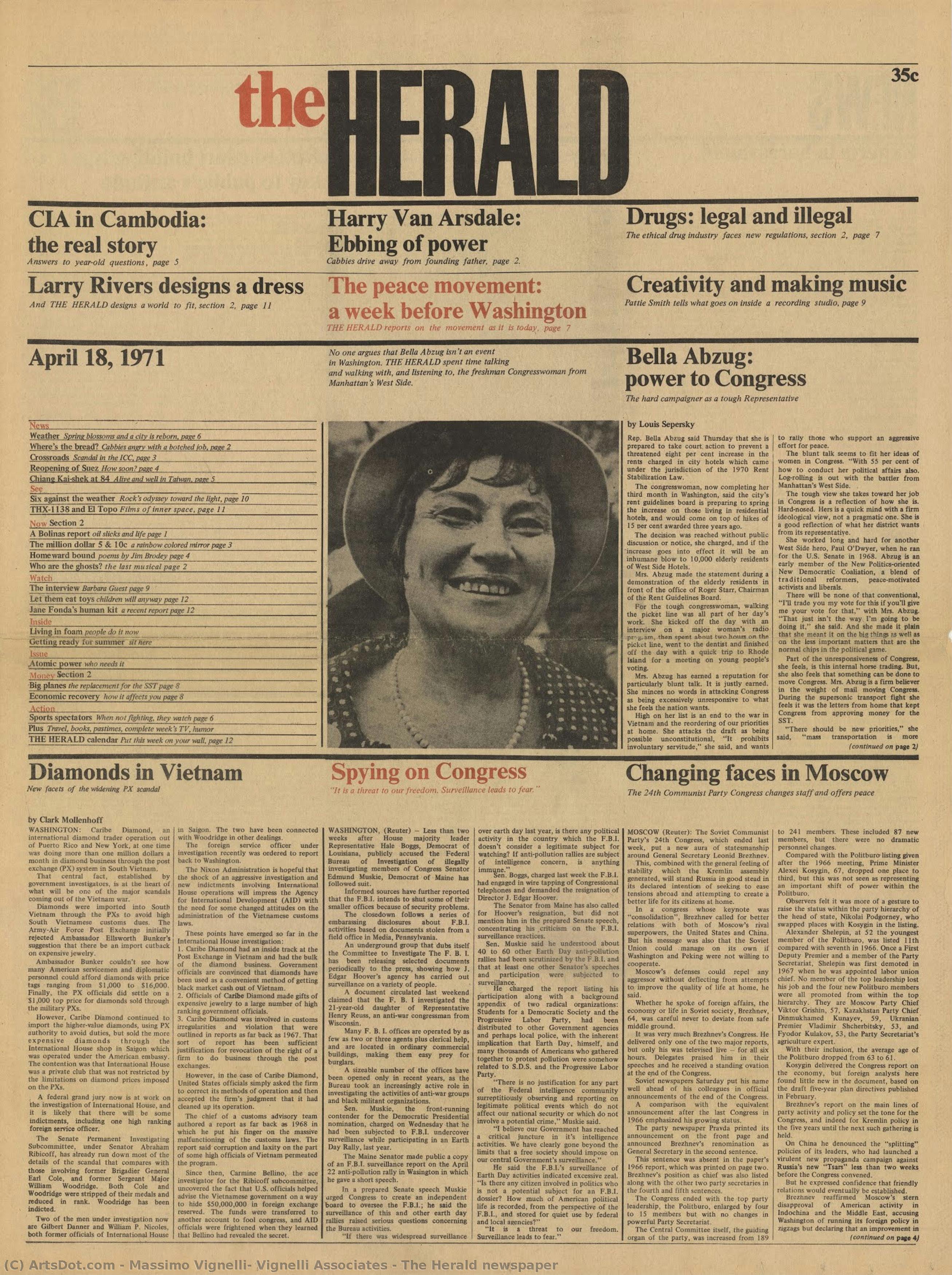
Experience the modernist grid design of The Herald newspaper by Massimo Vignelli (1971), showcasing vintage graphic communication art; discover this iconic piece today.
 Rozwiń treść
Massimo Vignelli (1931-2014): włoski ikona designu słynąca z minimalistycznej grafiki, w tym mapy NYC i identyfikacji korporacyjnych. Eksploruj jego dziedzictwo!
Dzieło sztuki prezentowane na tej stronie podlega ochronie prawem autorskim, co oznacza, że nie mamy prawa do tworzenia ani sprzedaży jego identycznej reprodukcji. Ochrona ta jest egzekwowana na mocy umów międzynarodowych, takich jak Konwencja berneńska oraz przez przepisy prawa krajowego, w tym te określone w Prawo autorskie USA – Tytuł 17.
Metoda ta jest w pełni zgodna z przepisami prawa autorskiego, ponieważ nie polega na kopiowaniu ani powielaniu chronionego dzieła. Stanowi ona kreatywną reinterpretację – nowy obraz, który czerpie inspirację z oryginału, ale nie jest z nim tożsamy.
Giclée / Wydruk artystyczny
Wydruki giclée lub płótna o jakości muzealnej, szybka realizacja i szeroki wybór opcji wykończenia. ( Zamów ręcznie malowaną reprodukcję Przejdź do wersji cyfrowej)




P118B zł10

P118H zł10

P118W zł10

P438Z zł10

P508JH zł12

P508YH zł12

P805H zł10

P805Z zł10

P919BZ zł10

P919G zł10

P919XJ zł10

P959ZH zł10

P968JZ zł12

W106C zł8

W218G zł10

W218JH zł8

W218Y zł10

W307PJ zł10

W316G zł10

W316PJ zł8

W316Y zł10

W398PJ zł8

W4111J zł10

W500HY zł15

W500JH zł15

W692G zł12

W849H zł8

W940BG zł15

W953PJ zł8




Standardowy format
personalizowane
CM
INCH
Wybierz spośród naszych standardowych rozmiarów, które zachowują oryginalne proporcje dzieła sztuki.
Loading sizes...

szerokość
wysokość
Wpisz wymaganą szerokość i wysokość, aby dopasować grafikę do ramy lub ściany. Wydruk można jedynie przyciąć, nigdy nie powiększając go poza oryginalny obraz, dlatego format o innych proporcjach spowoduje utratę części kompozycji. Przed rozpoczęciem druku prześlemy Ci cyfrowy podgląd do zatwierdzenia. Obraz wyświetlany na tej stronie nie pokazuje rzeczywistego przycięcia — jedynie podgląd oddaje ten efekt.
Dostawa na cały świat () w ciągu 2 tygodni zamiast standardowych 4/5 tygodni. (1 Listopad)

Bezpłatna ekspresowa wysyłka na cały świat

Wysokiej jakości płótno lniane

Pełne ubezpieczenie przesyłki

Gwarancja zwrotu należności celnych i podatków importowych

Gwarancja wiernego odwzorowania kolorów

100-dniowa polityka zwrotów (tylko w przypadku wad)

Gwarancja 100% zwrotu pieniędzy

Zniżka przy zakupie wielu sztuk
 Opcja ze szkłem jest dostępna wyłącznie w rozmiarach poniżej 110 cm

The Herald newspaper
Giclée / Wydruk artystyczny
Wymiary reprodukcji
-


Cena całkowita
zł 268
The Grid of Modern Communication: Vignelli's The Herald
To encounter this piece is to step directly into the vibrant, structured chaos of mid-century New York journalism. This reproduction of The Herald newspaper from April 1971, conceived by Massimo Vignelli and his associates, is far more than mere ephemera; it is a meticulously designed artifact of visual communication history. It captures a moment when design principles—simplicity, functionality, and rigorous structure—were being aggressively applied to the seemingly unruly medium of print journalism. The very act of presenting this newspaper front page transforms what might be considered disposable media into a profound study in modernist graphic discipline.
A Masterclass in Structured Design
Vignelli’s genius, always rooted in an almost architectural understanding of space, is on full display here. The description notes the structure: a rigid grid of six columns and sixteen modules per column. This underlying skeleton dictates every element—the placement of headlines like "Diamonds in Vietnam," the accompanying portrait of the smiling woman, and the smaller articles detailing everything from spying congress to changing leaves in Moscow. Vignelli’s commitment to using a single typeface, Times Roman, across various weights and sizes, speaks volumes about his belief in universal legibility. It is a powerful testament to the idea that restraint—the disciplined use of negative space and consistent typography—can generate an overwhelming sense of order and sophistication.
Historical Resonance and Materiality
The year 1971 places this work within a fascinating cultural nexus, post-war modernism grappling with the burgeoning media landscape. While the paper itself ultimately folded due to distribution issues, its surviving design remains potent. For the collector or designer, understanding this context is key. This piece speaks to an era obsessed with efficiency and clarity in information transfer. When considering a reproduction for your space, you are not just acquiring art; you are curating a dialogue about how we consume knowledge—a conversation between the fleeting headline and the enduring power of good design.
Symbolism of the Grid
The grid itself functions as the primary symbolic element. In an age where digital information often feels overwhelming, this physical manifestation of order offers a visual anchor. It symbolizes control, but not oppressive control; rather, it suggests that even complex narratives—the confluence of international events and local interest—can be organized into digestible, beautiful patterns. The interplay between the large, arresting photograph and the tightly packed textual modules creates a dynamic tension, mirroring the very energy of a bustling city like New York in that era.
Bringing Modernist Precision Home
For interior design or gallery display, this piece offers an unparalleled opportunity to inject intellectual rigor into a space. It pairs beautifully with minimalist furniture, mid-century modern accents, or any setting that appreciates the clean lines of 20th-century industrial aesthetics. Owning this reproduction is an homage to Massimo Vignelli’s lifelong dedication to elevating the mundane—the daily newspaper—into something enduringly beautiful and intellectually stimulating.
Pytania i odpowiedzi
Do jakiego nurtu należy "The Herald newspaper"?
Nurt związany z „The Herald newspaper” – Massimo Vignelli, Vignelli Associates to Modernism. Ta klasyfikacja sytuuje dzieło wśród pokrewnych artystów i dzieł sztuki.
Do czego zaleca się wykorzystanie wydruku "The Herald newspaper"?
Zalecanym zastosowaniem wydruku "The Herald newspaper" jest Statement.
Jaki jest format oraz wymiary dzieła „The Herald newspaper” – Massimo Vignelli, Vignelli Associates?
Format dzieła "The Herald newspaper" to Portrait, a wymiary oryginału wynoszą 43 x 57 cm. Obie te informacje są przydatne przy planowaniu reprodukcji.
Biografia artysty
Życie poświęcone formie: Świat Massimo Vignelligiego
Urodzony w 1931 roku w Mediolanie, Massimo Vignelli przeszedł drogę naznaczoną niezłomnym oddaniem zasadom modernizmu. Od najmłodszych lat wykazywał wrodzone zrozumienie dla komunikacji wizualnej, rozpoczynając formalną edukację architektoniczną na Politecnico di Milano, a następnie kontynuując ją na Università Iuvan di Venezia. Jednak to właśnie praktyka u szanowanych braci Castiglioni – pionierów włoskiego designu przemysłowego – prawdziwie rozbudziła w nim pasję do kształtowania świata poprzez przemyślaną kreację. Ta wczesna ekspozycja zaszczepiła w nim głęboką wiarę w funkcjonalność, prostotę oraz moc eleganckich rozwiązań dla codziennych problemów. Nie projektował on jedynie przedmiotów; on tworzył doświadczenia, usprawniał interakcje i podnosił to, co pospolite, do rangi czegoś niezapomnianego. Ten formacyjny okres położył fundamenty pod karierę, która miała na zawsze przedefiniować kulturę wizualną na wielu kontynentach.Z Włoch do Nowego Jorku: Transatlantycka Wizja
Droga Vignelligiego zaprowadziła go do Ameryki w 1966 roku, gdzie odegrał kluczową rolę w założeniu nowojorskiego biura Unimark International. Był to moment przełomowy, nie tylko dla jego własnej kariery, ale także dla całego krajobrazu amerykańskiego designu. Firma Unimark szybko zdobyła uznanie, a dokonania Vignelligiego – z niezwykle trwałym logo American Airlines na czele – ugruntowały jego reputację jako mistrza identyfikacji korporacyjnej. Jednak narastające rozbieżności w filozofii twórczej skłoniły go do podjęcia niezależnej inicjatywy. W 1971 roku, wraz z żoną i dożywotnią współpracowniczką, Lellą Vignelli, założył Vignelli Associates. To partnerstwo okazało się niezwykle owocne, stając się synonimem wyrafinowanych rozwiązań projektowych obejmujących grafikę, projektowanie wnętrz, produkty oraz architekturę. Etyka firmy wyrastała z przekonania, że dobry design powinien być dostępny, ponadczasowy i głęboko użyteczny – zasad, których niezmiennie bronili przez całe swoje życie zawodowe.Trwały wpływ: Poza estetykę
Oddziaływanie Massimo Vignelligiego wykracza daleko poza pojedyncze projekty; on fundamentalnie zmienił sposób, w jaki postrzegamy sam design. Był zagorzałym zwolennikiem dyscypliny typograficznej, słynąc z postulowania ograniczonej palety krojów pisma – wierzył bowiem, że prawdziwa kreatywność nie polega na nieskończonym wyborze, lecz na mistrzowskiej egzekucji przy użyciu starannie dobranych narzędzi. Jego książka, *The Vignelli Canon*, stała się manifestem dla projektantów, nakreślającym zasady klarowności, prostoty i trwałej elegancji. Nie tworzył on jedynie estetycznych obiektów; dążył do zaprowadzenia porządku w chaosie, do skutecznej komunikacji i podniesienia ludzkiego doświadczenia poprzez przemyślaną formę. Jego praca nieustannie inspiruje kolejne pokolenia twórców, przypominając im, że prawdziwa innowacja tkwi w odrzuceniu tego, co zbędne, i skupieniu się na tym, co istotne. Vignelli Center for Design Studies na Rochester Institute of Technology stanowi trwały hołd dla jego dziedzictwa, przechowując bogate archiwum jego dokonań i wspierając dalsze badania nad jego przełomowymi ideami. Choć odszedł w 2014 roku, jego projekty pozostają niezwykle obecne, kształtując nasz świat swoją ponadczasową elegancją i niezachwianym dążeniem do jasności przekazu.
Massimo Vignelli, Vignelli Associates
1931 - 2014 , Włochy
Krótka nota
- Artistic Movement Or Style: Modernism
- Artists Or Movements Influenced By This Artist: ['Heinz Waibl']
- Artists Who Influenced This Artist:
- Achille Castiglioni
- Pier Giacomo Castiglioni
- Date Of Birth: 1931
- Full Name: Massimo Vignelli
- Nationality: Italian
- Notable Artworks:
- American Airlines logo
- NYC Subway map
- Bloomingdale's paper bag
- Place Of Birth: Milan, Italy
Powiązane artykuły

TopImpressionists.com F.A.Q.: Discover the Vibrant Beauty of Our Premium Art Poster Prints
Explore the technical excellence of TopImpressionists.com's premium art poster prints. Discover how our 12-color pigment system and archival inks capture the luminous beauty of Impressionist masterpieces with unmatched color fidelity and museum-grade durability for the discerning collector.
Odkryj dzieła sztuki uporządkowane według tematów, stylów i cech charakterystycznych.


