


 Podgląd w skali 1:1
 Wyślij jako kartkę
 Udostępnij
 Szczegóły dzieła
 Przewodnik

 Pobierz obraz
 Podobne obiekty
 RTG
RTG Pokaz slajdów
 Q&A
Q&A Statystyki
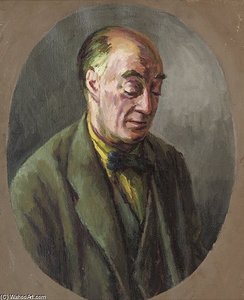
Bust Selfportrait in Paiting Overall


This artwork showcases Max Liebermann's self-portrait in 1922, executed in oil on canvas. It exemplifies Impressionism’s focus on capturing fleeting moments of light and color, featuring a contemplative gaze and attire reflecting the artist's era.
 Rozwiń treść
Max Liebermann (1847-1935): Pionier niemieckiego impresjonizmu, znany z obrazów z życia codziennego, portretów i idyllicznych krajobrazów. Jego twórczość inspiruje do wolności artystycznej.
Giclée / Wydruk artystyczny
Wydruki giclée lub płótna o jakości muzealnej, szybka realizacja i szeroki wybór opcji wykończenia. ( Zamów ręcznie malowaną reprodukcję Przejdź do wersji cyfrowej)




P118B zł10

P118H zł10

P118W zł10

P438Z zł10

P508JH zł12

P508YH zł12

P805H zł10

P805Z zł10

P919BZ zł10

P919G zł10

P919XJ zł10

P959ZH zł10

P968JZ zł12

W106C zł8

W218G zł10

W218JH zł8

W218Y zł10

W307PJ zł10

W316G zł10

W316PJ zł8

W316Y zł10

W398PJ zł8

W4111J zł10

W500HY zł15

W500JH zł15

W692G zł12

W849H zł8

W940BG zł15

W953PJ zł8




Standardowy format
personalizowane
CM
INCH
Wybierz spośród naszych standardowych rozmiarów, które zachowują oryginalne proporcje dzieła sztuki.
Loading sizes...

szerokość
wysokość
Wpisz wymaganą szerokość i wysokość, aby dopasować grafikę do ramy lub ściany. Wydruk można jedynie przyciąć, nigdy nie powiększając go poza oryginalny obraz, dlatego format o innych proporcjach spowoduje utratę części kompozycji. Przed rozpoczęciem druku prześlemy Ci cyfrowy podgląd do zatwierdzenia. Obraz wyświetlany na tej stronie nie pokazuje rzeczywistego przycięcia — jedynie podgląd oddaje ten efekt.
Dostawa na cały świat () w ciągu 2 tygodni zamiast standardowych 4/5 tygodni. (29 Październik)

Bezpłatna ekspresowa wysyłka na cały świat

Wysokiej jakości płótno lniane

Pełne ubezpieczenie przesyłki

Gwarancja zwrotu należności celnych i podatków importowych

Gwarancja wiernego odwzorowania kolorów

100-dniowa polityka zwrotów (tylko w przypadku wad)

Gwarancja 100% zwrotu pieniędzy

Zniżka przy zakupie wielu sztuk
 Opcja ze szkłem jest dostępna wyłącznie w rozmiarach poniżej 110 cm

Bust Selfportrait in Paiting Overall
Giclée / Wydruk artystyczny
Wymiary reprodukcji
-


Cena całkowita
zł 266
A Gaze Into the Self: Max Liebermann's Bust Selfportrait
To stand before this selfportrait is to encounter not merely a likeness, but a carefully considered meditation on identity itself. Painted in 1922 by Max Liebermann, this bust portrait captures the artist at a moment of profound introspection. The subject gazes out from the canvas with an undeniable seriousness, his mustache and beard lending him an air of intellectual gravitas. Every element—from the precise knot of his bow tie to the thoughtful set of his glasses—contributes to a persona that is both intimately familiar and strikingly composed. It speaks volumes about the artist's self-perception during this pivotal time in his life, offering us a direct line into the mind of a master.
Technique and Tonal Drama
Liebermann’s handling of paint here showcases his mastery of tonal contrast. The deliberate use of a black and white color scheme is not a limitation, but rather a powerful artistic choice that heightens the drama and focuses all attention squarely on the nuances of the sitter's expression. Observe how the light seems to sculpt the planes of his face, giving dimension to the subtle contours around his eyes and mouth. The technique employed suggests an Impressionist foundation—a sensitivity to fleeting moments—but channeled through a more formal, almost psychological portraiture lens. This stark palette strips away the distractions of color, leaving only the essential architecture of character.
Historical Echoes in Berlin
Created in 1922, this work emerges from a period when Germany was navigating immense social and artistic upheaval. Liebermann, an artist deeply connected to the vibrant cultural pulse of Berlin, captured a moment that feels both timeless and acutely contemporary. While his earlier works celebrated everyday life with Impressionistic joy, this selfportrait suggests a more internalized dialogue—a necessary turning inward amidst the roaring changes of the early 20th century. It is a testament to an artist who remained keenly observant, even when looking at himself.
Symbolism and Emotional Resonance
The act of painting a selfportrait has always been fraught with symbolic weight; it is both documentation and declaration. Here, the direct address to the viewer creates an immediate, almost confrontational intimacy. The seriousness in his eyes invites us to question: what is being observed? Is it the artist, or the enduring spirit that survives the passage of time? For collectors and those seeking art for a sophisticated interior space, this piece offers depth. It doesn't merely decorate; it prompts conversation, encouraging contemplation on self-image, intellect, and the weight of experience.
Bringing Liebermann Home
Owning a reproduction of "Bust Selfportrait in Paiting" allows one to integrate a piece of this rich artistic dialogue into your own sanctuary. The dramatic contrast inherent in the original composition translates beautifully into any setting, providing a focal point that is both intellectually stimulating and visually arresting. It serves as a sophisticated anchor for a room, echoing the thoughtful elegance of early 20th-century European portraiture while maintaining a modern, stark power.
Pytania i odpowiedzi
Jakie emocje wywołują kolory w „Bust Selfportrait in Paiting Overall” – Max Liebermann?
Paleta Earthy dzieła „Bust Selfportrait in Paiting Overall” – Max Liebermann współgra z jego Reflective wydźwiękiem emocjonalnym. Kolor jest jednym ze sposobów, w jakie praca przekazuje emocje.
Jak technika i ruch łączą się w "Bust Selfportrait in Paiting Overall"?
W "Bust Selfportrait in Paiting Overall" technika Oil On Canvas łączy się z nurtem Impressionism.
Kto jest autorem dzieła "Bust Selfportrait in Paiting Overall" i do jakiego nurtu ono należy?
Max Liebermann stworzył "Bust Selfportrait in Paiting Overall", reprezentujące nurt Impressionism.
Podobne dzieła



Biografia artysty
A Life Immersed in Light: The World of Max Liebermann
Max Liebermann, a name synonymous with the vibrant and nuanced development of Impressionism in Germany, was born on July 20, 1847, in Berlin. His early life, steeped in the comforts of a prosperous Jewish family – his father a successful textile manufacturer – seemed destined for a path far removed from the artistic realm. However, a deliberate shift towards intellectual pursuits at the University of Berlin, followed by studies in Weimar, Paris, and the Netherlands, ignited a passion that would forever transform his life and legacy. Liebermann’s journey wasn't simply about acquiring technical skills; it was a profound engagement with the world around him, a desire to capture not just what he saw, but the very essence of experience itself. This inherent sensitivity to light, color, and atmosphere became the hallmark of his distinctive style – an Impressionism uniquely German in its sensibility.Embracing Impressionism: A Dialogue with Paris
Liebermann’s artistic evolution was inextricably linked to his exposure to the revolutionary currents sweeping through France. The boldness of Édouard Manet, his rejection of rigid academic conventions, and his focus on depicting contemporary life resonated deeply within Liebermann's soul. He wasn’t merely a passive observer; he actively engaged with these new ideas, adapting them to his own artistic vision. While he admired the Parisian Impressionists – Monet, Renoir, Degas – he didn’t simply replicate their techniques. Instead, he infused his work with a distinctly German perspective, characterized by a brighter palette, looser brushstrokes, and a focus on scenes of bourgeois leisure and the tranquil beauty of his beloved garden near Lake Wannsee. This garden, a sanctuary from the turbulent world outside, became a recurring motif, a space where light danced upon foliage, and the simple pleasures of summer were immortalized on canvas. Liebermann’s early paintings often depicted scenes of everyday life – working-class laborers, bustling marketplaces, and intimate domestic moments – rendered with an honesty and respect that challenged the prevailing romanticized aesthetic of the time. These weren't intended as social commentaries, but rather as genuine portrayals of human existence, imbued with dignity and a profound appreciation for the beauty of ordinary life.The Berlin Secession: A Catalyst for Change
Recognizing the stifling constraints imposed by the traditional art establishment in Germany – particularly the rigid control exerted by the Prussian Academy of Arts – Liebermann became a pivotal figure in the formation of the Berlin Secession in 1898. This avant-garde movement, alongside artists like Kirchner and Nolde, represented a radical departure from established norms, providing a platform for artistic innovation and independent expression. Liebermann’s leadership of the Secession for over a decade was instrumental in challenging conventional notions of art and paving the way for modern German art. The Secession wasn't merely a group of artists; it was a declaration – a bold assertion of artistic freedom and a commitment to exploring new possibilities beyond the confines of academic tradition. This spirit of rebellion extended far beyond the realm of painting, influencing other areas of culture and contributing to a broader shift in societal attitudes towards art and creativity.A Master of Portraiture and Beyond
While his landscapes and scenes of everyday life are undoubtedly celebrated, Liebermann’s contribution to the art world extends significantly through his masterful portraiture. Over two hundred commissioned portraits attest to his skill and insight – works that capture not just likenesses, but the very essence of his subjects' personalities. Portraits of Albert Einstein, Paul von Hindenburg, and numerous other prominent figures demonstrate Liebermann’s ability to delve beneath the surface, revealing the inner lives of those he depicted through subtle gestures, expressions, and carefully observed details. Beyond portraiture, Liebermann also produced a significant body of prints, further showcasing his technical skill and artistic vision. His work spanned a wide range of subjects – from religious scenes to depictions of rural life – reflecting his diverse interests and evolving style.Legacy and Historical Context
Max Liebermann’s legacy is complex and layered, inextricably intertwined with the tumultuous events of 20th-century Germany. Following the rise of Nazism, he bravely resigned from the Prussian Academy of Arts in 1933, a courageous act of defiance against a regime that increasingly threatened artistic freedom and Jewish identity. Despite facing persecution and discrimination, Liebermann continued to paint, finding solace and purpose in his art until his death on February 8, 1935, in Berlin. Tragically, his wife, Martha, took her own life in 1943 to avoid deportation, a heartbreaking testament to the horrors of the Holocaust. For many years after World War II, Liebermann’s work was somewhat overlooked, overshadowed by the darker chapters of German history. However, in recent decades, there has been a renewed appreciation for his contributions to German Impressionism and modern art – recognizing him not only as a brilliant painter but also as a courageous advocate for artistic expression and a symbol of resistance against tyranny. His paintings continue to captivate viewers with their luminous beauty, insightful observations, and enduring humanity.Key Achievements & Lasting Influence
- “The Twelve-Year-Old Jesus in the Temple”: This early work sparked considerable debate due to its unconventional depiction of a Semitic-looking Jesus, challenging traditional religious iconography.
- Leadership of the Berlin Secession: His pivotal role in leading this avant-garde movement challenged artistic norms and paved the way for modern art in Germany.
- Presidency of the Prussian Academy of Arts: A significant recognition of his artistic merit, though ultimately compromised by the rise of Nazism.
- Masterful Portraiture: His ability to capture the essence of his subjects in over 200 commissioned portraits cemented his reputation as a leading portrait painter.
- Influence on German Impressionism: Liebermann successfully translated the principles of Impressionism into a uniquely German context, inspiring generations of artists.

Max Liebermann
1847 - 1935 , Niemcy
Krótka nota
- Artistic Movement Or Style: Impressionizm
- Artists Or Movements Influenced By This Artist: ['Secesja Berlin']
- Artists Who Influenced This Artist:
- Manet
- Millet
- Date Of Birth: 20 lipca 1847
- Date Of Death: 8 lutego 1935
- Full Name: Max Liebermann
- Nationality: Niemiec
- Notable Artworks:
- Dziecko w kapeluszu
- Kąpiący się chłop
- Dom starców
- Place Of Birth: Berlin, Niemcy
Powiązane artykuły

Impressionizm w Obrazach: 10 Arcydzieł Pełnych Światła i Koloru | TopImpressionists
Odkryj 10 arcydzieł impresjonizmu! Poznaj historie Claude Moneta, Degasa i Van Gogha. Reprodukcje obrazów najwyższej jakości – pejzaże pełne światła i koloru do Twojego wnętrza. TopImpressionists.

Reflecting the Self: A History of Portraiture & Psychological Insight
Explore the fascinating history of self-portraiture from Renaissance masters like Dürer & Rembrandt to modern interpretations. Discover the psychological insights and artistic techniques behind these iconic works. Expert analysis for art enthusiasts.

10 Arcydzieł Ekspresjonizmu Niemieckiego, Które Zdefiniowały Epokę | TopImpressionists
Poznaj 10 arcydzieł ekspresjonizmu niemieckiego – od Kirchnera po Muncha. Odkryj historię, emocje i techniki tych ikonicznych dzieł sztuki. Reprodukcje najwyższej jakości na TopImpressionists.com. Eksploruj kolekcję online!
Max Ernst: 25 Arcydzieł Surrealizmu dla Kolekcjonerów i Miłośników Sztuki | TopImpressionists
Odkryj 25 najbardziej fascynujących dzieł Maxa Ernsta – pioniera surrealizmu. Poznaj historię, techniki i inspiracje tego niemieckiego artysty. Reprodukcje obrazów najwyższej jakości na TopImpressionists.com. Eksploruj pełną kolekcję online!

Paul Cézanne: 25 Arcydzieł, które Zrewolucjonizowały Świat Sztuki | TopImpressionists
Odkryj 25 arcydzieł Paula Cézanne'a – od impresjonizmu po postimpresjonizm. Poznaj historie, techniki i inspiracje malarza, który zrewolucjonizował sztukę. Reprodukcje obrazów najwyższej jakości na TopImpressionists.com!
Odkryj dzieła sztuki uporządkowane według tematów, stylów i cech charakterystycznych.


