

Przedstawiony: · Wraz z ramą:
 Podgląd w skali 1:1
 Wyślij jako kartkę
 Udostępnij
 Szczegóły dzieła
 Przewodnik

 Pobierz obraz
 Podobne obiekty
 RTG
RTG Pokaz slajdów
 Pytania i odpowiedzi
 Statystyki


zł 1051
Ręcznie malowana reprodukcja olejowa
Ręcznie malowany obraz olejny na płótnie, wykonany na zamówienie przez naszych artystów w wybranym przez Ciebie wymiarze i oprawie. ( Przełącz na wydania drukowane Przejdź do wersji cyfrowej)
Wymiar
·Standardowy format
personalizowane
CM
INCH
Wybierz spośród naszych standardowych rozmiarów, które zachowują oryginalne proporcje dzieła sztuki.
Ładowanie rozmiarów...

szerokość
wysokość
Wpisz wymaganą szerokość i wysokość, aby obraz pasował do Twojej ramy lub ściany. Ponieważ jest to dzieło malowane ręcznie, w przypadku rozmiaru o innych proporcjach artysta może domalować nieco więcej wokół obrazu lub przyciąć jego fragmenty — wybór należy do Ciebie. Przed rozpoczęciem pracy prześlemy Ci cyfrową wizualizację do zatwierdzenia. Obraz widoczny na tej stronie nie przedstawia rzeczywistego efektu — jedynie wizualizacja oddaje realny rezultat.
 Dowiedz się więcej
Wykończenie
·
Białe krawędzie zł1

rozmyte krawędzie zł1

Przedłużony zł1

P118B zł10

P118H zł10

P118W zł10

P438Z zł10

P508JH zł12

P508YH zł12

P805H zł10

P805Z zł10

P919BZ zł10

P919G zł10

P919XJ zł10

P959ZH zł10

P968JZ zł12

W106C zł8

W218G zł10

W218JH zł8

W218Y zł10

W307PJ zł10

W316G zł10

W316PJ zł8

W316Y zł10

W398PJ zł8

W4111J zł10

W500HY zł15

W500JH zł15

W692G zł12

W849H zł8

W940BG zł15

W953PJ zł8

H24-GOLD zł30

H24-SILVER zł30

H36-GOLD zł45

H36-SILVER zł45
Dostarczane w ochronnej tubie, gotowe do oprawienia przez Twojego ramiarza.
Dodatki
opcjonalneCo obejmują dodatki?
Przykłady możliwych zmian: Zastąpienie twarzy zdjęciem klienta; Dodanie zwierzęcia (np. zamiana kota na psa); Ukrycie wiadomości w tle; Zmiana krajobrazu lub elementów tła.
Po złożeniu zamówienia zespół TopImpressionists.com skontaktuje się z klientem drogą mailową w celu uzyskania instrukcji i prześle podgląd projektu
Po złożeniu zamówienia zespół TopImpressionists.com skontaktuje się z klientem drogą mailową w celu uzyskania instrukcji i prześle podgląd projektu
Dostawa na całym świecie () w ciągu 3–4 tygodni zamiast standardowych 5 tygodni. (6 Listopad). Bez kompromisów w kwestii jakości.
Lakier ochronny
Etykieta obiektu
Szczegóły grawerowanej brązowej tabliczki
This elegant plaque features the artist's name and the title of the artwork, finely engraved for a timeless presentation.
It is made from bronze with a refined, elegant finish. The text is precisely laser-engraved for a sharp and permanent result. Measuring 9x2 cm, the plaque is compact yet easy to read. It's built to be durable and scratch-resistant, offering a professional, museum-quality look. Mounting is simple thanks to the included adhesive backing.
Szczegóły przezroczystej tabliczki akrylowej
The plaque includes essential engraved details such as the artist's name, the title of the artwork, the date it was created, the type of media used-like oil on canvas or watercolor-a brief description of the piece, and a QR code that links to the complete artwork information.
It is crafted from clear acrylic, offering a sleek, modern appearance. The text is UV-engraved in black to ensure strong visual contrast. With a size of 10x15 cm, it ensures optimal readability. It comes equipped with two metal hooks for secure wall mounting. The plaque is designed to be weather-resistant, making it suitable for various environments, and it includes interactive features that work seamlessly with smartphone scanning.
Szczegóły czarnej tabliczki akrylowej
This elegant plaque includes engraved information such as the artist's name, the title of the artwork, the date it was created, the type of media used (like oil on canvas or watercolor), a short description of the artwork, and a QR code for quick access to more information.
The plaque itself is made from refined black acrylic with a premium finish. The text is laser-engraved in white for high contrast and readability. Its size is 10x15 cm, designed to be easy to read. It comes with two metal hooks for professional mounting. The design is sleek and fits any interior style. It is also weather-resistant and durable, with built-in digital integration for mobile compatibility.
Opcja ze szkłem jest dostępna wyłącznie w rozmiarach poniżej 110 cm
 Opcja ze szkłem jest dostępna wyłącznie w rozmiarach poniżej 110 cm
- Bezpłatna ekspresowa wysyłka na cały świat
- Wysokiej jakości płótno lniane
- Pełne ubezpieczenie przesyłki
- Gwarancja zwrotu należności celnych i podatków importowych
- Gwarancja wiernego odwzorowania kolorów
- 100-dniowa polityka zwrotów (tylko w przypadku wad)
- Gwarancja 100% zwrotu pieniędzy
- Zniżka przy zakupie wielu sztuk


Opis obiektu
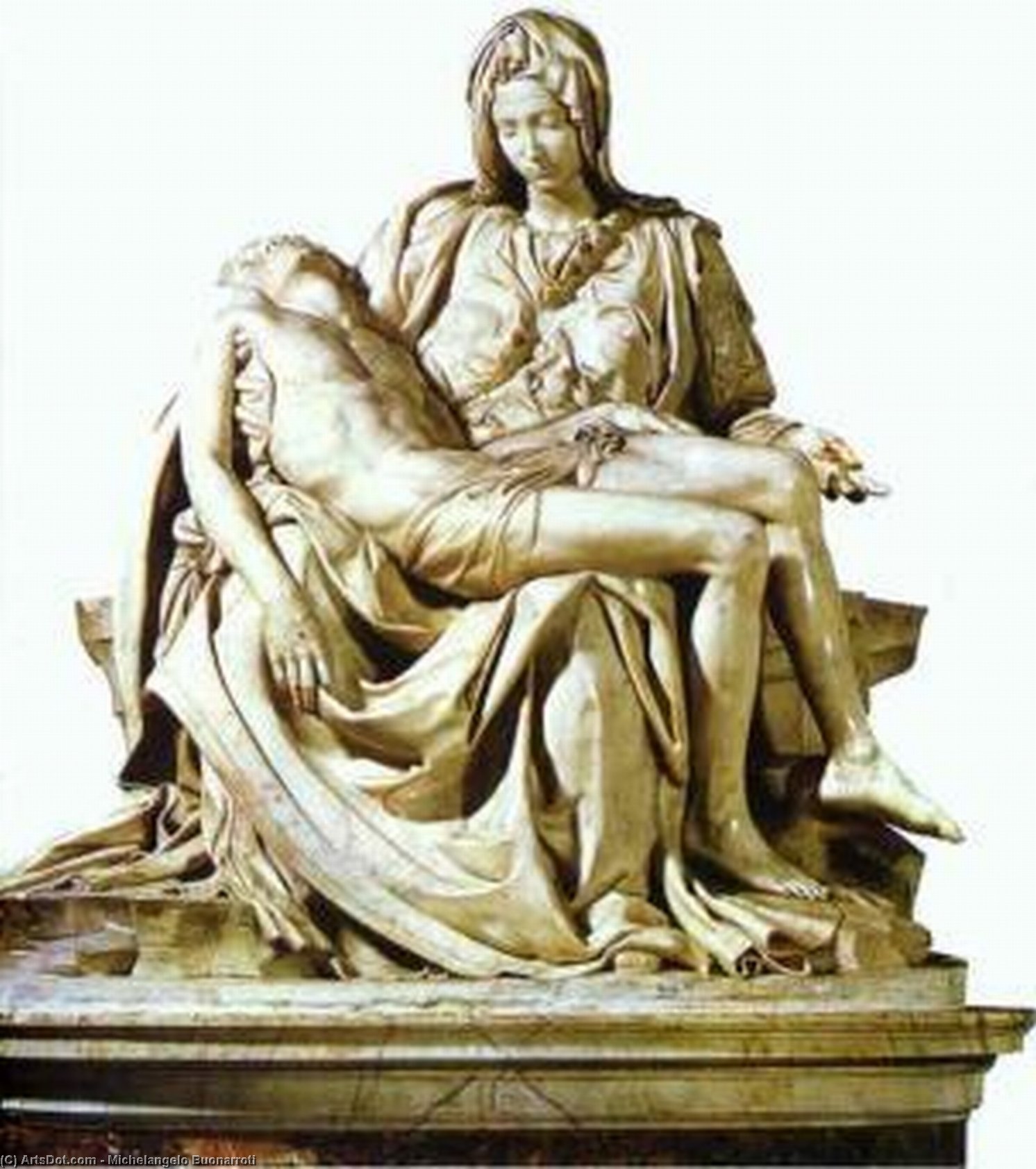
Wspaniała Pieta Michała Anioła – ikona renesansu, symbol żalu i miłosierdzia. Zobacz w St. Peter's Basilica, Watykanie! #MichałAnioł #Pieta #SztukaRenesansowa
Biografia artysty
Michelangelo Buonarroti (1475-1564): Odkryj arcydzieła renesansu – rzeźby Dawida i Pietà, freski Kaplicy Sykstyńskiej i trwały wpływ na historię sztuki!
O obrazie
Michelangelo’s Pietà: A Silent Symphony of Sorrow and Grace
The Pietà, sculpted by Michelangelo Buonarroti between 1498 and 1499, is more than just a marble statue; it's an experience. Located within the solemn heart of St. Peter’s Basilica in Vatican City, this masterpiece transcends mere representation, becoming a profound meditation on grief, faith, and the enduring power of maternal love. It’s a work that has captivated viewers for centuries, not merely with its technical brilliance but with its ability to evoke an immediate and deeply felt emotional response – a testament to Michelangelo's unparalleled understanding of human psychology and his mastery of form.
The genesis of the Pietà lies in a commission from Cardinal Jean Bilhères de Lagraulas, a French diplomat, for his funerary chapel within Old St. Peter’s Basilica. Michelangelo, already a rising star in Florence's artistic scene, was tasked with creating an image that would embody both sorrow and spiritual solace – a challenge he met with extraordinary sensitivity and skill. The story behind the commission is fascinating; it reveals Michelangelo’s early struggles for recognition as a sculptor, his reliance on wealthy patrons like the Medici family, and the ambitious architectural projects transforming Rome at the time. The basilica itself, conceived as a monumental expression of Christendom's enduring strength, provided the backdrop for this intensely personal and spiritually charged work.
A Synthesis of Classical Idealism and Humanist Observation
Michelangelo’s approach to the Pietà is a remarkable blend of classical influences and his own deeply humanistic vision. He meticulously studied the sculptures of ancient Greece and Rome, particularly those depicting idealized figures – the serene beauty of gods and goddesses, the heroic musculature of athletes. However, he didn't simply replicate these forms; instead, he used them as a foundation to create an image that felt profoundly real and emotionally resonant. Notice how the drapery, cascading around Mary’s body, isn’t merely decorative but dynamically conveys movement and texture – a testament to Michelangelo’s unparalleled ability to manipulate marble.
The anatomical precision is breathtaking, yet it's tempered with an exquisite sense of grace and tenderness. The folds of Mary’s robe aren’t stiff or formal; they flow organically around her body, creating an illusion of depth and emphasizing her posture as she cradles the lifeless form of Jesus. This careful attention to detail speaks volumes about Michelangelo’s commitment to portraying human emotion with uncompromising honesty – a hallmark of his artistic philosophy.
Symbolism Woven into Marble: Grief, Compassion, and Divine Redemption
The Pietà is laden with symbolic meaning, inviting viewers to contemplate profound themes. The most striking element is undoubtedly Mary’s expression – a serene calmness that contrasts sharply with the lifelessness of Jesus. This isn't an image of despair; it’s one of acceptance, of unwavering faith in the face of unimaginable loss. Michelangelo deliberately avoided depicting Mary as consumed by grief, instead portraying her as embodying maternal grace and spiritual fortitude.
The positioning of Mary’s hands – one gently supporting Jesus’s torso while the other cradles his feet – is particularly significant. It symbolizes her unwavering devotion to God and her selfless embrace of human suffering. The pyramidal composition, borrowed from classical sculpture, provides a sense of stability and grandeur, reinforcing the Pietà's message of enduring faith and divine grace. The dark cavernous space within the folds of Mary’s robe serves as a powerful metaphor for both Jesus’s birth and his death – a visual representation of the cyclical nature of life and sacrifice.
A Timeless Masterpiece: The Legacy of Michelangelo
The Pietà remains one of the most beloved and enduring works of art in history. It's a testament to Michelangelo’s genius, his ability to capture the essence of human emotion with unparalleled skill, and his profound understanding of religious symbolism. More than just a sculpture, it is an invitation to contemplate the mysteries of faith, grief, and the enduring power of love – a silent symphony that continues to resonate with viewers across centuries.
For those seeking a high-quality reproduction of this iconic masterpiece, consider exploring the exquisite reproductions offered by TopImpressionists. They provide an opportunity to bring the Pietà’s profound beauty into your own home or studio.


Pytania i odpowiedzi
Jak harmonijna jest kolorystyka dzieła „Pieta” – Michał Anioł Buonarroti?
„Pieta” – Michał Anioł Buonarroti prezentuje Zrównoważona harmonia harmonię kolorystyczną.
W jaki sposób kolory dzieła „Pieta” – Michał Anioł Buonarroti korespondują z jego ładunkiem emocjonalnym?
Paleta Barwy ziemi dzieła „Pieta” – Michał Anioł Buonarroti współgra z jego Refleksyjny wydźwiękiem emocjonalnym. Kolor jest jednym ze sposobów, w jakie praca przekazuje emocje.
W jaki sposób tematyka dzieła "Pieta" odnosi się do typowych motywów twórczości Michał Anioł Buonarroti?
Wśród motywów charakterystycznych dla twórczości Michał Anioł Buonarroti – takich jak dante’s *divine comedy* influence, classical beauty, humanist ideals, religious grief, maternal sorrow, papal patronage, vatican setting, michelangelo's evolving style – dzieło „Pieta” wprowadza własne skupienie na mary, jesus, sorrow, grief, michelangelo, pietà, renaissance, faith.
Najważniejsze informacje i quiz o sztuce
O Michał Anioł Buonarroti

Michał Anioł Buonarroti
1475 - 1564, Włochy
Biografia artysty
Renesans wykuty w kamieniu i namalowany na niebie
Michelangelo Buonarroti, imię synonimiczne z epoką Renesansu, rozbrzmiewa przez stulecia jako świadectwo ludzkiego potencjału artystycznego. Urodzony 6 marca 1475 roku w Caprese Michelangelo, położonym wśród toskańskich wzgórz Włoch, jego życie było niezwykłym zbiegiem talentu, ambicji i boskiego natchnienia. Początkowo napotkał opór ojca wobec artystycznej ścieżki, lecz wrodzony dar młodego Michelangelo do rysunku okazał się niepodważalny, wyznaczając mu kurs na przedefiniowanie granic rzeźby, malarstwa i architektury. Wczesna nauka pod okiem Domenico Ghirlandaio zapewniła podstawowe umiejętności fresku i szkicownictwa, ale to w ogrodach Medyceuszy – oazie antycznej klasyki – obudziła się jego artystyczna dusza. Zanurzony w studiowaniu greckich i rzymskich rzeźb, Michelangelo przyswoił zasady anatomii, proporcji i idealnego piękna, które stały się znakiem rozpoznawczym jego stylu. Ten formacyjny okres nie był jedynie szkoleniem technicznym; to była filozoficzna immersja w humanistycznych ideałach rozkwitających podczas Renesansu – nacisk na godność człowieka i potencjał, który głęboko ukształtował jego artystyczną wizję.Od żalu Piety do siły Dawida
Wzlot Michelangelo w świecie sztuki był niezwykle szybki. Około 1496 roku udał się do Rzymu, gdzie otrzymał swoje pierwsze poważne zlecenie: rzeźbę *Piety*. Ukończona w 1499 roku dla kardynała Jeana de Bilhères, ten zapierający dech w piersiach marmurowy majstersztyk – znajdujący się obecnie w Bazylice św. Piotra – natychmiast ustabilizował pozycję Michelangelo jako rzeźbiarza o niezrównanych umiejętnościach i głębokiej wrażliwości emocjonalnej. Spokojne piękno i przejmujący smutek uchwycone na twarzy Marii tulącej ciało Chrystusa były rewolucyjne, demonstrując zdolność do tchnięcia w zimny kamień głębokich ludzkich uczuć. Ten wczesny sukces utorował drogę do jego kolejnego monumentalnego przedsięwzięcia: *Dawida*. Rzeźbiony między 1501 a 1504 rokiem z jednego bloku karraryjskiego marmuru, ponad pięciometrowa statua stała się symbolem florenckich ideałów republikańskich – wyzywającym uosobieniem siły, odwagi i obywatelskiej cnoty. Niezwykła dokładność anatomiczna, dynamiczna poza i intensywność psychologiczna *Dawida* były bezprecedensowe, umacniając reputację Michelangelo jako mistrza rzeźby zdolnego do ożywienia kamienia. Nie była to jedynie skala, która robiła wrażenie; to wyczuwalne poczucie powstrzymanej energii, oczekiwanie na zamrożoną w marmurze akcję, które zachwycało widzów wtedy i nadal to robi dzisiaj.Kaplica Sixtińska: Boskie płótno
Być może najważniejszym dziedzictwem Michelangelo pozostają ściany Kaplicy Sixtińskiej. W 1508 roku papież Juliusz II zlecił mu namalowanie sklepienia kaplicy – zadanie, które pochłonęło cztery lata jego życia i na zawsze zmieniło bieg zachodniej sztuki. Początkowo niechętny, postrzegając siebie przede wszystkim jako rzeźbiarza, Michelangelo mimo to podjął wyzwanie, rozpoczynając monumentalny cykl fresków przedstawiający sceny z Księgi Rodzaju. Pracując w trudnych warunkach, często leżąc na plecach przez wiele godzin, namalował ponad 300 postaci z zapierającym dech w piersiach detalem i kompozycyjną błyskotliwością. *Stworzenie Adama*, prawdopodobnie najbardziej ikoniczny obraz ze sklepienia kaplicy, uchwyca boski iskra przechodzącą między Bogiem a człowiekiem – potężny symbol stworzenia i potencjału. Poza tym słynnym panelem cały cykl jest świadectwem siły narracyjnej Michelangelo, jego mistrzostwa anatomii i zdolności do przekazywania złożonych pojęć teologicznych za pomocą wizualnego opowiadania historii. Jednocześnie rozpoczął pracę nad grobowcem papieża Juliusza II – ambitnym projektem, który nie został ukończony w pierwotnej okazałości, ale przyniósł potężne rzeźby, takie jak *Mojżesz*.Architektura, manieryzm i trwały wpływ
W późniejszych latach życia talenty Michelangelo rozszerzyły się na architekturę. W 1520 roku został architektem Bazyliki św. Piotra w Rzymie, znacznie zmieniając pierwotny projekt Bramantego na bardziej imponujący i solidny plan. Ta transformacja oznaczała przesunięcie w kierunku manieryzmu – stylu charakteryzującego się wydłużonymi formami, wyolbrzymionymi pozami i dramatycznymi kompozycjami. Ta stylistyczna ewolucja jest wyraźnie widoczna w *Sądzie Ostatnim*, namalowanym na ścianie ołtarza Kaplicy Sixtińskiej między 1536 a 1541 rokiem. Fresk przedstawia Drugie Przyjście Chrystusa z przytłaczającym poczuciem dramatyzmu i emocjonalnej intensywności, odzwierciedlając bardziej burzliwy klimat duchowy. Wpływ Michelangelo wykraczał daleko poza jego własne życie. Wywarł głęboki wpływ na ruchy sztuki wysokiego renesansu i manieryzmu, inspirując pokolenia artystów swoją dokładnością anatomiczną, dynamicznymi kompozycjami i głębokim badaniem ludzkiej kondycji.Dziedzictwo wyryte w czasie
Michelangelo zmarł 18 lutego 1564 roku w Rzymie, pozostawiając po sobie niezrównane dzieło, które nadal fascynuje i inspiruje. Pozostaje wieczną postacią w historii sztuki – kwintesencją „człowieka renesansu” – którego rzeźby, malarstwa i projekty architektoniczne ukształtowały nasze rozumienie piękna, władzy i ludzkiego potencjału. Jego dziedzictwo to nie tylko osiągnięcie artystyczne; to świadectwo trwałej mocy kreatywności, poświęcenia i nieustannego dążenia do perfekcji. Udowodnił, że sztuka może transcendować zwykłą reprezentację, stając się nośnikiem głębokiej ekspresji duchowej i emocjonalnej. Echa jego geniuszu rozbrzmiewają w muzeach i kościołach na całym świecie, zapewniając, że Michelangelo Buonarroti zostanie na zawsze zapamiętany jako jeden z największych artystów, którzy kiedykolwiek żyli.- Inspiracje: Antyk klasyczny (rzeźba grecka i rzymska), Humanizm renesansowy, tradycja florenckiej sztuki (Donatello, Masaccio).
- Kluczowe dzieła: *Pieta*, *Dawid*, freski na sklepieniu Kaplicy Sixtińskiej (*Stworzenie Adama*), *Sąd Ostatni*, grobowiec Juliusza II.
- Styl artystyczny: Początkowo klasyczny idealizm, ewoluujący w kierunku dynamicznego i ekspresyjnego manieryzmu.
Krótkie informacje o Michał Anioł Buonarroti
- Artyści, Którzy Go Zainspirowali:
- Donatello
- Masaccio
- Artyści/Ruchy Inspirowane Nim:
- Renesans Wysoki
- Manieryzm
- Data Urodzenia: 6 marca 1475
- Data Śmierci: 18 lutego 1564
- Miejsce Urodzenia: Caprese Michelangelo, Włochy
- Narodowość: Włoska
- Pełne Imię I Nazwisko: Michał Anioł Buonarroti
- Ruch Artystyczny/Styl: Renesans Wysoki, Manieryzm
- Znane Dzieła:
- Pietà
- Dawid
- Sufit Kaplicy Sykstyńskiej
Odkryj dzieła sztuki uporządkowane według tematów, stylów i cech charakterystycznych.


Michał Anioł Buonarroti
Pieta
() ·
Wraz z ramą: · Ręcznie malowane farbami olejnymi na płótnie lnianym
Suma