

Shown: · With its frame:
 Podgląd w skali 1:1
 Wyślij jako kartkę
 Udostępnij
 Szczegóły dzieła
 Przewodnik

 Pobierz obraz
 Podobne obiekty
 RTG
RTG Pokaz slajdów
 Q&A
Q&A Statystyki
- 37.0 x 45.0 cm


zł 1046
Ręcznie malowana reprodukcja olejowa
Ręcznie malowany obraz olejny na płótnie, wykonany na zamówienie przez naszych artystów w wybranym przez Ciebie wymiarze i oprawie. ( Przełącz na wydania drukowane Przejdź do wersji cyfrowej)
Size
·Standardowy format
personalizowane
CM
INCH
Wybierz spośród naszych standardowych rozmiarów, które zachowują oryginalne proporcje dzieła sztuki.
Loading sizes...

szerokość
wysokość
Wpisz wymaganą szerokość i wysokość, aby obraz pasował do Twojej ramy lub ściany. Ponieważ jest to dzieło malowane ręcznie, w przypadku rozmiaru o innych proporcjach artysta może domalować nieco więcej wokół obrazu lub przyciąć jego fragmenty — wybór należy do Ciebie. Przed rozpoczęciem pracy prześlemy Ci cyfrową wizualizację do zatwierdzenia. Obraz widoczny na tej stronie nie przedstawia rzeczywistego efektu — jedynie wizualizacja oddaje realny rezultat.
 Dowiedz się więcej
Finish
·
White zł1

Blurside zł1

Extended zł1

P118B zł10

P118H zł10

P118W zł10

P438Z zł10

P508JH zł12

P508YH zł12

P805H zł10

P805Z zł10

P919BZ zł10

P919G zł10

P919XJ zł10

P959ZH zł10

P968JZ zł12

W106C zł8

W218G zł10

W218JH zł8

W218Y zł10

W307PJ zł10

W316G zł10

W316PJ zł8

W316Y zł10

W398PJ zł8

W4111J zł10

W500HY zł15

W500JH zł15

W692G zł12

W849H zł8

W940BG zł15

W953PJ zł8

H24-GOLD zł30

H24-SILVER zł30

H36-GOLD zł45

H36-SILVER zł45
Shipped in a protective tube, ready for your own framer.
Above 105 cm the frame is shipped as a kit for a professional framer — read the details.
Extras
optionalWhat do the extras include?
Examples of what can be changed: Replace face with customer photo; Add pet (e.g., replace cat with dog); Include hidden message in background; Change background landscape or elements.
After order, TopImpressionists.com team will email client for instructions and provide a mockup preview
After order, TopImpressionists.com team will email client for instructions and provide a mockup preview
Dostawa na całym świecie () w ciągu 3–4 tygodni zamiast standardowych 5 tygodni. (1 Listopad). Bez kompromisów w kwestii jakości.
Lakier ochronny
Etykieta obiektu
Szczegóły grawerowanej brązowej tabliczki
This elegant plaque features the artist's name and the title of the artwork, finely engraved for a timeless presentation.
It is made from bronze with a refined, elegant finish. The text is precisely laser-engraved for a sharp and permanent result. Measuring 9x2 cm, the plaque is compact yet easy to read. It's built to be durable and scratch-resistant, offering a professional, museum-quality look. Mounting is simple thanks to the included adhesive backing.
Szczegóły przezroczystej tabliczki akrylowej
The plaque includes essential engraved details such as the artist's name, the title of the artwork, the date it was created, the type of media used-like oil on canvas or watercolor-a brief description of the piece, and a QR code that links to the complete artwork information.
It is crafted from clear acrylic, offering a sleek, modern appearance. The text is UV-engraved in black to ensure strong visual contrast. With a size of 10x15 cm, it ensures optimal readability. It comes equipped with two metal hooks for secure wall mounting. The plaque is designed to be weather-resistant, making it suitable for various environments, and it includes interactive features that work seamlessly with smartphone scanning.
Szczegóły czarnej tabliczki akrylowej
This elegant plaque includes engraved information such as the artist's name, the title of the artwork, the date it was created, the type of media used (like oil on canvas or watercolor), a short description of the artwork, and a QR code for quick access to more information.
The plaque itself is made from refined black acrylic with a premium finish. The text is laser-engraved in white for high contrast and readability. Its size is 10x15 cm, designed to be easy to read. It comes with two metal hooks for professional mounting. The design is sleek and fits any interior style. It is also weather-resistant and durable, with built-in digital integration for mobile compatibility.
Opcja ze szkłem jest dostępna wyłącznie w rozmiarach poniżej 110 cm
 Opcja ze szkłem jest dostępna wyłącznie w rozmiarach poniżej 110 cm
- Bezpłatna ekspresowa wysyłka na cały świat
- Wysokiej jakości płótno lniane
- Pełne ubezpieczenie przesyłki
- Gwarancja zwrotu należności celnych i podatków importowych
- Gwarancja wiernego odwzorowania kolorów
- 100-dniowa polityka zwrotów (tylko w przypadku wad)
- Gwarancja 100% zwrotu pieniędzy
- Zniżka przy zakupie wielu sztuk


Opis obiektu
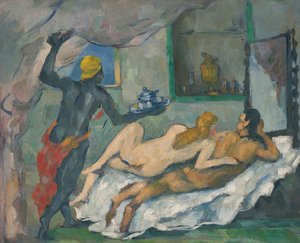
Explore Paul Cézanne's 'Afternoon in Naples' (1875). This Post-Impressionist masterpiece features striking contrasts & languid figures, hinting at Orientalism. A unique addition to any art collection! Hand-painted reproductions available.
Biografia artysty
Key Works and Recurring Motifs</h2> Cézanne’s oeuvre is remarkably diverse
About the painting
A Glimpse into Decadence: Exploring Cézanne’s “Afternoon in Naples”
Painted around 1875, this captivating work by Paul Cézanne offers a provocative and subtly unsettling glimpse into a world of leisure and exoticism. More than just a depiction of figures at rest, it's a study in contrasts – between light and shadow, power dynamics, and the emerging artistic sensibilities that would define Post-Impressionism.
Subject & Composition: A Scene of Servitude
The composition centers on three reclining nude female figures attended by a dark-skinned servant offering tea. This arrangement immediately draws attention to themes of service, privilege, and potentially, the complexities of colonial relationships. Cézanne deliberately avoids a traditional, balanced composition; the weight is concentrated on the left with the attendant, creating a dynamic tension within the scene. The fragmented quality of the figures and background suggests an unfinished quality, lending itself to expressive rather than strictly realistic representation.
Style & Technique: Bridging Impressionism & Beyond
“Afternoon in Naples” exemplifies Cézanne’s pivotal role in transitioning from Impressionism towards a more structured and analytical approach. While retaining the vibrant color palette associated with Impressionism, he moves away from capturing fleeting moments of light to explore form and structure. The visible brushstrokes, heavily impastoed paint application – particularly noticeable in the sheet and clothing – demonstrate Cézanne’s focus on the materiality of paint itself. This technique anticipates the expressive freedom of later movements like Fauvism.
Historical Context & Symbolism: Orientalism & Italian Indulgence
The painting reflects the prevalent 19th-century fascination with “Orientalism” – a Western preoccupation with, and often romanticized depiction of, Eastern cultures. Naples, in particular, was viewed as a place of sensual indulgence and freedom. The contrast between the pale skin tones of the reclining women and the dark complexion of the attendant speaks to power imbalances and societal norms of the time. Ambroise Vollard noted that the painting’s title came from Antoine Guillemet, who suggested it captured the spirit of leisurely carnality associated with Naples.
Emotional Impact & Aesthetic Appeal
“Afternoon in Naples” evokes a complex emotional response. While seemingly depicting relaxation and luxury, there's an underlying sense of detachment and perhaps even voyeurism. The ambiguous relationship between the figures creates a subtle unease. The muted color palette – ochres, browns, grays, and greens punctuated by the attendant’s striking yellow turban – contributes to a languid yet unsettling atmosphere. This artwork is not merely decorative; it invites contemplation on themes of power, beauty, and cultural exchange.
Bringing Cézanne Home: A Timeless Masterpiece
A high-quality reproduction of “Afternoon in Naples” offers an opportunity to introduce a touch of Post-Impressionist sophistication into any interior. Its nuanced color palette complements both modern and traditional settings, while its thought-provoking subject matter sparks conversation and adds depth to your collection. This piece is ideal for art enthusiasts, collectors seeking significant works, and designers aiming to create spaces that are both visually stunning and intellectually stimulating.
Pytania i odpowiedzi
Któremu artyście przypisuje się "Afternoon in Naples"?
„Afternoon in Naples” zostało stworzone przez Paul Cézanne. Informacje na tej stronie dotyczą oryginalnego dzieła autorstwa Paul Cézanne.
Co przedstawia „Afternoon in Naples” – Paul Cézanne?
Tematyka dzieła "Afternoon in Naples" to nude, orientalism, leisure, domesticity, post-impressionism, naples, exoticism, servitude.
Do którego pomieszczenia w domu najlepiej pasuje reprodukcja "Afternoon in Naples"?
Zalecaną przestrzenią dla „Afternoon in Naples” – Paul Cézanne jest Living Room. Sugestia ta może być oczywiście dostosowana do Twojego wnętrza.
Quick facts and art quiz
About Paul Cézanne

Paul Cézanne
1839 - 1906, Francja
Biografia artysty
Początki i Formowanie się Wizji: Życie Paula Cézanne’a
Paul Cézanne, urodzony 19 stycznia 1839 roku w Aix-en-Provence, był postacią przełomową, łączącą świat impresjonistycznych wrażeń z fragmentarycznymi formami kubizmu. Jego droga nie była usiana natychmiastowym uznaniem; raczej stanowiła powolny proces artystycznej eksploracji, naznaczony okresami zwątpienia i krytyki, który ostatecznie doprowadził do spuścizny na trwałe zmieniającej bieg historii sztuki. Cézanne pochodził z zamożnej rodziny – jego ojciec był początkowo kapelusznikiem, a później bankierem – co zapewniało mu rzadko spotykane bezpieczeństwo finansowe, pozwalając mu poświęcić się pasji bez natychmiastowej presji komercyjnego sukcesu. Początkowo skierowany przez ojca na studia prawnicze, uległ jednak sile wyrazu artystycznego i ostatecznie porzucił prawo na rzecz malarstwa, decyzji która zdefiniowała jego życie. Wczesne inspiracje czerpał z romantyzmu panującego w młodości oraz dbałości o krajobraz charakterystycznej dla szkoły Barbizońskiej, jednak to spotkania z artystami takimi jak Paul Gauguin i Georges Seurat, a ich innowacyjnymi podejściami do koloru i formy, pozwoliły Cézanne’owi wytyczyć własną, niepowtarzalną ścieżkę.Od Ciemności do Struktury: Ewolucja Stylu
Wczesne prace Cézanne’a często odzwierciedlały dramatyczne, emocjonalnie naładowane tematy charakterystyczne dla malarstwa romantycznego – ciemne palety i ekspresyjny pociągnięcie pędzlem dominowały w jego kompozycjach. Ta początkowa faza była jednak jedynie trampoliną do znacznie bardziej analitycznego i przełomowego podejścia. Niezadowolony z prostego uchwycenia ulotnych wrażeń świetlnych, jak to czynili impresjoniści, Cézanne podjął próbę zrozumienia i przedstawienia ukrytej struktury samych obiektów. Dążył nie tylko do tego, *co* widział, ale przede wszystkim do tego, *jak* postrzegał fundamentalne formy stanowiące rzeczywistość. To doprowadziło go do rozkładania naturalnych kształtów na ich geometryczne odpowiedniki – stożki, cylindry, kule – wyprzedzając rewolucję kubistyczną o dekady. Jego technika charakteryzowała się drobnymi, powtarzalnymi pociągnięciami pędzla, starannie nakładanymi warstwami w celu budowania złożonych pól koloru i tekstury, tworząc poczucie solidności i głębi wcześniej niespotykane w malarstwie. Nie interesowała go iluzoryczna przestrzeń; zamiast tego często prezentował obiekty z wielu punktów widzenia jednocześnie, kwestionując tradycyjne pojęcia perspektywy i zmuszając widza do aktywnego zaangażowania się w konstruowany charakter jego kompozycji. To celowe zniekształcenie nie było arbitralne, lecz stanowiło próbę przekazania pełniejszego zrozumienia formy, reprezentując nie tylko pojedynczy moment w czasie, ale syntezę percepcji.Krajobrazy, Martwe Natury i Forma Ludzka: Kluczowe Dzieła i Powracające Motywy
Twórczość Cézanne’a jest niezwykle różnorodna, obejmując krajobrazy, martwe natury, portrety i przedstawienia kąpiących się, jednak wszystkie łączy jego unikalne podejście do formy i koloru. Staw w Jas de Bouffan, namalowany w 1880 roku, jest przykładem jego pracy krajobrazowej, ukazując zdolność do uchwycenia istoty natury poprzez staranne ułożenie kształtów i tonów. Portret Émile’a Zoli, stworzony w 1866 roku, ujawnia rozwój jego stylu i oferuje przekonujący wgląd w intelektualną intensywność bliskiego przyjaciela i współczesnego pisarza. Jego martwe natury, takie jak te z jabłkami i innymi owocami, nie są jedynie reprezentacjami obiektów, lecz eksploracją objętości, światła i relacji przestrzennych. Seria Mont Sainte-Victoire stała się obsesją Cézanne’a, powracającym motywem, który pozwolił mu niestrudzenie badać formę i perspektywę przez dziesięciolecia. Te obrazy nie są jedynie przedstawieniami góry; to studia nad tym, jak postrzegamy głębię, objętość i grę światła i cienia. Wreszcie, jego seria Kąpiących się, przedstawiająca nagie postaci w idyllicznych krajobrazach, reprezentuje pogłębioną eksplorację ludzkiej formy i jej związku z naturą, często przesyconą poczuciem ponadczasowości i cichej kontemplacji.Spuścizna Wykuta Innowacją: Wpływ Cézanne’a na Sztukę Współczesną
Wpływ Paula Cézanne’a na kolejne pokolenia artystów jest nieoceniony. Powszechnie uważany za „ojca sztuki współczesnej” ze względu na przełomowy wkład w język obrazowania, torując drogę wielu głównym ruchom artystycznym XX wieku. Pablo Picasso i Georges Braque byli głęboko wdzięczni Cézanne’owi za nacisk na geometryczne formy i wielokrotne perspektywy, które stały się centralnymi zasadami kubizmu. Jego śmiałe użycie koloru zainspirowało również ruch fauwistyczny, prowadzony przez artystów takich jak Henri Matisse, którzy przyjęli żywe, nienaturalne odcienie. Nawet artyści surrealistyczni znaleźli rezonans w eksploracji subiektywnej percepcji i głębi psychicznej Cézanne’a. Poza konkretnymi ruchami, upór Cézanne’a na osobistą wizję artysty i odrzucenie tradycyjnych akademickich ograniczeń uwolniło pokolenia malarzy do eksplorowania nowych form ekspresji. Podważył on samą definicję reprezentacji, przesuwając nacisk z imitacji rzeczywistości na konstruowanie doświadczenia wizualnego opartego na ukrytej strukturze i subiektywnej percepcji. Jego śmierć w 1906 roku nie oznaczała końca, lecz początku – świtu nowej ery w historii sztuki, głęboko ukształtowanej przez jego rewolucyjną wizję.Quick facts about Paul Cézanne
- Artyści, Którzy Wpłynęli Na Niego:
- Romantyzm
- Barbizon
- Paul Gauguin
- Artyści/Ruchy Zainspirowane Nim:
- Kubizm
- Fowizm
- Data Urodzenia: 19 stycznia 1839
- Data Śmierci: 22 października 1906
- Miejsce Urodzenia: Aix-en-Provence, Francja
- Narodowość: Francuz
- Pełne Imię I Nazwisko: Paul Cézanne
- Ruch Artystyczny: Postimpresjonizm
- Znane Dzieła:
- Staw w Jas de Bouffan
- Portret Émile Zoli
- Mont Sainte-Victoire
Podobne dzieła


Odkryj dzieła sztuki uporządkowane według tematów, stylów i cech charakterystycznych.


Paul Cézanne
Afternoon in Naples
() ·
With its frame: · Hand-painted in oil on linen
Total