


 Podgląd w skali 1:1
 Wyślij jako kartkę
 Udostępnij
 Szczegóły dzieła
 Przewodnik

 Pobierz obraz
 Podobne obiekty
 RTG
RTG Pokaz slajdów
 Statystyki
untitled (4050) - Nieznane

Śledźcie piękno romantyzmu w doskonałym rytmie grafiki Dorégo! „Nieznane” fascynuje szczegółową techniką linii i koloru szarości – ikoniczny obraz górskiego krajobrazu z wodospadem i tęczą.
 Rozwiń treść
Gustave Doré – mistrz ilustracji romantycznych! Jego dramatyczne grafiki z Biblii, Dziwnej podróży i innych dzieł fascynują od lat. Odkryj świat jego niezwykłego talentu!
Giclée / Wydruk artystyczny
Wydruki giclée lub płótna o jakości muzealnej, szybka realizacja i szeroki wybór opcji wykończenia. ( Zamów ręcznie malowaną reprodukcję Przejdź do wersji cyfrowej)




P118B zł10

P118H zł10

P118W zł10

P438Z zł10

P508JH zł12

P508YH zł12

P805H zł10

P805Z zł10

P919BZ zł10

P919G zł10

P919XJ zł10

P959ZH zł10

P968JZ zł12

W106C zł8

W218G zł10

W218JH zł8

W218Y zł10

W307PJ zł10

W316G zł10

W316PJ zł8

W316Y zł10

W398PJ zł8

W4111J zł10

W500HY zł15

W500JH zł15

W692G zł12

W849H zł8

W940BG zł15

W953PJ zł8




Standardowy format
personalizowane
CM
INCH
Wybierz spośród naszych standardowych rozmiarów, które zachowują oryginalne proporcje dzieła sztuki.
Loading sizes...

szerokość
wysokość
Wpisz wymaganą szerokość i wysokość, aby dopasować grafikę do ramy lub ściany. Wydruk można jedynie przyciąć, nigdy nie powiększając go poza oryginalny obraz, dlatego format o innych proporcjach spowoduje utratę części kompozycji. Przed rozpoczęciem druku prześlemy Ci cyfrowy podgląd do zatwierdzenia. Obraz wyświetlany na tej stronie nie pokazuje rzeczywistego przycięcia — jedynie podgląd oddaje ten efekt.
Dostawa na cały świat () w ciągu 2 tygodni zamiast standardowych 4/5 tygodni. (26 Październik)

Bezpłatna ekspresowa wysyłka na cały świat

Wysokiej jakości płótno lniane

Pełne ubezpieczenie przesyłki

Gwarancja zwrotu należności celnych i podatków importowych

Gwarancja wiernego odwzorowania kolorów

100-dniowa polityka zwrotów (tylko w przypadku wad)

Gwarancja 100% zwrotu pieniędzy

Zniżka przy zakupie wielu sztuk
 Opcja ze szkłem jest dostępna wyłącznie w rozmiarach poniżej 110 cm

untitled (4050) - Nieznane
Giclée / Wydruk artystyczny
Wymiary reprodukcji
-


Cena całkowita
zł 265
A Symphony of Texture and Light: Exploring Gustave Doré’s Untitled Landscape
Paul Gustave Doré's "untitled (4050)" isn’t merely a depiction of a mountain valley; it’s an embodiment of Romantic idealism rendered with breathtaking precision. Created sometime around 1867, this engraving captures the grandeur and drama of the natural world—a landscape steeped in symbolism and illuminated by Doré's masterful command of etching technique. Examining its intricacies reveals layers of artistic intention that continue to resonate with audiences today.The Anatomy of Detail: Technique and Craftsmanship
Doré’s genius lay not just in his vision but also in his unparalleled ability to translate it onto paper. The engraving process—a laborious undertaking involving the creation of a copper plate etched with intricate lines—demands immense patience and skill. Artists like Doré meticulously scratched lines into the metal surface using specialized tools, transferring these impressions onto paper through pressure and ink. This technique allowed for astonishing levels of detail, capturing the textures of rock formations, foliage, and flowing water with remarkable accuracy. The dense cross-hatching employed throughout the composition isn’t simply decorative; it's fundamental to conveying volume and depth—creating a palpable sense of realism that distinguishes Doré’s work from looser watercolor renderings prevalent during his era. Consider the deliberate application of hatching – each stroke carefully positioned to sculpt the contours of mountainsides and illuminate the glistening surface of the river, demonstrating Doré’s dedication to capturing every nuance of visual representation.Romantic Ideals Projected onto Canvas
“untitled (4050)” firmly anchors itself within the Romantic movement, a period characterized by an intense fascination with emotion, imagination, and the sublime beauty of nature. Artists sought to evoke awe and wonder, portraying landscapes as expressions of divine power and spiritual contemplation. Doré’s depiction aligns perfectly with these ideals—the towering mountains represent strength and resilience, while the cascading river symbolizes the flow of life and the passage of time. Crucially, the inclusion of a rainbow serves as a potent emblem of hope and redemption, mirroring Romantic artists' belief in an afterlife filled with divine grace. This visual narrative transcends mere representation; it aspires to inspire contemplation on themes of faith and transcendence—a characteristic ambition that distinguishes Doré’s oeuvre from more pragmatic artistic endeavors of his time.Symbolism Beyond Sight: The Rainbow’s Promise
The rainbow itself is far more than just a colorful arc against the sky; it functions as a powerful symbol within “untitled (4050).” Rooted in Romantic mythology and Christian iconography, the rainbow signifies divine covenant—a reassurance of God's faithfulness after periods of upheaval and suffering. Its luminous hues convey optimism and spiritual renewal, mirroring the Romantic yearning for moral upliftment and an escape from the anxieties of industrialization. Doré’s careful placement of the rainbow reinforces this symbolic dimension, elevating the landscape beyond a simple visual spectacle into a meditation on existential questions.A Legacy Etched in Monochrome: Doré's Artistic Vision
The artwork’s striking monochrome palette—a deliberate choice reflecting the stylistic conventions of its time—amplifies its emotional impact. Absence of color forces viewers to focus entirely on tonal variations, highlighting the interplay between light and shadow and emphasizing the textural richness achieved through Doré's etching process. The artist skillfully manipulated grayscale hues to convey mood and atmosphere, creating a scene imbued with both melancholy beauty and dramatic tension. This restrained aesthetic underscores the Romantic preoccupation with inner experience—suggesting that true grandeur resides not in outward spectacle but in profound contemplation of the human condition. A reproduction of “untitled (4050)” allows for an appreciation of Doré’s artistic legacy, capturing the essence of Romantic landscape art and its enduring fascination with sublime beauty.Pytania i odpowiedzi
Do jakiego nurtu artystycznego należy „untitled (4050) - Nieznane” – Gustaw Doro?
Nurt związany z „untitled (4050) - Nieznane” – Gustaw Doro to Romantic Landscape. Ta klasyfikacja sytuuje dzieło wśród pokrewnych artystów i dzieł sztuki.
Czy mogę zobaczyć podgląd „untitled (4050) - Nieznane” – Gustaw Doro przed złożeniem zamówienia?
Podgląd dzieła „untitled (4050) - Nieznane” – Gustaw Doro można znaleźć na stronie Podgląd w pomieszczeniu.
Ilu użytkowników ogląda "untitled (4050) - Nieznane"?
Statystyki dotyczące „untitled (4050) - Nieznane” – Gustaw Doro znajdują się na stronie Statystyki wyświetleń dzieła: obejmują one miesięczną liczbę odwiedzin danego dzieła, wizyty przy pracach artysty oraz podział ostatnich odwiedzających według krajów i języków.
Biografia artysty
A Life Etched in Shadow and Light: The World of Gustave Doré
Paul Gustave Louis Christophe Doré, known to the world as Gustave Doré, was a figure who straddled the worlds of illustration, painting, and sculpture with an astonishing virtuosity. Born in Strasbourg, France, on January 6th, 1832, his life unfolded during a period of immense social and artistic change, a time when Romanticism still held sway but was giving way to new currents of realism and symbolism. Even as a child, Doré displayed a precocious talent, not merely in drawing—which he began at an incredibly young age—but also in a personality that hinted at the dramatic flair which would come to define his work. Stories abound of youthful pranks demonstrating a maturity beyond his years, foreshadowing the complex and often melancholic themes that would permeate his art. He embarked on his professional career remarkably early, at just fifteen years old, as a caricaturist for the French journal *Le Journal pour rire*, honing his skills in observation and composition within the bustling world of Parisian satire.From Caricature to Literary Giants: The Rise of an Illustrator
Doré’s early commissions laid the foundation for his future renown. Works like *Les Travaux d'Hercule* (1847), *Trois artistes incompris et mécontents* (1851), and *Les Dés-agréments d'un voyage d'agrément* (1851) showcased a burgeoning talent for dynamic composition and a masterful use of light and shadow, even in these relatively modest beginnings. He was deeply influenced by the illustrations of J.J. Grandville, whose fantastical imagery and satirical edge resonated with Doré’s own developing style. However, it was through his collaborations with literary giants that Doré truly ascended to prominence. In 1853, he received a commission to illustrate the works of Lord Byron, an undertaking which opened doors to further prestigious projects. The monumental task of illustrating the Bible followed, a project that would cement his reputation and bring his art before a vast international audience. His illustrations for Cervantes’ *Don Quixote* in the 1860s were particularly impactful, profoundly influencing subsequent interpretations of the characters and narrative. He wasn't merely illustrating these stories; he was reimagining them, imbuing them with a dramatic intensity that captured the imagination of readers worldwide. The oversized edition of Edgar Allan Poe’s “The Raven,” completed in 1883, earned him an impressive 30,000 francs from Harper & Brothers, demonstrating the commercial success alongside the artistic acclaim he had achieved. His collaboration with Blanchard Jerrold on *London: A Pilgrimage* (1872) was a particularly poignant and controversial work, depicting the stark realities of Victorian London’s poverty and sparking debate about social conditions.A Master of Technique: Wood Engraving and Romantic Vision
Doré's artistic prowess lay not only in his imaginative vision but also in his technical mastery, particularly in wood engraving. He possessed an extraordinary ability to create incredibly detailed and dramatic images through this medium, a skill that allowed for the mass production and widespread dissemination of his work. His compositions are characterized by their dynamism, strong contrasts between light and shadow—a technique known as chiaroscuro—and a sense of grandeur that often evokes a feeling of awe or even terror. He frequently employed a large team of block-cutters to translate his designs into wood engravings, enabling the efficient production needed to meet the demands of publishers and readers alike. His style is firmly rooted in the Romantic tradition, emphasizing emotion, imagination, and the sublime—a fascination with the overwhelming power of nature and the human condition. He wasn’t merely recording scenes; he was interpreting them through a lens of heightened emotionality and dramatic flair. This approach, while celebrated by many, also drew criticism from some contemporaries who found his work overly theatrical or sensationalized.Notable Works and Lasting Influence
Doré's artistic output spanned a remarkable range of subjects and styles. His illustrations for Dante’s *Inferno* remain perhaps his most enduring achievement, capturing the terrifying beauty and moral complexity of the poem with unparalleled intensity. Similarly, his interpretations of Milton’s *Paradise Lost* are renowned for their grandeur and dramatic flair, transporting viewers to realms of mythic proportions. Beyond these monumental projects, Doré produced countless illustrations for popular literature, including works by Cervantes, Hugo, and Dickens. His depictions of London—particularly *London: A Pilgrimage*—offered a stark and unflinching portrayal of the city’s social inequalities. His work also included series like “Flower Sellers of London,” which powerfully depicted the lives of ordinary people amidst poverty and hardship. Despite facing some criticism during his lifetime—some found his style overly dramatic or lacking in subtlety—Doré's work is now celebrated for its artistic merit and historical importance. His illustrations continue to shape our understanding of classic literature and Victorian society, offering a powerful visual interpretation of timeless stories and enduring themes. He died on January 23rd, 1883, leaving behind an immense body of work that continues to captivate and inspire. *His art remains a testament to the power of illustration to not only depict but also to interpret and transform the world around us.*Key Figures Influencing Doré
- J.J. Grandville: Doré admired Grandville's fantastical imagery and satirical edge, which influenced his own approach to illustration.
- Lord Byron: The commission to illustrate Byron’s works was a pivotal moment in Doré’s career, providing him with significant recognition and experience.
Major Achievements
- Illustrator of *Don Quixote* (1860-1862) – A monumental achievement that established his reputation as a master illustrator.
- Illustrator of the Bible (1857-1869) – A vast and ambitious project that showcased his technical skill and dramatic vision.
- Creator of *London: A Pilgrimage* (1872) – A powerful depiction of Victorian London’s social inequalities.

Gustaw Doro
1832 - 1883 , Francja
Krótka nota
- Artistic Movement Or Style: Romantyzm
- Artists Or Movements Influenced By This Artist: ['Vincent van Gogh']
- Artists Who Influenced This Artist: ['J.J. Grandville']
- Date Of Birth: 6 stycznia 1832
- Date Of Death: 23 stycznia 1883
- Full Name: Paul Gustave Doré
- Nationality: Francuz
- Notable Artworks:
- Don Kiszot
- Pająk
- Londyn: Pielgrzymka
- Dante Albigenski
- Place Of Birth: Strasburg, Francja
Powiązane artykuły
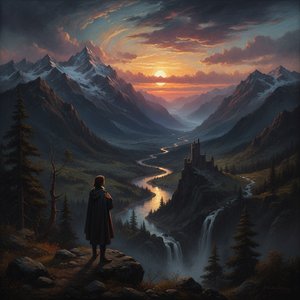
Capturing the Soul: The Emotional Majesty and Sublime Power of Romantic Landscape Painting
Explore the profound emotional depth of Romantic landscape painting. Discover how masters like Turner and Friedrich captured the sublime power of nature through intuition and imagination in this expert art history retrospective.

Capturing the Soul: The Emotional Magic and Sublime Grandeur of Romantic Landscape Painting
Explore the profound emotional depth of Romantic landscape painting. Discover how masters like Friedrich and Turner captured the sublime through light, shadow, and nature's power in this expert art history retrospective for discerning collectors.
Odkryj dzieła sztuki uporządkowane według tematów, stylów i cech charakterystycznych.


