

 Podgląd w skali 1:1
 Wyślij jako kartkę
 Udostępnij
 Szczegóły dzieła
 Przewodnik

 Pobierz obraz
 Podobne obiekty
 RTG
RTG Pokaz slajdów
 Statystyki
The Talisman
 Oil
Oil- WallArt
- Post-Impressionism
 1888
1888- 19th Century
 21.0 x 27.0 cm
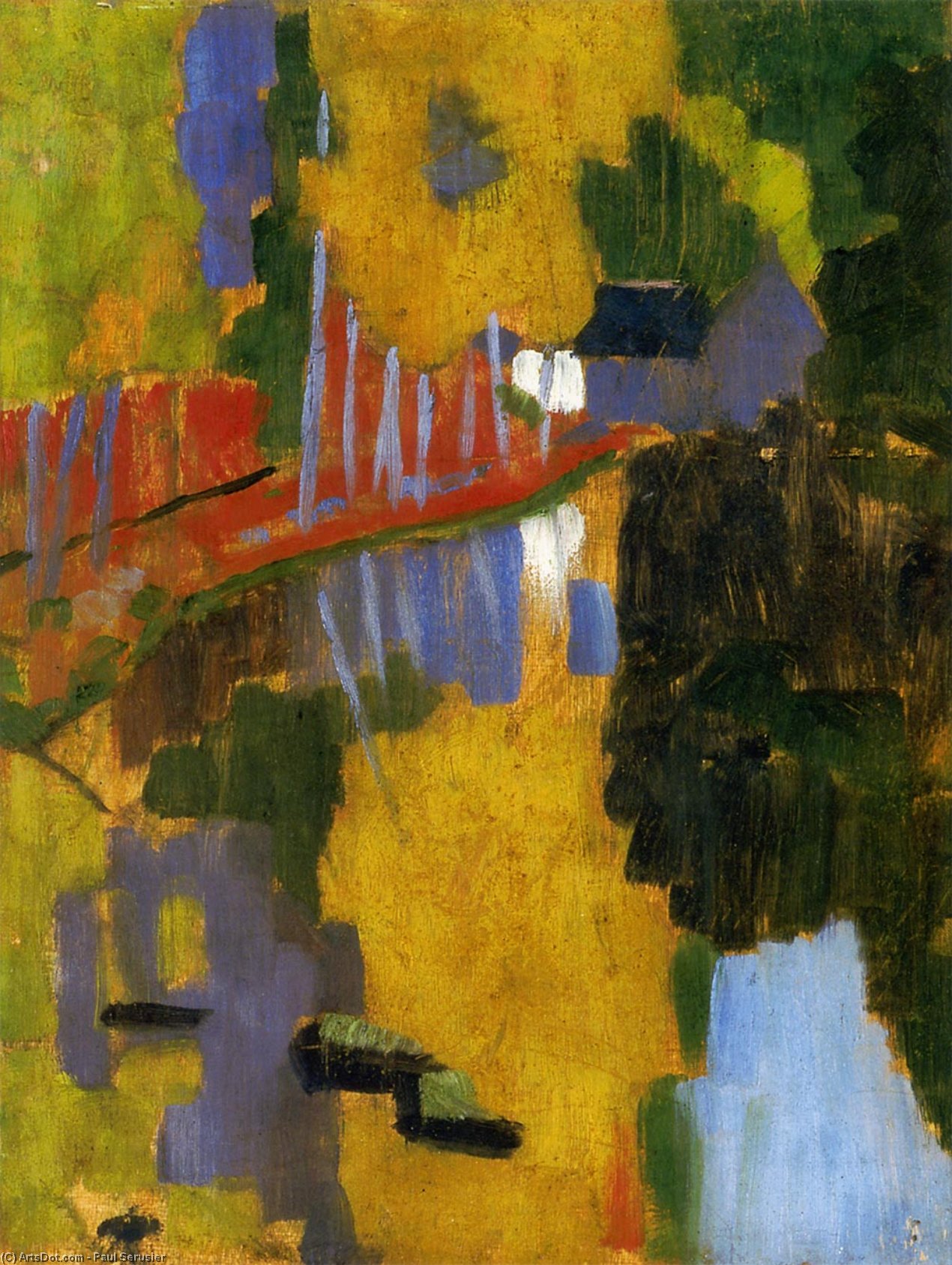
A vibrant explosion of color and abstraction defines this Post-Impressionist masterpiece The Talisman by Paul Sérusier, a seminal work of Cloisonnism that invites you to explore the roots of modern art.
 Rozwiń treść
Paul Sérusier (1864-1927) – francuski malarz, pionier abstrakcji i ważny członek grupy Les Nabis. Znany z obrazu "Talisman" oraz eksperymentów z cloisonnizmem i wpływu na rozwój sztuki nowoczesnej.
Kup wysokiej rozdzielczości, ulepszony obraz cyfrowy o jakości znacznie przewyższającej podgląd online.
Każdy plik jest starannie przygotowywany przez naszych specjalistów przy użyciu zaawansowanych narzędzi oraz profesjonalnej, ręcznej retuszy. Dbamy o to, aby każdy obraz cechował się wyjątkową ostrością, precyzyjnym odwzorowaniem kolorów i subtelnymi detalami.
Ostateczny plik dostarczany jest drogą mailową w ciągu 72 godzin, zoptymalizowany do natychmiastowego wykorzystania w profesjonalnych zastosowaniach redakcyjnych i poligraficznych. To ta sama jakość, której ufają czołowe studia projektowe, wydawnictwa oraz galerie sztuki.
Obraz cyfrowy
Pobierz plik o wysokiej rozdzielczości do osobistego użytku, druku oraz projektów kreatywnych. ( Przełącz na wydania drukowane Zamów ręcznie malowaną reprodukcję)
W każdym zamówieniu na obraz cyfrowy znajduje się
Profesjonalna dostawa cyfrowa z gwarancją
Wybierając TopImpressionists.com, nie otrzymujesz jedynie obrazu – otrzymujesz profesjonalnie udoskonalone cyfrowe dzieło sztuki, stworzone z najwyższą precyzją i objęte gwarancją satysfakcji. Oto wszystko, co automatycznie dołączane jest do Twojego zamówienia:

Błyskawiczna wysyłka e-mailowa
Plik z obrazem cyfrowym w wysokiej rozdzielczości zostanie przesłany na Twój adres e-mail w ciągu 72 godzin od złożenia zamówienia – gotowy do natychmiastowego użycia.

Plik cyfrowy wzbogacony przez AI
Twoja grafika została profesjonalnie zoptymalizowana przy użyciu zaawansowanych narzędzi AI oraz ręcznej edycji, co zapewnia maksymalną szczegółowość, klarowność i wierność kolorów.

Darmowe ponowne przesyłki dożywotnio
Przypadkowo usunąłeś lub zgubiłeś swój plik? Bez obaw – prześlemy go Tobie ponownie w dowolnym momencie, bez żadnych opłat.

Bez opłat importowych – zawsze
Ciesz się swoją sztuką natychmiast, bez żadnych opłat celnych, należności ani kosztów dostawy – pliki cyfrowe są zawsze wolne od podatku.

Gwarancja wierności kolorów
Dzięki zastosowaniu profesjonalnych narzędzi i procesów zarządzania barwą zapewniamy, że Twoje cyfrowe zdjęcie odzwierciedla oryginalne kolory tak wiernie, jak to tylko możliwe.

Gwarancja satysfakcji przez 100 dni
Jeśli nie będziesz zadowolony ze swojego cyfrowego obrazu, dokonamy jego poprawki lub zwrócimy 100% kosztów w ciągu 100 dni – bez zbędnych pytań.

100% Gwarancja zwrotu pieniędzy
Nie jesteś zadowolony? Otrzymaj pełny zwrot kosztów w ciągu 100 dni od otrzymania pliku cyfrowego – bez zbędnych pytań.

Rabaty przy zamówieniach hurtowych
Kup 3 obrazy, oszczędź 10% - Kup 5, oszczędź 15% - Kup 10+, oszczędź 20%. Idealne do projektów kreatywnych, galerii i agencji.
A Visionary Fragment: The Birth of Abstraction
In the annals of modern art history, few small-scale works possess the seismic power of Paul Sérusier’s The Talisman. Painted in 1888, this miniature masterpiece serves as much more than a mere landscape; it is a manifesto captured in pigment. Created during a transformative summer in Pont-Aven, the painting emerged from a profound encounter between the young Sérusier and the seasoned Paul Gauguin. Under Gauguin’s rigorous guidance, Sérus deliberately moved away from the fleeting light of Impressionism toward a more structured, symbolic language. The result is a work that does not merely represent a bridge over water, but rather distills the very essence of nature into a rhythmic arrangement of pure color and form.
The composition invites the viewer to wander across a vibrant yellow archway that spans the canvas with architectural confidence. Below, the water reflects a kaleidoscope of hues, while the background is populated by lush, stylized trees that frame the scene in an embrace of verdant tones. The presence of small figures on the bridge and birds drifting through the sky adds a layer of lively, breathing energy to the piece, preventing the abstraction from feeling cold or detached. Instead, there is a palpable sense of movement and life, as if the viewer has stumbled upon a fleeting, magical moment in the French countryside.
The Mastery of Cloisonnism and Color
Technically, The Talisman is a triumph of Cloisonnism, a style characterized by bold, flat areas of color separated by dark, distinct outlines. This technique, reminiscent of medieval stained glass, allows Sérusier to experiment with the emotional weight of color rather than the literal accuracy of light and shadow. The palette is unapologetically bright and saturated; the brilliant yellows and deep greens work in harmony to create a visual vibration that captivates the eye. By reducing the landscape to its most essential geometric components, Sérusier paved the way for the Nabis movement and the eventual rise of pure abstraction.
For the discerning collector or interior designer, this painting offers an unparalleled opportunity to introduce a piece of art history into a contemporary space. The work’s compact dimensions—a mere 21 x 27 cm—make it an intimate jewel, perfect for a curated gallery wall or as a focal point in a sophisticated study. A high-quality reproduction of this masterpiece brings with it not just the aesthetic beauty of Post-Impressionism, but the intellectual weight of a painting that changed the course of Western art. It is a conversation starter, a burst of historical vitality, and a profound testament to the power of seeing the world through a lens of pure, unadulterated color.
Pytania i odpowiedzi
Czy Paul Sérusier, twórca "The Talisman", jest znany pod innymi nazwiskami?
Paul Sérusier występuje również pod innymi nazwiskami: Louis-Paul-Henri Sérusier.
Jak harmonijna jest kolorystyka dzieła „The Talisman” – Paul Sérusier?
Harmonia kolorystyczna dzieła "The Talisman" została określona jako Strong Color Unity.
Jakie są rzeczywiste wymiary dzieła „The Talisman” – Paul Sérusier?
Oryginalne wymiary dzieła „The Talisman” to 21 x 27 cm. Znajomość pierwotnej skali może być pomocna przy wyborze odpowiedniego rozmiaru reprodukcji.
Podobne dzieła


Biografia artysty
Early Life and Artistic Beginnings
Paul Sérusier, a pivotal figure in the development of modern art, was born on November 9th, 1864, in the heart of Paris. His upbringing within a prosperous family instilled in him a deep appreciation for culture and learning. Unlike many artists of his time who hailed from privileged backgrounds, Sérusier’s father, a successful businessman involved in the perfume industry, provided him with an unusually comprehensive education. He studied philosophy, Greek, and Latin at Lycée Condorcet, a prestigious institution renowned for its rigorous academic standards. This classical foundation would later profoundly influence his artistic approach, shaping his understanding of form, composition, and symbolism. It was during this period that Sérusier encountered Maurice Denis and Édouard Vuillard, two fellow students who would become lifelong friends and collaborators – individuals whose shared intellectual curiosity and artistic aspirations proved to be a fertile ground for innovation. The encounter with these influential figures marked the beginning of his journey towards breaking away from traditional academic painting.The Pont-Aven Years: Cloisonnism and the Nabis
Sérusier’s artistic trajectory took a decisive turn in 1888 when he traveled to Pont-Aven, a small village nestled in Brittany – a region that would become inextricably linked with his life's work. It was here, amidst the rugged beauty of the Breton landscape and under the guidance of Paul Gauguin, that Sérusier encountered the revolutionary concept of *cloisonnism*. Gauguin encouraged him to abandon meticulous representation and instead focus on capturing the essence of a scene through bold, flat shapes delineated by dark outlines – akin to stained glass windows. This technique, characterized by its stark contrast between color and line, allowed Sérusier to distill his perceptions into their purest form, moving away from imitation towards an expressionistic approach. This period also witnessed the formation of *Les Nabis*, a small but influential group of artists who shared a common desire to break free from the constraints of Impressionism and explore new avenues for artistic expression. Alongside Maurice Denis, Pierre Bonnard, and Édouard Vuillard, Sérusier sought to create art that was both decorative and emotionally resonant – a synthesis of form and feeling.Key Works and Artistic Innovations
Sérusier’s most celebrated work, *The Talisman* (1888), exemplifies his pioneering approach to abstraction. Painted during his time in Pont-Aven, the canvas is a vibrant explosion of color and simplified forms – a radical departure from traditional landscape painting. The composition, inspired by a Breton forest, utilizes bold, non-naturalistic colors and flattened shapes to evoke a sense of atmosphere and emotion rather than a literal depiction of the scene. Other notable works include *L’Averse* (1893), a poignant portrayal of a rainy day in Brittany; *Portrait of Paul Ranson* (1890), a striking example of his ability to capture personality through simplified forms; and *Melancholy* (1890), a deeply evocative depiction of human emotion. Sérusier’s later works, such as *The Snake Eaters* (1894) and *Panneau Bretonne avec enfants* (1894), continued to explore themes of nature, spirituality, and the complexities of human experience. His work served as a bridge between Impressionism and the emerging movements of Synthetism and Cubism.Legacy and Influence
Paul Sérusier’s impact on the development of modern art is undeniable. His experimentation with abstraction, his embrace of *cloisonnism*, and his founding of *Les Nabis* paved the way for subsequent generations of artists to explore new forms of expression. His work influenced figures such as Maurice Denis, Pierre Bonnard, and Édouard Vuillard, who went on to become leading proponents of Synthetism. Sérusier’s emphasis on color and emotion, his rejection of traditional representational techniques, and his exploration of spiritual themes continue to resonate with artists today. He taught at the École Ranson, further disseminating his innovative ideas and shaping the artistic landscape of early 20th-century Paris. Paul Sérusier died on October 7, 1927, in Morlaix, leaving behind a legacy as one of the most important and influential figures in the history of modern art – a true pioneer who dared to break free from convention and forge his own unique artistic path.
Paul Sérusier
1864 - 1927 , Francja
Krótka nota
- Artistic Movement Or Style: Postimpresjonizm
- Artists Or Movements Influenced By This Artist: ['Nabis']
- Artists Who Influenced This Artist:
- Paul Gauguin
- Maurice Denis
- Date Of Birth: 9 listopada 1864
- Date Of Death: 7 października 1927
- Full Name: Louis-Paul-Henri Sérusier
- Nationality: Francuz
- Notable Artworks:
- Talizman
- Krajobraz w Bois d’Amour
- Place Of Birth: Paryż, Francja