


 Zobacz w skali 1:1
 Wyślij
 Udostępnij
 Szczegóły
 Przewodnik

 Pobierz plik obrazu
 Podobne obiekty
 RTG
RTG Pokaz slajdów
 Statystyki
Electricity
 Watercolor
- WallArt
- Fauvism
 1937
1937- Modern
 50.0 x 65.0 cm
A vibrant watercolor capturing the bustling energy of a 1937 cityscape, this masterpiece by French Fauvist Raoul Dufy brings a joyful sense of urban life to your collection through its luminous colors and light.
 Czytaj więcej
Raoul Dufy (1877-1953) – francuski malarz fawistyczny, znany z żywiołowych kolorów i obrazów przedstawiających życie towarzyskie oraz krajobrazy. #RaoulDufy #Fawizm
Ręcznie malowana reprodukcja olejowa
Ręcznie malowany obraz olejny na płótnie, wykonany na zamówienie przez naszych artystów w wybranym przez Ciebie wymiarze i oprawie. ( Przełącz na wersję drukowaną Przełącz na wersję cyfrową)




P118B zł10

P118H zł10

P118W zł10

P438Z zł10

P508JH zł12

P508YH zł12

P805H zł10

P805Z zł10

P919BZ zł10

P919G zł10

P919XJ zł10

P959ZH zł10

P968JZ zł12

W106C zł8

W218G zł10

W218JH zł8

W218Y zł10

W307PJ zł10

W316G zł10

W316PJ zł8

W316Y zł10

W398PJ zł8

W4111J zł10

W500HY zł15

W500JH zł15

W692G zł12

W849H zł8

W940BG zł15

W953PJ zł8




Standardowy
na zamówienie
CM
INCH
Wybierz spośród naszych standardowych rozmiarów, które zachowują oryginalne proporcje dzieła sztuki.
Loading sizes...

szerokość
wysokość
Wpisz wymaganą szerokość i wysokość, aby obraz pasował do Twojej ramy lub ściany. Ponieważ jest to dzieło malowane ręcznie, w przypadku rozmiaru o innym proporcji artysta może domalować nieco więcej wokół obrazu lub przyciąć fragmenty — wybór należy do Ciebie. Przed rozpoczęciem pracy prześlemy Ci cyfrową wizualizację do zatwierdzenia. Obraz widoczny na tej stronie nie przedstawia rzeczywistego efektu — jedynie wizualizacja oddaje realny rezultat.
Przykłady możliwych zmian: Zamień twarz na zdjęcie klienta; Dodaj zwierzę domowe (np. zamień kota na psa); Ukryj wiadomość w tle; Zmień krajobraz lub elementy tła.
Po złożeniu zamówienia zespół TopImpressionists.com skontaktuje się z klientem drogą mailową w celu uzyskania instrukcji i prześle wizualizację projektu
Po złożeniu zamówienia zespół TopImpressionists.com skontaktuje się z klientem drogą mailową w celu uzyskania instrukcji i prześle wizualizację projektu
Dostawa na całym świecie () w ciągu 3–4 tygodni zamiast standardowych 5 tygodni. (23 Październik). Bez kompromisów w kwestii jakości.

Bezpłatna ekspresowa wysyłka na cały świat

Wysokiej jakości płótno lniane

Pełne ubezpieczenie transportowe

Gwarancja zwrotu należności celnych i podatków importowych

Gwarancja idealnego odwzorowania barw

100-dniowy okres na zwrot dzieła w przypadku wykrycia wad produkcyjnych

Gwarancja 100% zwrotu pieniędzy

Oferta przy zakupie wielu sztuk
 Opcja ze szkłem jest dostępna wyłącznie w rozmiarach poniżej 110 cm

Electricity
Technika wykonania
Rozmiar reprodukcji
-


Suma do zapłaty
zł 1033
A Symphony of Urban Vitality
In his 1937 masterpiece, Electricity, Raoul Dufy captures the electric pulse of modern existence through a lens of pure, unadulterated joy. This watercolor serves as more than just a depiction of a cityscape; it is a rhythmic dance of light and movement that celebrates the burgeoning energy of the twentieth-century metropolis. As the eye wanders across the canvas, one encounters a bustling urban landscape where grand architectural structures stand alongside smaller, intimate buildings, all interconnected by the invisible currents of human activity. The scene is alive with the presence of people navigating their daily routines, some pausing near parked vehicles while others move through the streets, creating a sense of continuous, flowing motion that mirrors the very subject of the title.
Dufy’s signature style—a luminous blend of Fauvism and Impressionism—is on full display here. Eschewing heavy, somber outlines for a more fluid and decorative approach, he utilizes the transparency of watercolor to allow light to permeate the composition. The technique is characterized by spontaneous, sweeping brushstrokes that suggest form rather than strictly defining it, allowing the viewer's imagination to fill in the vibrant details of the windows, the silhouettes of pedestrians, and even the subtle suggestion of an umbrella, hinting at a recent or passing rain. This delicate interplay between light and pigment creates a shimmering effect, as if the painting itself is vibrating with the kinetic energy of the city.
Beyond its visual splendor, Electricity carries a profound historical resonance. Created in the late 1930s, a period of immense technological and social transformation, the work reflects the fascination with modern progress and the electrification of urban life. The title serves as a metaphor for both the literal power grids transforming cities and the metaphorical spark of human connection and vitality found within the crowd. For the collector or interior designer, this piece offers an unparalleled opportunity to introduce a sense of movement and optimism into a space. Its bright, airy composition and sophisticated use of color make it a versatile centerpiece, capable of breathing life into a contemporary gallery or adding a touch of French joie de vivre to a refined residential setting.
To possess a reproduction of this work is to invite the spirit of Raoul Dufy into one's home—a spirit that finds beauty in the mundane and magic in the mechanical. It is an invitation to pause amidst the chaos of modern life and find, as Dufy did, the rhythmic, colorful, and deeply human heartbeat that exists within the heart of the city.
Pytania i odpowiedzi
Jaka technika została użyta w przypadku "Electricity" i kiedy powstało to dzieło?
"Electricity" powstało w 1937 roku przy użyciu Watercolor.
Czy dzieło "Electricity" jest dostępne jako wysokiej jakości wydruk artystyczny?
„Electricity” jest dostępny jako szlachetna odbitka na płótnie bawełnianym lub archiwalnym papierze płótnopodobnym. Zamówienia można składać na stronie Wydruk artystyczny, wybierając dowolny rozmiar.
Jak opisuje się paletę kolorystyczną dzieła „Electricity” autorstwa Raoul Dufy?
Kolory dzieła "Electricity" tworzą Dark paletę barw. Klasyfikacja ta opisuje dominujące rodziny kolorystyczne.
Podobne dzieła


Biografia artysty
A Life Immersed in Color and Light
Raoul Dufy, born on June 3rd, 1877, in the bustling port city of Le Havre, Normandy, was an artist whose name became inextricably linked with joy, vibrancy, and a distinctly French *joie de vivre*. His artistic journey wasn’t one of solitary contemplation but began amidst the practical realities of life – he worked for a coffee-importing company after leaving school at just fourteen. Yet, even in this early stage, the undeniable pull towards creative expression proved too strong to resist. Evening classes at Le Havre's École des Beaux-Arts ignited a passion that would not only define his career but also shape his very being, forging lasting friendships with fellow artists Raimond Lecourt and Othon Friesz – companions who shared a studio in Montmartre and a deep commitment to exploring new visual languages. These formative years were steeped in the influence of Impressionism, particularly the luminous landscapes of Claude Monet and Camille Pissarro, providing him with a foundational understanding of light, color, and composition that would later inform his unique style. He received a prestigious scholarship to study at the École Nationale supérieure des Beaux-Arts in Paris, further honing his skills and immersing himself within the dynamic artistic environment of the capital city.Embracing Fauvism and Finding His Voice
The early 20th century presented Dufy with a rapidly evolving landscape of modern art. Initially, he experimented with Cubism, drawn to its fragmented forms and innovative approach to space. However, it was Henri Matisse’s groundbreaking *Luxe, Calme et Volupté* at the 1905 Salon des Indépendants that proved truly transformative. The sheer audacity of color and expressive freedom unleashed by Matisse – a declaration of vibrant hues divorced from traditional representation – resonated deeply with Dufy, propelling him towards a style characterized by bold colors and liberated brushwork. This wasn’t mere imitation; it was an absorption and distillation of Fauvism's energy into something uniquely his own. He deliberately moved away from the movement’s strict adherence to its tenets, developing a more decorative and fluid approach – a style that retained the boldness of Fauvism while injecting a sense of lightness and grace. This period witnessed a fascinating exploration of various mediums – illustration, textile design for Paul Poiret (a collaboration that significantly influenced his aesthetic), even ceramics – demonstrating a remarkable versatility that extended far beyond the confines of traditional painting. His designs weren’t merely decorative elements; they were integral expressions of his artistic vision, bringing color and dynamism to everyday objects, reflecting a deep appreciation for beauty in all its forms.A Stenographic Style: Capturing Modern Life
By the 1920s, Dufy had fully blossomed into a master of what became known as his “stenographic” style. This distinctive technique involved rapidly applying thin washes of color over skeletal structures – a method that created an impression of movement and spontaneity. It was a perfect fit for capturing the energy of modern life: yachting regattas, bustling city scenes, elegant social gatherings on the French Riviera. Dufy wasn’t interested in meticulous detail; he sought to convey atmosphere, emotion, and the fleeting beauty of a moment. His paintings became celebrations of leisure, pleasure, and the vibrant pulse of contemporary society. He painted orchestras, racecourses, and seascapes with an effervescent quality that captured the spirit of the Jazz Age. This period also saw him undertaking large-scale commissions, including the monumental *La Fée Electricité* for the 1937 Exposition Internationale in Paris – a vast work celebrating electricity’s impact on modern life, executed with remarkable speed and ingenuity using a new quick-drying medium. The sheer scale of this project showcased Dufy's ability to manage complex projects while maintaining his distinctive artistic vision.Key Characteristics of Dufy’s Art
- Vibrant Color Palette: Dufy was renowned for his use of bright, saturated colors, often applied in thin washes.
- Dynamic Composition: His paintings frequently feature energetic compositions that convey a sense of movement and spontaneity.
- Decorative Style: A strong decorative element is present throughout his work, influenced by his designs for textiles and ceramics.
- Celebration of Modern Life: Dufy’s art often depicts scenes of leisure, social gatherings, and the pleasures of contemporary society.
- Stenographic Technique: His signature style involved rapidly applying thin washes of color over skeletal structures.
Legacy and Enduring Appeal
Despite facing health challenges later in life due to rheumatoid arthritis, Dufy remained a dedicated artist until his death on March 23rd, 1953, in Forcalquier. His work continues to be celebrated worldwide, held in prestigious collections including the Musée d’Orsay in Paris, the Hermitage Museum in St. Petersburg, The Museum of Modern Art in New York, and the Art Institute of Chicago – a testament to his enduring artistic significance. Dufy's influence extends far beyond painting; his designs continue to inspire textile and decorative arts. He left behind an impressive body of work – thousands of paintings, watercolors, drawings, prints, and applied art pieces – that collectively represent a vibrant celebration of life, color, and the beauty of the everyday. Raoul Dufy wasn’t merely a painter; he was a chronicler of his time, capturing the spirit of an era with a unique blend of Fauvist energy, decorative flair, and a distinctly optimistic vision. His art remains profoundly relevant today, offering a vibrant escape and a reminder to embrace the *joie de vivre* that permeated his life and work.
Raoul Dufy
1877 - 1953 , Francja
Najważniejsze informacje
- Artistic Movement Or Style: Fauvizm
- Artists Or Movements Influenced By This Artist: ['Ceramika i tkaniny']
- Artists Who Influenced This Artist:
- Monet
- Matisse
- Date Of Birth: 3 czerwca 1877
- Date Of Death: 23 marca 1953
- Full Name: Raoul Dufy
- Nationality: Francuz
- Notable Artworks:
- Kasyno w Nicei
- Zatoka aniołów
- Wyścigi
- Place Of Birth: Le Havre, Francja
Zobacz także powiązane artykuły

Wild Colors & Raw Emotion: A Definitive Guide to the Fauvist Art Movement
Explore the vibrant world of Fauvism. Discover how masters like Matisse and Derain revolutionized art through bold colors and raw emotion in this expert guide to the 'Wild Beasts' movement.
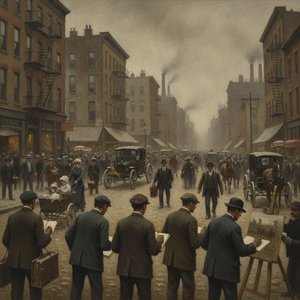
The Ashcan School: Capturing the Raw, Unfiltered Soul of Urban Life through American Realism
Discover the raw beauty of the Ashcan School. Explore how masters like Bellows and Henri captured the gritty, vibrant soul of early 20th-century New York through profound American Realism and evocative urban landscapes.