


 Zobacz w skali 1:1
 Wyślij
 Udostępnij
 Szczegóły
 Przewodnik

 Pobierz plik obrazu
 Podobne obiekty
 RTG
RTG Pokaz slajdów
 Statystyki
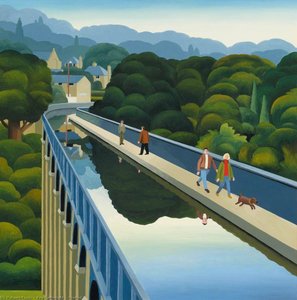
Canal Boat
 1992
1992 52.0 x 51.0 cm
 The British Postal Museum - Archive
Discover the serene landscapes & still lifes of reg cartwright, a British artist known for capturing rural England's beauty with detailed realism.
 Czytaj więcej
Dzieło sztuki prezentowane na tej stronie podlega ochronie prawem autorskim, co oznacza, że nie mamy prawa do tworzenia ani sprzedaży jego identycznej reprodukcji. Ochrona ta jest egzekwowana na mocy umów międzynarodowych, takich jak Konwencja berneńska oraz przez przepisy prawa krajowego, w tym te określone w Prawo autorskie USA – Tytuł 17.
Metoda ta jest w pełni zgodna z przepisami prawa autorskiego, ponieważ nie polega na kopiowaniu ani powielaniu chronionego dzieła. Stanowi ona kreatywną reinterpretację – nowy obraz, który czerpie inspirację z oryginału, ale nie jest z nim tożsamy.
Giclée / Wydruk artystyczny
Wydruki giclée lub płótna o jakości muzealnej, szybka realizacja i szeroki wybór opcji wykończenia. ( Kup ręcznie malowany obraz Przełącz na wersję cyfrową)




































Standardowy
na zamówienie
CM
INCH
Wybierz spośród naszych standardowych rozmiarów, które zachowują oryginalne proporcje dzieła sztuki.
Loading sizes...

szerokość
wysokość
Wpisz wymaganą szerokość i wysokość, aby dopasować grafikę do ramy lub ściany. Wydruk można jedynie przyciąć, nigdy nie powiększając go poza oryginalny obraz, dlatego format o innym proporcji spowoduje utratę części kompozycji. Przed rozpoczęciem druku prześlemy Ci cyfrowy podgląd do zatwierdzenia. Obraz wyświetlany na tej stronie nie pokazuje rzeczywistego przycięcia — jedynie podgląd oddaje ten efekt.
Dostawa na cały świat () w ciągu 2 tygodni zamiast standardowych 4/5 tygodni. (21 Październik)

Bezpłatna ekspresowa wysyłka na cały świat

Wysokiej jakości płótno lniane

Pełne ubezpieczenie transportowe

Gwarancja zwrotu należności celnych i podatków importowych

Gwarancja idealnego odwzorowania barw

100-dniowy okres na zwrot dzieła w przypadku wykrycia wad produkcyjnych

Gwarancja 100% zwrotu pieniędzy

Oferta przy zakupie wielu sztuk
 Opcja ze szkłem jest dostępna wyłącznie w rozmiarach poniżej 110 cm

Canal Boat
Giclée / Wydruk artystyczny
Rozmiar reprodukcji
-


Suma do zapłaty
zł 262
Biografia artysty
Reg Cartwright: A Quiet Master of British Pastoral
Reg Cartwright, born in Leicester in 1938, is a quietly compelling figure within the landscape of British contemporary art. His career, spanning over seven decades, has been marked by a dedication to capturing the subtle beauty and enduring character of rural England – not through grand vistas or dramatic storms, but with an intimate focus on everyday objects and the quiet rhythms of the countryside. Cartwright’s work isn't about shouting; it whispers, inviting contemplation and a deep appreciation for the understated elegance of the natural world.
Cartwright’s early life offered little indication of his future artistic path. After attending Gateway grammar school, he initially pursued a pattern-making role in a shoe factory, a seemingly conventional route that ultimately proved unsatisfying. National service followed, and then a period working in advertising, experiences which, paradoxically, provided him with the foundational skills – particularly in design and composition – that would later inform his painting. It was within the bustling environment of Frank Gayton Advertising that he truly began to hone his artistic eye, absorbing techniques and developing a keen understanding of visual hierarchy and balance.
The Evolution of Still Life
Cartwright’s artistic trajectory shifted decisively in 1976 when he embraced full-time painting. Initially exploring various mediums, he quickly found his voice within the realm of still life. This choice wasn't a rejection of landscape, but rather a deliberate narrowing of focus that allowed him to delve into the intricacies of form, texture, and light with unparalleled precision. He’s often described as a “cubist” in his approach, not in the revolutionary sense of Picasso or Braque, but in his ability to deconstruct familiar objects – plates, jugs, flowers, fish – and rearrange them within a carefully constructed composition. This process isn't about creating abstract representations; it’s about revealing the inherent beauty and complexity of these commonplace subjects.
Influences on Cartwright’s work are subtle yet discernible. The traditions of British landscape painting, particularly the quiet realism of artists like Constable and Turner, undoubtedly played a role. However, he also draws inspiration from the precision of Dutch still life painters – masters of light, shadow, and meticulous detail – as well as the understated elegance of 20th-century European modernists. His work possesses a unique blend of these influences, resulting in a style that is both deeply rooted in tradition and refreshingly contemporary.
Technique and Style
Cartwright’s technique is characterized by its remarkable control and restraint. He works primarily in oil on canvas, employing a muted palette dominated by earthy tones – browns, greys, ochres, and subtle greens – that evoke the textures and colors of the English countryside. His brushwork is often delicate and precise, meticulously building up layers of paint to create a sense of depth and luminosity. A key element of his style is his masterful use of light; he captures the fleeting effects of sunlight on surfaces with remarkable accuracy, creating an illusion of three-dimensionality that draws the viewer into the scene.
He frequently incorporates elements of landscape – often estuaries or coastal scenes – as a backdrop to his still lifes. These landscapes aren’t rendered in grand detail but rather serve as subtle anchors, grounding the compositions and reinforcing the connection between the objects within and the natural world outside. The effect is one of quiet harmony and understated beauty.
Recognition and Legacy
Cartwright's work has been exhibited widely throughout the United Kingdom and internationally, including shows in London, Cambridge, New York, and Japan. He’s received numerous awards and commissions, including the ‘Mother Goose Award’ for illustration and recognition from the MSIA (Museum of Society Illustrators). His paintings are held in private and public collections across the globe, testament to their enduring appeal.
Today, Reg Cartwright remains a vital voice within British contemporary art. His work speaks to a deep appreciation for the beauty of the everyday, inviting viewers to slow down, observe closely, and find solace in the quiet rhythms of rural England. He is an artist who has quietly, yet powerfully, captured the essence of a disappearing world – a testament to his skill, dedication, and profound understanding of the art of observation.
Reg Cartwright
1938 -
Najważniejsze informacje
- Artistic Movement Or Style: British Modernism
- Artists Or Movements Influenced By This Artist: ['Cambridge Contemporary Art']
- Artists Who Influenced This Artist:
- Cubism
- Still life painters
- Date Of Birth: 1938
- Full Name: Reg Cartwright
- Nationality: British
- Notable Artworks:
- Viaduct
- Blue Still Life
- Estuary Still Life
- Place Of Birth: Leicester, UK