Pracownia — Darmowa wysyłka na cały świat — Czas dostawy: 2–6 tygodni
Obraz ze zdjęcia Lista życzeń Koszyk
Podgląd w skaliPodgląd w skali Podgląd ARPodgląd AR Przejdź do ręcznie malowanego obrazu Przejdź do ręcznie malowanego obrazuPrzełącz na obraz Przełącz na obraz UdostępnijUdostępnij
Szczegóły dziełaSzczegóły dzieła Dodaj do ulubionych Dodaj do ulubionych PobierzPobierz Podobne obiektyPodobne obiekty RTGRTG Pokaz slajdówPokaz slajdów

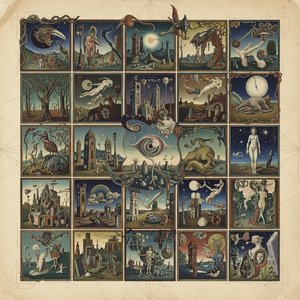
Man and head holder

Explore René Magritte's surrealist masterpiece, 'Man and head holder'. This thought-provoking painting blends abstract forms with representational figures, challenging perceptions of reality. Discover reproductions at TopImpressionists.

René Magritte (1898-1967): Belgijski mistrz surrealizmu! Odkryj jego niezwykłe obrazy, takie jak 'Kochankowie', które kwestionują rzeczywistość i percepcję. #Magritte #Surrealizm

Giclée / Wydruk artystyczny

Druk giclée lub płótno o jakości muzealnej z szybką realizacją i szerokim wyborem opcji wykończenia. (Przejdź do ręcznie malowanego obrazu Przejdź do ręcznie malowanego obrazuPrzełącz na obraz Przełącz na obraz)

P118B $10
P118H $10
P118W $10
P438Z $10
P508JH $12
P508YH $12
P805H $10
P805Z $10
P919BZ $10
P919G $10
P919XJ $10
P959ZH $10
P968JZ $12
W106C $8
W218G $10
W218JH $8
W218Y $10
W307PJ $10
W316G $10
W316PJ $8
W316Y $10
W398PJ $8
W4111J $10
W500HY $15
W500JH $15
W692G $12
W849H $8
W940BG $15
W953PJ $8

Standard
custom
CM
INCH

Wybierz spośród naszych predefiniowanych rozmiarów, które zachowują oryginalne proporcje dzieła sztuki.

szerokość
wysokość

Możesz wprowadzić własne wymiary, aby dopasować dzieło do konkretnej ramy lub przestrzeni. Jeśli wybrany rozmiar nie będzie odpowiadał proporcjom oryginalnego obrazu, przytniecie dzieło lub rozszerzymy obraz za pomocą odbicia lustrzanego lub jednolitego wypełnienia krawędzi. Przed rozpoczęciem produkcji prześlemy cyfrową wizualizację do Twojej akceptacji.
Prosimy pamiętać, że podgląd na ekranie nie odzwierciedla faktycznego przycinania ani rozszerzania. Tylko wizualizacja dokładnie pokaże końcową kompozycję.
Mimo dostępności niestandardowych rozmiarów, zalecamy wybór wymiaru z listy zdefiniowanej, aby zachować oryginalne proporcje.

Dostawa na cały świat () w ciągu 2 tygodni zamiast standardowych 4/5 tygodni. (31 Lipiec)

why_choose_icon
Bezpłatna ekspresowa wysyłka na cały świat
why_choose_icon
Wysokiej jakości płótno lniane
why_choose_icon
Pełne ubezpieczenie przesyłki
why_choose_icon
Gwarancja zwrotu należności celnych
why_choose_icon
Gwarancja pełnego zgodności kolorystycznej
why_choose_icon
Polityka 60-dniowego zwrotu (tylko w przypadku wad)
why_choose_icon
Gwarancja 100% zwrotu pieniędzy
why_choose_icon
Zniżka przy większych zamówieniach

Suma całkowita

$ 69

reproduction

Man and head holder

Giclée / Wydruk artystyczny

Wymiary reprodukcji

-

Cena całkowita

$ 69

Szybkie fakty

  • Title: Man and head holder
  • Subject or theme: Abstract forms & figures
  • Artist: René Magritte
  • Artistic style: Surrealism
  • Medium: Pen and ink on paper

Quiz o sztuce

Na każde pytanie istnieje tylko jedna poprawna odpowiedź.

Pytanie 1:
What artistic movement is René Magritte most closely associated with?
Pytanie 2:
The image description notes a recurring shape in the artwork. What is it?
Pytanie 3:
What is a common interpretation of the blue sphere featured prominently in Magritte's work?
Pytanie 4:
The image description mentions the technique used to create this artwork. What is it?
Pytanie 5:
Magritte's style often aims to challenge what aspect of perception?

Opis obiektu kolekcjonerskiego

A Surreal Encounter: Exploring René Magritte's "Man and Head Holder"

This captivating artwork by René Magritte presents a compelling visual puzzle, characteristic of his signature Surrealist style. The composition centers around a blue sphere seemingly suspended within a dark rectangular frame, juxtaposed with handwritten notes and sketches – a deliberate layering that invites contemplation and challenges conventional perception. It’s not merely an image; it's a window into the subconscious, meticulously crafted to provoke thought and stir emotion.

Style & Technique: The Precision of Dreams

Magritte masterfully employs a precise pen and ink drawing technique on paper, resulting in sharp lines, flattened perspective, and smooth textures. This deliberate approach contrasts beautifully with the dreamlike subject matter, creating an unsettling yet harmonious tension. The color palette is muted – dominated by browns, blues, and blacks – further enhancing the sense of artificiality and detachment. Magritte’s dedication to clarity, even within the realm of the illogical, sets his work apart. He wasn't interested in spontaneous expression but rather in a calculated disruption of reality through carefully chosen forms and arrangements. The technique itself—drawing rather than painting—adds an intimacy and directness to the piece, suggesting a personal exploration of these surreal ideas.

Historical Context & Symbolism: Challenging Reality

Created during Magritte’s prolific Surrealist period (1926 onwards), "Man and Head Holder" reflects the movement's core principles – exploring the unconscious mind, challenging societal norms, and questioning the nature of representation. The blue sphere is a recurring motif in Magritte’s work, often interpreted as representing the unknown, the infinite, or the subconscious itself. The inclusion of handwritten notes and sketches suggests a process of thought, perhaps even a self-portrait of the artist's internal world. Magritte aimed to create images that were not simply seen but *thought* about, prompting viewers to question their own perceptions and assumptions. The juxtaposition of abstract and representational elements further underscores this desire to dismantle conventional understanding.

Emotional Impact & Interior Design Considerations

"Man and Head Holder" evokes a sense of mystery, intrigue, and subtle unease. It’s not an artwork that offers easy answers; instead, it invites prolonged contemplation and personal interpretation. Its muted color palette and sophisticated composition make it a versatile addition to various interior styles – from modern minimalist spaces to more eclectic collections. The piece would be particularly striking in a study or living room, serving as a focal point for conversation and reflection.
  • Placement: Consider pairing with neutral tones to allow the artwork's complexity to shine.
  • Framing: A simple black frame will complement the piece’s sharp lines and enhance its modern aesthetic.
  • Scale: Due to the intricate detail, a medium-to-large scale reproduction would best capture the artwork's nuances.
This reproduction offers an opportunity to bring a touch of Surrealist brilliance into your home or collection.

Biografia artysty

Early Life and the Seeds of Surrealism

René Magritte, born René François Ghislain Magritte on November 21, 1898, in Lessines, Belgium, emerged into a world that would profoundly shape his enigmatic artistic vision. His early years were marked by an unsettling event – the suicide of his mother when he was just thirteen. The image of her body being recovered from the River Sambre, with her dress obscuring her face, became a haunting motif that would subtly permeate his later work, manifesting in veiled figures and a persistent exploration of hidden realities. This early trauma instilled within him a fascination with mystery, loss, and the unsettling power of what remains unseen. While details of his childhood remain somewhat elusive, it’s clear this formative experience laid the groundwork for his lifelong questioning of perception and representation. He began drawing lessons at age ten, revealing an innate inclination towards visual expression, but initially explored Impressionism before embarking on a path that would lead him to become one of the most significant figures in Surrealist art.

Artistic Development and Influences

Magritte’s artistic journey was not immediate or straightforward. He studied at the Académie Royale des Beaux-Arts in Brussels, yet found its traditional methods stifling. His early work experimented with Futurism and Cubism, absorbing elements of these avant-garde movements but ultimately rejecting their purely formal concerns. It wasn't until encountering Giorgio de Chirico’s painting *The Song of Love* in 1922 that Magritte discovered a resonance that would irrevocably alter his artistic course. De Chirico’s dreamlike landscapes and unsettling juxtapositions unlocked within Magritte a new way of seeing – a world where the familiar could be rendered strange, and the ordinary imbued with profound mystery. This encounter sparked his commitment to Surrealism, though he often maintained a unique distance from its more overtly psychological or automatic approaches. He preferred a meticulous, almost clinical precision in his painting, using realistic techniques to depict illogical scenarios.

The Heart of Surrealism: Challenging Reality

By 1926, Magritte had fully embraced the tenets of Surrealism, producing *Le Jockey Perdu (The Lost Jockey)*, widely considered his first truly surrealist work. However, his brand of Surrealism was distinct. He wasn’t interested in exploring the subconscious through free association or dream imagery in the manner of some of his contemporaries. Instead, Magritte sought to challenge viewers' perceptions of reality by presenting ordinary objects in unexpected contexts, forcing them to question their assumptions about the world around them. Iconic works like *The Treachery of Images (This is not a pipe)* (1929) brilliantly deconstructs the relationship between image and object, reminding us that a representation is never the thing itself. *Les Amants (The Lovers)* (1927-1928), with its shrouded figures, echoes the trauma of his mother’s death while simultaneously exploring themes of concealment and intimacy. *Time Transfixed* (1938) presents a locomotive bursting through a brick wall, disrupting our sense of space and time. And *The Human Condition* (1933), a canvas within a canvas, blurs the boundaries between representation and reality, prompting us to consider how we perceive and interpret the world.

Later Life, Recognition, and Enduring Legacy

Despite initial struggles for recognition, Magritte’s work gradually gained prominence, particularly in the United States with exhibitions in 1936 and later retrospective shows at the Museum of Modern Art (1965) and the Metropolitan Museum of Art (1992). He remained politically engaged throughout his life, advocating for artistic autonomy. He continued to refine his signature style, exploring themes of repetition, illusion, and the power of language in paintings that are both intellectually stimulating and visually arresting. Magritte died on August 15, 1967, leaving behind a body of work that continues to captivate and challenge audiences worldwide. His influence extends far beyond the realm of painting, impacting pop art, minimalist art, conceptual art, and even advertising and film. Today, his paintings are held in major museum collections around the globe, including the Musées royaux des beaux-arts de Belgique in Brussels, which houses the Magritte Museum – dedicated entirely to his work and boasting the world’s largest collection of his creations.
  • Museum Collections: Musées royaux des beaux-arts de Belgique, Brussels; Magritte Museum.

Magritte's enduring legacy lies in his ability to make us see the familiar anew, to question our assumptions about reality, and to appreciate the power of art to provoke thought and inspire wonder. He wasn’t simply painting images; he was crafting visual paradoxes that continue to resonate with viewers decades after their creation, solidifying his position as a true master of Surrealism and a pivotal figure in 20th-century art.

René Magritte

René Magritte

1898 - 1967 , Belgia

Kluczowe informacje

  • Artistic Movement Or Style: Surrealizm
  • Artists Or Movements Influenced By This Artist:
    • Pop art
    • Minimalist sztuka
  • Artists Who Influenced This Artist: ['Giorgio de Chirico']
  • Date Of Birth: 21 listopada 1898
  • Date Of Death: 15 sierpnia 1967
  • Full Name: René François Ghislain Magritte
  • Nationality: Belgijski
  • Notable Artworks:
    • Les Amants
    • The Treachery of Images
    • Time Transfixed
  • Place Of Birth: Lessines, Belgia
Odkryj dzieła sztuki uporządkowane według tematów, stylów i cech charakterystycznych.
© TopImpressionists.com — Wszelkie prawa zastrzeżone  ·  100% Ręcznie malowane · Gwarancja satysfakcji · Darmowa wysyłka na cały świat
VISA MASTERCARD