

Shown: · With its frame:
 Podgląd w skali 1:1
 Wyślij jako kartkę
 Udostępnij
 Szczegóły dzieła
 Przewodnik

 Pobierz obraz
 Podobne obiekty
 RTG
RTG Pokaz slajdów
 Q&A
Q&A Statystyki
zł 1046
Ręcznie malowana reprodukcja olejowa
Ręcznie malowany obraz olejny na płótnie, wykonany na zamówienie przez naszych artystów w wybranym przez Ciebie wymiarze i oprawie. ( Przełącz na wydania drukowane Przejdź do wersji cyfrowej)
Size
·Standardowy format
personalizowane
CM
INCH
Wybierz spośród naszych standardowych rozmiarów, które zachowują oryginalne proporcje dzieła sztuki.
Loading sizes...

szerokość
wysokość
Wpisz wymaganą szerokość i wysokość, aby obraz pasował do Twojej ramy lub ściany. Ponieważ jest to dzieło malowane ręcznie, w przypadku rozmiaru o innych proporcjach artysta może domalować nieco więcej wokół obrazu lub przyciąć jego fragmenty — wybór należy do Ciebie. Przed rozpoczęciem pracy prześlemy Ci cyfrową wizualizację do zatwierdzenia. Obraz widoczny na tej stronie nie przedstawia rzeczywistego efektu — jedynie wizualizacja oddaje realny rezultat.
 Dowiedz się więcej
Finish
·
White zł1

Blurside zł1

Extended zł1

P118B zł10

P118H zł10

P118W zł10

P438Z zł10

P508JH zł12

P508YH zł12

P805H zł10

P805Z zł10

P919BZ zł10

P919G zł10

P919XJ zł10

P959ZH zł10

P968JZ zł12

W106C zł8

W218G zł10

W218JH zł8

W218Y zł10

W307PJ zł10

W316G zł10

W316PJ zł8

W316Y zł10

W398PJ zł8

W4111J zł10

W500HY zł15

W500JH zł15

W692G zł12

W849H zł8

W940BG zł15

W953PJ zł8

H24-GOLD zł30

H24-SILVER zł30

H36-GOLD zł45

H36-SILVER zł45
Shipped in a protective tube, ready for your own framer.
Above 105 cm the frame is shipped as a kit for a professional framer — read the details.
Extras
optionalWhat do the extras include?
Examples of what can be changed: Replace face with customer photo; Add pet (e.g., replace cat with dog); Include hidden message in background; Change background landscape or elements.
After order, TopImpressionists.com team will email client for instructions and provide a mockup preview
After order, TopImpressionists.com team will email client for instructions and provide a mockup preview
Dostawa na całym świecie () w ciągu 3–4 tygodni zamiast standardowych 5 tygodni. (1 Listopad). Bez kompromisów w kwestii jakości.
Lakier ochronny
Etykieta obiektu
Szczegóły grawerowanej brązowej tabliczki
This elegant plaque features the artist's name and the title of the artwork, finely engraved for a timeless presentation.
It is made from bronze with a refined, elegant finish. The text is precisely laser-engraved for a sharp and permanent result. Measuring 9x2 cm, the plaque is compact yet easy to read. It's built to be durable and scratch-resistant, offering a professional, museum-quality look. Mounting is simple thanks to the included adhesive backing.
Szczegóły przezroczystej tabliczki akrylowej
The plaque includes essential engraved details such as the artist's name, the title of the artwork, the date it was created, the type of media used-like oil on canvas or watercolor-a brief description of the piece, and a QR code that links to the complete artwork information.
It is crafted from clear acrylic, offering a sleek, modern appearance. The text is UV-engraved in black to ensure strong visual contrast. With a size of 10x15 cm, it ensures optimal readability. It comes equipped with two metal hooks for secure wall mounting. The plaque is designed to be weather-resistant, making it suitable for various environments, and it includes interactive features that work seamlessly with smartphone scanning.
Szczegóły czarnej tabliczki akrylowej
This elegant plaque includes engraved information such as the artist's name, the title of the artwork, the date it was created, the type of media used (like oil on canvas or watercolor), a short description of the artwork, and a QR code for quick access to more information.
The plaque itself is made from refined black acrylic with a premium finish. The text is laser-engraved in white for high contrast and readability. Its size is 10x15 cm, designed to be easy to read. It comes with two metal hooks for professional mounting. The design is sleek and fits any interior style. It is also weather-resistant and durable, with built-in digital integration for mobile compatibility.
Opcja ze szkłem jest dostępna wyłącznie w rozmiarach poniżej 110 cm
 Opcja ze szkłem jest dostępna wyłącznie w rozmiarach poniżej 110 cm
- Bezpłatna ekspresowa wysyłka na cały świat
- Wysokiej jakości płótno lniane
- Pełne ubezpieczenie przesyłki
- Gwarancja zwrotu należności celnych i podatków importowych
- Gwarancja wiernego odwzorowania kolorów
- 100-dniowa polityka zwrotów (tylko w przypadku wad)
- Gwarancja 100% zwrotu pieniędzy
- Zniżka przy zakupie wielu sztuk


Opis obiektu
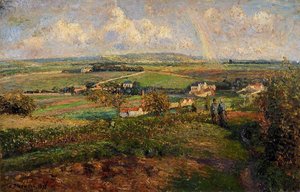
Explore 'After The Rain' by Robert Bruce Crane – an evocative Tonalist landscape painting capturing a post-storm rainbow in impressionistic style. Discover serene nature scenes & American art.
Biografia artysty
A master of the Tonalist movement, Robert Bruce Crane captured the serene beauty of autumn and winter landscapes in works like Snow Scene, inviting you to discover the evocative atmosphere of his timeless oil paintings.
About the painting
Quick facts and art quiz
About Robert Bruce Crane

Robert Bruce Crane
1857 - 1937, United States of America
Biografia artysty
The Ethereal Landscapes of Robert Bruce Crane
In the quiet, mist-laden corners of American art history, few names evoke the serene melancholy of the Tonalist movement as poignantly as Robert Bruce Crane. Born in New York City, Crane’s journey into the heart of landscape painting was shaped by a deep connection to the natural world and an early exposure to the vibrant New York art scene through his father, Solomon Crane. His path was not merely one of spontaneous inspiration but of disciplined refinement; after working briefly as a draftsman in an architect's office, he sought the mentorship of the esteemed Alexander H. Wyant. This apprenticeship laid the foundation for a career defined by a delicate mastery of atmosphere and light, allowing him to transform simple observations of nature into profound emotional experiences.
Crane’s artistic evolution was deeply influenced by his time in Europe, particularly under the guidance of Jean-Charles Cazin at Grez-sur-Loing. This exposure helped him refine a style that would become his hallmark: a Tonalist approach characterized by subtle gradations of color and a focus on mood over meticulous detail. While he was an active member of the prestigious Lyme Art Colony in Connecticut, much of his most evocative work was born from memory. Retreating to his studio in Bronxville, New York, Crane would conjure the essence of the outdoors—the dampness of a post-storm afternoon or the crisp chill of a winter morning—relying on his extensive oil sketches of woods, meadows, and hills to guide his brush.
A Mastery of Season and Light
The true soul of Crane’s oeuvre lies in his devotion to the transitional seasons. He possessed an uncanny ability to capture the fleeting beauty of autumn and winter, often utilizing a palette dominated by soft yellows, earthy tones, and muted greys. His mature works frequently explore the following themes:
- The Golden Glow of Autumn: Many of his pieces, such as Autumn Uplands, celebrate the warmth and texture of falling leaves through a sophisticated use of light.
- Winter’s Solitude: In works like Snow Scene, Crane captures the stillness and contemplative silence of a landscape blanketed in white, evoking a sense of peaceful isolation.
- Atmospheric Transitions: Through paintings like After The Rain, he demonstrates an impressionistic flair, capturing the ephemeral magic of a rainbow emerging from a storm.
His technique was never about the mere depiction of scenery; it was about the capture of a feeling. By utilizing textured brushstrokes and a carefully controlled tonal range, Crane invited viewers into a world where the boundaries between reality and memory blur. His ability to evoke the scent of damp earth or the biting cold of a frost-covered meadow remains his greatest achievement as a painter.
Legacy and Recognition
Throughout his prolific career, Robert Bruce Crane earned significant acclaim within the American art community. He was a respected figure in several prestigious institutions, serving as an associate and later a full academician of the National Academy of Design. His contributions to the arts were recognized through numerous honors, including the Webb Prize from the Society of American Artists and medals at the International Exposition of 1904 in Saint Louis. Beyond his individual accolades, his presence in the Lyme Art Association and his leadership within the Salmagundi Club cemented his status as a pillar of the American Tonalist tradition.
Today, the works of Crane continue to resonate in major collections, such as the Newark Museum and the Florence Griswold Museum, serving as enduring testaments to his ability to find the infinite within the intimate. His legacy is one of quiet strength, reminding us that the most powerful art often speaks in whispers, capturing the fleeting, beautiful moments of the natural world that might otherwise be lost to time.
Quick facts about Robert Bruce Crane
- Artistic Movement Or Style: Tonalism
- Artists Who Influenced This Artist:
- Alexander H. Wyant
- Jean-Charles Cazin
- Full Name: Robert Bruce Crane
- Nationality: American
- Notable Artworks:
- Snow Scene
- Late Autumn
- After The Rain
- Autumn Uplands
- Place Of Birth: New York City, United States of America
- Date Of Birth: 1857
- Date Of Death: 1937
Podobne dzieła


Robert Bruce Crane
After The Rain
() ·
With its frame: · Hand-painted in oil on linen
Total