


 Zobacz w skali 1:1
 Wyślij
 Udostępnij
 Szczegóły
 Przewodnik

 Pobierz plik obrazu
 Podobne obiekty
 RTG
RTG Pokaz slajdów
 Statystyki
La Madrelenita


Experience Robert Henri's 'La Madrelenita,' a captivating 1910 portrait showcasing American Realism. Admire the vibrant colors, intricate details & intimate gaze of this masterpiece from the Ashcan School.
 Czytaj więcej
Robert Henri (1865-1929) – amerykański malarz realizmu, twórca Ashcan School. Portretował życie codzienne z autentycznością i wrażliwością. Wpływowy nauczyciel sztuki.
Giclée / Wydruk artystyczny
Wydruki giclée lub płótna o jakości muzealnej, szybka realizacja i szeroki wybór opcji wykończenia. ( Kup ręcznie malowany obraz Przełącz na wersję cyfrową)




P118B zł10

P118H zł10

P118W zł10

P438Z zł10

P508JH zł12

P508YH zł12

P805H zł10

P805Z zł10

P919BZ zł10

P919G zł10

P919XJ zł10

P959ZH zł10

P968JZ zł12

W106C zł8

W218G zł10

W218JH zł8

W218Y zł10

W307PJ zł10

W316G zł10

W316PJ zł8

W316Y zł10

W398PJ zł8

W4111J zł10

W500HY zł15

W500JH zł15

W692G zł12

W849H zł8

W940BG zł15

W953PJ zł8




Standardowy
na zamówienie
CM
INCH
Wybierz spośród naszych standardowych rozmiarów, które zachowują oryginalne proporcje dzieła sztuki.
Loading sizes...

szerokość
wysokość
Możesz wprowadzić własne wymiary, aby dopasować dzieło do konkretnej ramy lub przestrzeni. Jeśli wybrany rozmiar nie będzie odpowiadał proporcjom oryginalnego obrazu, przytniecie dzieło lub rozszerzymy obraz za pomocą odbicia lustrzanego lub jednolitego wypełnienia krawędzi. Przed rozpoczęciem produkcji prześlemy cyfrową wizualizację do Twojej akceptacji.
Prosimy pamiętać, że podgląd na ekranie nie odzwierciedla faktycznego przycinania ani rozszerzania. Tylko wizualizacja dokładnie pokaże końcową kompozycję.
Mimo dostępności niestandardowych rozmiarów, zalecamy wybór wymiaru z listy zdefiniowanej, aby zachować oryginalne proporcje.
Dostawa na cały świat () w ciągu 2 tygodni zamiast standardowych 4/5 tygodni. (13 Październik)

Bezpłatna ekspresowa wysyłka na cały świat

Wysokiej jakości płótno lniane

Pełne ubezpieczenie transportowe

Gwarancja zwrotu należności celnych i podatków importowych

Gwarancja idealnego odwzorowania barw

100-dniowy okres na zwrot dzieła w przypadku wykrycia wad produkcyjnych

Gwarancja 100% zwrotu pieniędzy

Oferta przy zakupie wielu sztuk
 Opcja ze szkłem jest dostępna wyłącznie w rozmiarach poniżej 110 cm

La Madrelenita
Giclée / Wydruk artystyczny
Rozmiar reprodukcji
-


Suma do zapłaty
zł 257
La Madrelenita: A Glimpse into Early 20th Century American Realism
Robert Henri's "La Madrelenita," created in 1910, stands as a compelling example of American realism and a testament to Henri’s dedication to portraying everyday life with honesty and vitality. This oil on canvas portrait, currently residing within the esteemed collection of the Telfair Museum of Art, offers viewers an intimate encounter with a young woman whose gaze holds both confidence and a touch of melancholy.
Subject and Composition
The painting depicts a close-up portrait of a young woman, likely in her late teens or early twenties. She is elegantly dressed in a striking red dress adorned with green and gold embellishments, indicative of the fashion trends of the era. Her long hair is meticulously styled into a bun, further emphasizing her refined appearance. A delicate gold necklace graces her neck, adding a subtle touch of luxury to the composition. Henri’s masterful use of light and shadow sculpts her features, highlighting the contours of her face and the intricate details of her clothing. The woman's direct gaze engages the viewer, creating an immediate sense of connection and inviting contemplation about her inner world.
Artistic Style and Technique
Henri’s artistic style is characterized by bold brushstrokes and a vibrant color palette, hallmarks of the Ashcan School movement he helped pioneer. In "La Madrelenita," these techniques are employed to create a sense of depth and dimensionality. The warm colors—particularly the rich reds and golds—imbue the painting with energy and vibrancy. Henri’s use of visible brushstrokes adds texture and dynamism, preventing the portrait from appearing static or overly polished. He skillfully captures the nuances of light reflecting on her skin and clothing, demonstrating his keen observational skills and technical proficiency. The composition is carefully balanced, drawing the viewer's eye to the woman's face while still appreciating the details of her attire.
Historical Context and Symbolism
"La Madrelenita" was painted during a period of significant social change in America. The Ashcan School emerged as a reaction against the idealized and often sentimental subjects favored by traditional academic art. Henri and his contemporaries sought to depict the realities of urban life, including its grit and beauty. The painting’s setting—likely Spain, where Henri traveled extensively—adds another layer of cultural richness. The red dress, historically associated with passion, royalty, or even revolution, could symbolize the woman's inner strength and spirit. Her direct gaze suggests a sense of self-assurance and independence, challenging conventional notions of femininity prevalent at the time. Henri’s choice to portray an ordinary individual rather than a prominent figure reflects his commitment to celebrating the dignity and beauty of everyday people.
Emotional Impact and Legacy
“La Madrelenita” evokes a range of emotions in the viewer, from admiration for the woman's poise to curiosity about her story. The painting’s intimate scale and direct gaze create a sense of immediacy, drawing the viewer into a personal connection with the subject. Henri’s ability to capture not only physical likeness but also an underlying emotional depth is what makes this portrait so compelling. As a key work within the Ashcan School, "La Madrelenita" continues to inspire artists and art lovers alike, serving as a powerful reminder of the importance of portraying life with honesty, authenticity, and compassion.
Pytania i odpowiedzi
Gdzie mogę kupić cyfrowy obraz dzieła „La Madrelenita” autorstwa Robert Henri?
„La Madrelenita” jest dostępny jako wysokiej rozdzielczości cyfrowe zdjęcie do pobrania, zakupiony bezpośrednio na ta strona.
Do jakiego nurtu artystycznego należy „La Madrelenita” autorstwa Robert Henri?
„La Madrelenita” to dzieło należące do nurtu American Realism. Nurt ten określa tradycję artystyczną, w której osadzone jest dzieło.
Jakie emocje budzi "La Madrelenita" jako prezent?
"La Madrelenita" niesie ze sobą Reflective nastrój, a zarekomendowany pomysł na prezent to Birthday.
W jaki sposób technika i ruch łączą się w "La Madrelenita"?
"La Madrelenita" powstało przy użyciu Oil On Canvas, w stylu American Realism.
Z jakim etapem kariery Robert Henri odpowiada data 1910 dla dzieła „La Madrelenita”?
"La Madrelenita", powstałe w 1910, należy do Mature Period w twórczości Robert Henri.
Czy mogę zobaczyć „La Madrelenita” autorstwa Robert Henri na własnej ścianie przed zakupem?
Strona Podgląd AR dzieła „La Madrelenita” autorstwa Robert Henri wykorzystuje rozszerzoną rzeczywistość, aby pokazać obraz w Twojej własnej przestrzeni za pomocą kompatybilnego urządzenia.
Czy „La Madrelenita” autorstwa Robert Henri to jasne czy ciemne dzieło?
Postrzegana jasność dzieła „La Madrelenita” autorstwa Robert Henri wynosi deep_shadow. Można ją dopasować do oświetlenia w docelowym pomieszczeniu.
W jakim rozmiarze zaleca się wydruk dzieła "La Madrelenita"?
Zalecanym rozmiarem wydruku dla dzieła "La Madrelenita" jest Medium. Dostępne są również inne rozmiary o tych samych proporcjach.
Podobne dzieła


Biografia artysty
A Turbulent Genesis: The Early Life of Robert Henri
Robert Henri, born Robert Henry Cozad in Cincinnati, Ohio, in 1865, carried within him from the outset a sense of displacement and reinvention that would profoundly shape both his life and art. His childhood was far from idyllic; shadowed by the volatile relationship between his father, John Jackson Cozad—a man of ambition and risk as a gambler and real estate developer—and his mother, Theresa Gatewood Cozad. This instability culminated in a dramatic event in 1882: a fatal shooting over a land dispute that forced the family into flight, adopting new identities to escape retribution. Young Robert became Robert Henri, a deliberate severing from a past fraught with conflict and a symbolic rebirth as an artist. The westward journey through Nebraska and Colorado, culminating in a settling in New York City and then Atlantic City, instilled within him a deep empathy for those living on the fringes of society—an empathy that would become a defining characteristic of his artistic vision. This early experience of upheaval and reinvention fostered a spirit of independence and a commitment to portraying life as it truly was, unburdened by convention or societal expectation.Forging a New Vision: Artistic Development and Influences
Henri’s formal artistic education began at the Pennsylvania Academy of the Fine Arts in Philadelphia under Thomas Anshutz, where he honed his technical skills. However, it was his subsequent journey to Paris in 1888 that truly ignited his artistic awakening. Initially drawn to the academic tradition at the Académie Julian and influenced by masters like William-Adolphe Bouguereau and François Millet, Henri gradually gravitated towards Impressionism. Yet, he wasn’t content with merely replicating what he saw; he sought a more profound engagement with reality—a way to capture not just the fleeting effects of light but also the raw emotion and vitality of modern life. This quest led him to embrace a bolder, more direct approach, influenced by the Dutch Realist Franz Hals, whose loose brushwork and psychological insight resonated deeply with Henri’s own artistic sensibilities. He began experimenting with *pochades*, small wood panels used for quick sketches, encouraging spontaneity and immediacy in his work. Returning to America, he became a dedicated teacher, imparting not just technique but also a philosophy of art rooted in observation, honesty, and individual expression.Championing the Real: The Ashcan School and “The Eight”
Robert Henri’s impact on American art extended far beyond his own canvases; he became a catalyst for change, challenging the conservative norms of the established art world. He was a central figure in the emergence of the Ashcan School—a group of artists who dared to depict the gritty realities of urban life, from bustling city streets to crowded tenements. Henri’s commitment to realism and his rejection of academic pretension led him to organize “The Eight” in 1908—a collective of like-minded artists including William Glackens, George Luks, Everett Shinn, and John Sloan—who staged an independent exhibition as a direct protest against the restrictive policies of the National Academy of Design. This act of defiance was a watershed moment in American art history, signaling a shift away from European dominance and towards a uniquely American artistic voice. Henri’s paintings during this period, such as “Woman in Manteau” (1899) and his evocative portraits, captured the dignity and resilience of ordinary people, offering a powerful counterpoint to the idealized representations favored by the establishment.Legacy and Enduring Influence
Robert Henri’s influence on subsequent generations of American artists is immeasurable. As a teacher, he mentored a remarkable roster of talent, including Joseph Stella, Edward Hopper, Rockwell Kent, George Bellows, Norman Raeben, Louis D. Fancher, and Stuart Davis—artists who would go on to shape the course of 20th-century art. His book, *The Art Spirit*, published posthumously in 1923, remains a seminal text for aspiring artists, offering timeless wisdom on observation, technique, and the importance of artistic integrity. *Henri’s commitment to portraying life with honesty and empathy*, his rejection of convention, and his unwavering belief in the power of art to connect with audiences continue to inspire artists today. His paintings are not merely representations of reality; they are windows into the human condition—testaments to the beauty, struggle, and resilience of the human spirit. He left an indelible mark on American Realism, paving the way for a more democratic and inclusive art world that celebrated the everyday experiences of ordinary people. His legacy endures not only through his own masterful works but also through the countless artists he inspired to find their own voices and tell their own stories.
Robert Henri
1865 - 1929 , Stany Zjednoczone
Najważniejsze informacje
- Artistic Movement Or Style: Ashcan School, Realizm
- Artists Or Movements Influenced By This Artist:
- Edward Hopper
- The Eight
- Artists Who Influenced This Artist:
- William-Adolphe Bouguereau
- François Millet
- Date Of Birth: 24 czerwca 1865
- Date Of Death: 12 lipca 1929
- Full Name: Robert Henry Cozad
- Nationality: Amerykański
- Notable Artworks:
- Kobieta w mantie
- La Neige
- Sissy w żółci
- Place Of Birth: Cincinnati, USA
Zobacz także powiązane artykuły

Capturing the Light: A Journey Through the Soul of American Impressionism and the Hudson River School
Explore the luminous beauty of American Impressionism and the Hudson River School. Discover a curated journey through light, landscape, and history, celebrating the enduring legacy of masters through exquisite, hand-painted oil reproductions for the discerning art lover.

Capturing the Soul of Nature: A Journey Through the Sublime Majesty of American Romanticism
Explore the breathtaking beauty of American Romanticism. Discover how Hudson River School masters captured the sublime spirit of the wilderness through luminous oil landscapes and emotional depth. A journey into the soul of nature for the true art enthusiast.
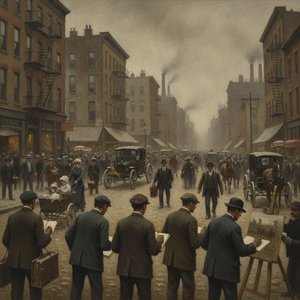
The Ashcan School: Capturing the Raw, Unfiltered Soul of Urban Life through American Realism
Discover the raw beauty of the Ashcan School. Explore how masters like Bellows and Henri captured the gritty, vibrant soul of early 20th-century New York through profound American Realism and evocative urban landscapes.

The Unvarnished Truth: A Cultural Journey Through the Soul of American Realism
Explore the profound beauty of American Realism. From the Ashcan School's urban grit to intimate portraits, discover how artists captured the authentic soul of a nation through unvarnished truth and masterful observation.
Odkryj dzieła sztuki uporządkowane według tematów, stylów i cech charakterystycznych.
