


 Zobacz w skali 1:1
 Wyślij
 Udostępnij
 Szczegóły
 Przewodnik

 Pobierz plik obrazu
 Podobne obiekty
 RTG
RTG Pokaz slajdów
 Statystyki
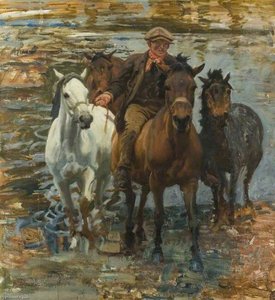
The Ford
 Acrylic On Canvas
- WallArt
- Newlyn School
 19th Century
 139.0 x 165.0 cm
 Wolverhampton Art Gallery
Experience 'The Ford' by Sir Alfred Munnings – a captivating 1910 painting of a man and horses navigating floodwaters. A stunning depiction of rural England’s adventurous spirit, rendered in rich detail.
 Czytaj więcej
Sir Alfred Munnings – wybitny malarz koni i krajobrazów angielskich. Jego obrazy uchwyciły romantyzm wsi, tradycję polowań i wspaniałość zwierząt. Pasjonat sztuki klasycznej.
Kup wysokiej rozdzielczości, ulepszony obraz cyfrowy o jakości znacznie przewyższającej podgląd online.
Każdy plik jest starannie przygotowywany przez naszych specjalistów przy użyciu zaawansowanych narzędzi oraz profesjonalnej, ręcznej retuszy. Dbamy o to, aby każdy obraz cechował się wyjątkową ostrością, precyzyjnym odwzorowaniem kolorów i subtelnymi detalami.
Ostateczny plik dostarczany jest drogą mailową w ciągu 72 godzin, zoptymalizowany do natychmiastowego wykorzystania w profesjonalnych zastosowaniach redakcyjnych i poligraficznych. To ta sama jakość, której ufają czołowe studia projektowe, wydawnictwa oraz galerie sztuki.
Obraz cyfrowy
Pobierz plik o wysokiej rozdzielczości do osobistego użytku, druku oraz projektów kreatywnych. ( Przełącz na wersję drukowaną Kup ręcznie malowany obraz)
W każdym zamówieniu na obraz cyfrowy znajduje się
Profesjonalna dostawa cyfrowa z gwarancją
Wybierając TopImpressionists.com, nie otrzymujesz jedynie obrazu – otrzymujesz profesjonalnie udoskonalone cyfrowe dzieło sztuki, stworzone z najwyższą precyzją i objęte gwarancją satysfakcji. Oto wszystko, co automatycznie dołączane jest do Twojego zamówienia:

Błyskawiczna dostawa e-mailowa
Plik z obrazem cyfrowym w wysokiej rozdzielczości zostanie przesłany na Twój adres e-mail w ciągu 72 godzin od złożenia zamówienia – gotowy do natychmiastowego użycia.

Plik cyfrowy ulepszony przez AI
Twoja grafika została profesjonalnie zoptymalizowana przy użyciu zaawansowanych narzędzi AI oraz ręcznej edycji, co zapewnia maksymalną szczegółowość, klarowność i wierność kolorów.

Bezpłatna dożywotnia ponowna dostawa
Przypadkowo usunąłeś lub zgubiłeś swój plik? Bez obaw – prześlemy go Tobie ponownie w dowolnym momencie, bez żadnych opłat.

Bez opłat importowych – zawsze
Ciesz się swoją sztuką natychmiast, bez żadnych opłat celnych, należności ani kosztów dostawy – pliki cyfrowe są zawsze wolne od podatku.

Gwarancja odwzorowania kolorów
Dzięki zastosowaniu profesjonalnych narzędzi i procesów zarządzania barwą zapewniamy, że Twoje cyfrowe zdjęcie odzwierciedla oryginalne kolory tak wiernie, jak to tylko możliwe.

100 dni na satysfakcję
Jeśli nie będziesz zadowolony ze swojego cyfrowego obrazu, poprawimy go lub zwrócimy 100% kosztów w ciągu 100 dni – bez zbędnych pytań.

100% Gwarancja zwrotu pieniędzy
Nie jesteś zadowolony? Otrzymaj pełny zwrot kosztów w ciągu 100 dni od otrzymania pliku cyfrowego – bez zbędnych pytań.

Rabaty przy zamówieniach hurtowych
Kup 3 obrazy, oszczędź 10% - Kup 5, oszczędź 15% - Kup 10+, oszczędź 20%. Idealne do projektów kreatywnych, galerii i agencji.
A Moment Frozen in Time: The Ford by Sir Alfred Munnings
Sir Alfred James Munnings’s “The Ford,” painted in 1910, isn't merely a depiction of horses and riders; it’s a vibrant snapshot of a vanishing world – the heartland of rural England on the cusp of profound change. More than just a landscape painting, it’s an immersive experience, transporting the viewer to a flooded field teeming with life, action, and a palpable sense of camaraderie. Munnings, a master of capturing the essence of equine grace and the spirit of the countryside, skillfully renders this chaotic scene with remarkable precision and emotional depth.
The painting immediately draws the eye to the central figure on horseback, a man confidently leading a group through the turbulent waters. His posture exudes authority and leadership, while his attire – a crisp tie against the muddy backdrop – subtly anchors him in a world of gentlemanly pursuits. The horses themselves are rendered with breathtaking realism; each muscle flexes, each stride is captured with an almost photographic accuracy. Munnings’s ability to convey the power and movement of these animals is truly remarkable, highlighting their vital role within this community.
The Painter's Technique: Impressionism Meets Equestrian Detail
Munnings’s style seamlessly blends elements of Impressionism with his deep understanding of horses. He employs loose brushstrokes and a vibrant palette – dominated by earthy browns, greens, and blues – to create an atmosphere of immediacy and dynamism. The water itself is depicted not as a static element but as a swirling vortex of color and movement, reflecting the light and adding to the sense of unrestrained energy. Notice how he uses broken color to suggest depth and texture, particularly in the wet ground and the flowing garments of the riders.
The painting’s composition is carefully constructed to draw the viewer into the scene. The diagonal lines created by the horses and riders lead the eye across the canvas, while the use of atmospheric perspective – with distant figures appearing paler and less distinct – reinforces the sense of depth. Munnings' meticulous attention to detail extends beyond the horses; he captures the expressions on the faces of the riders, conveying a range of emotions from determination to amusement.
A Window into a Disappearing World
“The Ford” offers more than just a beautiful landscape; it’s a poignant reminder of a bygone era. Painted in 1910, the scene depicts a time when rural life was deeply intertwined with agriculture and hunting – activities that were increasingly threatened by industrialization and urbanization. The flooded field itself speaks to the unpredictable nature of the countryside, highlighting its vulnerability to the elements.
The painting’s historical context is crucial to understanding its significance. Munnings was a staunch defender of traditional rural values, and his work often served as a visual chronicle of a disappearing way of life. “The Ford” captures this sentiment perfectly, offering a glimpse into a world where horses were not just animals but essential partners in the daily rhythms of life. The painting’s enduring appeal lies in its ability to evoke a sense of nostalgia for a time when community and connection with nature held greater importance.
Symbolism and Emotional Resonance
Beyond its technical brilliance, “The Ford” is rich in symbolism. The flooded field represents both challenge and opportunity – a test of skill and resilience. The central figure on horseback embodies leadership and determination, while the other riders represent community and shared experience. The painting’s overall mood is one of optimism and camaraderie, suggesting that even amidst adversity, there is always reason for hope.
Ultimately, “The Ford” is a powerful testament to Munnings' artistic vision and his ability to capture the essence of rural England. It’s a timeless masterpiece that continues to resonate with viewers today, reminding us of the beauty and importance of preserving our cultural heritage.
Podobne dzieła




Biografia artysty
A Life Immersed in Equine Grace
Sir Alfred James Munnings, a name inextricably linked to the vibrant depiction of horses and the romantic allure of rural England, occupies a pivotal position within 20th-century British art. Born in 1878 amidst the rolling landscapes of Suffolk, his life was profoundly shaped by an enduring connection with the equine world – a bond that would define his artistic vision and propel him to prominence. Munnings wasn’t simply recording what he saw; he was preserving a feeling, an atmosphere, a world poised on the brink of irreversible change. He captured a vanishing way of life, a keenly observed portrait of Britain steeped in tradition, hunting, and the rhythms of the countryside. His work stands as a testament to his deep appreciation for the beauty of the English landscape and the magnificent creatures that inhabit it.From Rural Beginnings to Artistic Development
Munnings’s artistic journey began not within the formal confines of an academy, but in the practical world of a Norwich printing house. This apprenticeship honed his skills in design and observation while simultaneously allowing him to pursue studies at the Norwich School of Art. It was a formative period, instilling a discipline that would serve him well as he navigated the challenges of establishing himself as an artist. Early influences included the plein air painters of the Newlyn School in Cornwall, where he embraced their commitment to capturing light and atmosphere directly from nature. This immersion in Impressionistic techniques laid the groundwork for his signature style – loose brushwork, a vibrant palette, and a palpable sense of movement. His early works often depicted rural scenes, particularly those featuring gypsies and horses roaming the Suffolk countryside, imbued with a romantic sensibility that showcased his growing mastery of color and light. These paintings weren’t merely representations; they were expressions of a deep affection for the land and its inhabitants. The influence of artists like Frederic Leighton is evident in the idealized beauty of some of these early works, yet Munnings quickly developed his own distinctive style, prioritizing observation and capturing the essence of rural life over strict academic conventions.War, Recognition, and a Champion of Tradition
The First World War profoundly shaped both Munnings's artistic perspective and his public profile. Though initially deemed unfit for combat, he served as an official war artist with the Canadian Cavalry Brigade, documenting the vital role horses played in the conflict. This experience brought him face-to-face with the harsh realities of war – the suffering, the loss, and the enduring bond between humans and animals. His paintings from this period are not glorifications of battle, but poignant reflections on sacrifice and resilience, capturing a somber beauty amidst devastation. The images he produced during this time are considered some of his most powerful and emotionally resonant works. Following the war, Munnings’s reputation soared. Prestigious commissions poured in, allowing him to acquire Castle House, a magnificent estate in Dedham, Essex – a property that would become both his home and studio for the remainder of his life. He became a sought-after portraitist, capturing the likenesses of prominent figures from the aristocracy and racing world. His ability to convey not only physical resemblance but also character and spirit cemented his reputation as one of Britain’s leading artists. However, Munnings was also a staunch defender of traditional artistic values, often expressing his views with passionate conviction.A Controversial Voice and Enduring Legacy
Munnings's artistic philosophy was deeply rooted in tradition, and he became a vocal critic of the burgeoning modernist movements that were challenging conventional notions of art. His famous – and often controversial – 1949 BBC radio broadcast saw him launch a scathing attack on Cubism and Surrealism, delivered with characteristic candor (and reportedly fueled by alcohol). While his remarks sparked outrage among proponents of modern art, they also resonated with those who valued representational painting and the enduring power of artistic skill. He wasn’t simply resisting change for its own sake; he believed in the importance of preserving artistic standards and celebrating beauty in its traditional forms. This conviction culminated in his election as President of the Royal Academy in 1944, a position he held until 1949, solidifying his status within the British art establishment. He was knighted Bachelor in 1944 and appointed a Knight Commander of the Royal Victorian Order in 1947, further acknowledging his contributions to the nation’s cultural life. Sir Alfred James Munnings left behind a vast and compelling body of work that continues to captivate audiences today. His paintings offer a window into a bygone era – a world of horses, hunting, and rural landscapes that has largely disappeared. The Munnings Art Museum, established by his wife Violet at Castle House, serves as a testament to his enduring legacy, preserving his art and providing a space for future generations to appreciate his unique vision. Beyond the technical brilliance of his paintings, it is Munnings’s ability to evoke emotion that truly sets him apart. He captured not just the physical beauty of horses, but also their spirit, their power, and their connection to the human heart. His work remains a powerful reminder of the enduring appeal of representational painting and the importance of preserving artistic traditions in an ever-changing world.Major Achievements
- Royal Academy President: Elected President of the Royal Academy in 1944, serving until 1949.
- Knighthood: Knighted Bachelor in 1944 and appointed a Knight Commander of the Royal Victorian Order in 1947.
- War Artist Commissions: Recognized for his work documenting the Canadian Cavalry during WWI.
- Sculptural Work: Created sculptures, including an equestrian statue of Edward Horner.

Alfred Munnings
1878 - 1959 , Wielka Brytania
Najważniejsze informacje
- Artistic Movement Or Style: Impressionizm
- Artists Or Movements Influenced By This Artist: ['Nowoczesność']
- Artists Who Influenced This Artist: ['Piotrowie Szkoła']
- Date Of Birth: 1878
- Date Of Death: 1959
- Full Name: Sir Alfred James Munnings
- Nationality: Brytyjski
- Notable Artworks:
- The Fancy Dress Ball
- A Piper
- Sky Study -
- Place Of Birth: Mendham Township, UK