

 Podgląd w skali 1:1
 Wyślij jako kartkę
 Udostępnij
 Szczegóły dzieła
 Przewodnik

 Pobierz obraz
 Podobne obiekty
 RTG
RTG Pokaz slajdów
 Q&A
Q&A Statystyki
T. G. Arthur


Admire Sir John Lavery's 'T. G. Arthur,' a striking portrait capturing the distinguished figure of a military officer. Experience the elegance and authority conveyed through masterful brushstrokes and a captivating composition.
 Rozwiń treść
Sir John Lavery (1856-1941): Irlandzki malarz portretowy, znany z obrazów Edwardowskiej arystokracji i scen wojennych. Pod wpływem Whistlera, kluczowa postać brytyjskiej sztuki.
Giclée / Wydruk artystyczny
Wydruki giclée lub płótna o jakości muzealnej, szybka realizacja i szeroki wybór opcji wykończenia. ( Zamów ręcznie malowaną reprodukcję Przejdź do wersji cyfrowej)




P118B zł10

P118H zł10

P118W zł10

P438Z zł10

P508JH zł12

P508YH zł12

P805H zł10

P805Z zł10

P919BZ zł10

P919G zł10

P919XJ zł10

P959ZH zł10

P968JZ zł12

W106C zł8

W218G zł10

W218JH zł8

W218Y zł10

W307PJ zł10

W316G zł10

W316PJ zł8

W316Y zł10

W398PJ zł8

W4111J zł10

W500HY zł15

W500JH zł15

W692G zł12

W849H zł8

W940BG zł15

W953PJ zł8




Standardowy format
personalizowane
CM
INCH
Wybierz spośród naszych standardowych rozmiarów, które zachowują oryginalne proporcje dzieła sztuki.
Loading sizes...

szerokość
wysokość
Wpisz wymaganą szerokość i wysokość, aby dopasować grafikę do ramy lub ściany. Wydruk można jedynie przyciąć, nigdy nie powiększając go poza oryginalny obraz, dlatego format o innych proporcjach spowoduje utratę części kompozycji. Przed rozpoczęciem druku prześlemy Ci cyfrowy podgląd do zatwierdzenia. Obraz wyświetlany na tej stronie nie pokazuje rzeczywistego przycięcia — jedynie podgląd oddaje ten efekt.
Dostawa na cały świat () w ciągu 2 tygodni zamiast standardowych 4/5 tygodni. (1 Listopad)

Bezpłatna ekspresowa wysyłka na cały świat

Wysokiej jakości płótno lniane

Pełne ubezpieczenie przesyłki

Gwarancja zwrotu należności celnych i podatków importowych

Gwarancja wiernego odwzorowania kolorów

100-dniowa polityka zwrotów (tylko w przypadku wad)

Gwarancja 100% zwrotu pieniędzy

Zniżka przy zakupie wielu sztuk
 Opcja ze szkłem jest dostępna wyłącznie w rozmiarach poniżej 110 cm

T. G. Arthur
Giclée / Wydruk artystyczny
Wymiary reprodukcji
-


Cena całkowita
zł 268
The Commanding Presence: Sir John Lavery’s T.G. Arthur
Sir John Lavery's 1890 portrait of Thomas George Arthur, a prominent figure in British military and colonial administration, is more than just a likeness; it’s a carefully constructed tableau of authority, confidence, and the subtle complexities of Victorian society. Painted during a period of significant imperial expansion and burgeoning social reform, the painting captures Arthur not merely as a man, but as an embodiment of the power and responsibility held within the British Empire. Lavery, deeply embedded in the Glasgow School movement yet increasingly influenced by Parisian Impressionism, masterfully blends realistic detail with a loose, evocative brushstroke – a technique that breathes life into the subject while simultaneously hinting at the artist’s own evolving style.
- Subject and Context: T.G. Arthur (1840-1907) served as Chief Secretary for Ireland from 1886 to 1888, a role marked by considerable political tension and ultimately unsuccessful attempts at reconciliation with Irish nationalists. His position demanded both strategic acumen and a measured approach, qualities subtly conveyed in the portrait’s composition. The backdrop, deliberately blurred and indistinct, suggests a vastness of responsibility – mirroring the expansive reach of the British Empire under his stewardship.
- Lavery's Technique: Notice the interplay of light and shadow, characteristic of Lavery’s approach. He employs broken brushstrokes to create a sense of movement within Arthur’s uniform, suggesting both military precision and underlying energy. The muted palette – dominated by browns, blues, and greys – reinforces the seriousness of the subject while preventing the portrait from becoming overly formal or static.
Decoding the Symbolism: Uniform, Gesture, and Gaze
Beyond mere representation, Lavery imbues the painting with layers of symbolic meaning. Arthur’s military uniform, meticulously rendered, is not simply a garment; it's a visual shorthand for his role as a soldier and administrator – a symbol of order, discipline, and control. The gold stripe on his sleeve, a clear indicator of rank, subtly elevates him within the social hierarchy. However, Lavery doesn’t present Arthur as an unapproachable figure of absolute power. Instead, he captures a moment of relaxed contemplation, with Arthur’s hand resting casually on his hip and his gaze directed directly at the viewer. This direct engagement invites a connection, suggesting a willingness to engage in dialogue – a surprisingly human element within this portrait of authority.
The subtle tilt of Arthur's head adds an air of intelligence and perhaps even a hint of weariness, reflecting the burdens of his position.A Window into Victorian Society
To understand Lavery’s portrait fully, it’s crucial to consider the broader social context of 1890. The Victorian era was characterized by rapid industrialization, imperial expansion, and a complex interplay of social classes. Portraits like this were not merely commissioned; they served as powerful statements of status and influence within a society obsessed with appearances. Lavery's skill lies in his ability to capture the essence of this era – its formality, its ambition, and its underlying anxieties – all within the confines of a single canvas.
- The Glasgow School Influence: While rooted in the realism of the Glasgow School, Lavery’s work increasingly embraced Impressionistic techniques, particularly his use of light and color. This fusion reflects the artistic currents of the time – a blending of traditional academic training with modern experimentation.
- Social Commentary: The portrait can be interpreted as a subtle commentary on the role of the British Empire in Ireland. Arthur’s position as Chief Secretary highlights the complexities of colonial administration and the ongoing tensions between Britain and its Irish subjects.
Collecting a Legacy: Reproduction and Appreciation
TopImpressionists offers meticulously crafted hand-painted reproductions of Sir John Lavery's “T.G. Arthur,” ensuring that this significant work of art is accessible to collectors and enthusiasts worldwide. Each reproduction captures the nuances of Lavery’s original technique, faithfully recreating the painting’s evocative atmosphere and symbolic depth. Whether adorning a study or a grand salon, this portrait remains a compelling testament to Victorian power, diplomacy, and the enduring legacy of Sir John Lavery.
Pytania i odpowiedzi
Czy dzieło „T. G. Arthur” autorstwa John Lavery znajduje się w domenie publicznej i dlaczego?
Dzieło "T. G. Arthur" autorstwa John Lavery znajduje się w należy do domeny publicznej – autorskie prawa majątkowe wygasły. Okres ochrony praw autorskich liczony jest od daty śmierci artysty, a John Lavery zmarł(a) w 1941.
Jaki nastrój emocjonalny budzi „T. G. Arthur” – John Lavery?
„T. G. Arthur” budzi Nostalgic emocje. Ton emocjonalny opisuje wrażenie, jakie wywołuje to dzieło.
Gdzie mogę znaleźć przewodnik do "T. G. Arthur"?
Przewodnik po "T. G. Arthur" to strona Karta informacyjna dla uczniów dzieła sztuki – nadrukowalna karta informacyjna zawierająca opis utworu, informacje o autorstwie oraz tabelę danych (artysta, daty, technika, wymiary oryginału, kolekcja).


Biografia artysty
A Life Immersed in Portraiture and Society
Sir John Lavery, urodzony w Belfaście w 1856 roku, był malarzem, który z niezwykłą wrażliwością uchwycił ducha swojej epoki – ery zarówno luksusowej angielskiej arystokracji, jak i ponurych realiów wojny. Jego podróż od skromnych początków do bycia jednym z najbardziej poszukiwanych portrecistów w Wielkiej Brytanii jest świadectwem jego talentu, ambicji i umiejętności nawigowania po złożonych prądach społecznych tamtych czasów. Poświecony na początku życia sierotem, Lavery znalazł się w Szkocji, gdzie otrzymał podstawowe wykształcenie w Haldane Academy w Glasgow w latach 70. XIX wieku. To pierwsze zetknięcie z sztuką zapaliło w nim pasję, która doprowadziła go do dalszych studiów w Académie Julian w Paryżu na początku XX wieku, zanurzając go w sercu europeńskiej innowacji artystycznej. Po powrocie do Glasgow Lavery szybko związał się z wpływowym ruchem szkockiej szkoły, absorbując jego estetyczne zasady i nawiązując kontakty, które ukształtowały jego wczesny rozwój. Kluczowym momentem okazało się 1888 rok, kiedy to otrzymał prestiżowe zlecenie: namalowanie wizyty Królowej Wiktorii w Glasgow International Exhibition. To wydarzenie nie tylko przyniosło mu zawodowy sukces, ale także sygnalizowało jego wejście do kręgu wyższych sfer i spowodowało przeniesienie do Londynu krótko po tym. Zlecenie to nie było jedynie triumfem zawodowym; oznaczało również, że Lavery stał się malarzem zdolnym nie tylko do odwzorowywania wyglądu, ale także do oddawania majestatu i autorytetu swoich podmiotów.Wpływy i Rozwój Artystyczny
Sensybilność artystyczna Lavery została głęboko ukształtowana przez kilka kluczowych wpływów, przede wszystkim Jamesa McNeilla Whistlera. Podziwiał nacisk Whistlera na harmonię tonalną, efekty atmosferyczne i wyrafinowaną wrażliwość estetyczną – cechy, które stały się znakiem rozpoznawczym jego własnego stylu. Wpływ ten jest widoczny w delikatnej fakturze pędzla i subtelnych paletach kolorów obecnych we wszystkich jego dziełach. Poza Whistlerem Lavery uczył się od impresjonizmu francuskiego, wprowadzając elementy jego przerwanych kolorów i nacisku na uchwycenie ulotnych chwil światła. Jednak nigdy nie przyjął w pełni radykalnego oddalenia od tradycyjnej formy charakterystycznego dla impresjonistów; zamiast tego zsyntetyzował te wpływy w unikalny styl, który łączył elegancję z nowoczesnością. Jego wczesne prace często przedstawiały sceny z życia codziennego i krajobrazy, ale jego biegłość w portrecie zapewniła mu prawdziwą renomę. Lavery posiadał niezwykłą zdolność do uchwycenia esencji swoich podmiotów – ich osobowości, statusu społecznego i wewnętrznych przeżyć – na płótnie. Umiejętnie łączył techniki impresjonistyczne z czujnym okiem na szczegóły, tworząc portrety, które były zarówno estetycznie przyjemne, jak i psychologicznie wnikliwe. Nie ograniczał się do odwzorowywania wyglądu; interpretował charakter.Wojenne Depcje i Rozpoznanie Narodowe
Wybuch I wojny światowej dodał nowym wymiarom praktyki artystycznej Lavery. Podobnie jak William Orpen, został mianowany oficjalnym malarzem wojennym, powierzono mu zadanie dokumentowania konfliktu. Jednak przewlekła choroba i przerażający wypadek samochodowy – konsekwencja nalotu niemieckich samolotów – uniemożliwiły mu służbę na Froncie Zachodnim. Nie zrażony Lavery skupił swoje uwagi na scenach w Wielkiej Brytanii, przedstawiając atmosferę życia w czasie wojny poprzez obrazy łodzi, samolotów i samolotów rozpoznawczych. Te prace oferują unikalną perspektywę na wysiłek wojenne, koncentrując się nie na koszmarach oblężonych fortyfikacji, ale na technicznych postępach i wyzwaniach logistycznych, które definiowały konflikt na terenie kraju. Po zakończeniu wojny jego wkład został formalnie uznany za tytuł szlachecki oraz przyjęcie do Royal Academy of Arts. Jego życie stało się coraz bardziej splątane z życiem elit społecznych, szczególnie rodziny Asquithów. Spędzał sporo czasu w ich rezydencji nad Tamizą, tworząc portrety i idylliczne sceny, które oferowały spojrzenie na ich przywilegiowy świat. Lavery również zaangażował się w burzliwe wydarzenia związane z niezależnością Irlandii, zapewniając swój dom londyński jako neutralne miejsce do prowadzenia kluczowych negocjacji traktatu.Dziedzictwo i Trwały Wpływ
Dziedzictwo Sir Johna Lavery wykracza poza jego imponujący dorobek artystyczny. Był postacią charakteryzującą się niezwykłą charyzmą, która z łatwością przemieszczała się między kręgiami artystycznymi a elitami społecznymi, stając się symbolem dynamiki kulturowej tamtej epoki. Jego portrety są nadal cenione za elegancję, umiejętność techniczną i wnikliwe charakterystyki. Zauważalnie jego alegoryczna postać Irlandii pojawiła się na banknotach irlandzkich od 1928 roku do 1975 roku – świadectwo trwałego znaczenia narodowego. Lavery’s artistic style, characterized by its blend of Impressionistic techniques and meticulous detail, continues to inspire artists today. His ability to capture the essence of his subjects, combined with his mastery of light and color, ensures that his work will continue to captivate audiences for generations to come. He was a painter who not only documented his time but also helped define it, leaving an indelible mark on British art history.Kluczowe Cechy Jego Sztuki
- Techniki impresjonistyczne: Wprowadził elementy impresjonizmu do swojej twórczości, szczególnie w zakresie użycia światła i koloru.
- Ekspert w portrecie: Był znany z uchwycenia zarówno podobieństwa fizycznego, jak i głębi psychologicznej w swoich portretach.
- Główne tematy: Portrety, sceny społeczne, depcje wojenne, krajobrazy.
- Elegancki styl: Jego obrazy często charakteryzują się elegancją, żywotnością i wyrafinowaną wrażliwością estetyczną.

John Lavery
1856 - 1941 , Irlandia
Krótka nota
- Artistic Movement Or Style: Impressionizm, Portret
- Artists Or Movements Influenced By This Artist: ['Whistler']
- Artists Who Influenced This Artist: ['James McNeill Whistler']
- Date Of Birth: 1856
- Date Of Death: 1941
- Full Name: Sir John Lavery
- Nationality: Irlandczykowanie
- Notable Artworks:
- Mrs Lavery
- Michael Collins
- Summer on the River
- Place Of Birth: Belfast, Irlandia
Powiązane artykuły

John Singer Sargent: 25 Arcydzieł Pełnych Elegancji i Światła | TopImpressionists.com
Odkryj 25 arcydzieł Johna Singera Sargenta – mistrza portretu i impresjonizmu. Poznaj historie, techniki i inspiracje za jego najsłynniejszymi obrazami. Reprodukcje najwyższej jakości na TopImpressionists.com. Eksploruj pełną kolekcję online!

Sir Alfred James Munnings: 25 Arcydzieł Malarstwa Koni i Angielskiej Wsi | TopImpressionists.com
Odkryj 25 arcydzieł Sir Alfreda Jamesa Munningsa – mistrza malarstwa koni i angielskiego krajobrazu. Poznaj historię, technikę i piękno jego obrazów. Reprodukcje najwyższej jakości na TopImpressionists.com! Eksploruj pełną kolekcję online.

John Constable: 25 Najlepszych Obrazów Mistrza Angielskiego Krajobrazu | TopImpressionists
Odkryj 25 arcydzieł Johna Constable'a – mistrza angielskiego krajobrazu! Poznaj romantyczne pejzaże, technikę malarską i inspiracje z Dedham Vale. Reprodukcje obrazów najwyższej jakości na TopImpressionists.com. Eksploruj pełną kolekcję online!
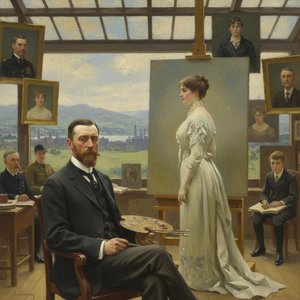
Sir John Lavery: A Study in Scottish Impressionism & the Portraiture of a Generation
Explore the life & art of Sir John Lavery, a master of Scottish Impressionism and renowned portraitist. Discover his captivating works, Irish heritage, and lasting legacy with TopImpressionists.

Sir Joshua Reynolds: 25 Arcydzieł Pełnych Elegancji i Historii | TopImpressionists.com
Odkryj 25 arcydzieł Sir Joshua Reynoldsa – mistrza angielskiego rokoko i neoklasycyzmu. Poznaj historie portretów, techniki malarskie i inspiracje wnętrzarskie. Reprodukcje najwyższej jakości na TopImpressionists.com! Eksploruj pełną kolekcję online.
Odkryj dzieła sztuki uporządkowane według tematów, stylów i cech charakterystycznych.


