


 Zobacz w skali 1:1
 Wyślij
 Udostępnij
 Szczegóły
 Przewodnik

 Pobierz plik obrazu
 Podobne obiekty
 RTG
RTG Pokaz slajdów
 Statystyki
Central Australia
 Oil On Board
- WallArt
- Cubist
 1949
1949- Modern
 92.0 x 121.0 cm
 National Gallery of Victoria
Experience the shifting patterns of Central Australia with Sidney Nolan's evocative 1949 landscape; discover this masterpiece capturing the vast Australian spirit.
 Czytaj więcej
Sir Christopher Edward Nolan, CBE (ur. 30 lipca 1970 w Londynie) – brytyjski reżyser, scenarzysta i producent filmowy. Jest jednym z najbardziej dochodowych reżyserów w historii i jednym z najwyżej cenionych filmowców XXI wieku.
Po debiutanckim reżyserskim filmie Śledząc (1998) Nolan przykuł uwagę drugim swoim filmem, Memento (2000), za który otrzymał nominację do Oscara za najlepszy scenariusz or
Dzieło sztuki prezentowane na tej stronie podlega ochronie prawem autorskim, co oznacza, że nie mamy prawa do tworzenia ani sprzedaży jego identycznej reprodukcji. Ochrona ta jest egzekwowana na mocy umów międzynarodowych, takich jak Konwencja berneńska oraz przez przepisy prawa krajowego, w tym te określone w Prawo autorskie USA – Tytuł 17.
Jako pełną szacunku i legalną alternatywę oferujemy personalizowane, malowane ręcznie dzieła sztuki inspirowane oryginałem. Nasi wykwalifikowani i profesjonalni artyści starannie analizują styl, nastrój oraz artystyczną esencję pierwowzoru, aby stworzyć nowe, unikalne dzieło, które przywołuje te same emocje – pozostając jednocześnie w pełni oryginalną kreacją.
Metoda ta jest w pełni zgodna z przepisami prawa autorskiego, ponieważ nie polega na kopiowaniu ani powielaniu chronionego dzieła. Stanowi ona kreatywną reinterpretację – nowy obraz, który czerpie inspirację z oryginału, ale nie jest z nim tożsamy.
Ręcznie malowana reprodukcja olejowa
Ręcznie malowany obraz olejny na płótnie, wykonany na zamówienie przez naszych artystów w wybranym przez Ciebie wymiarze i oprawie. ( Przełącz na wersję drukowaną Przełącz na wersję cyfrową)




P118B zł10

P118H zł10

P118W zł10

P438Z zł10

P508JH zł12

P508YH zł12

P805H zł10

P805Z zł10

P919BZ zł10

P919G zł10

P919XJ zł10

P959ZH zł10

P968JZ zł12

W106C zł8

W218G zł10

W218JH zł8

W218Y zł10

W307PJ zł10

W316G zł10

W316PJ zł8

W316Y zł10

W398PJ zł8

W4111J zł10

W500HY zł15

W500JH zł15

W692G zł12

W849H zł8

W940BG zł15

W953PJ zł8




Standardowy
na zamówienie
CM
INCH
Wybierz spośród naszych standardowych rozmiarów, które zachowują oryginalne proporcje dzieła sztuki.
Loading sizes...

szerokość
wysokość
Wpisz wymaganą szerokość i wysokość, aby obraz pasował do Twojej ramy lub ściany. Ponieważ jest to dzieło malowane ręcznie, w przypadku rozmiaru o innym proporcji artysta może domalować nieco więcej wokół obrazu lub przyciąć fragmenty — wybór należy do Ciebie. Przed rozpoczęciem pracy prześlemy Ci cyfrową wizualizację do zatwierdzenia. Obraz widoczny na tej stronie nie przedstawia rzeczywistego efektu — jedynie wizualizacja oddaje realny rezultat.
Przykłady możliwych zmian: Zamień twarz na zdjęcie klienta; Dodaj zwierzę domowe (np. zamień kota na psa); Ukryj wiadomość w tle; Zmień krajobraz lub elementy tła.
Po złożeniu zamówienia zespół TopImpressionists.com skontaktuje się z klientem drogą mailową w celu uzyskania instrukcji i prześle wizualizację projektu
Po złożeniu zamówienia zespół TopImpressionists.com skontaktuje się z klientem drogą mailową w celu uzyskania instrukcji i prześle wizualizację projektu
Dostawa na całym świecie () w ciągu 3–4 tygodni zamiast standardowych 5 tygodni. (18 Październik). Bez kompromisów w kwestii jakości.

Bezpłatna ekspresowa wysyłka na cały świat

Wysokiej jakości płótno lniane

Pełne ubezpieczenie transportowe

Gwarancja zwrotu należności celnych i podatków importowych

Gwarancja idealnego odwzorowania barw

100-dniowy okres na zwrot dzieła w przypadku wykrycia wad produkcyjnych

Gwarancja 100% zwrotu pieniędzy

Oferta przy zakupie wielu sztuk
 Opcja ze szkłem jest dostępna wyłącznie w rozmiarach poniżej 110 cm

Central Australia
Technika wykonania
Rozmiar reprodukcji
-


Suma do zapłaty
zł 1022
A Vision of the Red Centre: The Abstracted Majesty of Central Australia
In the vast, sun-drenched expanse of the Australian interior, where the horizon blurs between earth and sky, Sir Sidney Robert Nolan captured a reality that transcends mere topography. Central Australia is not simply a landscape painting; it is a profound meditation on pattern, perception, and the mythic quality of the outback. Created in 1949, this masterpiece invites the viewer to experience the desert not as a static scene, but as a living, breathing entity. Nolan, a titan of 20th-century Australian art, possessed a singular ability to distill the raw, often harsh essence of the continent into a visual language that feels both ancient and avant-garde. Through his eyes, the rugged mountain ranges and undulating hills become part of a rhythmic dance, where geological forms appear to emerge from and dissolve back into the earth.
The painting’s power lies in its unique stylistic synthesis, reminiscent of Cubist collage and the spontaneous abstractions of Paul Klee. Nolan famously drew inspiration from the perspective of an aerial view, imagining the landscape from an altitude of 10,000 feet. This elevated vantage point allowed him to strip away the clutter of the foreground and focus on the mesmerizing, random patterns etched upon the earth’s surface. The result is a composition that feels remarkably modern—a tapestry of shifting shapes where the distinction between solid rock and ephemeral shadow is intentionally blurred. For the discerning collector or interior designer, this work offers a sophisticated focal point that brings a sense of structured movement and intellectual depth to any curated space.
Technique and the Texture of Drought
To touch the surface of this work—even through a high-quality reproduction—is to encounter the ruggedness of the Australian spirit. Nolan utilized a specialized drybrush technique, applying thin, deliberate layers of oil paint onto hardboard. This method was essential for capturing the parched, textured reality of the desert. By manipulating the pigment to create a sense of friction and grit, he successfully evoked the heat of the sun and the desiccated nature of the terrain. The color palette is a masterful study in contrast: deep, earthy ochres and burnt siennas collide with sudden bursts of brilliant orange and cool, atmospheric blues. These hues do more than represent color; they communicate the intense thermal shifts of the desert, where the warmth of the day gives way to the biting chill of the nocturnal air.
This technical mastery serves a deeper symbolic purpose. The painting was conceived during a period when Nolan was documenting the devastating effects of drought in the rural interior. Every stroke carries the weight of this environmental struggle, imbuing the landscape with a sense of vulnerability and resilience. The mountains, appearing like ghostly silhouettes against an incandescent sky, act as monuments to endurance. For those seeking to decorate a space with art that possesses true emotional gravity, Central Australia provides a window into a world where nature is both beautiful and formidable, offering a timeless connection to the primal elements of our planet.
An Invitation to Wonder
Beyond its historical significance and technical brilliance, Central Australia serves as an emotional gateway. It evokes a sense of profound wonder, pulling the viewer into a space of quiet contemplation. There is a rhythmic, almost musical quality to the way the hills rise and fall, a visual cadence that can soothe the mind while stimulating the imagination. Whether placed in a contemporary gallery setting or a warm, residential study, this painting acts as an anchor of authenticity and mythic storytelling.
Owning a reproduction of such a seminal work allows one to inhabit Nolan’s dreamscape daily. It is an opportunity to surround oneself with the legacy of the Angry Penguins movement and the enduring mystery of the Australian outback. As a piece of fine art, it transcends decoration; it becomes a conversation starter, a piece of history, and a permanent tribute to the breathtaking complexity of the natural world.
Pytania i odpowiedzi
Czy istnieje karta informacyjna o „Central Australia” autorstwa Sir Sidney Robert Nolan przeznaczona dla studentów?
Przewodnik po "Central Australia" to strona Przewodnik dzieła sztuki – nadrukowalna karta informacyjna prezentująca utwór wraz z podpisem, informacją o autorstwie oraz tabelą danych (artysta, daty, technika, wymiary oryginału, kolekcja).
Jaka paleta barw została wykorzystana w „Central Australia” autorstwa Sir Sidney Robert Nolan?
„Central Australia” autorstwa Sir Sidney Robert Nolan wykorzystuje Dark paletę barw. Paleta ta podsumowuje ogólny charakter kolorystyczny dzieła.
Jakie miejsce w historii sztuki zajmuje „Central Australia” autorstwa Sir Sidney Robert Nolan?
Pod względem historycznym „Central Australia” to dzieło z nurtu Cubist, powstałe w szerszej epoce Modern.
Biografia artysty
A Life Painted in Myth and Landscape
Sir Sidney Robert Nolan, born in Melbourne in 1917, stands as a monumental figure in 20th-century Australian art. His journey was not one of conventional artistic training but rather an explosive emergence from the working-class streets of St Kilda into a world of vibrant imagination and relentless experimentation. Nolan wasn’t simply a painter; he was a visual storyteller, a mythmaker who wrestled with Australia's history, its landscapes, and its very identity. From his early days as a runner for an illegal betting ring to his eventual acclaim on the international stage, Nolan’s life was marked by a restless energy and a refusal to be confined by artistic norms. He absorbed influences from diverse sources – the poetry of Rimbaud, the spatial innovations of Cézanne, the raw emotion of Danila Vassilieff – yet forged a style uniquely his own, one that resonated with a distinctly Australian sensibility. His early exposure to the harsh realities of Melbourne life and the allure of its underbelly would profoundly shape his artistic vision, imbuing his work with a sense of both defiance and vulnerability.The Shaping of an Iconoclast
Nolan’s formative years were steeped in intellectual ferment. The Heide Circle, centered around patrons John and Sunday Reed, proved pivotal. This haven for artists and writers fostered a spirit of radical experimentation and provided Nolan with crucial support during his developing phase. It was at Heide that he encountered kindred spirits – Albert Tucker, Joy Hester, Arthur Boyd – all grappling with the challenge of creating a distinctly Australian modernism. The influence of modernist literature, particularly the Symbolist poets, cannot be overstated. Rimbaud’s call for a “systematic derangement of the senses” became a guiding principle for Nolan, liberating him from representational constraints and encouraging him to explore the emotional power of color, form, and symbolism. His early works demonstrate this influence, often featuring fragmented figures and dreamlike landscapes that hint at deeper psychological truths. He wasn’t interested in merely depicting reality; he sought to capture its essence, its underlying emotions, and its hidden narratives. This period also saw Nolan experimenting with various media, from stage design for the Ballet Russes to commercial art, each experience contributing to his growing technical prowess and artistic vocabulary.Early Influences and Artistic Development
Nolan’s artistic education began informally, fueled by a voracious appetite for literature and visual arts. He devoured books on Pablo Picasso, Paul Klee, Henri Matisse and the surrealists—artists who championed spontaneity and intuition as antidotes to rationalism. Particularly compelling was Klee's approach, which deliberately undermined accepted boundaries of art through experimentation and a range of techniques, media and juxtaposition of subject matter. Klee’s belief that art should be childlike – embracing simplicity and uninhibited emotion – resonated deeply with Nolan’s artistic sensibilities. He recognized the importance of rejecting academic conventions and pursuing personal vision—a conviction that would permeate his entire oeuvre. His early paintings reflect these influences, characterized by bold colors, simplified forms, and a deliberate disregard for photographic realism. This initial stylistic exploration laid the groundwork for his later mastery of monumental canvases and iconic imagery.The Kelly Cycle: Mythmaking as Art
Nolan’s most celebrated achievement is undoubtedly *The Kelly Cycle*, a series of 26 paintings depicting the exploits of Ned Kelly, Australia's legendary bushranger. This project represents Nolan’s culmination of his lifelong fascination with Australian mythology and history—a quest to transform legend into art. He approached the subject matter not as a historian recounting events but as a poet crafting an epic poem. The resulting canvases are striking in their scale, color palette, and compositional daring—each painting imbued with a palpable sense of drama and psychological depth. Nolan’s use of black armor as a dominant visual motif symbolizes defiance and impenetrability—a deliberate rejection of conventional heroic representations. He sought to capture the spirit of Kelly not merely as an outlaw but as a complex human being grappling with moral dilemmas and confronting the forces of law and order. The Kelly Cycle cemented Nolan's reputation as one of Australia’s foremost artists, establishing him as a visionary who redefined the boundaries of artistic expression.Legacy and Enduring Influence
Sir Sidney Robert Nolan’s contribution to Australian art is profound and enduring. He challenged artistic conventions, embraced experimentation, and created a body of work that continues to inspire artists today. His bold depictions of Ned Kelly have become iconic images—symbols of Australia's rebellious spirit and its ambivalent relationship with its past. Beyond his monumental canvases, Nolan’s influence extends across various mediums—from sculpture to ceramics to stage design—demonstrating his versatility as an artist and his unwavering commitment to exploring the complexities of human experience. His paintings are held in major museums worldwide, ensuring that his vision will continue to captivate audiences for generations to come. He left behind not just a collection of artworks but a new way of seeing Australia—a land of myth, mystery, and artistic potential—solidifying his place as one of the most important figures in Australian art history.
Sir Sidney Robert Nolan
1917 - 1992 , Australia
Najważniejsze informacje
- Artistic Movement Or Style: Modernist
- Artists Who Influenced This Artist:
- Rimbaud
- Cézanne
- Kandinsky
- Klee
- Date Of Birth: April 22, 1917
- Date Of Death: November 28, 1992
- Full Name: Sir Sidney Robert Nolan
- Nationality: Australian
- Notable Artworks:
- Ned Kelly series
- Carriers of Horses
- AFL Series
- Place Of Birth: Melbourne, Australia
Zobacz także powiązane artykuły
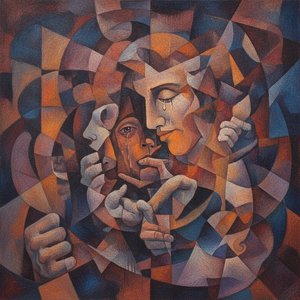
Beyond the Surface: Exploring the Emotional Depth of Cubist Expressionism
Discover the profound emotional resonance within Cubist Expressionism. Explore how fragmented forms and geometric abstraction convey deep human feeling through an expert art-historical lens for the discerning collector.

Fragmented Beauty: Exploring the Soul and Geometric Depth of Cubist Landscapes
Embark on a cultural journey through the soul of Cubist landscapes. Discover how masters like Braque and Rivera redefined nature through geometric beauty, fragmented forms, and profound abstraction in this expert art-history exploration.

Breaking Reality: A Sophisticated Guide to the Power of Cubist Fragmentation and Geometric Reimagination
Explore the profound depth of Cubist fragmentation. Our expert guide delves into the revolutionary techniques of Picasso and Braque, offering art collectors a sophisticated understanding of how deconstructed forms redefine modern perception and luxury curation.
Odkryj dzieła sztuki uporządkowane według tematów, stylów i cech charakterystycznych.


