

Przedstawiony: · Wraz z ramą:
 Podgląd w skali 1:1
 Wyślij jako kartkę
 Udostępnij
 Szczegóły dzieła
 Przewodnik

 Pobierz obraz
 Podobne obiekty
 RTG
RTG Pokaz slajdów
 Pytania i odpowiedzi
 Statystyki
- 51.0 x 71.0 cm


zł 1051
Ręcznie malowana reprodukcja olejowa
Ręcznie malowany obraz olejny na płótnie, wykonany na zamówienie przez naszych artystów w wybranym przez Ciebie wymiarze i oprawie. ( Przełącz na wydania drukowane Przejdź do wersji cyfrowej)
Ten utwór podlega ochronie prawem autorskim
Dzieło sztuki prezentowane na tej stronie podlega ochronie prawem autorskim, co oznacza, że nie mamy prawa do tworzenia ani sprzedaży jego identycznej reprodukcji. Ochrona ta jest egzekwowana na mocy umów międzynarodowych, takich jak Konwencja berneńska oraz przez przepisy prawa krajowego, w tym te określone w Prawo autorskie USA – Tytuł 17.
Jako pełną szacunku i legalną alternatywę oferujemy personalizowane, malowane ręcznie dzieła sztuki inspirowane oryginałem. Nasi wykwalifikowani i profesjonalni artyści starannie analizują styl, nastrój oraz artystyczną esencję pierwowzoru, aby stworzyć nowe, unikalne dzieło, które przywołuje te same emocje – pozostając jednocześnie w pełni oryginalną kreacją.
Metoda ta jest w pełni zgodna z przepisami prawa autorskiego, ponieważ nie polega na kopiowaniu ani powielaniu chronionego dzieła. Stanowi ona kreatywną reinterpretację – nowy obraz, który czerpie inspirację z oryginału, ale nie jest z nim tożsamy.
 Dowiedz się więcej
Wymiar
·Standardowy format
personalizowane
CM
INCH
Wybierz spośród naszych standardowych rozmiarów, które zachowują oryginalne proporcje dzieła sztuki.
Ładowanie rozmiarów...

szerokość
wysokość
Wpisz wymaganą szerokość i wysokość, aby obraz pasował do Twojej ramy lub ściany. Ponieważ jest to dzieło malowane ręcznie, w przypadku rozmiaru o innych proporcjach artysta może domalować nieco więcej wokół obrazu lub przyciąć jego fragmenty — wybór należy do Ciebie. Przed rozpoczęciem pracy prześlemy Ci cyfrową wizualizację do zatwierdzenia. Obraz widoczny na tej stronie nie przedstawia rzeczywistego efektu — jedynie wizualizacja oddaje realny rezultat.
Wykończenie
·
Białe krawędzie zł1

rozmyte krawędzie zł1

Przedłużony zł1

P118B zł10

P118H zł10

P118W zł10

P438Z zł10

P508JH zł12

P508YH zł12

P805H zł10

P805Z zł10

P919BZ zł10

P919G zł10

P919XJ zł10

P959ZH zł10

P968JZ zł12

W106C zł8

W218G zł10

W218JH zł8

W218Y zł10

W307PJ zł10

W316G zł10

W316PJ zł8

W316Y zł10

W398PJ zł8

W4111J zł10

W500HY zł15

W500JH zł15

W692G zł12

W849H zł8

W940BG zł15

W953PJ zł8

H24-GOLD zł30

H24-SILVER zł30

H36-GOLD zł45

H36-SILVER zł45
Dostarczane w ochronnej tubie, gotowe do oprawienia przez Twojego ramiarza.
Dodatki
opcjonalneCo obejmują dodatki?
Przykłady możliwych zmian: Zastąpienie twarzy zdjęciem klienta; Dodanie zwierzęcia (np. zamiana kota na psa); Ukrycie wiadomości w tle; Zmiana krajobrazu lub elementów tła.
Po złożeniu zamówienia zespół TopImpressionists.com skontaktuje się z klientem drogą mailową w celu uzyskania instrukcji i prześle podgląd projektu
Po złożeniu zamówienia zespół TopImpressionists.com skontaktuje się z klientem drogą mailową w celu uzyskania instrukcji i prześle podgląd projektu
Dostawa na całym świecie () w ciągu 3–4 tygodni zamiast standardowych 5 tygodni. (6 Listopad). Bez kompromisów w kwestii jakości.
Lakier ochronny
Etykieta obiektu
Szczegóły grawerowanej brązowej tabliczki
This elegant plaque features the artist's name and the title of the artwork, finely engraved for a timeless presentation.
It is made from bronze with a refined, elegant finish. The text is precisely laser-engraved for a sharp and permanent result. Measuring 9x2 cm, the plaque is compact yet easy to read. It's built to be durable and scratch-resistant, offering a professional, museum-quality look. Mounting is simple thanks to the included adhesive backing.
Szczegóły przezroczystej tabliczki akrylowej
The plaque includes essential engraved details such as the artist's name, the title of the artwork, the date it was created, the type of media used-like oil on canvas or watercolor-a brief description of the piece, and a QR code that links to the complete artwork information.
It is crafted from clear acrylic, offering a sleek, modern appearance. The text is UV-engraved in black to ensure strong visual contrast. With a size of 10x15 cm, it ensures optimal readability. It comes equipped with two metal hooks for secure wall mounting. The plaque is designed to be weather-resistant, making it suitable for various environments, and it includes interactive features that work seamlessly with smartphone scanning.
Szczegóły czarnej tabliczki akrylowej
This elegant plaque includes engraved information such as the artist's name, the title of the artwork, the date it was created, the type of media used (like oil on canvas or watercolor), a short description of the artwork, and a QR code for quick access to more information.
The plaque itself is made from refined black acrylic with a premium finish. The text is laser-engraved in white for high contrast and readability. Its size is 10x15 cm, designed to be easy to read. It comes with two metal hooks for professional mounting. The design is sleek and fits any interior style. It is also weather-resistant and durable, with built-in digital integration for mobile compatibility.
Opcja ze szkłem jest dostępna wyłącznie w rozmiarach poniżej 110 cm
 Opcja ze szkłem jest dostępna wyłącznie w rozmiarach poniżej 110 cm
- Bezpłatna ekspresowa wysyłka na cały świat
- Wysokiej jakości płótno lniane
- Pełne ubezpieczenie przesyłki
- Gwarancja zwrotu należności celnych i podatków importowych
- Gwarancja wiernego odwzorowania kolorów
- 100-dniowa polityka zwrotów (tylko w przypadku wad)
- Gwarancja 100% zwrotu pieniędzy
- Zniżka przy zakupie wielu sztuk


Opis obiektu
Malowidło przedstawiające malowniczą dolinę z górami na tle. Spokojna atmosfera stworzona przez drzewa i trawę oraz rozproszone domy dodają uroku krajobrazowi. Klasyczny obraz szkockiego pejzażu autorstwa Williama Gilliesa.
Biografia artysty
W.G. Gillies – szkocki malarz znany z pięknych krajobrazów i nastrojowych still life'ów. Jego twórczość inspirowana kubizmem, wpływem Paul Klee i tradycjami szkockiego malarstwa. Odkryj jego unikalny styl i bogate dziedzictwo!
O obrazie
Czas Zbioru Żyto
“Czas Zbioru Żyto” obraz autorstwa Sir William George Gilliesa z roku 1952 stanowi fascynujące świadectwo ducha szkockiego krajobrazowego malarstwa lat trzydziestych XX wieku. Jest to dzieło, które nie tylko przedstawia piękno górskiego pejzażu Szkocji, ale także kryje w sobie głębokie przesłanie dotyczące cyklu przyrody i ludzkiej obecności w obliczu przemijającego czasu.
Obraz został stworzony przez Gilliesa po powrocie z Paryża i podróży włoskich, gdzie zainspirował się twórczością André Lhote’a oraz wpływem kubizmu. Jego wcześniejsze prace, takie jak „Dwie Czarki, Podtocznik i Owoc” (1933), wyraźnie odzwierciedlają wpływ Cézanne'a i subtelne palety kolorystyczne Braque’a oraz Picasso’a – elementy charakterystyczne dla kubizmu okresu jego młodszego twórczego rozwoju.
Jednak prawdziwym punktem zwrotnym w karierze Gilliesa było spotkanie z twórczością Paula Klee'a w 1934 roku. Inspiracja Klee’a wpłynęła na artystę, zachęcając go do wykorzystywania kolorów w sposób bardziej fantazyjny i przytaczania dziecięcych jakości w jego kompozycjach. Można dostrzec tę wpływową inspirację szczególnie wyraźnie w fakturze obrazu – delikatną, niemal pastelową powierzchnię uzyskaną dzięki zastosowaniu technik olejnych na płótnie.
Obraz przedstawia panoramę doliny otoczonej górami Szkocji. Szczegółowo odwzorowano drzewa i trawę, tworząc atmosferę spokoju i harmonii z naturą. Na obrazie znajdują się niewielkie budynki ludzkie, które dodają scenie ciepła i charakteru. Rdzeń obrazu stanowi prosty szlak drogowy przecinający dolinę – element świadczący o połączeniu ludzi z otaczającym ich krajobrazem.
“Czas Zbioru Żyto” nie jest jedynie wiernym odwzorowaniem rzeczywistości; Gillies użył umiejętnego wykorzystania kolorów i faktury, aby przekazać emocje związane z obserwacją przyrody. Obraz emanuje ciepłem słonecznego światła i delikatną melancholią wspomnienia – uczuciami często towarzyszącymi refleksjom nad przemijającym czasem i pięknem krajobrazu Szkocji.
- Styl: Krajobrazowy, Inspiracja Kubizmem i Cézanne’em
- Technika: Olej na płótnie, Delikatna faktura powierzchni
- Kolorystyka: Pastelowa paleta kolorystyczna, Odzwierciedlająca światło górskie
- Historia: Lata trzydziestych XX wieku, Szkockie krajobrazowe malarstwo
Obraz „Czas Zbioru Żyto” stanowi doskonałą propozycję dla kolekcjonerów sztuki oraz osób zainteresowanych dekoracją wnętrz. Jego spokojna kompozycja i ciepła kolorystyka wpisują się idealnie w klimat nowoczesnych przestrzeni mieszkalnych, dodając im elegancji i głębi emocjonalną.
Pytania i odpowiedzi
Jak można wykorzystać „Czasami” – William George Gillies w dekoracji wnętrz?
Dzieło „Czasami” – William George Gillies jest polecane do Akcent kolorystyczny, najlepiej w Salon lub strefa dzienna. Zastosowanie oraz przestrzeń pomagają zdecydować, gdzie najlepiej umieścić reprodukcję.
Czy mogę zobaczyć „Czasami” – William George Gillies na własnej ścianie przed zakupem?
„Czasami” posiada podgląd w rozszerzonej rzeczywistości: strona Podgląd w AR pozwala zobaczyć dzieło w Twojej własnej przestrzeni na kompatybilnym urządzeniu.
Czy "Czasami" to jedno z najpopularniejszych dzieł William George Gillies?
Poziom popularności dla „Czasami” – William George Gillies wynosi Uznany/a.
Najważniejsze informacje i quiz o sztuce
O William George Gillies

William George Gillies
1898 - 1973, Wielka Brytania
Biografia artysty
Early Life and Education
Sir William George Gillies, a name synonymous with the evocative beauty of Scottish landscapes and still lifes, was born in Haddington, East Lothian, on September 21st, 1898. His early life unfolded amidst the rolling hills and historic charm of his native region – an environment that would profoundly shape his artistic vision. Initially enrolled at the Edinburgh College of Art, Gillies’ academic pursuits were tragically interrupted by the exigencies of World War I. He bravely enlisted with the Royal Engineers, serving with distinction during a period of immense national upheaval. Following the war's conclusion, he returned to complete his education at the same institution, ultimately graduating and dedicating over four decades to nurturing young artists as a teacher. This commitment to education wasn’t merely a profession; it was a deeply held belief in the transformative power of art and its ability to connect individuals with their surroundings.Artistic Development and Influences
Gillies' artistic journey began with an initial exploration of Cubism, a movement that had captivated European artists in the early 20th century. His studies under André Lhote in Paris (1923) provided him with invaluable insight into the principles of this revolutionary style – its fragmented forms and geometric arrangements. A subsequent trip to Italy in 1924 further broadened his artistic horizons, exposing him to the classical traditions that had informed so much of Western art. Early works like “Two Pots, Saucer and Fruit” (1933) demonstrate this early influence, showcasing a Cézanne-inspired composition characterized by carefully arranged objects and a muted color palette reminiscent of Braque and Picasso. However, a pivotal moment arrived in 1934 when Gillies encountered the work of Paul Klee. The whimsical use of colour, the childlike quality of his forms, and the imaginative narratives embedded within Klee’s paintings profoundly impacted Gillies' approach to art. He began to incorporate these elements into his own compositions, gradually moving away from strict Cubist dogma and developing a distinctive style rooted in Scottish landscape and still life traditions.The 1922 Group and Collaborative Spirit
In 1922, a year marked by significant artistic ferment in Scotland, Gillies played a crucial role in establishing the “1922 Group.” Alongside fellow artists such as William Crozier, William Geissler, and William MacTaggart, he envisioned an exhibition society dedicated to providing a platform for emerging Scottish talent. The New Gallery in Edinburgh became the focal point of this collective endeavor for a decade, fostering a vibrant community of artists who shared a passion for innovation and experimentation. The 1922 Group wasn’t simply a means of showcasing art; it was a crucible where ideas were exchanged, techniques were refined, and a sense of camaraderie flourished – a vital ingredient in the development of Scottish modernism. It represented a conscious effort to elevate the profile of young artists within their country.Themes and Subject Matter
Gillies’ artistic focus primarily revolved around two distinct yet interconnected themes: landscapes and still lifes. He possessed an extraordinary ability to capture the essence of the Lothian, Fife, and Border regions of Scotland – translating the rugged beauty of these areas onto canvas with a remarkable sensitivity. His paintings weren't merely depictions of scenery; they were imbued with a profound understanding of light, atmosphere, and the subtle nuances of color. Equally significant was his exploration of still life compositions. These works often featured ceramics created by his younger sister, Emma Smith Gillies, whose untimely death in 1936 cast a long shadow over his artistic life. The poignant beauty of these objects served as a powerful reminder of loss and grief, imbuing the paintings with an undercurrent of melancholy and introspection. While he experimented with portraiture early in his career, landscapes and still lifes ultimately became the cornerstones of his artistic legacy.Major Achievements and Recognition
Throughout his illustrious career, Sir William George Gillies achieved numerous accolades that recognized his exceptional talent and unwavering dedication to art. He was elected an Associate of the Royal Scottish Academy (ARSA) in 1940, a significant step towards establishing his place within the established artistic community. In 1947, he received full membership into the Royal Scottish Academy (RSA), solidifying his position as one of Scotland’s leading artists. In 1957, he was awarded the Commander of the Order of the British Empire (CBE) for his contributions to art in Scotland, and later, in 1964, he became an Associate of the Royal Academy (RA). The highest honor bestowed upon him – knighthood – arrived in 1970. His legacy extended beyond his artistic achievements; he served as Principal of the Edinburgh College of Art from 1961 to 1966, guiding a new generation of artists and shaping the future direction of art education in Scotland. Gillies’ prolific output—estimated at over 2,000 works—testifies to his unwavering commitment to his craft. His paintings are now found in prestigious collections across Scotland and internationally, including those of Aberdeen, Dundee, Edinburgh, Glasgow, the Scottish Arts Council, the National Galleries of Scotland (Tate London, Ottawa, Peru), demonstrating a lasting impact on the art world.Krótkie informacje o William George Gillies
- Artistic Movement Or Style: Kubizm, Malarstwo Szkockie
- Artists Or Movements Influenced By This Artist: ['Malarstwo Szkockie']
- Artists Who Influenced This Artist:
- André Lhote
- Cézanne
- Braque
- Picasso
- Paul Klee
- Date Of Birth: 1898
- Date Of Death: 1973
- Full Name: Sir William George Gillies
- Nationality: Skoćy
- Notable Artworks:
- Young Boy with a Teapot
- Krajobraz Śródziemnomorski z Pochmurnym Niebem
- Kompozycja – Żółty Misa i Przegrodzony Tkanina
- Place Of Birth: Haddington, Wielka Brytania
Podobne dzieła


Odkryj dzieła sztuki uporządkowane według tematów, stylów i cech charakterystycznych.




William George Gillies
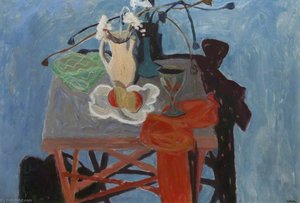
Czasami
() ·
Wraz z ramą: · Ręcznie malowane farbami olejnymi na płótnie lnianym
Suma