Podgląd w skali 1:1
 Wyślij jako kartkę
 Udostępnij
 Szczegóły dzieła
 Przewodnik

 Pobierz obraz
 Podobne obiekty
 RTG
RTG Pokaz slajdów
 Statystyki
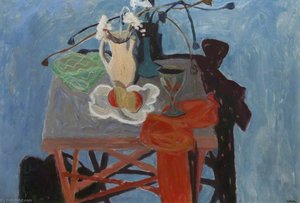
Tree Trunks
 Painting
- Cubism
 Modern
 63.0 x 76.0 cm
 Royal Scottish Academy of Art - Architecture
Sir William George Gillies (1898-1973) was a Scottish landscape painter celebrated for his masterful depictions of Scottish scenery, particularly trees and undergrowth. His artistic style blended Impressionism with Cubist influences, reflecting the impact of artists like Cézanne and Paul Klee.
 Rozwiń treść
W.G. Gillies – szkocki malarz znany z pięknych krajobrazów i nastrojowych still life'ów. Jego twórczość inspirowana kubizmem, wpływem Paul Klee i tradycjami szkockiego malarstwa. Odkryj jego unikalny styl i bogate dziedzictwo!
Dzieło sztuki prezentowane na tej stronie podlega ochronie prawem autorskim, co oznacza, że nie mamy prawa do tworzenia ani sprzedaży jego identycznej reprodukcji. Ochrona ta jest egzekwowana na mocy umów międzynarodowych, takich jak Konwencja berneńska oraz przez przepisy prawa krajowego, w tym te określone w Prawo autorskie USA – Tytuł 17.
Jako pełną szacunku i legalną alternatywę oferujemy personalizowane, malowane ręcznie dzieła sztuki inspirowane oryginałem. Nasi wykwalifikowani i profesjonalni artyści starannie analizują styl, nastrój oraz artystyczną esencję pierwowzoru, aby stworzyć nowe, unikalne dzieło, które przywołuje te same emocje – pozostając jednocześnie w pełni oryginalną kreacją.
Metoda ta jest w pełni zgodna z przepisami prawa autorskiego, ponieważ nie polega na kopiowaniu ani powielaniu chronionego dzieła. Stanowi ona kreatywną reinterpretację – nowy obraz, który czerpie inspirację z oryginału, ale nie jest z nim tożsamy.
Ręcznie malowana reprodukcja olejowa
Ręcznie malowany obraz olejny na płótnie, wykonany na zamówienie przez naszych artystów w wybranym przez Ciebie wymiarze i oprawie. ( Przełącz na wydania drukowane Przejdź do wersji cyfrowej)




P118B zł10

P118H zł10

P118W zł10

P438Z zł10

P508JH zł12

P508YH zł12

P805H zł10

P805Z zł10

P919BZ zł10

P919G zł10

P919XJ zł10

P959ZH zł10

P968JZ zł12

W106C zł8

W218G zł10

W218JH zł8

W218Y zł10

W307PJ zł10

W316G zł10

W316PJ zł8

W316Y zł10

W398PJ zł8

W4111J zł10

W500HY zł15

W500JH zł15

W692G zł12

W849H zł8

W940BG zł15

W953PJ zł8




Standardowy format
personalizowane
CM
INCH
Wybierz spośród naszych standardowych rozmiarów, które zachowują oryginalne proporcje dzieła sztuki.
Loading sizes...

szerokość
wysokość
Wpisz wymaganą szerokość i wysokość, aby obraz pasował do Twojej ramy lub ściany. Ponieważ jest to dzieło malowane ręcznie, w przypadku rozmiaru o innych proporcjach artysta może domalować nieco więcej wokół obrazu lub przyciąć jego fragmenty — wybór należy do Ciebie. Przed rozpoczęciem pracy prześlemy Ci cyfrową wizualizację do zatwierdzenia. Obraz widoczny na tej stronie nie przedstawia rzeczywistego efektu — jedynie wizualizacja oddaje realny rezultat.
Przykłady możliwych zmian: Zamień twarz na zdjęcie klienta; Dodaj zwierzę domowe (np. zamień kota na psa); Ukryj wiadomość w tle; Zmień krajobraz lub elementy tła.
Po złożeniu zamówienia zespół TopImpressionists.com skontaktuje się z klientem drogą mailową w celu uzyskania instrukcji i prześle wizualizację projektu
Po złożeniu zamówienia zespół TopImpressionists.com skontaktuje się z klientem drogą mailową w celu uzyskania instrukcji i prześle wizualizację projektu
Dostawa na całym świecie () w ciągu 3–4 tygodni zamiast standardowych 5 tygodni. (26 Październik). Bez kompromisów w kwestii jakości.

Bezpłatna ekspresowa wysyłka na cały świat

Wysokiej jakości płótno lniane

Pełne ubezpieczenie przesyłki

Gwarancja zwrotu należności celnych i podatków importowych

Gwarancja wiernego odwzorowania kolorów

100-dniowa polityka zwrotów (tylko w przypadku wad)

Gwarancja 100% zwrotu pieniędzy

Zniżka przy zakupie wielu sztuk
 Opcja ze szkłem jest dostępna wyłącznie w rozmiarach poniżej 110 cm

Tree Trunks
Technika reprodukcji
Wymiary reprodukcji
-


Cena całkowita
zł 1033
A Quiet Encounter in the Scottish Wilds
In the evocative monochrome of Tree Trunks, Sir William George Gillies invites us into a moment of profound stillness. The painting presents a hauntingly beautiful encounter between humanity and the natural world, capturing a solitary figure standing before the rugged texture of a tree trunk. With their back turned to the viewer, the individual becomes an anonymous vessel for our own emotions, allowing us to step into the scene and share in the quiet contemplation of the woods. The composition is masterfully balanced, using the verticality of the surrounding trees to create a sense of deep, immersive space that draws the eye inward, much like a whispered secret shared between the observer and the landscape.
The atmosphere of the piece is one of melancholic beauty, where the absence of color serves to heighten our focus on form, light, and shadow. This black and white palette strips away the distractions of the vibrant world, leaving behind a skeletal, structural elegance that emphasizes the raw textures of bark and the soft silhouettes of the forest. For the discerning collector or interior designer, this work offers a sophisticated focal point that brings a sense of timelessness and organic calm to any space, acting as a window into a serene, primordial realm.
The Intersection of Cubism and Impressionism
To understand the technical brilliance of Tree Trunks, one must look toward the rich artistic lineage of Sir William George Gillies. Having studied under André Lhote in Paris, Gillies brought a sophisticated understanding of Cubist structure to his Scottish landscapes. In this particular work, we see the subtle influence of that movement through the way he organizes the forest; the trees are not merely botanical subjects but architectural elements that build a complex, layered composition. There is a rhythmic quality to the arrangement of the trunks, creating a sense of depth and dimension that feels both grounded and dreamlike.
Yet, despite this structural rigor, the painting breathes with an Impressionistic soul. The way light filters through the unseen canopy to touch the figure and the bark suggests a fleeting moment captured in time. Gillies’ ability to blend the geometric precision of his early training with a more emotive, atmospheric approach allows the painting to transcend simple documentation. It becomes an exploration of texture and tone, where the interplay of light and dark creates a tactile experience that makes the viewer feel the coolness of the shade and the rough skin of the ancient trees.
A Timeless Addition to the Modern Interior
For those seeking to curate an environment of reflection and elegance, Tree Trunks serves as an incomparable inspiration. Its monochromatic depth makes it a versatile masterpiece, capable of complementing both minimalist contemporary settings and more traditional, classic interiors. The painting does not merely decorate a wall; it anchors a room with its quiet strength and historical weight. It evokes the spirit of the Scottish Highlands—a landscape of rugged endurance and silent beauty—making it an ideal choice for those who value art that tells a story of connection to the earth.
Owning a high-quality reproduction of this work allows one to bring the contemplative essence of Gillies' vision into the home. It is a piece that rewards repeated viewing, revealing new nuances in its shadows and compositions each time the light changes in the room. Whether placed in a quiet study or a grand living area, Tree Trunks remains a powerful testament to the enduring dialogue between the human spirit and the enduring majesty of nature.
Pytania i odpowiedzi
Jaki rozmiar "Tree Trunks" jest sugerowany do Living Room?
Dla Living Room zalecany rozmiar wydruku dzieła „Tree Trunks” – William George Gillies to Medium.
Czy dzieło "Tree Trunks" posiada podgląd w rozszerzonej rzeczywistości?
Strona Podgląd w AR dzieła „Tree Trunks” – William George Gillies wykorzystuje rozszerzoną rzeczywistość, aby dzięki kompatybilnemu urządzeniu pokazać obraz w Twojej własnej przestrzeni.
Do jakiego nurtu w sztuce należy „Tree Trunks” – William George Gillies?
Nurt związany z „Tree Trunks” – William George Gillies to Cubism. Ta klasyfikacja sytuuje dzieło wśród pokrewnych artystów i dzieł sztuki.
Podobne dzieła


Biografia artysty
Early Life and Education
Sir William George Gillies, a name synonymous with the evocative beauty of Scottish landscapes and still lifes, was born in Haddington, East Lothian, on September 21st, 1898. His early life unfolded amidst the rolling hills and historic charm of his native region – an environment that would profoundly shape his artistic vision. Initially enrolled at the Edinburgh College of Art, Gillies’ academic pursuits were tragically interrupted by the exigencies of World War I. He bravely enlisted with the Royal Engineers, serving with distinction during a period of immense national upheaval. Following the war's conclusion, he returned to complete his education at the same institution, ultimately graduating and dedicating over four decades to nurturing young artists as a teacher. This commitment to education wasn’t merely a profession; it was a deeply held belief in the transformative power of art and its ability to connect individuals with their surroundings.Artistic Development and Influences
Gillies' artistic journey began with an initial exploration of Cubism, a movement that had captivated European artists in the early 20th century. His studies under André Lhote in Paris (1923) provided him with invaluable insight into the principles of this revolutionary style – its fragmented forms and geometric arrangements. A subsequent trip to Italy in 1924 further broadened his artistic horizons, exposing him to the classical traditions that had informed so much of Western art. Early works like “Two Pots, Saucer and Fruit” (1933) demonstrate this early influence, showcasing a Cézanne-inspired composition characterized by carefully arranged objects and a muted color palette reminiscent of Braque and Picasso. However, a pivotal moment arrived in 1934 when Gillies encountered the work of Paul Klee. The whimsical use of colour, the childlike quality of his forms, and the imaginative narratives embedded within Klee’s paintings profoundly impacted Gillies' approach to art. He began to incorporate these elements into his own compositions, gradually moving away from strict Cubist dogma and developing a distinctive style rooted in Scottish landscape and still life traditions.The 1922 Group and Collaborative Spirit
In 1922, a year marked by significant artistic ferment in Scotland, Gillies played a crucial role in establishing the “1922 Group.” Alongside fellow artists such as William Crozier, William Geissler, and William MacTaggart, he envisioned an exhibition society dedicated to providing a platform for emerging Scottish talent. The New Gallery in Edinburgh became the focal point of this collective endeavor for a decade, fostering a vibrant community of artists who shared a passion for innovation and experimentation. The 1922 Group wasn’t simply a means of showcasing art; it was a crucible where ideas were exchanged, techniques were refined, and a sense of camaraderie flourished – a vital ingredient in the development of Scottish modernism. It represented a conscious effort to elevate the profile of young artists within their country.Themes and Subject Matter
Gillies’ artistic focus primarily revolved around two distinct yet interconnected themes: landscapes and still lifes. He possessed an extraordinary ability to capture the essence of the Lothian, Fife, and Border regions of Scotland – translating the rugged beauty of these areas onto canvas with a remarkable sensitivity. His paintings weren't merely depictions of scenery; they were imbued with a profound understanding of light, atmosphere, and the subtle nuances of color. Equally significant was his exploration of still life compositions. These works often featured ceramics created by his younger sister, Emma Smith Gillies, whose untimely death in 1936 cast a long shadow over his artistic life. The poignant beauty of these objects served as a powerful reminder of loss and grief, imbuing the paintings with an undercurrent of melancholy and introspection. While he experimented with portraiture early in his career, landscapes and still lifes ultimately became the cornerstones of his artistic legacy.Major Achievements and Recognition
Throughout his illustrious career, Sir William George Gillies achieved numerous accolades that recognized his exceptional talent and unwavering dedication to art. He was elected an Associate of the Royal Scottish Academy (ARSA) in 1940, a significant step towards establishing his place within the established artistic community. In 1947, he received full membership into the Royal Scottish Academy (RSA), solidifying his position as one of Scotland’s leading artists. In 1957, he was awarded the Commander of the Order of the British Empire (CBE) for his contributions to art in Scotland, and later, in 1964, he became an Associate of the Royal Academy (RA). The highest honor bestowed upon him – knighthood – arrived in 1970. His legacy extended beyond his artistic achievements; he served as Principal of the Edinburgh College of Art from 1961 to 1966, guiding a new generation of artists and shaping the future direction of art education in Scotland. Gillies’ prolific output—estimated at over 2,000 works—testifies to his unwavering commitment to his craft. His paintings are now found in prestigious collections across Scotland and internationally, including those of Aberdeen, Dundee, Edinburgh, Glasgow, the Scottish Arts Council, the National Galleries of Scotland (Tate London, Ottawa, Peru), demonstrating a lasting impact on the art world.
William George Gillies
1898 - 1973 , Wielka Brytania
Krótka nota
- Artistic Movement Or Style: Kubizm, Malarstwo Szkockie
- Artists Or Movements Influenced By This Artist: ['Malarstwo Szkockie']
- Artists Who Influenced This Artist:
- André Lhote
- Cézanne
- Braque
- Picasso
- Paul Klee
- Date Of Birth: 1898
- Date Of Death: 1973
- Full Name: Sir William George Gillies
- Nationality: Skoćy
- Notable Artworks:
- Young Boy with a Teapot
- Krajobraz Śródziemnomorski z Pochmurnym Niebem
- Kompozycja – Żółty Misa i Przegrodzony Tkanina
- Place Of Birth: Haddington, Wielka Brytania
Powiązane artykuły

Arboreal Echoes: A Historical & Artistic Exploration of Trees in Painting
Explore the rich history of trees in painting! Discover symbolism, Romantic masterpieces by Caspar David Friedrich & beyond. A curated journey for art enthusiasts.

Sir William George Gillies: A Scottish Colourist's Journey Through Landscape & Abstraction
Explore the captivating world of Sir William George Gillies, a leading Scottish Colourist. Discover his journey from Cubism to iconic landscapes & still lifes. Expert insights for collectors and art enthusiasts.

Romantyczny Krajobraz w Malarstwie: 10 Arcydzieł, Które Zdefiniowały Epokę | TopImpressionists.com
Odkryj 10 arcydzieł romantyzmu w malarstwie! Poznaj historie Caspara Davida Friedricha, Turnera i innych mistrzów. Inspiracje wnętrzarskie & reprodukcje obrazów najwyższej jakości na TopImpressionists.com. Eksploruj kolekcję online!

Drzewa w malarstwie: Historia, symbolika i artystyczne interpretacje od antyku do współczesności
Odkryj fascynującą historię drzew w malarstwie! Poznaj symbolikę, interpretacje i wpływ tego archetypu na sztukę od antyku do współczesności. Ekspercka analiza dla miłośników historii sztuki.

John Constable: 25 Najlepszych Obrazów Mistrza Angielskiego Krajobrazu | TopImpressionists
Odkryj 25 arcydzieł Johna Constable'a – mistrza angielskiego krajobrazu! Poznaj romantyczne pejzaże, technikę malarską i inspiracje z Dedham Vale. Reprodukcje obrazów najwyższej jakości na TopImpressionists.com. Eksploruj pełną kolekcję online!
Odkryj dzieła sztuki uporządkowane według tematów, stylów i cech charakterystycznych.