

Przedstawiony: · Wraz z ramą:
 Podgląd w skali 1:1
 Wyślij jako kartkę
 Udostępnij
 Szczegóły dzieła
 Przewodnik

 Pobierz obraz
 Podobne obiekty
 RTG
RTG Pokaz slajdów
 Pytania i odpowiedzi
 Statystyki


zł 1052
Ręcznie malowana reprodukcja olejowa
Ręcznie malowany obraz olejny na płótnie, wykonany na zamówienie przez naszych artystów w wybranym przez Ciebie wymiarze i oprawie. ( Przełącz na wydania drukowane Przejdź do wersji cyfrowej)
Wymiar
·Standardowy format
personalizowane
CM
INCH
Wybierz spośród naszych standardowych rozmiarów, które zachowują oryginalne proporcje dzieła sztuki.
Ładowanie rozmiarów...

szerokość
wysokość
Wpisz wymaganą szerokość i wysokość, aby obraz pasował do Twojej ramy lub ściany. Ponieważ jest to dzieło malowane ręcznie, w przypadku rozmiaru o innych proporcjach artysta może domalować nieco więcej wokół obrazu lub przyciąć jego fragmenty — wybór należy do Ciebie. Przed rozpoczęciem pracy prześlemy Ci cyfrową wizualizację do zatwierdzenia. Obraz widoczny na tej stronie nie przedstawia rzeczywistego efektu — jedynie wizualizacja oddaje realny rezultat.
 Dowiedz się więcej
Wykończenie
·
Białe krawędzie zł1

rozmyte krawędzie zł1

Przedłużony zł1

P118B zł10

P118H zł10

P118W zł10

P438Z zł10

P508JH zł12

P508YH zł12

P805H zł10

P805Z zł10

P919BZ zł10

P919G zł10

P919XJ zł10

P959ZH zł10

P968JZ zł12

W106C zł8

W218G zł10

W218JH zł8

W218Y zł10

W307PJ zł10

W316G zł10

W316PJ zł8

W316Y zł10

W398PJ zł8

W4111J zł10

W500HY zł15

W500JH zł15

W692G zł12

W849H zł8

W940BG zł15

W953PJ zł8

H24-GOLD zł30

H24-SILVER zł30

H36-GOLD zł45

H36-SILVER zł45
Dostarczane w ochronnej tubie, gotowe do oprawienia przez Twojego ramiarza.
Dodatki
opcjonalneCo obejmują dodatki?
Przykłady możliwych zmian: Zastąpienie twarzy zdjęciem klienta; Dodanie zwierzęcia (np. zamiana kota na psa); Ukrycie wiadomości w tle; Zmiana krajobrazu lub elementów tła.
Po złożeniu zamówienia zespół TopImpressionists.com skontaktuje się z klientem drogą mailową w celu uzyskania instrukcji i prześle podgląd projektu
Po złożeniu zamówienia zespół TopImpressionists.com skontaktuje się z klientem drogą mailową w celu uzyskania instrukcji i prześle podgląd projektu
Dostawa na całym świecie () w ciągu 3–4 tygodni zamiast standardowych 5 tygodni. (6 Listopad). Bez kompromisów w kwestii jakości.
Lakier ochronny
Etykieta obiektu
Szczegóły grawerowanej brązowej tabliczki
This elegant plaque features the artist's name and the title of the artwork, finely engraved for a timeless presentation.
It is made from bronze with a refined, elegant finish. The text is precisely laser-engraved for a sharp and permanent result. Measuring 9x2 cm, the plaque is compact yet easy to read. It's built to be durable and scratch-resistant, offering a professional, museum-quality look. Mounting is simple thanks to the included adhesive backing.
Szczegóły przezroczystej tabliczki akrylowej
The plaque includes essential engraved details such as the artist's name, the title of the artwork, the date it was created, the type of media used-like oil on canvas or watercolor-a brief description of the piece, and a QR code that links to the complete artwork information.
It is crafted from clear acrylic, offering a sleek, modern appearance. The text is UV-engraved in black to ensure strong visual contrast. With a size of 10x15 cm, it ensures optimal readability. It comes equipped with two metal hooks for secure wall mounting. The plaque is designed to be weather-resistant, making it suitable for various environments, and it includes interactive features that work seamlessly with smartphone scanning.
Szczegóły czarnej tabliczki akrylowej
This elegant plaque includes engraved information such as the artist's name, the title of the artwork, the date it was created, the type of media used (like oil on canvas or watercolor), a short description of the artwork, and a QR code for quick access to more information.
The plaque itself is made from refined black acrylic with a premium finish. The text is laser-engraved in white for high contrast and readability. Its size is 10x15 cm, designed to be easy to read. It comes with two metal hooks for professional mounting. The design is sleek and fits any interior style. It is also weather-resistant and durable, with built-in digital integration for mobile compatibility.
Opcja ze szkłem jest dostępna wyłącznie w rozmiarach poniżej 110 cm
 Opcja ze szkłem jest dostępna wyłącznie w rozmiarach poniżej 110 cm
- Bezpłatna ekspresowa wysyłka na cały świat
- Wysokiej jakości płótno lniane
- Pełne ubezpieczenie przesyłki
- Gwarancja zwrotu należności celnych i podatków importowych
- Gwarancja wiernego odwzorowania kolorów
- 100-dniowa polityka zwrotów (tylko w przypadku wad)
- Gwarancja 100% zwrotu pieniędzy
- Zniżka przy zakupie wielu sztuk


Opis obiektu
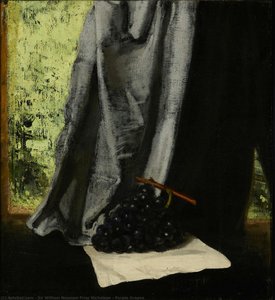
Sir William Nicholson's 'Purple Grapes' captures a captivating scene of a man offering grapes, showcasing his signature style and masterful use of light & shadow. Explore this iconic painting!
Biografia artysty
"PolishMetaDescription": "Sir William Nicholson (1872-1949) – brytyjski malarz i grafik znany z dynamicznych portretów, eleganckich kompozycji i rewolucyjnych plakatów w partnerstwie z Jamesem Prydem. Jego twórczość wpłynęła na sztukę nowoczesną."
O obrazie
The Allure of Still Life: Unveiling "Purple Grapes"
Sir William Nicholson’s “Purple Grapes,” painted around 1920, isn't merely a depiction of fruit; it’s an intimate portrait of light, color, and the quiet contemplation of domesticity. Created during a period of significant artistic experimentation in Britain – a time when artists were pushing beyond traditional academic styles – this work exemplifies Nicholson’s masterful ability to distill complex emotions into deceptively simple forms. The painting immediately draws the eye with its rich, velvety tones; deep purples and blues dominate, punctuated by the vibrant greens and yellows of the grapes themselves. It's a scene imbued with a sense of warmth and serenity, suggesting a moment captured within a comfortable, well-lit room.
A Collaboration and a Style: The Beggarstaffs’ Influence
Nicholson's artistic journey was deeply intertwined with his partnership with James Pryde, forming the celebrated graphic design collective known as the Beggarstaffs. This collaboration profoundly shaped Nicholson’s approach to painting, particularly in his use of light and color. The Beggarstaffs were renowned for their stylish posters and illustrations, often featuring glamorous women and sophisticated settings – a style that clearly influenced “Purple Grapes.” The composition echoes this aesthetic: the figure holding the grapes is presented with an air of relaxed elegance, reminiscent of the figures found in the Beggarstaff’s work. The careful arrangement of objects—the chair, the cloth draped across the arm—creates a carefully constructed tableau, inviting the viewer to step into the scene and share in its quiet beauty.
- Technique: Oil on canvas – Nicholson employed a broken brushstroke technique, layering colors to create depth and luminosity.
- Composition: A balanced arrangement of form and color, emphasizing the central figure and the vibrant grapes.
- Light: The painting is bathed in soft, diffused light, creating an atmosphere of warmth and intimacy.
Symbolism and Context: Domesticity and Modern Life
“Purple Grapes” offers a subtle yet poignant commentary on the changing social landscape of early 20th-century Britain. The painting’s focus on domestic life—a simple scene within a home—reflects a growing interest in portraying everyday experiences, rather than grand historical or mythological subjects. The grapes themselves can be interpreted as symbols of abundance and fertility, but also perhaps as a reminder of the fleeting nature of beauty and pleasure. Painted in 1920, it’s a snapshot of a world transitioning from Victorian formality to a more relaxed, modern sensibility – a world where leisure and domestic comfort were increasingly valued.
The painting's placement within Nicholson's broader body of work reveals a consistent exploration of light, color, and the human figure, often imbued with a quiet emotional resonance.A Timeless Masterpiece: Reproduction and Beyond
Reproductions of “Purple Grapes” capture much of the original’s captivating charm. The rich colors and subtle nuances of Nicholson's technique are faithfully reproduced, making it an ideal addition to a wide range of interior spaces. Whether adorning a living room wall or gracing a study, this painting evokes a sense of tranquility and sophistication. Consider commissioning a hand-painted reproduction from TopImpressionists – a way to bring this timeless masterpiece into your home while supporting the legacy of one of Britain’s most celebrated artists.
Pytania i odpowiedzi
Czy „Purple Grapes” – William Nicholson to znane dzieło sztuki?
"Purple Grapes" jest klasyfikowane jako Recognized.
Gdzie można obecnie zobaczyć dzieło „Purple Grapes” – William Nicholson?
Oryginał dzieła „Purple Grapes” można zobaczyć w Art Gallery of Hamilton, Hamilton, Kanada.
Z czego wynika obecny status praw autorskich dzieła "Purple Grapes"?
„Purple Grapes” – William Nicholson jest należy do domeny publicznej – autorskie prawa majątkowe wygasły. Okres ochrony praw autorskich liczony jest od śmierci artysty, która nastąpiła w 1949.
Najważniejsze informacje i quiz o sztuce
O William Nicholson

William Nicholson
1872 - 1949, Wielka Brytania
Biografia artysty
Early Life and Artistic Beginnings
Sir William Newzam Prior Nicholson, born on February 5, 1872, in Newark-on-Trent, Nottinghamshire, emerged from a background that blended industrial pragmatism with artistic sensibility. His father, William Nicholson, was an industrialist and Conservative MP of Newark, while his mother, Annie Elizabeth Prior, brought to the family a connection to the aesthetic traditions of Oxfordshire. From a young age, William displayed an aptitude for art, nurtured by lessons from William Cubley, a local painter who himself traced his artistic roots back to Sir Joshua Reynolds. This early exposure laid the foundation for a career that would span diverse mediums and styles – from striking portraits and elegant still lifes to innovative woodcuts and graphic design. A brief stint at Hubert von Herkomer’s art school proved pivotal, not only for honing his technical skills but also for introducing him to Mabel Pryde, who would become his wife and an essential collaborator in his burgeoning artistic journey. It was through Mabel that he met her brother, James Pryde, a partnership that would soon revolutionize the world of graphic design and establish Nicholson’s reputation as a true innovator.The Beggarstaffs and a Revolution in Poster Art
The collaboration between William Nicholson and James Pryde, known as “J. & W. Beggarstaff,” marked a turning point in British visual culture. Rejecting the prevailing ornate aesthetic of Victorian posters – often cluttered with fussy details and overly sentimental imagery – they embraced a bold simplicity characterized by striking silhouettes, flat planes of color, and a deliberate rejection of traditional perspective. Their designs weren’t merely advertisements; they were statements—powerful, graphic compositions that captured the public's imagination and challenged conventional notions of visual communication. Posters for productions like Don Quixote and publications such as Harper’s Magazine became instantly recognizable, influencing a generation of artists and designers. The Beggarstaffs’ work wasn’t confined to commercial art; it was about redefining how images were used to convey information and evoke emotion. Their impact resonated far beyond the realm of posters, influencing illustration and even painting with its emphasis on strong form and deliberate composition. This period demonstrated Nicholson's remarkable ability to synthesize artistic vision with practical design considerations, solidifying his position as a leading figure in early 20th-century graphic art.From Woodcuts to Portraits: A Developing Style
Following the dissolution of the Beggarstaff partnership – largely due to creative differences and differing commercial ambitions – Nicholson embarked on a period of stylistic exploration and experimentation. He turned his attention to woodcut and wood-engraving, techniques that allowed him to further refine his mastery of line and form. This medium offered a unique challenge, demanding precision and control as he translated images onto the block. Encouraged by the influential James Abbott McNeill Whistler, who recognized Nicholson’s talent and provided valuable guidance, he embraced these methods, producing intricate and evocative prints that showcased his growing artistic maturity. These works – including series like *An Alphabet*, *An Almanac of Twelve Sports*, and *Twelve Portraits* – demonstrated a remarkable ability to capture essence with minimal detail, a quality that would become a hallmark of his style. Simultaneously, Nicholson began to establish himself as a portrait painter, receiving commissions from prominent figures of the era, including members of the Royal Family. His portraits weren’t merely likenesses; they were insightful studies of character, revealing the inner lives of his subjects through subtle nuances of expression and pose – capturing not just physical appearance but also social standing and personality. Works like *Lady in Furs, Mme. P.* exemplify this skill, imbued with a quiet dignity and an understanding of human psychology.Still Life, Landscape, and Lasting Legacy
In the later stages of his career, Nicholson increasingly focused on still life and landscape painting. His still lifes – often featuring luxurious fabrics, exotic fruits, and gleaming tableware – are celebrated for their exquisite attention to detail, harmonious color palettes, and a quiet sense of intimacy. He imbued everyday objects with a poetic quality, elevating them beyond mere representation to become symbols of beauty and contemplation. Nicholson’s landscapes, frequently depicting scenes from his travels in Spain and Italy, reveal a sensitivity to light and atmosphere, capturing the essence of place with remarkable skill – from the sun-drenched hills of Tuscany to the rugged coastline of Cornwall. Throughout his life, Nicholson remained a versatile artist, constantly experimenting with new techniques and approaches, always seeking to refine his craft and expand his artistic horizons. He authored children’s books, designed for the theatre, and continued to produce prints alongside his paintings, demonstrating a remarkable adaptability and a deep-seated passion for art in all its forms. Sir William Nicholson's influence extends beyond his own prolific output; he inspired generations of artists with his commitment to craftsmanship, his innovative spirit, and his ability to find beauty in the ordinary. His work remains a testament to the power of art to illuminate the human experience and transform our perception of the world around us – a legacy that continues to captivate and inspire today. He died on May 16, 1949, leaving behind a rich artistic legacy that endures.Krótkie informacje o William Nicholson
- Artistic Movement Or Style: Portrety, krajobrazy, warstwa druku
- Artists Or Movements Influenced By This Artist: ['Beggarstaffs']
- Artists Who Influenced This Artist:
- Whistler
- James Pryde
- Date Of Birth: 5 lutego 1872
- Date Of Death: 16 maja 1949
- Full Name: Sir William Newzam Prior Nicholson
- Nationality: Brytyjczyk
- Notable Artworks:
- Lady in Furs
- Lowestoft Bowl
- n
- Plaza de toros, Malaga
- Place Of Birth: Newark, Wielka Brytania
Podobne dzieła



Odkryj dzieła sztuki uporządkowane według tematów, stylów i cech charakterystycznych.

William Nicholson
Purple Grapes
() ·
Wraz z ramą: · Ręcznie malowane farbami olejnymi na płótnie lnianym
Suma