


 Podgląd w skali 1:1
 Wyślij jako kartkę
 Udostępnij
 Szczegóły dzieła
 Przewodnik

 Pobierz obraz
 Podobne obiekty
 RTG
RTG Pokaz slajdów
 Statystyki
Man at the Helm


 Rozwiń treść
Théo van Rysselberghe – pionier Neo-Impressionizmu, znany z żywych obrazów i portretów. Jego twórczość łączyła światło, kolor i symbolizm, wprowadzając innowacje w Belgii.
Giclée / Wydruk artystyczny
Wydruki giclée lub płótna o jakości muzealnej, szybka realizacja i szeroki wybór opcji wykończenia. ( Zamów ręcznie malowaną reprodukcję Przejdź do wersji cyfrowej)




P118B zł10

P118H zł10

P118W zł10

P438Z zł10

P508JH zł12

P508YH zł12

P805H zł10

P805Z zł10

P919BZ zł10

P919G zł10

P919XJ zł10

P959ZH zł10

P968JZ zł12

W106C zł8

W218G zł10

W218JH zł8

W218Y zł10

W307PJ zł10

W316G zł10

W316PJ zł8

W316Y zł10

W398PJ zł8

W4111J zł10

W500HY zł15

W500JH zł15

W692G zł12

W849H zł8

W940BG zł15

W953PJ zł8




Standardowy format
personalizowane
CM
INCH
Wybierz spośród naszych standardowych rozmiarów, które zachowują oryginalne proporcje dzieła sztuki.
Loading sizes...

szerokość
wysokość
Wpisz wymaganą szerokość i wysokość, aby dopasować grafikę do ramy lub ściany. Wydruk można jedynie przyciąć, nigdy nie powiększając go poza oryginalny obraz, dlatego format o innych proporcjach spowoduje utratę części kompozycji. Przed rozpoczęciem druku prześlemy Ci cyfrowy podgląd do zatwierdzenia. Obraz wyświetlany na tej stronie nie pokazuje rzeczywistego przycięcia — jedynie podgląd oddaje ten efekt.
Dostawa na cały świat () w ciągu 2 tygodni zamiast standardowych 4/5 tygodni. (26 Październik)

Bezpłatna ekspresowa wysyłka na cały świat

Wysokiej jakości płótno lniane

Pełne ubezpieczenie przesyłki

Gwarancja zwrotu należności celnych i podatków importowych

Gwarancja wiernego odwzorowania kolorów

100-dniowa polityka zwrotów (tylko w przypadku wad)

Gwarancja 100% zwrotu pieniędzy

Zniżka przy zakupie wielu sztuk
 Opcja ze szkłem jest dostępna wyłącznie w rozmiarach poniżej 110 cm

Man at the Helm
Giclée / Wydruk artystyczny
Wymiary reprodukcji
-


Cena całkowita
zł 265
A Symphony of Light and Motion: Theo van Rysselberghe’s “Man at the Helm”
Theo van Rysselberghe, a Belgian painter who profoundly shaped the artistic landscape of his era, stands as a pivotal figure bridging Impressionism's sensual exploration with Neo-Impressionism’s scientific rigor. His artistic journey began in Ghent, Belgium, where he honed his skills under Theo Canneel at the Academy of Ghent before progressing to the Académie Royale des Beaux-Arts in Brussels, guided by Jean-François Portaels—a teacher whose influence extended beyond mere instruction, introducing him to the burgeoning fascination with Orientalism. This formative period instilled within him a foundational understanding of realism, beautifully exemplified in early works like *Self-Portrait with Pipe* (1880), where meticulous detail and somber hues mirrored the artistic sensibilities prevalent in Belgium at the time. Yet, even amidst these initial explorations, Van Rysselberghe’s gaze was already attuned to the transformative power of light—a preoccupation that would define his subsequent oeuvre.Inspired by Sailings: The Olympia Expedition
The genesis of “Man at the Helm” lies in a singular experience: Van Rysselberghe's participation in an ambitious yacht voyage aboard Olympia with fellow Impressionist Paul Signac. This expedition, undertaken in 1892, served as a catalyst for artistic innovation, propelling him toward a stylistic approach that prioritized capturing fleeting moments of light and movement—a hallmark of Divisionism. The turbulent waters depicted in the painting weren’t merely a backdrop; they represented a deliberate challenge to traditional representation, mirroring Signac's own commitment to portraying nature with unprecedented vibrancy and accuracy. This shared passion for maritime pursuits directly informed Van Rysselberghe’s artistic vision.Divisionist Technique: Precise Dots of Color
“Man at the Helm” exemplifies Divisionism—a technique championed by Signac and championed by Van Rysselberghe himself. Unlike Impressionists who blended colors on the canvas, Divisionists meticulously applied small dots of pure pigment onto the surface, allowing them to optically blend in the viewer’s eye. This method demanded painstaking precision and rewarded a heightened sensitivity to color perception—a characteristic that distinguishes Van Rysselberghe's work from its predecessors. The artist skillfully utilized this technique to render the choppy waves with remarkable fidelity, conveying both their visual texture and emotional impact. Each dot of pigment contributes to an overall impression of dynamism and luminosity, mirroring the energy of the sea itself.Symbolism Within Tranquility: A Portrait of Determination
Beyond its technical brilliance, “Man at the Helm” resonates with symbolic significance. The solitary figure at the helm embodies resilience and unwavering focus—a testament to human perseverance amidst adversity. The boat itself symbolizes navigation through life’s challenges, while the turbulent waters represent obstacles encountered on one's journey. Van Rysselberghe’s masterful composition draws attention to the central subject, placing him at an angle on the canvas – a stylistic choice that amplifies the feeling of movement and underscores the importance of maintaining composure in difficult circumstances.A Legacy Preserved: Musée d’Orsay and Artistic Context
Currently housed within the Musée d’Orsay in Paris, “Man at the Helm” occupies a prominent position within the museum's celebrated collection of French art from 1848 to 1914—a period marked by groundbreaking artistic experimentation. Alongside works by Impressionists like Pierre Bonnard and Monet, Van Rysselberghe’s painting stands as an emblem of Neo-Impressionism’s contribution to the broader artistic dialogue of its time. Its enduring appeal lies not only in its aesthetic beauty but also in its ability to convey a profound emotional truth—a reminder that even amidst chaos, human spirit can triumph through unwavering resolve and careful observation.Pytania i odpowiedzi
Gdzie mogę kupić cyfrową wersję dzieła „Man at the Helm” – Teofil van Rysselberghe?
Aby otrzymać plik cyfrowy dzieła „Man at the Helm” – Teofil van Rysselberghe, zamów wysokiej rozdzielczości cyfrowe zdjęcie do pobrania na stronie Cyfrowy obraz.
Jaka technika została użyta w przypadku "Man at the Helm" i kiedy powstało to dzieło?
"Man at the Helm" powstało w 1892 roku przy użyciu Acrylic On Canvas.
W którym roku powstało dzieło "Man at the Helm"?
"Man at the Helm" powstało w 1892 roku. Data ta pozwala umiejscowić dzieło w kontekście twórczości Teofil van Rysselberghe oraz epoki, w której powstało.
Podobne dzieła


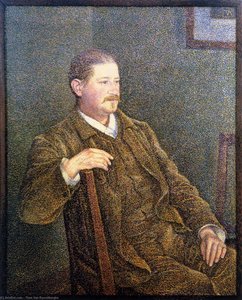

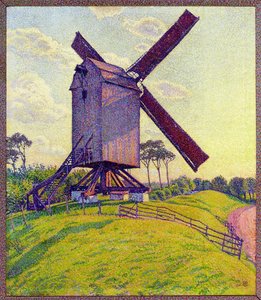


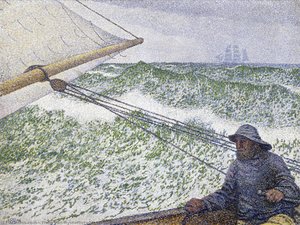


Biografia artysty
A Pioneer of Light: The Life and Art of Théo van Rysselberghe
Théophile “Théo” van Rysselberghe, born in Ghent, Belgium, in 1862, emerged as a pivotal figure bridging the gap between Impressionism and Neo-Impressionism. His journey wasn’t one of immediate stylistic conviction but rather an evolving exploration sparked by travel, intellectual exchange, and a relentless pursuit of capturing light's essence. Coming from a comfortably bourgeois French-speaking family, van Rysselberghe received his initial artistic training at the Academy of Ghent under Theo Canneel, followed by studies at the prestigious Académie Royale des Beaux-Arts in Brussels. These formative years instilled in him a foundation rooted in traditional realism, evident in early works like *Self-Portrait with Pipe* (1880), characterized by somber tones and meticulous detail—a reflection of the prevailing Belgian artistic climate. However, even within these early pieces, hints of a burgeoning sensitivity to light and color began to surface, foreshadowing his future trajectory.Moroccan Impressions and the Birth of Les XX
A transformative chapter unfolded with van Rysselberghe’s voyages to Morocco between 1882 and 1888. These extended sojourns immersed him in a world of vibrant colors, intense sunlight, and exotic landscapes—a stark contrast to the subdued tones of his earlier work. Paintings like *Arabian Street Cobbler* (1882), *Arabian Boy* (1882), and *Resting Guard* (1883) demonstrate a growing fascination with capturing the effects of light on form, moving away from strict realism towards a more impressionistic sensibility. The Moroccan experience wasn’t merely about visual observation; it was an immersion into a different culture that broadened his artistic horizons and instilled a lifelong love for travel. He documented these experiences in numerous paintings, seeking to capture not just the appearance but also the atmosphere of the North African world. Upon returning to Brussels, van Rysselberghe became a driving force in the Belgian art scene, co-founding the influential group *Les XX* (The Twenty) in 1883 alongside Octave Maus and Émile Verhaeren. This collective served as a platform for showcasing avant-garde art, introducing new movements like Impressionism and Symbolism to a Belgian audience largely unfamiliar with such innovations. *Arabian Phantasia* (1884), a large-scale exotic painting depicting a Moroccan scene, became his most celebrated work from this period, demonstrating his mastery of light and composition. The group’s aim was to foster artistic experimentation and challenge established norms within the Belgian art world.Embracing Neo-Impressionism: A Scientific Approach to Color
The true turning point in van Rysselberghe’s artistic development arrived with his encounter with Georges Seurat's *A Sunday on La Grande Jatte* at the eighth Impressionist exhibition in Paris in 1886. Initially skeptical of Seurat’s meticulous “pointillist” technique—the systematic application of tiny dots of pure color—van Rysselberghe gradually came to appreciate its scientific basis and potential for achieving luminous effects. He began experimenting with divisionism, the Neo-Impressionist method of separating colors into their constituent parts and allowing the viewer’s eye to blend them optically. This wasn't simply a technical shift; it represented a fundamental change in his approach to painting—a move towards a more analytical and objective representation of light and color. He forged close friendships with other Neo-Impressionist painters like Paul Signac, traveling with him along the French Riviera and exchanging ideas about technique and theory. Van Rysselberghe distinguished himself within the movement by applying pointillism not only to landscapes but also to portraiture, creating strikingly vibrant and psychologically insightful likenesses of his family and friends—works such as *Madame Charles Maus* (1890) are prime examples. The meticulous layering of tiny dots created a shimmering effect, capturing the nuances of light and atmosphere with remarkable precision.A Lasting Legacy: Beyond Pointillism
While deeply committed to Neo-Impressionism for a significant period, van Rysselberghe eventually moved beyond its strict tenets in the late 1890s. He sought greater freedom in his brushwork and compositions, exploring new ways to express emotion and atmosphere. He continued to be a prolific artist, working in various media including furniture design, book illustration, and decorative arts. His influence extended far beyond Belgium, impacting artists like Piet Mondrian and Jan Toorop who were inspired by his innovative use of color and light. He also experimented with Symbolist themes, incorporating elements of mysticism and dream imagery into his work. His dedication to exploring the interplay of light, color, and form cemented his place as a true pioneer of modern painting. Van Rysselberghe’s works are now held in prominent museum collections worldwide, including the Musée du Luxembourg in Paris and the Museum voor Schone Kunsten in Ghent, ensuring that his contribution to the history of art continues to be celebrated and appreciated by generations to come. His legacy lies not only in his beautiful paintings but also in his role as a catalyst for artistic change—a champion of modernism who helped introduce new ideas and techniques to the Belgian art world.Key Works
* *Self-Portrait with Pipe* (1880) * *Child in an Open Spot of the Forest* (1880) * *Arabian Street Cobbler* (1882) * *Arabian Boy* (1882) * *Resting Guard* (1883) * *La Pointe Perkiridec Near Roscoff in Brittany* (1889) * *Madame Charles Maus* (1890) * *Family in the Orchard* (1890)
Teofil van Rysselberghe
1862 - 1926 , Belgia
Krótka nota
- Artistic Movement Or Style: Neo-Impressionizm
- Artists Or Movements Influenced By This Artist:
- Piet Mondrian
- Jan Toorop
- Artists Who Influenced This Artist:
- Jean-François Portaels
- Georges Seurat
- Paul Signac
- Date Of Birth: 23 listopada 1862
- Date Of Death: 13 grudnia 1926
- Full Name: Théo van Rysselberghe
- Nationality: Belgijski
- Notable Artworks:
- Arabian Phantasia
- Sevillan Woman
- Place Of Birth: Ghent, Belgia
Powiązane artykuły

Beyond the Light: Discovering the Soul and Emotional Depth of Post-Impressionism
Embark on a cultural journey through Post-Impressionism. Discover the profound emotional depth of masters like Van Gogh and Cézanne, exploring how they moved beyond light to capture the very soul of human experience through vibrant color and symbolic form.
Odkryj dzieła sztuki uporządkowane według tematów, stylów i cech charakterystycznych.

