

 Podgląd w skali 1:1
 Wyślij jako kartkę
 Udostępnij
 Szczegóły dzieła
 Przewodnik

 Pobierz obraz
 Podobne obiekty
 RTG
RTG Pokaz slajdów
 Pytania i odpowiedzi
 Statystyki
Maria Sethe at the Harmonium

- 118.0 x 84.0 cm


Experience Theo van Rysselberghe's luminous Neo-Impressionist masterpiece, ‘Maria Sethe at the Harmonium,’ capturing serene beauty with meticulous pointillism and a cozy domestic atmosphere.
 Rozwiń treść
Théo van Rysselberghe – pionier Neo-Impressionizmu, znany z żywych obrazów i portretów. Jego twórczość łączyła światło, kolor i symbolizm, wprowadzając innowacje w Belgii.
Giclée / Wydruk artystyczny
Wydruki giclée lub płótna o jakości muzealnej, szybka realizacja i szeroki wybór opcji wykończenia. ( Zamów ręcznie malowaną reprodukcję Przejdź do wersji cyfrowej)




P118B zł10

P118H zł10

P118W zł10

P438Z zł10

P508JH zł12

P508YH zł12

P805H zł10

P805Z zł10

P919BZ zł10

P919G zł10

P919XJ zł10

P959ZH zł10

P968JZ zł12

W106C zł8

W218G zł10

W218JH zł8

W218Y zł10

W307PJ zł10

W316G zł10

W316PJ zł8

W316Y zł10

W398PJ zł8

W4111J zł10

W500HY zł15

W500JH zł15

W692G zł12

W849H zł8

W940BG zł15

W953PJ zł8




Standardowy format
personalizowane
CM
INCH
Wybierz spośród naszych standardowych rozmiarów, które zachowują oryginalne proporcje dzieła sztuki.
Loading sizes...

szerokość
wysokość
Wpisz wymaganą szerokość i wysokość, aby dopasować grafikę do ramy lub ściany. Wydruk można jedynie przyciąć, nigdy nie powiększając go poza oryginalny obraz, dlatego format o innych proporcjach spowoduje utratę części kompozycji. Przed rozpoczęciem druku prześlemy Ci cyfrowy podgląd do zatwierdzenia. Obraz wyświetlany na tej stronie nie pokazuje rzeczywistego przycięcia — jedynie podgląd oddaje ten efekt.
Dostawa na cały świat () w ciągu 2 tygodni zamiast standardowych 4/5 tygodni. (7 Listopad)

Bezpłatna ekspresowa wysyłka na cały świat

Wysokiej jakości płótno lniane

Pełne ubezpieczenie przesyłki

Gwarancja zwrotu należności celnych i podatków importowych

Gwarancja wiernego odwzorowania kolorów

100-dniowa polityka zwrotów (tylko w przypadku wad)

Gwarancja 100% zwrotu pieniędzy

Zniżka przy zakupie wielu sztuk
 Opcja ze szkłem jest dostępna wyłącznie w rozmiarach poniżej 110 cm

Maria Sethe at the Harmonium
Giclée / Wydruk artystyczny
Wymiary reprodukcji
-


Cena całkowita
zł 274
A Symphony of Light and Stillness
In the quiet corners of late nineteenth-century European art, few works capture the delicate intersection of domestic peace and intellectual depth as poignantly as Théo van Rysselberghe’s 1891 masterpiece, Maria Sèthe at the Harmonium. This oil on canvas is far more than a mere portrait; it is an immersive experience that invites the viewer into a moment of profound, silent contemplation. The scene depicts a woman, Maria Sèthe, seated before the harmonium, her gaze drifting upward as if caught in the middle of a musical thought or a sudden, beautiful realization. There is a palpable sense of stillness in the room, an atmosphere where time seems to slow down, allowing the soft light of a Belgian afternoon to dance across the surfaces of a private, scholarly sanctuary.
The setting itself tells a story of a life enriched by both art and intellect. Surrounded by the comforting presence of books and the gentle touch of nature provided by a vase of flowers, the room exudes a sophisticated yet cozy ambiance. For the discerning collector or interior designer, this painting offers a unique emotional anchor—a piece that brings a sense of tranquility, warmth, and cultured refinement to any space. It is an artwork that does not demand attention through loud colors or dramatic action, but rather earns it through a subtle, luminous grace that rewards prolonged observation.
The Magic of the Pointillist Dot
To look closely at this work is to witness the revolutionary spirit of Neo-Impressionism. Van Ryssebheghe, heavily inspired by the groundbreaking methods of Georges Seurat and Paul Signac, employs the technique of Pointillism to breathe life into the canvas. Rather than traditional blending, the artist meticulously applies tiny, distinct dots of pure pigment side by side. This scientific approach to color relies on the viewer's eye to perform an optical blend, creating a shimmering, vibrating effect that mimics the true behavior of light. In Maria Sèthe at the Harmonium, this technique is used to extraordinary effect; the woman’s dress, rendered in muted ochre and mauve, seems to catch a subtle, internal glow, while the textures of the wooden instrument and the surrounding shadows possess a luminous depth that feels almost tactile.
This painstaking method requires immense patience and precision, resulting in a surface that feels alive with energy despite the subject's outward stillness. The way the light scatters across the scene—simulating the soft diffusion of sunlight through a window—creates a sense of atmosphere that is both ethereal and grounded. For those seeking a high-quality reproduction, capturing this specific optical vibration is essential, as it is the very soul of the painting, transforming a static domestic scene into a breathing, luminous window into the past.
A Legacy of Elegance for the Modern Interior
Beyond its technical brilliance, the painting serves as a bridge between the traditional realism of the Academy and the modern fascination with light and perception. Van Rysselberghe’s ability to infuse a portrait with such symbolic resonance—suggesting an intellectual pursuit through the presence of books and a musical soul through the harmonium—makes this work a timeless addition to any curated collection. It embodies a period of European history where the domestic sphere was a site of profound cultural cultivation.
Integrating a reproduction of this masterpiece into a contemporary interior design scheme offers an opportunity to introduce narrative depth and historical prestige. Whether placed in a sunlit reading nook or as a focal point in a formal living area, the painting’s soft palette and serene subject matter provide a calming influence. It is an ideal choice for those who appreciate art that speaks of quiet sophistication, offering a sophisticated touch of Belgian Neo-Impressionism that remains as captivating today as it was in 1891.
Pytania i odpowiedzi
W którym roku i w ramach jakiego nurtu powstało dzieło "Maria Sethe at the Harmonium"?
"Maria Sethe at the Harmonium" powstało w 1891 roku jako dzieło należące do nurtu Neo-Impressionism. Data powstania oraz przynależność do tego kierunku osadzają dzieło w kontekście historii sztuki.
Czy w „Maria Sethe at the Harmonium” – Teofil van Rysselberghe zastosowano silne kontrasty czy raczej łagodne harmonie?
Kompozycja kolorystyczna „Maria Sethe at the Harmonium” – Teofil van Rysselberghe łączy w sobie Bold kontrast z Softly Mixed Palette harmonią.
Ile lat miał Teofil van Rysselberghe, gdy powstało dzieło „Maria Sethe at the Harmonium”?
Gdy w 1891 roku powstało dzieło „Maria Sethe at the Harmonium”, Teofil van Rysselberghe – urodzony/a w 1862 – miał/a 29 lat.
Podobne dzieła
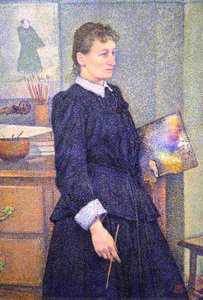

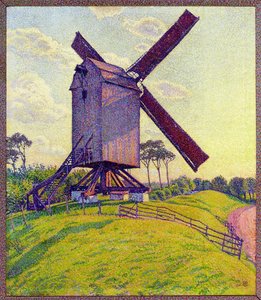


Biografia artysty
A Pioneer of Light: The Life and Art of Théo van Rysselberghe
Théophile “Théo” van Rysselberghe, born in Ghent, Belgium, in 1862, emerged as a pivotal figure bridging the gap between Impressionism and Neo-Impressionism. His journey wasn’t one of immediate stylistic conviction but rather an evolving exploration sparked by travel, intellectual exchange, and a relentless pursuit of capturing light's essence. Coming from a comfortably bourgeois French-speaking family, van Rysselberghe received his initial artistic training at the Academy of Ghent under Theo Canneel, followed by studies at the prestigious Académie Royale des Beaux-Arts in Brussels. These formative years instilled in him a foundation rooted in traditional realism, evident in early works like *Self-Portrait with Pipe* (1880), characterized by somber tones and meticulous detail—a reflection of the prevailing Belgian artistic climate. However, even within these early pieces, hints of a burgeoning sensitivity to light and color began to surface, foreshadowing his future trajectory.Moroccan Impressions and the Birth of Les XX
A transformative chapter unfolded with van Rysselberghe’s voyages to Morocco between 1882 and 1888. These extended sojourns immersed him in a world of vibrant colors, intense sunlight, and exotic landscapes—a stark contrast to the subdued tones of his earlier work. Paintings like *Arabian Street Cobbler* (1882), *Arabian Boy* (1882), and *Resting Guard* (1883) demonstrate a growing fascination with capturing the effects of light on form, moving away from strict realism towards a more impressionistic sensibility. The Moroccan experience wasn’t merely about visual observation; it was an immersion into a different culture that broadened his artistic horizons and instilled a lifelong love for travel. He documented these experiences in numerous paintings, seeking to capture not just the appearance but also the atmosphere of the North African world. Upon returning to Brussels, van Rysselberghe became a driving force in the Belgian art scene, co-founding the influential group *Les XX* (The Twenty) in 1883 alongside Octave Maus and Émile Verhaeren. This collective served as a platform for showcasing avant-garde art, introducing new movements like Impressionism and Symbolism to a Belgian audience largely unfamiliar with such innovations. *Arabian Phantasia* (1884), a large-scale exotic painting depicting a Moroccan scene, became his most celebrated work from this period, demonstrating his mastery of light and composition. The group’s aim was to foster artistic experimentation and challenge established norms within the Belgian art world.Embracing Neo-Impressionism: A Scientific Approach to Color
The true turning point in van Rysselberghe’s artistic development arrived with his encounter with Georges Seurat's *A Sunday on La Grande Jatte* at the eighth Impressionist exhibition in Paris in 1886. Initially skeptical of Seurat’s meticulous “pointillist” technique—the systematic application of tiny dots of pure color—van Rysselberghe gradually came to appreciate its scientific basis and potential for achieving luminous effects. He began experimenting with divisionism, the Neo-Impressionist method of separating colors into their constituent parts and allowing the viewer’s eye to blend them optically. This wasn't simply a technical shift; it represented a fundamental change in his approach to painting—a move towards a more analytical and objective representation of light and color. He forged close friendships with other Neo-Impressionist painters like Paul Signac, traveling with him along the French Riviera and exchanging ideas about technique and theory. Van Rysselberghe distinguished himself within the movement by applying pointillism not only to landscapes but also to portraiture, creating strikingly vibrant and psychologically insightful likenesses of his family and friends—works such as *Madame Charles Maus* (1890) are prime examples. The meticulous layering of tiny dots created a shimmering effect, capturing the nuances of light and atmosphere with remarkable precision.A Lasting Legacy: Beyond Pointillism
While deeply committed to Neo-Impressionism for a significant period, van Rysselberghe eventually moved beyond its strict tenets in the late 1890s. He sought greater freedom in his brushwork and compositions, exploring new ways to express emotion and atmosphere. He continued to be a prolific artist, working in various media including furniture design, book illustration, and decorative arts. His influence extended far beyond Belgium, impacting artists like Piet Mondrian and Jan Toorop who were inspired by his innovative use of color and light. He also experimented with Symbolist themes, incorporating elements of mysticism and dream imagery into his work. His dedication to exploring the interplay of light, color, and form cemented his place as a true pioneer of modern painting. Van Rysselberghe’s works are now held in prominent museum collections worldwide, including the Musée du Luxembourg in Paris and the Museum voor Schone Kunsten in Ghent, ensuring that his contribution to the history of art continues to be celebrated and appreciated by generations to come. His legacy lies not only in his beautiful paintings but also in his role as a catalyst for artistic change—a champion of modernism who helped introduce new ideas and techniques to the Belgian art world.Key Works
* *Self-Portrait with Pipe* (1880) * *Child in an Open Spot of the Forest* (1880) * *Arabian Street Cobbler* (1882) * *Arabian Boy* (1882) * *Resting Guard* (1883) * *La Pointe Perkiridec Near Roscoff in Brittany* (1889) * *Madame Charles Maus* (1890) * *Family in the Orchard* (1890)
Teofil van Rysselberghe
1862 - 1926 , Belgia
Krótka nota
- Artistic Movement Or Style: Neo-Impressionizm
- Artists Or Movements Influenced By This Artist:
- Piet Mondrian
- Jan Toorop
- Artists Who Influenced This Artist:
- Jean-François Portaels
- Georges Seurat
- Paul Signac
- Date Of Birth: 23 listopada 1862
- Date Of Death: 13 grudnia 1926
- Full Name: Théo van Rysselberghe
- Nationality: Belgijski
- Notable Artworks:
- Arabian Phantasia
- Sevillan Woman
- Place Of Birth: Ghent, Belgia
Powiązane artykuły

Rembrandt van Rijn: 25 Najwybitniejszych Dzieł Sztuki – Reprodukcje i Inspiracje do Wnętrz
Poznaj 25 arcydzieł Rembrandta van Rijn! Odkryj fascynujące historie, techniki i wpływ holenderskiego mistrza baroku na świat sztuki. Reprodukcje obrazów najwyższej jakości – inspiracje do wnętrz na TopImpressionists.com

Theo van Doesburg: Pioneering De Stijl & the Evolution of Neo-Plasticism
Explore the revolutionary De Stijl movement & Neo-Plasticism with our expert guide. Discover Piet Mondrian, Theo van Doesburg, and the lasting impact of this influential art style. Learn about collecting & investing in De Stijl masterpieces.

Théo van Rysselberghe: Pioneering Belgian Pointillism & the Pursuit of Luminosity
Explore the captivating world of Théo van Rysselberghe, a pioneer of Belgian Neo-Impressionism. Discover his masterpieces, artistic journey, and lasting impact on modern art. Learn more at TopImpressionists.

The Science of Light: Decoding the Optical Precision of Neo-Impressionism
Explore the scientific brilliance of Neo-Impressionism. Discover how masters like Georges Seurat revolutionized art through optical mixing, color theory, and the precision of Pointillism to capture the true essence of light.

10 Arcydzieł Postimpresjonizmu, Które Zdefiniowały Sztukę. Inspiracje do Dekoracji Domu.
Odkryj 10 arcydzieł postimpresjonizmu Van Gogha, Moneta i Cézanne'a! Poznaj historie artystów, techniki malarskie i inspiracje do dekoracji wnętrz. Reprodukcje obrazów najwyższej jakości na TopImpressionists.com – sztuka dla Twojego domu.
Odkryj dzieła sztuki uporządkowane według tematów, stylów i cech charakterystycznych.

