

 Podgląd w skali 1:1
 Wyślij jako kartkę
 Udostępnij
 Szczegóły dzieła
 Przewodnik

 Pobierz obraz
 Podobne obiekty
 RTG
RTG Pokaz slajdów
 Pytania i odpowiedzi
 Statystyki
Taking the Count


Explore Thomas Eakins' masterful realism in 'Taking the Count,' a captivating black and white depiction of a boxing match at Yale University Art Gallery. Discover anatomical precision & American spirit.
 Rozwiń treść
Thomas Eakins – amerykański malarz realizmu, znany z bezkompromisowych portretów, dynamicznych scen wioślarskich i precyzyjnego oddania anatomii. Jego dzieła inspirują do obserwacji rzeczywistości.
Giclée / Wydruk artystyczny
Wydruki giclée lub płótna o jakości muzealnej, szybka realizacja i szeroki wybór opcji wykończenia. ( Zamów ręcznie malowaną reprodukcję Przejdź do wersji cyfrowej)




P118B zł10

P118H zł10

P118W zł10

P438Z zł10

P508JH zł12

P508YH zł12

P805H zł10

P805Z zł10

P919BZ zł10

P919G zł10

P919XJ zł10

P959ZH zł10

P968JZ zł12

W106C zł8

W218G zł10

W218JH zł8

W218Y zł10

W307PJ zł10

W316G zł10

W316PJ zł8

W316Y zł10

W398PJ zł8

W4111J zł10

W500HY zł15

W500JH zł15

W692G zł12

W849H zł8

W940BG zł15

W953PJ zł8




Standardowy format
personalizowane
CM
INCH
Wybierz spośród naszych standardowych rozmiarów, które zachowują oryginalne proporcje dzieła sztuki.
Loading sizes...

szerokość
wysokość
Wpisz wymaganą szerokość i wysokość, aby dopasować grafikę do ramy lub ściany. Wydruk można jedynie przyciąć, nigdy nie powiększając go poza oryginalny obraz, dlatego format o innych proporcjach spowoduje utratę części kompozycji. Przed rozpoczęciem druku prześlemy Ci cyfrowy podgląd do zatwierdzenia. Obraz wyświetlany na tej stronie nie pokazuje rzeczywistego przycięcia — jedynie podgląd oddaje ten efekt.
Dostawa na cały świat () w ciągu 2 tygodni zamiast standardowych 4/5 tygodni. (8 Listopad)

Bezpłatna ekspresowa wysyłka na cały świat

Wysokiej jakości płótno lniane

Pełne ubezpieczenie przesyłki

Gwarancja zwrotu należności celnych i podatków importowych

Gwarancja wiernego odwzorowania kolorów

100-dniowa polityka zwrotów (tylko w przypadku wad)

Gwarancja 100% zwrotu pieniędzy

Zniżka przy zakupie wielu sztuk
 Opcja ze szkłem jest dostępna wyłącznie w rozmiarach poniżej 110 cm

Taking the Count
Giclée / Wydruk artystyczny
Wymiary reprodukcji
-


Cena całkowita
zł 274
The Raw Pulse of Philadelphia: A Masterclass in Realism
In the dim, electric atmosphere of Philadelphia’s Arena in 1898, a moment of profound human vulnerability is frozen in time. Thomas Eakins, a titan of American Realism, does not merely paint a boxing match; he dissects the very essence of endurance and physical struggle. In Taking the Count, we are thrust into the center of the ring, where the sweat, the tension, and the heavy breathing of the combatants feel almost palpable. This is not the romanticized, heroic athleticism often found in sporting art; instead, Eakins presents a gritty, unvarnished truth. The scene captures a fallen fighter at his most precarious moment, caught in the agonizing interval between a devastating blow and the referee's decisive count. It is a study of the human body under duress, rendered with a scientific precision that reflects Eakins’ lifelong obsession with anatomy.
The composition draws the eye through a complex web of gazes and physical postures. At the heart of the drama, the kneeling figure embodies a desperate struggle for recovery, his muscles taut and his spirit tested. Surrounding him, the referee and the standing opponent create a triangular tension that anchors the viewer within the ring. Beyond the immediate combatants, the presence of the crowd—a shadowy, watchful collective—adds a layer of psychological depth, reminding us that this private agony is being consumed as public spectacle. For the collector or the lover of fine art, this painting offers more than just a depiction of sport; it provides a window into the late 19th-century urban experience, where the boundaries between physical prowess and human frailty are perpetually blurred.
Anatomy of a Masterpiece: Technique and Light
Eakins’s technical mastery is most evident in his ability to marry scientific rigor with emotional resonance. Having spent years studying the intricacies of musculature and bone structure through dissection, he approaches the canvas with the eye of an anatomist. Every sinew and strained limb in Taking the Count is rendered with an uncompromising accuracy that makes the figures appear to possess weight and volume. His use of light does not serve to beautify the scene but to illuminate its harsh realities. The lighting within the arena creates deep, dramatic shadows that sculpt the bodies of the boxers, emphasizing the physical toll of the fight and adding a sense of cinematic gravity to the composition.
The palette, while grounded in the earthy, somber tones characteristic of Eakins’s realism, is used to direct the viewer's emotional journey. The muted colors of the background allow the pale, strained skin of the athletes to emerge from the gloom, focusing our attention on the visceral reality of the struggle. For interior designers seeking a centerpiece for a sophisticated space, this work offers a profound sense of gravitas. A high-quality reproduction of this masterpiece brings with it an air of intellectual depth and historical weight, making it an ideal choice for galleries, studies, or living spaces that value art which challenges the eye and stirs the soul.
A Legacy of Unflinching Honesty
To understand Taking the Count is to understand the rebellious spirit of Thomas Eakins himself. At a time when many of his contemporaries were retreating into the soft, fleeting impressions of light or the idealized myths of history, Eakins stood firm in his commitment to the real. He found beauty not in perfection, but in the truth of the human condition—in the grit of the city, the precision of science, and the raw intensity of life lived on the edge. This painting remains a testament to that courage.
Owning or displaying a reproduction of this work is an invitation to contemplate the themes of resilience and the cyclical nature of struggle. It serves as a powerful reminder that even in moments of defeat, there is a profound dignity in the attempt to rise again. Whether viewed as a historical document of Philadelphia’s sporting culture or as a timeless exploration of human anatomy, Taking the Count continues to captivate, offering an enduring source of inspiration for those who find beauty in the authentic and the unadorned.
Pytania i odpowiedzi
Jaką harmonię kolorów prezentuje „Taking the Count” – Thomas Eakins?
„Taking the Count” – Thomas Eakins prezentuje Strong Color Unity harmonię kolorystyczną.
Do którego etapu twórczości Thomas Eakins należy dzieło „Taking the Count”?
"Taking the Count" reprezentuje Mature Period twórczości Thomas Eakins.
Jaki rozmiar wydruku „Taking the Count” – Thomas Eakins będzie odpowiedni do zalecanego pomieszczenia?
W pomieszczeniu typu Living Room sugerowany jest wydruk dzieła „Taking the Count” w rozmiarze Large.
Biografia artysty
Thomas Eakins (1844-1916): A Life Dedicated to Reality
Thomas Cowperthwait Eakins, ur. 25 lipca 1844 w Filadelfii, zm. 25 czerwca 1916 tamże – amerykański malarz, rzeźbiarz, fotograf i nauczyciel, uważany za jednego z największych malarzy realistów XIX wieku. Jego twórczość charakteryzuje się bezkompromisowym oddaniem prawdzie, szczegółową obserwacją świata i głębokim zrozumieniem natury ludzkiej. Eakins nie ograniczał się do *reprezentowania* rzeczywistości; dążył do jej analizy, uchwycenia anatomii – zarówno fizycznej, jak i psychicznej – i następnie rekonstrukcji na płótnie z uczciwością, która często graniczyła z prowokacją. Jego ścieżka artystyczna nie była droga do natychmiastowego uznania, lecz powolnym, stopniowym wzrostem sławy, kontrowersjami i ostatecznie, trwałym rozpoznaniem jako jeden z najbardziej wyrazistych realistów w XIX i na początku XX wieku. Filadelfia, którą malował, nie była miastem monumentalnych krajobrazów czy romantycznych ideałów; to był świat lekarzy, zawodowych łowców, myśliwych i zwykłych ludzi – a ci byli jego tematami, przedstawianymi z niemal naukową precyzją.Wczesne Lata i Formacja Artystyczna
Dorastanie Eakinsa sprzyjało zarówno ciekawości intelektualnej, jak i artystycznego zamiłowania. Jego ojciec, Benjamin Eakins, pisarz i kaligraf, nauczył go dyscypliny i dokładnego obserwacji. Ta podstawa została wzmocniona jego edukacją w Central High School i Pennsylvania Academy of the Fine Arts, gdzie doskonalił rysunek i anatomię – fascynację, która przeniknęła całą jego twórczość. Jednak to czas spędzony we Włoszech i Francji, szczególnie pod okiem Jean-Léon Gérôme’a w Paryżu, ukształtował jego artystyczne podejście. Nacisk Gérôme’a na precyzyjne rysunki i historyczną dokładność rezonował z własnymi skłonnościami Eakinsa, ale szybko poszedł on o krok dalej. Pobyt w Hiszpanii dodatkowo wyostrzył jego zrozumienie światła, cienia i siły bezpośredniej obserwacji. Nie był zadowolony jedynie z kopiowania Mistrzów; chciał *zrozumieć*, jak oni to robią, i następnie zastosować tę wiedzę do własnej unikalnej wizji. Ten okres ugruntował jego zaangażowanie w malowanie bezpośrednio od życia, praktykę, która definiowała jego karierę.Poszukiwanie Prawdy: Tematyka i Techniki
Twórczość Eakinsa charakteryzuje się niezachwianym oddaniem realizmowi – odmową idealizowania lub romantyzowania swoich tematów. Jego portrety, liczące się setki, nie są ubarwionymi przedstawieniami zaprojektowanymi, aby uspokoić model; są penetrującymi studiami charakteru, ujawniającymi zarówno siłę, jak i wrażliwość. Malował osoby zajęte swoimi zawodami – chirurgów w pracy w *The Gross Clinic*, zawodowych łowców na łabędziach w *Max Schmitt in a Single Scull* – uchwytywając nie tylko ich wygląd fizyczny, ale także intensywność skupienia i wymagania ich zawodu. Ta dedykacja prawdzie rozciągała się również na jego technikę. Eakins dokładnie studiował anatomię, często sekwując zwłoki, aby zrozumieć podstawową strukturę ludzkiego ciała. Eksperymentował nawet z fotografią, wykorzystując ją jako narzędzie do analizy ruchu i osiągnięcia większej dokładności w swoich obrazach. Jego użycie chiaroscuro – dramatyczny kontrast między światłem a ciemnością – dodatkowo wzmacniało poczucie realizmu i głębi psychologicznej w jego dziełach.Kontrowersje i Dziedzictwo
Pomimo artystycznego geniuszu, kariera Eakinsa była naznaczona kontrowersjami. Jego nacisk na malowanie bezpośrednio od życia, często z udziałem nagiętych modeli, kolidował z konserwatywnymi sentymentami tamtejszej Filadelfii. Jego metody nauczania w Pennsylvania Academy były równie niekonwencjonalne; podkreślał znaczenie studiowania ludzkiego ciała na żywo i zachęcał swoich uczniów do kwestionowania tradycyjnych konwenansów artystycznych. Doprowadziło to do napięć z kolegami i ostatecznie do jego usunięcia z funkcji w 1886 roku. Kontrowersje osobiste dodatkowo zaszkodziły mu reputacji podczas jego życia, pozostawiając go w dużej mierze odizolowanego od środowiska artystycznego. Jednak Eakins nie zwalniał i kontynuował malowanie i nauczanie prywatnie, aż do pogorszenia stanu zdrowia. Po śmierci w 1916 roku jego twórczość stopniowo zaczęła być uznawana, a dziś jest celebrowana jako kluczowa postać historii amerykańskiej sztuki. Jego bezkompromisowy realizm, zaangażowanie w dokładne odwzorowanie anatomiczne i głębokie zrozumienie natury ludzkiej inspirują artystów do dzisiaj.Kluczowe Dzieła i Trwałe Wpływy
Niektóre dzieła stanowią znaki szczególne geniuszu Eakinsa. *Max Schmitt in a Single Scull* (1871), z mistrzowskim przedstawieniem ruchu i światła, jest prawdopodobnie jego najbardziej ikonicznym obrazem. *The Gross Clinic* (1875), choć kontrowersyjne w tamtych czasach ze względu na bezkompromisowe przedstawienie operacji, pozostaje potężnym świadectwem poświęcenia i umiejętności lekarzy. William Rush and His Model (1908) prezentuje jego późniejszy styl, łącząc portret z elementami alegorycznymi. Poza tymi konkretnymi obrazami wpływ Eakinsa można dostrzec w twórczości wielu artystów, którzy podążyli za nim – tych, którzy dążyli do uchwycenia otaczającego świata z uczciwością, precyzją i głębokim zrozumieniem natury ludzkiej. Jego zaangażowanie w realizm wytyczył drogę dla późniejszych ruchów, takich jak Ashcan School, a jego dziedzictwo trwa do dziś.
Thomas Eakins
1844 - 1916 , Stany Zjednoczone
Krótka nota
- Artistic Movement Or Style: Realizm
- Artists Or Movements Influenced By This Artist: ['Amerykański realizm']
- Artists Who Influenced This Artist: ['Gérôme']
- Date Of Birth: 25 lipca 1844
- Date Of Death: 25 czerwca 1916
- Full Name: Thomas Cowperthwait Eakins
- Nationality: Amerykanin
- Notable Artworks:
- Max Schmitt
- The Gross Clinic
- Swimming Hole
- Place Of Birth: Filadelfia, USA
Powiązane artykuły

The Unvarnished Truth: A Cultural Journey Through the Soul of American Realism
Explore the profound beauty of American Realism. From the Ashcan School's urban grit to intimate portraits, discover how artists captured the authentic soul of a nation through unvarnished truth and masterful observation.
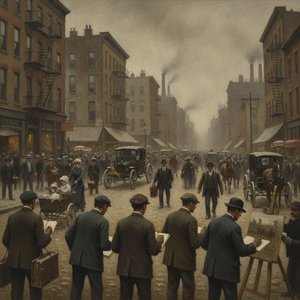
The Ashcan School: Capturing the Raw, Unfiltered Soul of Urban Life through American Realism
Discover the raw beauty of the Ashcan School. Explore how masters like Bellows and Henri captured the gritty, vibrant soul of early 20th-century New York through profound American Realism and evocative urban landscapes.
Odkryj dzieła sztuki uporządkowane według tematów, stylów i cech charakterystycznych.


