


 Podgląd w skali 1:1
 Wyślij jako kartkę
 Udostępnij
 Szczegóły dzieła
 Przewodnik

 Pobierz obraz
 Podobne obiekty
 RTG
RTG Pokaz slajdów
 Statystyki
The Morning


Experience Umberto Boccioni’s vibrant depiction of urban life at sunset—a Futurist masterpiece capturing movement and tranquility amidst a bustling cityscape. Explore this evocative painting and bring home a timeless piece of art history.
 Rozwiń treść
Umberto Boccioni – pionier włoskiego futurizmu! Odkryj dynamiczne obrazy i rzeźby, oddające ruch, nowoczesność i rozszczepione formy. Zobacz 'Dynamizm ciała ludzkiego' i więcej!
Giclée / Wydruk artystyczny
Wydruki giclée lub płótna o jakości muzealnej, szybka realizacja i szeroki wybór opcji wykończenia. ( Zamów ręcznie malowaną reprodukcję Przejdź do wersji cyfrowej)




P118B zł10

P118H zł10

P118W zł10

P438Z zł10

P508JH zł12

P508YH zł12

P805H zł10

P805Z zł10

P919BZ zł10

P919G zł10

P919XJ zł10

P959ZH zł10

P968JZ zł12

W106C zł8

W218G zł10

W218JH zł8

W218Y zł10

W307PJ zł10

W316G zł10

W316PJ zł8

W316Y zł10

W398PJ zł8

W4111J zł10

W500HY zł15

W500JH zł15

W692G zł12

W849H zł8

W940BG zł15

W953PJ zł8




Standardowy format
personalizowane
CM
INCH
Wybierz spośród naszych standardowych rozmiarów, które zachowują oryginalne proporcje dzieła sztuki.
Loading sizes...

szerokość
wysokość
Wpisz wymaganą szerokość i wysokość, aby dopasować grafikę do ramy lub ściany. Wydruk można jedynie przyciąć, nigdy nie powiększając go poza oryginalny obraz, dlatego format o innych proporcjach spowoduje utratę części kompozycji. Przed rozpoczęciem druku prześlemy Ci cyfrowy podgląd do zatwierdzenia. Obraz wyświetlany na tej stronie nie pokazuje rzeczywistego przycięcia — jedynie podgląd oddaje ten efekt.
Dostawa na cały świat () w ciągu 2 tygodni zamiast standardowych 4/5 tygodni. (27 Październik)

Bezpłatna ekspresowa wysyłka na cały świat

Wysokiej jakości płótno lniane

Pełne ubezpieczenie przesyłki

Gwarancja zwrotu należności celnych i podatków importowych

Gwarancja wiernego odwzorowania kolorów

100-dniowa polityka zwrotów (tylko w przypadku wad)

Gwarancja 100% zwrotu pieniędzy

Zniżka przy zakupie wielu sztuk
 Opcja ze szkłem jest dostępna wyłącznie w rozmiarach poniżej 110 cm

The Morning
Giclée / Wydruk artystyczny
Wymiary reprodukcji
-


Cena całkowita
zł 265
A Snapshot of Urban Rhythm: Exploring Umberto Boccioni’s “The Morning”
“The Morning,” painted in 1909 by Italian Futurist artist Umberto Boccioni, isn't merely a depiction of a cityscape at dusk; it’s an ambitious attempt to encapsulate the very spirit of modernity—a movement that fundamentally questioned artistic traditions and championed the relentless pace of industrialization.
- Subject Matter: The painting captures a bustling city street scene, populated by pedestrians and punctuated by the presence of a horse. This deliberate choice reflects Futurists’ fascination with urban environments and their desire to portray dynamism rather than static beauty.
- Style: Boccioni's work firmly establishes itself within the Futurist aesthetic—characterized by fragmentation, geometric abstraction, and an emphasis on movement. Unlike Impressionism or Post-Impressionism which prioritize capturing fleeting moments of light and color, Futurists aimed to represent the sensation of speed and energy.
- Technique: Boccioni employed a technique known as “Dynamism of Movement,” pioneered by Marinetti himself. This involved layering multiple canvases together—a process that created an illusion of depth and movement—resulting in a textured surface that conveys the palpable vibration of urban life. The artist utilized oil paints on canvas, applying them with bold brushstrokes to achieve maximum impact.
Historical Context: Futurism’s Rebellion Against Tradition
Futurism emerged in Italy during the early 1900s as a reaction against academic art and bourgeois values. Spearheaded by Marinetti, it proclaimed “speed,” “violence,” and “technology” as virtues—a radical departure from prevailing artistic sensibilities. Artists like Boccioni sought to express the anxieties and exhilarations of the rapidly changing world, fueled by advancements in transportation, communication, and manufacturing.
Symbolism Beyond Representation: Capturing Essence
While “The Morning” eschews detailed realism, it’s rich in symbolic significance. The horse represents tradition—a counterpoint to the Futurist embrace of innovation. Its presence serves as a reminder of the past while simultaneously highlighting the dynamism of the present. Furthermore, the positioning of figures within the composition contributes to the overall sense of movement and instability, mirroring the turbulent energy of the era.
Emotional Impact: A Feeling of Transient Beauty
Ultimately, “The Morning” succeeds in conveying a profound emotional response—a fleeting glimpse of beauty amidst chaos. The warm hues of sunset illuminate the cityscape, creating an atmosphere of tranquility that contrasts sharply with the hurried pace of human activity. Boccioni’s masterful technique captures not just what is seen but how it feels—a testament to his ability to translate complex ideas into visually arresting art.
Pytania i odpowiedzi
Jaki rozmiar wydruku jest zalecany dla dzieła "The Morning"?
Zalecany rozmiar wydruku dla „The Morning” – Umberto Boccioni to Large.
Jak mogę podejrzeć reprodukcję dzieła „The Morning” – Umberto Boccioni?
Aby podglądnąć reprodukcję dzieła „The Morning” – Umberto Boccioni, otwórz stronę Podgląd w pomieszczeniu danego utworu.
Co przedstawia "The Morning"?
„The Morning” – Umberto Boccioni przedstawia: urban landscape, sunset glow, city street, human figures, horse silhouette, movement rhythm, dynamic composition.
Biografia artysty
A Life Forged in Motion: The Revolutionary Vision of Umberto Boccioni
Umberto Boccioni, born in Reggio Calabria in 1882, was a figurehead of the Italian Futurist movement—a force that sought to shatter artistic conventions and embrace the dynamism of the modern world. His life, though tragically cut short at just thirty-three, became a testament to this fervent belief in progress, speed, and the intoxicating energy of the machine age. Boccioni’s early years were marked by constant relocation due to his father's civil service position, an upbringing that exposed him to diverse landscapes and instilled within him a restless spirit. This nomadic existence eventually led him to Rome, where he initially pursued studies in decorative arts before gravitating towards painting, absorbing influences from the Liberty style poster artists of the time. However, it was his encounter with Futurism, ignited by the writings of Filippo Tommaso Marinetti, that truly set his artistic trajectory ablaze.Embracing the Whirlwind: The Rise of a Futurist
The year 1910 proved pivotal for Boccioni. He signed the *Manifesto dei Pittori Futuristi*, solidifying his commitment to a movement that celebrated technology, velocity, and even violence as emblems of modernity. This wasn’t merely an aesthetic choice; it was a philosophical rebellion against the weight of tradition, a desire to capture the very essence of a world hurtling towards an uncertain future. Boccioni quickly became one of Futurism's most articulate theorists, expanding upon Marinetti’s initial pronouncements and applying them to the visual arts. He argued for a complete break from representational accuracy, advocating instead for paintings that conveyed not just *what* things looked like, but *how* they felt in motion—the sensation of speed, the fragmentation of form, the overwhelming energy of urban life. His early works, while still hinting at Impressionist and Divisionist influences, began to demonstrate this burgeoning obsession with dynamism. Paintings such as *The City Rises* (1910-1911) are monumental in scale and ambition, depicting the chaotic construction of a modern metropolis—a swirling vortex of human figures, buildings, and machinery that embodies the Futurist ideal. The painting’s composition is deliberately unsettling, conveying a sense of overwhelming movement and transformation.Deconstructing Reality: Technique and Themes
Boccioni’s artistic development was characterized by an increasingly radical approach to form. He moved away from traditional notions of perspective and composition, embracing fragmentation as a means of conveying movement and energy. Objects were broken down into their constituent parts, lines of force radiated outwards, and colors blended in swirling patterns—all designed to create a sense of visual vibration. This deconstruction wasn’t merely stylistic; it was rooted in Boccioni's belief that reality itself was fluid and constantly changing. He sought to represent not the static appearance of things, but their dynamic essence. Key themes emerged throughout his oeuvre: dynamism, the celebration of modernity, and a fascination with the human body as a vehicle for expressing energy and motion. This is powerfully illustrated in works like *Dynamism of a Human Body* (1913), where a figure is depicted not as a solid form but as a series of fragmented shapes suggesting movement through space. The painting captures the sensation of a runner in full stride, conveying both power and vulnerability simultaneously. His sculpture *Unique Forms of Continuity in Space* (1913) further exemplifies this approach—a bronze figure that appears to be caught mid-stride, its limbs and torso elongated and distorted, conveying a sense of unstoppable momentum. The work’s innovative use of materials and techniques pushed the boundaries of sculptural representation.Influences and Artistic Connections
Boccioni's artistic journey was shaped by a diverse range of influences. Early exposure to the landscapes of Southern Italy instilled in him a deep appreciation for nature, which he later sought to capture through dynamic compositions. His studies with Giacomo Balla at the Roman art academy introduced him to techniques like pointillism and divisionism, providing a foundation for his exploration of color and light. However, it was his encounter with Filippo Marinetti and the Futurist movement that truly transformed his artistic vision. He collaborated closely with Marinetti on theoretical works, contributing significantly to the development of Futurism’s core principles. Furthermore, Boccioni maintained friendships with other prominent artists of the era, including Gino Severini and Carlo Carrà, exchanging ideas and influencing each other's work. The shared ambition to break free from traditional artistic conventions fostered a vibrant creative environment within the Futurist circle.Legacy and Lasting Impact
Boccioni’s untimely death in 1916, during World War I, tragically cut short a brilliant career. Despite his brief life, his ideas and artworks had a profound impact on the development of modern art. He profoundly influenced not only subsequent Futurist artists but also movements like Constructivism and Abstract Expressionism. His exploration of motion, dynamism, and the representation of modern life paved the way for new forms of artistic expression, challenging traditional notions of beauty and representation. His work continues to be exhibited in major museums around the world, serving as a testament to his revolutionary vision and enduring legacy. His paintings are not merely depictions of reality; they are embodiments of its relentless energy.
Umberto Boccioni
1882 - 1916 , Włochy
Krótka nota
- Artistic Movement Or Style: Futurismo
- Artists Or Movements Influenced By This Artist:
- Konstrukcjonizm
- Ekspresionizm abstrakcyjny
- Artists Who Influenced This Artist:
- Giacomo Balla
- Cubismo
- Date Of Birth: 1882-10-19
- Date Of Death: 1916-08-17
- Full Name: Umberto Boccioni
- Nationality: Włoski
- Notable Artworks:
- Dynamizm ciała ludzkiego
- Formy ciągłości w przestrzeni
- Miasto rośnie
- Place Of Birth: Reggio Calabria, Italia
Powiązane artykuły
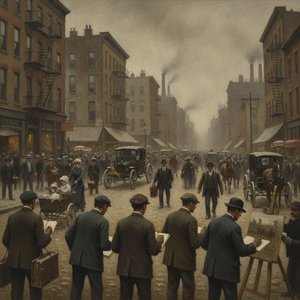
The Ashcan School: Capturing the Raw, Unfiltered Soul of Urban Life through American Realism
Discover the raw beauty of the Ashcan School. Explore how masters like Bellows and Henri captured the gritty, vibrant soul of early 20th-century New York through profound American Realism and evocative urban landscapes.
Odkryj dzieła sztuki uporządkowane według tematów, stylów i cech charakterystycznych.


