Zobacz w skali 1:1
 Wyślij
 Udostępnij
 Szczegóły
 Przewodnik

 Pobierz plik obrazu
 Podobne obiekty
 RTG
RTG Pokaz slajdów
 Statystyki
Kaglo II


Explore Victor Vasarely's mesmerizing 'Kaglo II,' a vibrant geometric print inspired by natural forms like waves and architectural structures found in Provence and Gordes. Discover the artist’s Bauhaus influence and his pioneering role in Op Art.
 Czytaj więcej
Victor Vasarely (1906-1997) – pionier op-art i sztuki kinetycznej. Jego geometryczne abstrakcje, iluzje optyczne i wpływ na współczesny design są niezapomniane.
Dzieło sztuki prezentowane na tej stronie podlega ochronie prawem autorskim, co oznacza, że nie mamy prawa do tworzenia ani sprzedaży jego identycznej reprodukcji. Ochrona ta jest egzekwowana na mocy umów międzynarodowych, takich jak Konwencja berneńska oraz przez przepisy prawa krajowego, w tym te określone w Prawo autorskie USA – Tytuł 17.
Jako pełną szacunku i legalną alternatywę oferujemy personalizowane, malowane ręcznie dzieła sztuki inspirowane oryginałem. Nasi wykwalifikowani i profesjonalni artyści starannie analizują styl, nastrój oraz artystyczną esencję pierwowzoru, aby stworzyć nowe, unikalne dzieło, które przywołuje te same emocje – pozostając jednocześnie w pełni oryginalną kreacją.
Metoda ta jest w pełni zgodna z przepisami prawa autorskiego, ponieważ nie polega na kopiowaniu ani powielaniu chronionego dzieła. Stanowi ona kreatywną reinterpretację – nowy obraz, który czerpie inspirację z oryginału, ale nie jest z nim tożsamy.
Ręcznie malowana reprodukcja olejowa
Ręcznie malowany obraz olejny na płótnie, wykonany na zamówienie przez naszych artystów w wybranym przez Ciebie wymiarze i oprawie. ( Przełącz na wersję drukowaną Przełącz na wersję cyfrową)




P118B zł10

P118H zł10

P118W zł10

P438Z zł10

P508JH zł12

P508YH zł12

P805H zł10

P805Z zł10

P919BZ zł10

P919G zł10

P919XJ zł10

P959ZH zł10

P968JZ zł12

W106C zł8

W218G zł10

W218JH zł8

W218Y zł10

W307PJ zł10

W316G zł10

W316PJ zł8

W316Y zł10

W398PJ zł8

W4111J zł10

W500HY zł15

W500JH zł15

W692G zł12

W849H zł8

W940BG zł15

W953PJ zł8




Standardowy
na zamówienie
CM
INCH
Wybierz spośród naszych standardowych rozmiarów, które zachowują oryginalne proporcje dzieła sztuki.
Loading sizes...

szerokość
wysokość
Możesz wprowadzić własne wymiary, aby dopasować obraz do konkretnej ramy lub przestrzeni. Jeśli wybrany rozmiar nie będzie odpowiadał proporcjom oryginału, przytniecie dzieło sztuki lub rozszerzymy je o dodatkowe elementy, ręcznie domalowane przez artystę. Przed rozpoczęciem produkcji wyślemy projekt cyfrowy do Twojej akceptacji.
Należy pamiętać, że podgląd na ekranie nie odzwierciedla rzeczywistego przycinania ani rozszerzania obrazu. Tylko projekt dokładnie pokaże ostateczną kompozycję.
Choć oferujemy możliwość zamówienia niestandardowych rozmiarów, zalecamy wybór wymiaru z gotowej listy, aby zachować oryginalne proporcje dzieła.
Przykłady możliwych zmian: Zamień twarz na zdjęcie klienta; Dodaj zwierzę domowe (np. zamień kota na psa); Ukryj wiadomość w tle; Zmień krajobraz lub elementy tła.
Po złożeniu zamówienia zespół TopImpressionists.com skontaktuje się z klientem drogą mailową w celu uzyskania instrukcji i prześle wizualizację projektu
Po złożeniu zamówienia zespół TopImpressionists.com skontaktuje się z klientem drogą mailową w celu uzyskania instrukcji i prześle wizualizację projektu
Dostawa na całym świecie () w ciągu 3–4 tygodni zamiast standardowych 5 tygodni. (10 Październik). Bez kompromisów w kwestii jakości.

Bezpłatna ekspresowa wysyłka na cały świat

Wysokiej jakości płótno lniane

Pełne ubezpieczenie transportowe

Gwarancja zwrotu należności celnych i podatków importowych

Gwarancja idealnego odwzorowania barw

100-dniowy okres na zwrot dzieła w przypadku wykrycia wad produkcyjnych

Gwarancja 100% zwrotu pieniędzy

Oferta przy zakupie wielu sztuk
 Opcja ze szkłem jest dostępna wyłącznie w rozmiarach poniżej 110 cm

Kaglo II
Technika wykonania
Rozmiar reprodukcji
-


Suma do zapłaty
zł 1002
A Symphony of Circles: The Pulsating Vision of Kaglo II
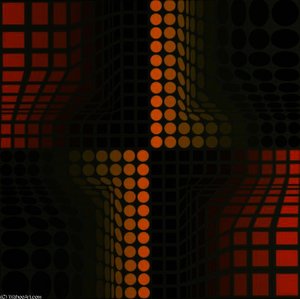
To stand before Victor Vasarely’s Kaglo II is to enter a realm where the boundaries between the static and the kinetic dissolve into a rhythmic dance of light and color. Created in 1986, this masterful print serves as a profound testament to the enduring power of geometric abstraction. At first glance, the eye is drawn to a central, commanding red sphere, which acts as the sun within a private cosmos. Surrounding this core is an intricate constellation of smaller circles, rendered in a vibrant palette of blue, green, orange, and yellow. This arrangement does not merely sit upon the surface; it breathes. Through the meticulous application of Op Art principles, Vasarely orchestrates a visual symphony that challenges our very understanding of depth and stability, inviting the viewer into an active dialogue with the canvas.
The magic of Kaglo II lies in its ability to transform passive observation into an immersive sensory experience. Vasarely, often revered as the "grandfather" of the Op Art movement, was a pioneer who sought to engineer experiences rather than simply paint images. In this work, he utilizes a technique characteristic of kinetic art, where the interplay of contrasting colors and precise geometric placement creates a subtle illusion of motion. As one moves before the piece, the retinal distortion causes the patterns to shift and vibrate, as if the circles are undulating like waves on an ocean surface. This deliberate manipulation of visual stimuli forces the viewer to confront the mechanics of their own perception, making the artwork a living, breathing entity that refuses to remain still.
Nature’s Geometry and the Legacy of Perception
While the forms in Kaglo II are strictly mathematical, their soul is deeply rooted in the organic rhythms of the natural world. Vasarely found profound inspiration in the textures of Gordes, France—the rugged limestone formations and the undulating patterns of waves that define the landscape. By translating these complex, organic movements into simplified geometric shapes, he bridged the gap between the wild unpredictability of nature and the structured precision of human intellect. This translation creates a sense of harmony that is both intellectually stimulating and emotionally soothing, making it an ideal centerpiece for those seeking to bring a sense of dynamic balance to a modern interior.
For the discerning collector or interior designer, Kaglo II offers more than mere decoration; it offers a portal into a mid-century revolution. The piece carries the weight of history, echoing the functionalist energy of the Bauhaus movement and the radical shifts in 20th-century aesthetics. It is a work that demands attention, acting as a focal point that can energize a minimalist room or add a layer of sophisticated complexity to a contemporary gallery space. To possess a reproduction of such a piece is to hold a fragment of art history—a piece that continues to pulse with the same vibrant energy that Vasarely first captured decades ago, reminding us all that even in the most rigid shapes, there is infinite movement and life.
Pytania i odpowiedzi
Do którego etapu rozwoju Wiktór Wasaryli należy dzieło „Kaglo II”?
W dorobku artystycznym Wiktór Wasaryli, dzieło „Kaglo II” przypada na Mature Period. Ten etap pozwala na zestawienie go z innymi pracami twórcy.
Do czego zaleca się wykorzystanie wydruku "Kaglo II"?
Sugerowanym zastosowaniem dla „Kaglo II” autorstwa Wiktór Wasaryli jest Accent. Może on jednak służyć również do innych celów.
W którym roku powstało dzieło "Kaglo II"?
Dzieło „Kaglo II” autorstwa Wiktór Wasaryli powstało w 1986.
Kto jest autorem dzieła "Kaglo II"?
Autorem dzieła „Kaglo II” jest Wiktór Wasaryli. Praca ta figuruje w katalogu pod nazwiskiem Wiktór Wasaryli.
Jaki ładunek emocjonalny niesie ze sobą „Kaglo II” autorstwa Wiktór Wasaryli?
„Kaglo II” budzi Calm uczucia. Ton emocjonalny opisuje wrażenie, jakie wywołuje to dzieło.
Czy „Kaglo II” autorstwa Wiktór Wasaryli należy do najbardziej pożądanych dzieł w nurcie Op Art?
„Kaglo II” jest sklasyfikowane jako Iconic wśród dzieł z nurtu Op Art w katalogu.
Ile lat miał(a) Wiktór Wasaryli, tworząc "Kaglo II" w 1986 roku?
Wiktór Wasaryli miał 80 lat, tworząc „Kaglo II” w 1986. Wiek ten został obliczony na podstawie roku urodzenia artysty, 1906.
Biografia artysty
A Life Forged in Geometry: The World of Victor Vasarely
Victor Vasarely (węg. Vásárhelyi Győző), (ur. 9 kwietnia 1906, Pecz, Węgry, zm. 15 marca 1997, Paryż, Francja) – artysta węgierskiego pochodzenia, który tworzył i pracował we Francji aż do śmierci. Jeden z czołowych przedstawicieli abstrakcji geometrycznej. Uważany za prekursora i przedstawiciela nurtu op-art. Tworzył poprzez komponowanie układów, wykorzystując geometryczne kształty (najbardziej charakterystyczne są kompozycje w kształcie kostki). Tworzył iluzję przestrzennej głębi na powierzchniach dwuwymiarowych, wykorzystując do tego jedynie abstrakcyjne plamy barwne. Pierwotnie w jego pracach dominowała czarno-biała kolorystyka, którą znacznie urozmaicił w swojej późniejszej działalności. Pierwotnie studiował medycynę, jednak po dwóch latach zmienił kierunek na malarstwo. Vasarely działał w węgierskim oddziale Bauhausu (Muhely) w Budapeszcie pod koniec lat 20. XX wieku. Here, Vasarely absorbed the tenets of functional design and geometric abstraction, seeds that would blossom into his signature style. These formative years weren't simply about acquiring technique; they were about dismantling traditional artistic conventions and embracing a new visual language rooted in logic and precision. From Early Abstraction to the Dawn of Op ArtThe late 1920s and early 1930s witnessed Vasarely’s gradual departure from representational art, as he delved deeper into the realm of geometric abstraction. Works like “Blue Study” and “Green Study,” created in 1929, exemplify this transition – a deliberate shedding of narrative content in favor of pure form and color relationships. While influenced by masters such as Piet Mondrian and Kazimir Malevich, Vasarely wasn’t content to simply emulate their styles. He sought to transcend the static compositions of his predecessors, aiming for a dynamism that would actively engage the viewer's perception. This quest led him to Paris in 1930, where he established himself as a graphic designer and advertising artist, honing his skills while continuing to develop his unique artistic vision. It was during this period that he began experimenting with techniques that would later become hallmarks of Op Art – manipulating shapes and colors to create illusions of movement and depth. The seeds were sown for a revolution in visual experience.The Systematic Illusion: Defining a Movement
By the 1960s, Victor Vasarely had fully emerged as a leading figure in the burgeoning Op Art movement. Unlike many artists who relied on intuition and spontaneous expression, Vasarely approached his work with a distinctly systematic methodology. He employed grids and mathematical principles to generate patterns that created powerful optical illusions – visual vibrations, swirling effects, and sensations of depth where none physically existed. This wasn’t about trickery; it was about revealing the inherent dynamism within perception itself. He believed in reproducibility and mass appeal, aiming to democratize art by making it accessible beyond the confines of galleries and museums. His work challenged viewers to question their own visual experience, forcing them to actively participate in the creation of meaning. He wasn't merely painting pictures; he was constructing experiences.Historical Significance
Vasarely’s contribution to art history is multifaceted. He moved beyond traditional painting techniques to create works that actively engage the viewer’s perception. His systematic approach challenged conventional notions of artistic creativity and paved the way for computer-generated art and digital design. By embracing reproducibility and commercial applications, Vasarely blurred the boundaries between fine art and popular culture, leaving an enduring mark on both. He wasn't simply creating aesthetically pleasing objects; he was conducting visual experiments that revealed fundamental truths about how we see the world. His work continues to resonate today, reminding us of the power of abstraction, the beauty of geometry, and the endless possibilities of human creativity.Influences and Development
Vasarely’s artistic journey began with a medical education in Budapest, but he quickly realized his true passion lay in visual expression. His enrollment at Sándor Bortnyik’s workshop – Műhely – profoundly shaped his early style, exposing him to the principles of functional design and geometric abstraction deeply rooted in the Bauhaus movement. This environment fostered a critical approach to traditional art forms, encouraging him to dismantle established conventions and develop a new visual language based on logic and precision. His time in Paris solidified this shift, as he honed his skills as a graphic designer and advertising artist while continuing to experiment with abstract forms and color relationships. The influence of Piet Mondrian’s reductive style and Kazimir Malevich's Suprematist explorations are evident in Vasarely’s early works, yet he ultimately sought to transcend mere imitation, aiming for a dynamic visual experience that engaged the viewer’s perception directly.Major Achievements
Vasarely’s legacy extends far beyond his paintings. He pioneered techniques of optical illusion and kinetic art, creating works that challenged our understanding of space and movement. His collaboration with Rosenthal porcelain resulted in the iconic “Suomi” tableware series, demonstrating his ability to integrate artistic principles into everyday objects. Perhaps most remarkably, Vasarely’s work was selected for display aboard the French-Soviet spacecraft Salyut 7 in 1982 – a testament to its universal appeal and groundbreaking nature. His Fondation Vasarely in Aix-en-Provence continues to preserve and promote his extensive body of work, ensuring that his innovative vision endures.
Wiktór Wasaryli
1906 - 1997 , Chorwacja
Najważniejsze informacje
- Artistic Movement Or Style: Op Art, Kinoart
- Artists Or Movements Influenced By This Artist: ['Projektowanie graficzne']
- Artists Who Influenced This Artist:
- Mondrian
- Malevich
- Date Of Birth: 9 kwietnia 1906
- Date Of Death: 15 marca 1997
- Full Name: Victor Vasarely
- Nationality: Węgiersko-Francuz
- Notable Artworks:
- Blue Study
- Green Study
- Place Of Birth: Pécs, Chorwacja
Zobacz także powiązane artykuły

Mastering Illusion: The Vibrant World of Victor Vasarely's Op Art and the Geometry of Perception
Explore the mesmerizing world of Victor Vasarely. Discover how his Bauhaus-inspired Op Art masters the science of perception through geometric abstraction and vibrant color. A sophisticated guide for discerning art collectors seeking to understand the legacy of optical illusion.

Geometria Sztuki: 10 Arcydzieł Abstrakcji Geometrycznej | TopImpressionists.com
Odkryj 10 arcydzieł abstrakcji geometrycznej! Poznaj historię Mondriana, Kandinskiego i Maleвича. Inspiracje wnętrzarskie z malarstwem abstrakcyjnym – reprodukcje najwyższej jakości na TopImpressionists.com. Eksploruj kolekcję online!

Op Art Unveiled: The Science of Optical Illusion and Kinetic Movement in Geometric Abstraction
Explore the science of Op Art through the lens of masters like Victor Vasarely. Discover how geometric abstraction uses optical illusions to create movement and delve into the neuroaesthetics of perception with our expert art history guide.

Victor Vasarely: Pioneering Op Art & Democratizing Visual Experience
Explore the revolutionary world of Victor Vasarely, father of Op Art. Discover his geometric masterpieces, artistic system, & lasting impact on modern design. A guide for discerning art collectors.

Neo-Abstract Art: The High-Impact Evolution of Modern Visual Energy and Geometric Sophistication
Discover the power of Neo-Abstract art. Explore how bold geometric forms and high-impact visual energy are redefining modern design. Learn to curate sophisticated, high-energy spaces with the latest trends in contemporary abstraction and structural color.
Odkryj dzieła sztuki uporządkowane według tematów, stylów i cech charakterystycznych.