

Przedstawiony: · Wraz z ramą:
 Podgląd w skali 1:1
 Wyślij jako kartkę
 Udostępnij
 Szczegóły dzieła
 Przewodnik

 Pobierz obraz
 Podobne obiekty
 RTG
RTG Pokaz slajdów
 Pytania i odpowiedzi
 Statystyki
- 104.0 x 158.0 cm


zł 1052
Ręcznie malowana reprodukcja olejowa
Ręcznie malowany obraz olejny na płótnie, wykonany na zamówienie przez naszych artystów w wybranym przez Ciebie wymiarze i oprawie. ( Przełącz na wydania drukowane Przejdź do wersji cyfrowej)
Wymiar
·Standardowy format
personalizowane
CM
INCH
Wybierz spośród naszych standardowych rozmiarów, które zachowują oryginalne proporcje dzieła sztuki.
Ładowanie rozmiarów...

szerokość
wysokość
Wpisz wymaganą szerokość i wysokość, aby obraz pasował do Twojej ramy lub ściany. Ponieważ jest to dzieło malowane ręcznie, w przypadku rozmiaru o innych proporcjach artysta może domalować nieco więcej wokół obrazu lub przyciąć jego fragmenty — wybór należy do Ciebie. Przed rozpoczęciem pracy prześlemy Ci cyfrową wizualizację do zatwierdzenia. Obraz widoczny na tej stronie nie przedstawia rzeczywistego efektu — jedynie wizualizacja oddaje realny rezultat.
 Dowiedz się więcej
Wykończenie
·
Białe krawędzie zł1

rozmyte krawędzie zł1

Przedłużony zł1

P118B zł10

P118H zł10

P118W zł10

P438Z zł10

P508JH zł12

P508YH zł12

P805H zł10

P805Z zł10

P919BZ zł10

P919G zł10

P919XJ zł10

P959ZH zł10

P968JZ zł12

W106C zł8

W218G zł10

W218JH zł8

W218Y zł10

W307PJ zł10

W316G zł10

W316PJ zł8

W316Y zł10

W398PJ zł8

W4111J zł10

W500HY zł15

W500JH zł15

W692G zł12

W849H zł8

W940BG zł15

W953PJ zł8

H24-GOLD zł30

H24-SILVER zł30

H36-GOLD zł45

H36-SILVER zł45
Dostarczane w ochronnej tubie, gotowe do oprawienia przez Twojego ramiarza.
Dodatki
opcjonalneCo obejmują dodatki?
Przykłady możliwych zmian: Zastąpienie twarzy zdjęciem klienta; Dodanie zwierzęcia (np. zamiana kota na psa); Ukrycie wiadomości w tle; Zmiana krajobrazu lub elementów tła.
Po złożeniu zamówienia zespół TopImpressionists.com skontaktuje się z klientem drogą mailową w celu uzyskania instrukcji i prześle podgląd projektu
Po złożeniu zamówienia zespół TopImpressionists.com skontaktuje się z klientem drogą mailową w celu uzyskania instrukcji i prześle podgląd projektu
Dostawa na całym świecie () w ciągu 3–4 tygodni zamiast standardowych 5 tygodni. (5 Listopad). Bez kompromisów w kwestii jakości.
Lakier ochronny
Etykieta obiektu
Szczegóły grawerowanej brązowej tabliczki
This elegant plaque features the artist's name and the title of the artwork, finely engraved for a timeless presentation.
It is made from bronze with a refined, elegant finish. The text is precisely laser-engraved for a sharp and permanent result. Measuring 9x2 cm, the plaque is compact yet easy to read. It's built to be durable and scratch-resistant, offering a professional, museum-quality look. Mounting is simple thanks to the included adhesive backing.
Szczegóły przezroczystej tabliczki akrylowej
The plaque includes essential engraved details such as the artist's name, the title of the artwork, the date it was created, the type of media used-like oil on canvas or watercolor-a brief description of the piece, and a QR code that links to the complete artwork information.
It is crafted from clear acrylic, offering a sleek, modern appearance. The text is UV-engraved in black to ensure strong visual contrast. With a size of 10x15 cm, it ensures optimal readability. It comes equipped with two metal hooks for secure wall mounting. The plaque is designed to be weather-resistant, making it suitable for various environments, and it includes interactive features that work seamlessly with smartphone scanning.
Szczegóły czarnej tabliczki akrylowej
This elegant plaque includes engraved information such as the artist's name, the title of the artwork, the date it was created, the type of media used (like oil on canvas or watercolor), a short description of the artwork, and a QR code for quick access to more information.
The plaque itself is made from refined black acrylic with a premium finish. The text is laser-engraved in white for high contrast and readability. Its size is 10x15 cm, designed to be easy to read. It comes with two metal hooks for professional mounting. The design is sleek and fits any interior style. It is also weather-resistant and durable, with built-in digital integration for mobile compatibility.
Opcja ze szkłem jest dostępna wyłącznie w rozmiarach poniżej 110 cm
 Opcja ze szkłem jest dostępna wyłącznie w rozmiarach poniżej 110 cm
- Bezpłatna ekspresowa wysyłka na cały świat
- Wysokiej jakości płótno lniane
- Pełne ubezpieczenie przesyłki
- Gwarancja zwrotu należności celnych i podatków importowych
- Gwarancja wiernego odwzorowania kolorów
- 100-dniowa polityka zwrotów (tylko w przypadku wad)
- Gwarancja 100% zwrotu pieniędzy
- Zniżka przy zakupie wielu sztuk


Opis obiektu
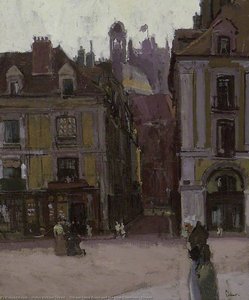
Explore 'The Bar Parlour' by Walter Richard Sickert – an evocative Impressionist painting capturing London nightlife and featuring three figures in a dimly lit bar setting.
Biografia artysty
Walter Richard Sickert (1860-1942) – brytyjski malarz, pionier modernizmu. Znany z obrazów z Londynu, muzycznych hal i portretów. Fascynujące spojrzenie na życie miasta.
O obrazie
A Glimpse into London's Twilight: The Soul of Sickert's Bar Parlour
In the quiet, amber-hued corners of early twentieth-century London, Walter Richard Sickert found his most profound muses. The Bar Parlorp, painted in 1922, serves as a masterful window into a world that exists in the soft periphery of the bustling metropolis. This evocative piece captures a fleeting moment of repose within a dimly lit establishment, where the boundaries between public life and private intimacy begin to blur. Through his distinctive lens, Sickert does not merely document a scene; he invites the viewer to sit at the table, to feel the weight of the afternoon shadows, and to become a silent participant in this intimate tableau of everyday existence.
The composition is anchored by three figures who inhabit the space with a natural, unforced grace. Two women are seated at a table, their presence suggesting a shared confidence or perhaps a momentary respite from the world outside, while a man leans against the counter behind them, his posture embodying the weary yet watchful character of the urban dweller. There is a profound sense of theatricality in this arrangement—a nod to Sickert’s own early ambitions on the London stage. Every element, from the scattered bottles on the counter to the humble loaf of bread resting on the table, contributes to a narrative of domesticity found within the public sphere, creating a scene that feels both deeply personal and universally recognizable.
The Mastery of Impressionistic Light and Texture
Technically, The Bar Parlour is a triumph of late Impressionist sensibility. Sickert eschews the sharp, clinical lines of realism in favor of loose, expressive brushstrokes that prioritize atmosphere over anatomical precision. This technique allows the light to perform its own magic; rather than being a harsh, direct force, the illumination is soft and diffused, as if filtering through a haze of tobacco smoke and dust motes. The color palette is a sophisticated study in earth tones—deep ochres, warm umbers, and muted shadows—which coalesce to create an inviting, nostalgic warmth that wraps around the viewer like a heavy velvet curtain.
For the discerning collector or interior designer, this painting offers more than mere decoration; it provides a focal point of profound emotional depth. The texture of the paint itself adds a tactile dimension to the work, suggesting the weathered surfaces of the bar and the soft fabrics of the figures' attire. When rendered as a high-quality reproduction, the interplay of light and shadow retains its ability to transform a room, lending an air of sophisticated melancholy and timeless elegance to any curated space. It is a piece that does not demand attention through loudness, but rather commands it through a quiet, irresistible magnetism.
A Legacy of Shadows and Human Connection
To understand the emotional resonance of this work, one must consider Sickert’s unique position as an artist caught between German heritage and British urbanity. His fascination with the "marginalized" and the "unseen" is palpable here. There is no grand historical drama unfolding in The Bar Parlour; instead, the drama lies in the subtle psychological tension between the characters and the heavy, comforting stillness of their environment. It is a celebration of the mundane, elevated to the level of high art through sheer observational genius.
Owning or displaying a reproduction of this masterpiece allows one to bring a piece of London's historical soul into the modern home. It serves as a reminder of the beauty found in the quiet intervals of life—the moments of stillness amidst the chaos of progress. For those seeking to infuse their interiors with a sense of history, warmth, and intellectual depth, Sickert’s vision offers an unparalleled source of inspiration, bridging the gap between the fleeting present and the enduring past.
Pytania i odpowiedzi
Czy dzieło „The Bar Parlour” – Walter Richard Sickert, znajdujące się w zbiorach Fitzwilliam College, może być legalnie reprodukowane?
Dzieło „The Bar Parlour” – Walter Richard Sickert, znajdujące się w zbiorach Fitzwilliam College, znajduje się w należy do domeny publicznej – autorskie prawa majątkowe wygasły. Status ten określa, czy możliwe jest tworzenie reprodukcji obrazu.
Co przedstawia „The Bar Parlour” – Walter Richard Sickert i jaki ma nastrój?
„The Bar Parlour” – Walter Richard Sickert przedstawia london life, bar parlour scene, interior painting, early 20th century, figure composition, earth tones palette, domestic setting, wprowadzając Elegant nastrój. Tematyka i atmosfera wspólnie definiują to dzieło.
Czy „The Bar Parlour” – Walter Richard Sickert znajduje się w domenie publicznej?
Status praw autorskich dla „The Bar Parlour” – Walter Richard Sickert: dzieło znajduje się w należy do domeny publicznej – autorskie prawa majątkowe wygasły. Określa to, czy reprodukcje obrazu mogą być sporządzane swobodnie.
Najważniejsze informacje i quiz o sztuce
O Walter Richard Sickert

Walter Richard Sickert
1860 - 1942, Niemcy
Biografia artysty
A Life Painted in Shadows and Light
Walter Richard Sickert, urodzony w Monachium w 1860 roku, był postacią nieustannie uwikłaną w światy – niemieckim przez pochodzenie, brytyjskim przez adopcję i artystą stale oscylującym między tradycjami malarskiego rzemiosła a prądami nowoczesności. Jego młode lata były naznaczone ruchem; relokacja rodziny do Anglii w 1868 roku, wywołana zmianami politycznymi na kontynencie, zakorzeniła w nim poczucie dyslokacji, które być może stale napędzało jego fascynację outsiderami i marginalizowanymi ludźmi. Chociaż pochodził z rodziny artystycznej – jego ojciec, Oswald Sickert, był duńskim malarzem – młody Walter początkowo dążył do kariery na scenie, krótko występując jako aktor u boku słynnego Sir Henry'ego Irvinga. To wczesne doświadczenie teatralne, sztuka iluzji i kreowania postaci, głęboko wpłynęło na jego wizję artystyczną, nadając jego obrazom teatralności i psychologicznej głębi, które odróżniały go od współczesnych. Jednak urok ekspresji wizualnej okazał się silniejszy, prowadząc go do studiów w Slade School w 1881 roku i następnie do zostania oddanym uczniem Jamesa Abbott McNeilla Whistlera. Ta mentoria była kształtująca, wprowadzając Sickerta w preferencję dla tonalnych studium malowanych *alla prima*, bezpośrednio od natury, oraz wyrafinowaną wrażliwość estetyczną, która stała się fundamentem jego wczesnej twórczości. Wpływ Whistlera nie ograniczał się jedynie do aspektów technicznych; sprzyjał poczuciu niezależności artystycznej i gotowości do kwestionowania konwencji.London's Underbelly and the Allure of Modern Life
Szybko, kompas artystyczny Sickerta skierował się ku tętniącemu życiem, często szaremu realowi londyńskiego życia. Zafascynował go klimat muzycznych hal – przestrzeni pełnych energii, spektaklu i różnorodnej grupy społeczeństwa. Jego obrazy z tego okresu, takie jak Katie Lawrence at Gatti's, wyróżniają się bezkompromisowym przedstawieniem tych środowisk i ich mieszkańców. Nie były to jedynie wizje; były eksploracjami współczesnego życia miejskiego, uchwycującą ulotne momenty i surowe emocje doświadczane w tych murach. Dążył do malowania życia takim, jakim było naprawdę, a nie takim, jak zostało idealizowane – radykalny odchylenie od konwencji artystycznych epoki Wiktorii. Ta zaangażowana w realizm spotkała się z kontrowersjami; krytycy uważali jego postacie za „brudne” i „obrzydliwe”, kwestionując wrażliwość, która preferowała idealizowane reprezentacje. Gotowość Sickerta do przedstawiania zwykłych ludzi, szczególnie wykonawczyń, ze szczerością i bez romantyzmu, był prowokacyjnym aktem, zapowiadającym przesunięcie w kierunku realizmu społecznego w sztuce XX wieku. Jego pobyt w Dieppe, we Francji, od 1894 roku również okazał się kluczowy, oferując nowe perspektywy na światło, kolor i kompozycję, a jego kolejne wizyty w Wenecji dodatkowo dopracowały jego podejście do przedstawiania przestrzeni wewnętrznych i skomplikowanych układów postaci. Nie był po prostu rejestrował to, co widział; interpretował je przez wyjątkowo osobisty pryzmat, nadając nawet najbardziej banalnym scenom poczucie tajemnicy i psychologicznej napiętości.The Influence of Whistler and the Pursuit of a Unique Style
Wczesna twórczość Sickerta charakteryzowała się tonalnymi studiami, inspirowanymi przez Whistlera – skupieniem na kolorze i świetle, a nie na szczegółach. Pracował z Whistlerem, ucząc się od niego technik etyczowania i malowania *alla prima*. Whistler wpłynął na Sickerta w sposób głęboki, kształtując jego postrzeganie sztuki jako formy niezależnej i kwestionującej konwencje. Sickert nie tylko naśladował techniki Whistlera, ale również rozwijał własny styl, który łączył elementy impresjonizmu z elementami realizmu i teatralności. Jego obrazy często charakteryzowały się ciemnymi kolorami, dyskretnym światłem i napiętą atmosferą, co odróżniało go od bardziej jasnych i optymistycznych obrazów jego czasowych kolegów. W tym okresie Sickert eksperymentował z różnymi technikami malarskimi, w tym kolażem i montażem, które wykorzystywał do tworzenia złożonych i wielowarstwowych obrazów.The Camden Town Group and the Exploration of Modern London
Wraz z upływem lat XX wieku Sickert stał się kluczową postacią rozwijającego się brytyjskiego nurtu awangardy. Dołączył do New English Art Club w 1888 roku, łącząc się z artystami, którzy akceptowali zasady impresjonizmu francuskiego. Później odegrał kluczową rolę w założeniu Camden Town Group w 1911 roku – kolektywu artystów poświęconego przedstawianiu współczesnego życia z bezkompromisową szczerością i innowacyjnymi stylami. Wpływ Sickerta na tę grupę był ogromny, zachęcając ich do porzucenia tradycyjnych ograniczeń akademickich i eksploracji nowych form wyrazu. Jego obrazy z tego okresu często przedstawiały niepokojące tematy, takie jak seria przerażających, dwuznacznych obrazów zatytułowanych Camden Town Murder, odzwierciedlając rosnącą fascynację przestępczością i psychologiczną napiętością. Ta gotowość do konfrontacji trudnych tematów umocniła jego reputację jako prowokującego i wyzwalającego artysty. Nie interesował się jedynie przedstawianiem powierzchni rzeczy; pragnął zgłębiać ciemniejsze zakamarki ludzkiej psychiki, badając tematy alienacji, lęku i napięcia moralnego.Legacy and Lingering Mysteries
Dziedzictwo Walter Richarda Sickerta wykracza daleko poza jego bogatą twórczość. Był katalizatorem zmian w brytyjskiej sztuce, otwierającym drogę dla kolejnych pokoleń artystów do przyjęcia modernizmu i eksploracji nowych ścieżek ekspresji. Jego wpływ można dostrzec w pracach wielu malarzy, którzy podążyli za nim, szczególnie tych związanych z Camden Town Group i innymi grupami awangardowymi. Prace Sickerta znajdują się w najważniejszych muzeach na całym świecie, zapewniając, że jego wizja nadal inspiruje i prowokuje odbiorców przez lata. Jego wpływ jest widoczny w wielu obrazach, takich jak *Katie Lawrence at Gatti's*, *Sinn Féiners* i *L’Hotel Royal, Dieppe*. Chociaż kontrowersje dotyczące jego życia – w tym spekulacje na temat jego potencjalnego udziału w morderstwach Jacka Sherilla – dodały warstwę tajemniczości jego historii, nie zmniejszają one jego artystycznych osiągnięć. Te teorie, choć w dużej mierze odrzucone przez naukowców, świadczą o niepokojącej jakości jego dzieł i ich skupieniu na tematach przemocy i miejskiego rozpadu. Jego obrazy pozostają potężnymi świadectwami zmieniającego się świata, oferującymi spojrzenia na życie i doświadczenia ludzi często pomijanych przez tradycyjną historię sztuki.Key Details & Influences
- Born: May 31, 1860, Munich, Bavaria
- Died: January 22, 1942, Bathampton, England
- Key Influences: James Abbott McNeill Whistler, Edgar Degas
- Associated Groups: New English Art Club, Camden Town Group
Krótkie informacje o Walter Richard Sickert
- Artistic Movement Or Style: Postimpresjonizm
- Artists Or Movements Influenced By This Artist: ['Camden Town Group']
- Artists Who Influenced This Artist:
- Whistler
- Degas
- Date Of Birth: 31 maja 1860
- Date Of Death: 22 stycznia 1942
- Full Name: Walter Richard Sickert
- Nationality: Brytyjczyk
- Notable Artworks:
- Katie Lawrence
- Sinn Féiners
- L'Hotel Royal
- Place Of Birth: Monachium, Niemcy
Podobne dzieła




Walter Richard Sickert
The Bar Parlour
() ·
Wraz z ramą: · Ręcznie malowane farbami olejnymi na płótnie lnianym
Suma