


 Podgląd w skali 1:1
 Wyślij jako kartkę
 Udostępnij
 Szczegóły dzieła
 Przewodnik

 Pobierz obraz
 Podobne obiekty
 RTG
RTG Pokaz slajdów
 Statystyki
Good Friends
 Pastel
- Impressionist Style
 1888
1888 121.0 x 21.0 cm
William Merritt Chase’s "Good Friends" captures serene Impressionism with pastel hues of a woman and her dog outdoors. A beautiful example of American art from 1888, perfect for art lovers.
 Rozwiń treść
William Merritt Chase (1849-1916) – amerykański malarz i pedagog, pionier impresjonizmu w USA. Znany z portretów, krajobrazów i wpływu na kształtowanie sztuki.
Giclée / Wydruk artystyczny
Wydruki giclée lub płótna o jakości muzealnej, szybka realizacja i szeroki wybór opcji wykończenia. ( Zamów ręcznie malowaną reprodukcję Przejdź do wersji cyfrowej)




P118B zł10

P118H zł10

P118W zł10

P438Z zł10

P508JH zł12

P508YH zł12

P805H zł10

P805Z zł10

P919BZ zł10

P919G zł10

P919XJ zł10

P959ZH zł10

P968JZ zł12

W106C zł8

W218G zł10

W218JH zł8

W218Y zł10

W307PJ zł10

W316G zł10

W316PJ zł8

W316Y zł10

W398PJ zł8

W4111J zł10

W500HY zł15

W500JH zł15

W692G zł12

W849H zł8

W940BG zł15

W953PJ zł8




Standardowy format
personalizowane
CM
INCH
Wybierz spośród naszych standardowych rozmiarów, które zachowują oryginalne proporcje dzieła sztuki.
Loading sizes...

szerokość
wysokość
Wpisz wymaganą szerokość i wysokość, aby dopasować grafikę do ramy lub ściany. Wydruk można jedynie przyciąć, nigdy nie powiększając go poza oryginalny obraz, dlatego format o innych proporcjach spowoduje utratę części kompozycji. Przed rozpoczęciem druku prześlemy Ci cyfrowy podgląd do zatwierdzenia. Obraz wyświetlany na tej stronie nie pokazuje rzeczywistego przycięcia — jedynie podgląd oddaje ten efekt.
Dostawa na cały świat () w ciągu 2 tygodni zamiast standardowych 4/5 tygodni. (26 Październik)

Bezpłatna ekspresowa wysyłka na cały świat

Wysokiej jakości płótno lniane

Pełne ubezpieczenie przesyłki

Gwarancja zwrotu należności celnych i podatków importowych

Gwarancja wiernego odwzorowania kolorów

100-dniowa polityka zwrotów (tylko w przypadku wad)

Gwarancja 100% zwrotu pieniędzy

Zniżka przy zakupie wielu sztuk
 Opcja ze szkłem jest dostępna wyłącznie w rozmiarach poniżej 110 cm

Good Friends
Giclée / Wydruk artystyczny
Wymiary reprodukcji
-


Cena całkowita
zł 265
The painting "Good Friends" by William Merritt Chase is a captivating piece that showcases the artist's mastery of Impressionism. Created in 1888, this pastel work measures 121 x 21 cm and exudes a sense of serenity and companionship. The scene depicts a woman sitting on a chair with her dog in front of her, set against a backdrop of grass and trees.
The "Good Friends" painting by William Merritt Chase is a beautiful example of Impressionist art, showcasing the artist's skillful use of pastel and his ability to capture the essence of a moment. For those interested in learning more about Camille Pissarro, a prominent Impressionist painter, visit Camille Pissarro on Wikipedia.
Artistic Style and Technique
William Merritt Chase's use of pastel as the primary medium adds a soft, delicate quality to the painting. The Impressionist style is evident in the way the artist captures the play of light on the subject's face and the surrounding environment. The woman's white dress and the dog's fur are rendered with remarkable texture and depth, demonstrating Chase's skillful handling of the medium.Similar Works by William Merritt Chase
Some notable works by William Merritt Chase include Flowers (aka Roses), Study of an Arab Girl, and Back of a Nude. These paintings showcase the artist's versatility and range, from still-life compositions to portraits and figure studies.Museums and Collections
The Heckscher Museum of Art in Huntington, New York, is a prominent institution that houses an impressive collection of American and European fine art. According to the museum's website, Heckscher Museum of Art has been dedicated to preserving, exhibiting, and promoting the visual arts for over a century. For more information on portrait painting, visit Portrait Painting on Wikipedia.- Pastel as a medium adds a unique texture to the painting
- The Impressionist style captures the play of light and color
- The woman's white dress and the dog's fur are rendered with remarkable depth
The "Good Friends" painting by William Merritt Chase is a beautiful example of Impressionist art, showcasing the artist's skillful use of pastel and his ability to capture the essence of a moment. For those interested in learning more about Camille Pissarro, a prominent Impressionist painter, visit Camille Pissarro on Wikipedia.
Pytania i odpowiedzi
Jakie kolory dominują w „Good Friends” – William Merritt Chase?
„Good Friends” charakteryzuje się paletą Neutrals, w której dominuje Gray (#618d8b).
Czy dzieło "Good Friends" jest dostępne jako wysokiej jakości wydruk artystyczny?
Aby zamówić wydruk dzieła „Good Friends” – William Merritt Chase, wystarczy przejść na jego stronę Wydruk artystyczny premium: szlachetna odbitka na płótnie bawełnianym lub archiwalnym papierze o strukturze płótna.
Do jakiego etapu kariery William Merritt Chase odpowiada data powstania dzieła „Good Friends” (1888)?
Biorąc pod uwagę datę powstania (1888), dzieło „Good Friends” wpisuje się w Mature Impressionism twórczości William Merritt Chase.
Podobne dzieła


Biografia artysty
A Life Painted in Light: The World of William Merritt Chase
William Merritt Chase, a name synonymous with the blossoming of American Impressionism, was more than just a painter; he was a pivotal force in shaping the nation’s artistic identity at the turn of the 20th century. Born on November 1, 1849, in the humble surroundings of Williamsburg (later Nineveh), Indiana, Chase's journey from rural beginnings to becoming a celebrated artist and influential educator is a testament to his unwavering dedication and innate talent. His early life was marked by a familial relocation to Indianapolis in 1861, where he initially assisted in his father’s business ventures. However, even amidst these practical obligations, the seeds of artistic passion were sown, nurtured by studies with local instructors Barton S. Hays and Jacob Cox. This foundational training ignited a desire for further exploration, leading him briefly into naval service before ultimately gravitating towards the vibrant art scene of New York City in 1869. There, under the tutelage of Joseph Oriel Eaton at the National Academy of Design, and later Lemuell Wilmarth, a student of Jean-Léon Gérôme, Chase began to hone his skills, laying the groundwork for a career that would redefine American painting. A temporary financial setback forced a move to Saint Louis in 1870, but even this challenge proved fruitful, allowing him to establish himself within the local art community and gain recognition for his burgeoning talent.From Academic Roots to Impressionistic Brilliance
Chase’s artistic development was not a sudden leap into Impressionism, but rather a gradual evolution informed by rigorous academic training and extensive travels abroad. A crucial turning point came with his extended sojourn in Munich beginning in 1872, where he studied at the Academy of Fine Arts under Alexander von Wagner and Karl von Piloty. This period instilled in him a mastery of traditional techniques and a penchant for dramatic compositions, yet it was during a subsequent visit to Venice with fellow American artists Frank Duveneck and John Twachtman that Chase began to embrace a more liberated approach to painting. Inspired by the luminous light and vibrant colors of the Italian landscape, he started experimenting with looser brushwork and a heightened sensitivity to atmospheric effects. He was particularly drawn to the works of old masters like Peter Paul Rubens and Frans Hals, absorbing their techniques for rendering form and color. His time in Munich also exposed him to the prevailing style—a dramatic, dark palette and bold brushstrokes—which he initially adopted but later modified to suit his own artistic vision. Upon his return to New York in 1878, Chase fully embraced Impressionistic principles, capturing fleeting moments of modern life with an energetic and captivating style. Works like Keying Up – The Court Jester (1876), exhibited to critical acclaim at the Boston Art Club and Philadelphia Centennial Exposition, showcased his ability to convey movement and personality through bold brushstrokes and a dynamic composition. He continued to explore diverse subjects—striking portraits such as Portrait of Virginia Gerson, evocative landscapes like Gowanus Bay (aka Misty Day, Gowanus Bay), and scenes depicting the vibrancy of urban life, including Alice Fernandez. Other notable works include “A Friendly Call,” “A Study in Curves,” and “Terrace at the Mall, Central Park.”The Educator: Shaping a Generation of Artists
Beyond his accomplishments as a painter, William Merritt Chase left an indelible mark on American art through his dedication to teaching. Recognizing the need for innovative art education, he founded the Chase School in New York City in 1896, which later evolved into Parsons The New School for Design. This institution became a breeding ground for artistic talent, emphasizing direct observation, technical proficiency, and creative experimentation. Unlike many of his contemporaries who favored rigid academic instruction, Chase encouraged his students to develop their individual voices and explore diverse styles. He held teaching positions at the Pennsylvania Academy of the Fine Arts, the Art Students League, and the Brooklyn Art Association, disseminating his artistic philosophy far and wide. His influence extended to numerous artists, including Wayman Elbridge Adams, who openly acknowledged Chase as a mentor. The emphasis on plein air painting—painting outdoors directly from nature—became a cornerstone of his pedagogical approach, fostering a deeper connection between students and their subjects. He believed that true art stemmed from direct experience with the world around them.Influences and Style
Chase’s artistic style was remarkably eclectic, reflecting his extensive travels and diverse influences. Initially trained in academic realism, he quickly absorbed elements of Impressionism, particularly from artists like Alfred Stevens, who encouraged him to lighten his palette and embrace looser brushwork. He also drew inspiration from the vibrant color palettes and dynamic compositions of French painters such as Édouard Manet and Giuseppe de Nittis. Chase’s work is characterized by a remarkable ability to capture fleeting moments of light and atmosphere, often depicting scenes of urban life, portraits, and landscapes with an energetic and engaging style. His brushwork is loose and expressive, conveying movement and emotion through the application of color and texture. He was particularly adept at portraying the effects of light on surfaces—the shimmering reflections on water, the dappled sunlight filtering through trees, and the warm glow of city lights. His portraits were renowned for their psychological depth and ability to capture the personality of his subjects.Legacy and Historical Significance
William Merritt Chase’s place in American art history is secure. He bridged the gap between established academic traditions and the burgeoning Impressionist movement, contributing significantly to the development of a distinctly American artistic identity. His commitment to capturing the essence of modern life—the bustling cityscapes, intimate domestic interiors, and leisurely pursuits of his time—resonated with audiences eager for a new visual language. While his later years saw a temporary eclipse in critical recognition, his work has experienced a resurgence in recent decades, solidifying his reputation as one of America’s most important and influential artists. He wasn't merely documenting scenes; he was interpreting the spirit of an evolving nation through the vibrant lens of Impressionism. His legacy extends beyond his canvases to the countless artists he inspired, ensuring that his innovative approach to painting continues to shape the landscape of American art for generations to come.
William Merritt Chase
1849 - 1916 , Stany Zjednoczone
Krótka nota
- Artistic Movement Or Style: Impresjonizm
- Artists Or Movements Influenced By This Artist: ['Wayman Elbridge Adams']
- Artists Who Influenced This Artist: ['Jean-Léon Gérôme']
- Date Of Birth: 1 listopada 1849
- Date Of Death: 25 října 1916
- Full Name: William Merritt Chase
- Nationality: Amerykański
- Notable Artworks:
- Keying Up – The Court Jester
- Idle Hours
- A Study in Curves
- Place Of Birth: Nineveh, USA
Powiązane artykuły

Capturing the Drama: How Impressionist Light and Shadow Transform Your Living Space
Discover how the luminous light and dramatic shadows of Impressionist masterpieces can transform your home. Explore expert insights on using Renoir, Monet, and Cézanne to create a serene, culturally rich sanctuary through museum-quality, hand-painted oil reproductions.

Dining Room Elegance: Transforming Your Space with Impressionist Masterpieces
Elevate your dining room with the luminous beauty of Impressionist masterpieces. Discover how hand-painted Claude Monet and Renoir reproductions can transform your space into a sanctuary of light, color, and timeless elegance for your home.

Chasing Light: The Soulful Beauty and Eternal Legacy of Impressionist Landscapes
Discover the soulful beauty of Impressionist landscapes. Explore the mastery of Claude Monet and the revolution of light through expert art history insights and premium, hand-painted oil reproductions designed for discerning collectors.

Soft Light & Velvet Touch: The Ethereal Magic of Pastel Artistry in Impressionist Masterpieces
Discover the ethereal beauty of pastel art through an Impressionist lens. Explore how masters like Monet and Renoir captured light and velvet textures, and learn to curate a collection of luminous, museum-quality masterpieces for your home.
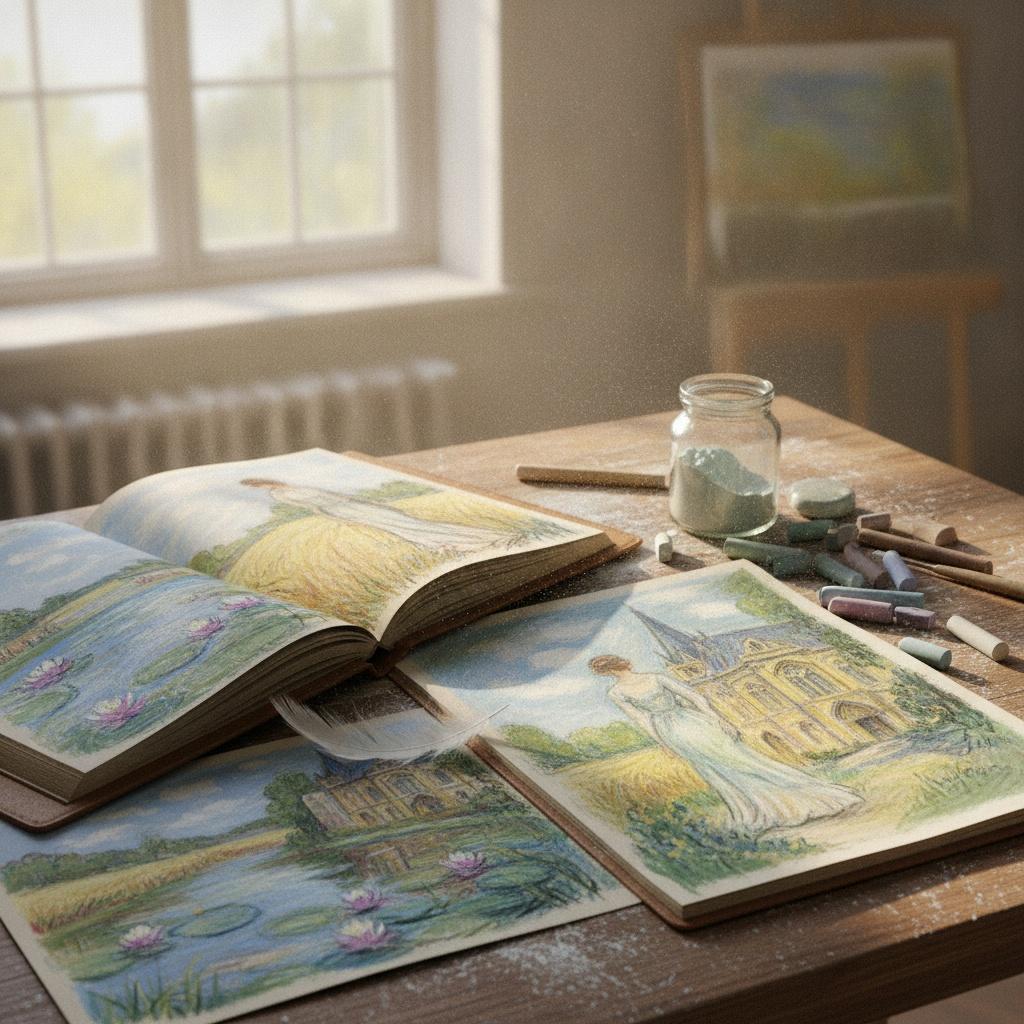
The Soft Magic of Chalk: Capturing Light, Texture, and the Ethereal Soul of Impressionist Masterpieces
Discover the ethereal beauty of pastel and chalk art. Explore how Impressionist masters like Van Gogh and Degas captured light and texture to create timeless, soulful masterpieces for the discerning collector.
Odkryj dzieła sztuki uporządkowane według tematów, stylów i cech charakterystycznych.


