

Shown: · With its frame:
 Podgląd w skali 1:1
 Wyślij jako kartkę
 Udostępnij
 Szczegóły dzieła
 Przewodnik

 Pobierz obraz
 Podobne obiekty
 RTG
RTG Pokaz slajdów
 Q&A
Q&A Statystyki

zł 1046
Ręcznie malowana reprodukcja olejowa
Ręcznie malowany obraz olejny na płótnie, wykonany na zamówienie przez naszych artystów w wybranym przez Ciebie wymiarze i oprawie. ( Przełącz na wydania drukowane Przejdź do wersji cyfrowej)
Ten utwór podlega ochronie prawem autorskim
Dzieło sztuki prezentowane na tej stronie podlega ochronie prawem autorskim, co oznacza, że nie mamy prawa do tworzenia ani sprzedaży jego identycznej reprodukcji. Ochrona ta jest egzekwowana na mocy umów międzynarodowych, takich jak Konwencja berneńska oraz przez przepisy prawa krajowego, w tym te określone w Prawo autorskie USA – Tytuł 17.
Jako pełną szacunku i legalną alternatywę oferujemy personalizowane, malowane ręcznie dzieła sztuki inspirowane oryginałem. Nasi wykwalifikowani i profesjonalni artyści starannie analizują styl, nastrój oraz artystyczną esencję pierwowzoru, aby stworzyć nowe, unikalne dzieło, które przywołuje te same emocje – pozostając jednocześnie w pełni oryginalną kreacją.
Metoda ta jest w pełni zgodna z przepisami prawa autorskiego, ponieważ nie polega na kopiowaniu ani powielaniu chronionego dzieła. Stanowi ona kreatywną reinterpretację – nowy obraz, który czerpie inspirację z oryginału, ale nie jest z nim tożsamy.
 Dowiedz się więcej
Size
·Standardowy format
personalizowane
CM
INCH
Wybierz spośród naszych standardowych rozmiarów, które zachowują oryginalne proporcje dzieła sztuki.
Loading sizes...

szerokość
wysokość
Wpisz wymaganą szerokość i wysokość, aby obraz pasował do Twojej ramy lub ściany. Ponieważ jest to dzieło malowane ręcznie, w przypadku rozmiaru o innych proporcjach artysta może domalować nieco więcej wokół obrazu lub przyciąć jego fragmenty — wybór należy do Ciebie. Przed rozpoczęciem pracy prześlemy Ci cyfrową wizualizację do zatwierdzenia. Obraz widoczny na tej stronie nie przedstawia rzeczywistego efektu — jedynie wizualizacja oddaje realny rezultat.
Finish
·
White zł1

Blurside zł1

Extended zł1

P118B zł10

P118H zł10

P118W zł10

P438Z zł10

P508JH zł12

P508YH zł12

P805H zł10

P805Z zł10

P919BZ zł10

P919G zł10

P919XJ zł10

P959ZH zł10

P968JZ zł12

W106C zł8

W218G zł10

W218JH zł8

W218Y zł10

W307PJ zł10

W316G zł10

W316PJ zł8

W316Y zł10

W398PJ zł8

W4111J zł10

W500HY zł15

W500JH zł15

W692G zł12

W849H zł8

W940BG zł15

W953PJ zł8

H24-GOLD zł30

H24-SILVER zł30

H36-GOLD zł45

H36-SILVER zł45
Shipped in a protective tube, ready for your own framer.
Above 105 cm the frame is shipped as a kit for a professional framer — read the details.
Extras
optionalWhat do the extras include?
Examples of what can be changed: Replace face with customer photo; Add pet (e.g., replace cat with dog); Include hidden message in background; Change background landscape or elements.
After order, TopImpressionists.com team will email client for instructions and provide a mockup preview
After order, TopImpressionists.com team will email client for instructions and provide a mockup preview
Dostawa na całym świecie () w ciągu 3–4 tygodni zamiast standardowych 5 tygodni. (1 Listopad). Bez kompromisów w kwestii jakości.
Lakier ochronny
Etykieta obiektu
Szczegóły grawerowanej brązowej tabliczki
This elegant plaque features the artist's name and the title of the artwork, finely engraved for a timeless presentation.
It is made from bronze with a refined, elegant finish. The text is precisely laser-engraved for a sharp and permanent result. Measuring 9x2 cm, the plaque is compact yet easy to read. It's built to be durable and scratch-resistant, offering a professional, museum-quality look. Mounting is simple thanks to the included adhesive backing.
Szczegóły przezroczystej tabliczki akrylowej
The plaque includes essential engraved details such as the artist's name, the title of the artwork, the date it was created, the type of media used-like oil on canvas or watercolor-a brief description of the piece, and a QR code that links to the complete artwork information.
It is crafted from clear acrylic, offering a sleek, modern appearance. The text is UV-engraved in black to ensure strong visual contrast. With a size of 10x15 cm, it ensures optimal readability. It comes equipped with two metal hooks for secure wall mounting. The plaque is designed to be weather-resistant, making it suitable for various environments, and it includes interactive features that work seamlessly with smartphone scanning.
Szczegóły czarnej tabliczki akrylowej
This elegant plaque includes engraved information such as the artist's name, the title of the artwork, the date it was created, the type of media used (like oil on canvas or watercolor), a short description of the artwork, and a QR code for quick access to more information.
The plaque itself is made from refined black acrylic with a premium finish. The text is laser-engraved in white for high contrast and readability. Its size is 10x15 cm, designed to be easy to read. It comes with two metal hooks for professional mounting. The design is sleek and fits any interior style. It is also weather-resistant and durable, with built-in digital integration for mobile compatibility.
Opcja ze szkłem jest dostępna wyłącznie w rozmiarach poniżej 110 cm
 Opcja ze szkłem jest dostępna wyłącznie w rozmiarach poniżej 110 cm
- Bezpłatna ekspresowa wysyłka na cały świat
- Wysokiej jakości płótno lniane
- Pełne ubezpieczenie przesyłki
- Gwarancja zwrotu należności celnych i podatków importowych
- Gwarancja wiernego odwzorowania kolorów
- 100-dniowa polityka zwrotów (tylko w przypadku wad)
- Gwarancja 100% zwrotu pieniędzy
- Zniżka przy zakupie wielu sztuk


Opis obiektu
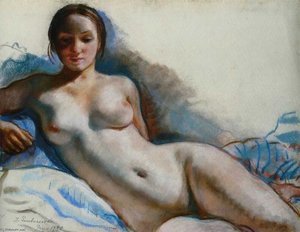
Zinaida Serebriakova's pastel 'Nude' captures serene beauty and introspection. This 1930 drawing showcases her mastery of form, texture & subtle emotion.
Biografia artysty
Zinaida Serebriakowa – rosyjska malarka znana z intymnych portretów i scen wiejskiego życia. Jej obrazy, pełne światła i ciepła, uchwycą ducha epoki i piękno codzienności.
About the painting
A Moment of Quiet Contemplation: Zinaida Serebriakova's "Nude"
This evocative pastel drawing by Zinaida Serebriakova captures a moment of serene intimacy. Depicting a nude female figure reclining on what appears to be a bed or couch, the artwork exudes an atmosphere of quiet contemplation and relaxed beauty. Created around 1930, this piece exemplifies Serebriakova’s mastery of capturing the human form with both realism and a touch of impressionistic softness. The composition centers entirely on the woman, her limbs gracefully extended, inviting the viewer into her private world.Style and Technique: A Blend of Realism and Impressionism
Serebriakova’s style is characterized by its unique blend of classical realism and impressionistic techniques. While the figure's anatomy is rendered with precision, the loose and expressive use of lines lends a dreamlike quality to the scene. The technique involves building up color through multiple layers of pastel, creating a rich and textured surface that mimics the play of light on skin and fabric. Notice how the artist skillfully uses variations in tone and layered pastel marks to suggest depth and form, despite the shallow perspective. This approach emphasizes texture – particularly in the rendering of skin and drapery – contributing to the artwork’s overall impressionistic feel. The soft, diffused lighting further enhances this effect, creating subtle shadows that define the figure's curves and contours.Historical Context: A Glimpse into Interwar Europe
Created in 1930, this pastel drawing reflects a period of significant social and artistic change in Europe. The interwar years were marked by a shift away from traditional academic styles towards more expressive forms of art. Serebriakova, having spent considerable time both in Russia and Paris, was deeply influenced by these developments. Her work often explored themes of femininity, beauty, and the human condition with a modern sensibility. Having experienced the upheaval of the Russian Revolution and exile, her later works, including this piece, often convey a sense of quiet resilience and introspection, reflecting the mood of a world recovering from conflict.Symbolism and Emotional Impact
While subtle, symbolic elements are present within the artwork. The nude figure itself carries connotations of vulnerability, beauty, and perhaps introspection. Her serene expression and relaxed posture evoke feelings of peace and tranquility. The absence of any distracting background further emphasizes the woman's presence and invites viewers to focus on her inner state. Ultimately, Serebriakova’s "Nude" is not merely a depiction of the human form; it is an exploration of emotion, beauty, and the quiet moments that define our lives. The artwork resonates with a timeless quality, inviting contemplation and offering a glimpse into the artist's profound understanding of the human spirit.Pytania i odpowiedzi
Co przedstawia „Nude” – Zinaida Sieriebriakowa?
Tematyka dzieła "Nude" to nude, reclining figure, pastel drawing, female form, introspection, serene, body study, relaxation.
Ile lat miał(a) Zinaida Sieriebriakowa, tworząc "Nude" w 1930 roku?
Zinaida Sieriebriakowa miał 46 lat w momencie powstania „Nude” w 1930. Wiek ten obliczono na podstawie roku urodzenia artysty, 1884.
W którym roku powstało dzieło "Nude"?
Powstanie „Nude” – Zinaida Sieriebriakowa datuje się na 1930.
Quick facts and art quiz
About Zinaida Sieriebriakowa

Zinaida Sieriebriakowa
1884 - 1967, Ukraina
Biografia artysty
Życie i Początki Artystyczne Zinaidy Serebriakowej
Zinaida Jewgienjewna Serebriakowa, nazwisko rezonujące z subtelną siłą wczesnej XX-wiecznej sztuki rosyjskiej, wyłoniła się z rodu przesiąkniętego twórczą doskonałością. Urodzona w 1884 roku w Nieskucznym Chutorze, na posiadłości rodzinnej niedaleko Charkowa na Ukrainie, została przeznaczona do życia w świecie, gdzie sztuka nie była jedynie zawodem, lecz stylem życia. Jej dziadek, wybitny architekt Nikołaj Benois, oraz wujek, znany malarz Aleksander Benois – jeden z założycieli *Świata Sztuki* (Mir iskusstwa) – stworzyli fundament jej artystycznego przebudzenia. Ta rodzinna akceptacja piękna i innowacji głęboko wpłynęła na wrażliwość młodej Zinaidy, kształtując oko dla detalu i głęboką apreciację formy, które zdefiniowały jej twórczość. Śmierć ojca w młodym wieku przeniosła ją do serca tętniącej życiem artystycznie społeczności Petersburga, gdzie mieszkała z rodziną Benoisów, chłonąc atmosferę kreatywności ich otoczenia.Kształcenie i Artystyczna Podróż
Formalne wykształcenie Serebriakowej było rygorystyczne i wszechstronne. Rozpoczęła studia w 1901 roku w szkole artystycznej założonej przez księżniczkę Marię Tieniszewą, ważną patronkę sztuk, gdzie po raz pierwszy zetknęła się z nauczaniem Ilji Riepina, mistrza rosyjskiego realizmu. To wczesne doświadczenie technik Riepina – jego mistrzowskie operowanie światłem i cieniem, zaangażowanie w portretowanie życia z bezkompromisową szczerością – pozostawiło niezatarte piętno na jej podejściu artystycznym. Doskonaląc swoje umiejętności między 1903 a 1905 rokiem pod kierunkiem Osipa Braza, zagłębiła się w portrecistykę i niuanse oddawania ludzkich emocji. Pobyt we Włoszech w latach 1902-1903 poszerzył jej horyzonty, wprowadzając ją w klasyczne tradycje, które subtelnie wpłynęły na jej pracę. Ta artystyczna pielgrzymka zakończyła się studiami w Académie de la Grande Chaumière w Paryżu (1905-1906), gdzie chłonęła wpływy nowoczesnego malarstwa europejskiego, jednocześnie torując własną unikalną ścieżkę. W tym okresie poślubiła Borisa Serebriakowa, związek który zapewnił jej zarówno wsparcie osobiste, jak i artystyczne na lata.Synteza Realizmu i Intymności w Twórczości
Styl Serebriakowej charakteryzuje się niezwykłą syntezą realizmu, intymności i głębokiej wrażliwości na światło i formę. Choć często kojarzona z *Światem Sztuki*, wyróżniała się skupieniem na życiu codziennym – życiu kobiet, dzieci i społeczności wiejskich – oddanym z uczciwością i czułością, które rezonowały z odbiorcami. Jej obrazy nie są monumentalnymi narracjami historycznymi ani alegoriami mitologicznymi; to ciche obserwacje życia domowego, macierzyństwa i piękna odnajdywanego w prostych chwilach. Posiadała unikalną zdolność do obdarzania swoich postaci godnością i gracją, nawet w kontekście pracy lub trudności. *Przy Toalecie* (1909), być może jej najbardziej ikoniczne dzieło, uosabia tę cechę – niezwykle szczery autoportret, który umocnił jej reputację i zdobył uznanie publiczności. Ten obraz, powstały w okresie izolacji podczas zamieci śnieżnej, prezentuje jej mistrzostwo światła i cienia, tworząc atmosferę spokojnej kontemplacji. Inne godne uwagi prace, takie jak *Bielenie Płótna* (1917), demonstrują jej umiejętność uchwycenia fizyczności pracy zarówno z realizmem, jak i empatią.Przez Burzliwe Czasy do Trwałego Dziedzictwa
Burzliwe wydarzenia początku XX wieku – rewolucja, wojna i przewroty polityczne – głęboko wpłynęły na życie i twórczość Serebriakowej. Śmierć męża w 1919 roku pozostawiła ją samotną matką zmagającą się z utrzymaniem rodziny w trudnych czasach. Pomimo tych wyzwań, kontynuowała malowanie, dostosowując swoje techniki do ograniczeń narzuconych przez okoliczności. Przeszła od farb olejnych do bardziej przystępnych cenowo mediów, takich jak węgiel i ołówek, ale zachowała zaangażowanie w ekspresję artystyczną. Później w życiu spotkały ją dalsze przesiedlenia i przeciwności losu, aż w końcu znalazła schronienie we Francji w 1947 roku. Choć uznanie było sporadyczne w późniejszych latach, dziedzictwo Serebriakowej przetrwało. Jej obrazy oferują poruszający wgląd w krajobraz społeczny i kulturowy Rosji w okresie ogromnych zmian, dostarczając cennych informacji o życiu zwykłych ludzi. Jest świadectwem potęgi sztuki do przekraczania granic politycznych i uchwycenia trwałego ducha ludzkości. Dziś jej prace są celebrowane za kunszt techniczny, głębię emocjonalną i niezachwiane zaangażowanie w portretowanie piękna i godności codziennego życia.Wpływy i Pokrewieństwo Artystyczne
- Rosyjski Realizm: Fundament Serebriakowej był mocno zakorzeniony w rosyjskiej tradycji realistycznej, dziedzicząc oddanie dokładnej reprezentacji i komentarza społecznego po mistrzach takich jak Ilja Riepin i Osip Braz.
- Świat Sztuki: Choć nie przestrzegała ściśle wszystkich zasad ruchu *Świata Sztuki*, podzielała ich wrażliwość estetyczną – nacisk na piękno, wyrafinowanie i odrzucenie czysto utylitarnej sztuki.
- Anna Ostroumowa-Lebiediewa: Współczesna artystka, która również skupiała się na portretowaniu kobiet i scen domowych, Ostroumowa-Lebiediewa dzieli podobieństwa stylistyczne z Serebriakową w jej wrażliwym przedstawianiu postaci kobiecych.
- Intymizm: Jej twórczość rezonuje z zasadami intymizmu, stylu charakteryzującego się intymnymi portretami życia domowego i spokojnymi chwilami refleksji. Jest to widoczne w obrazach takich jak *Przy Toalecie* i licznych przedstawieniach macierzyństwa.
Quick facts about Zinaida Sieriebriakowa
- Artyści Wpływający:
- Ilya Repin
- Osip Braz
- Data Urodzenia: 12 grudnia 1884
- Data Śmierci: 19 września 1967
- Miejsce Urodzenia: Charków, Ukraina
- Narodowość: Rosyjska/Francuska
- Pełne Imię I Nazwisko: Zinaida Serebriakowa
- Ruch Artystyczny: Realizm, Intymizm
- Wpływ Na Artystów: ['Anna Ostroumowa-Lebedewa']
- Znane Dzieła:
- Przy toalecie
- Bleaching Cloth
Zinaida Sieriebriakowa
Nude
() ·
With its frame: · Hand-painted in oil on linen
Total