Pracownia — Bezpłatna wysyłka na cały świat — Czas dostawy: 2–6 tygodni
      Georges Seurat, 1859 – 1891

      Georges Seurat: The 100 Best-Known Paintings

      Of all Georges Seurat's paintings, Niedzielne popołudnie na wyspie La Grande Jatte (1886) is the most famous; it hangs in the Art Institute of Chicago, Chicago. Close behind come Bañistas en Asnieres and Pokaz Ciarskowy (1888). Among the 438 works by Georges Seurat in our catalogue, these 100 are the most celebrated, each shown with its date, its museum and its story.

      Ranking oparty na naszym wskaźniku popularności, który łączy liczbę wyszukiwań, wizyt oraz zamówień dla każdego dzieła. Aktualizacja: Październik 2026. Each painting on this page can be ordered as an oil reproduction painted by hand on linen canvas, or as a fine art print, made to the size you choose.

      Portret Georges Seurat
      Georges Seurat · 1859 – 1891
      Urodzony · zmarł
      1859 – 1891, Paryż
      Nurt
      Neo-impressionism
      Dzieła w naszym katalogu
      438
      Najsłynniejsze
      Niedzielne popołudnie na wyspie La Grande Jatte (1886)
      Najwięcej dzieł w
      Musée d'Orsay

      Georges Seurat's 10 most celebrated paintings

      Niedzielne popołudnie na wyspie La Grande Jatte (1886) autorstwa Georges Seurat
      1

      Niedzielne popołudnie na wyspie La Grande Jatte

      1886 · Obraz olejny na płótnie · Art Institute of Chicago, Chicago

      Georges Seurat, postimpresjonistyczny geniusz, stworzył dzieło, które na zawsze zmieniło oblicze malarstwa. „Niedzielne popołudnie na wyspie La Grande Jatte”, monumentalna kompozycja powstała w latach 1884-1886, to nie tylko kronika paryskiego wypoczynku, ale przede wszystkim przełomowe studium koloru, światła i rodzącego się nowoczesnego świata. Obraz przenosi widza na spokojne brzegi Sekwany, na Île de la Grande Jatte, oferując wgląd w życie paryskiego społeczeństwa w kluczowym momencie historii. To spotkanie z atmosferą…

      Bañistas en Asnieres autorstwa Georges Seurat
      2

      Bañistas en Asnieres

      Obraz olejny na płótnie · National Gallery, Londyn

      „Bañistas en Asnieres” (Odsunięci do Asnières) to obraz Georges’a Seourota, stworzony w 1889 roku, który nie jest jedynie przedstawieniem grupy ludzi relaksujących się nad wodą. To fascynujący portret współczesnego życia, uchwycony w subtelnej harmonii pastelowych barw i precyzyjnych technik. Obraz ten, z jego spokojną atmosferą i pozornie prostym tematem, stanowi wyjątkowe świadectwo post-imprezjonizmu i innowacyjnego podejścia Seourota do malarstwa. To więcej niż tylko scena – to fragment dnia, uchwycony w…

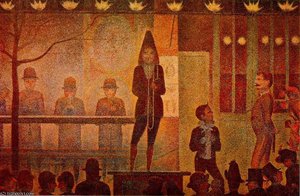
      Pokaz Ciarskowy (1888) autorstwa Georges Seurat
      3

      Pokaz Ciarskowy

      1888 · Obraz olejny na płótnie · Metropolitan Museum of Art, Nowy Jork

      Wprowadzenie do „Circus Sideshow” – Ognista Scena Seurata „Circus Sideshow” Georges’a Pierre’a Seurat’a to więcej niż tylko obraz; to przeniesienie w świat barwnych iluzji, ekscytacji i tajemniczej atmosfery późno-niniejszego wieku. Stworzony w 1888 roku, ten monumentalny dzieło, zrealizowane w charakterystycznej dla Seurat’a technice punktowej, zachwyca swoją dynamiką i precyzją. Obraz przedstawia nocne widowisko cyrkowego pokazowego spektaklu, a jego intensywne kolory i złożona kompozycja zapraszają do głębokiego zanurzenia w świat impresjonizmu…

      Models (1887) autorstwa Georges Seurat
      4

      Models

      1887 · Acrylic On Canvas · Barnes Foundation, Filadelfia

      Georges Pierre Seurat’s “Models,” completed in 1887, stands as an emblem of the Impressionist movement's final gasp before embracing the radical innovations of Post-Impressionism. Painted during a period of intense artistic experimentation—a time when artists wrestled with reconciling scientific understanding with expressive emotion—the canvas embodies Seurat’s groundbreaking Pointillist technique and offers a glimpse into the intellectual fervor that fueled this transformative era.

      Niedzielne Popołudnie na Wyspie La Grande Jatte autorstwa Georges Seurat
      5

      Niedzielne Popołudnie na Wyspie La Grande Jatte

      Obraz olejny na płótnie

      Georges Seurat’s “Sunday Afternoon on the Isle of La Grande Jatte” (1884-1886) to nie tylko obraz przedstawiający czas wolny; jest to przełomowe oświadczenie dotyczące percepcji, społeczeństwa i wschodu sztuki nowoczesnej. Ten monumentalny obraz – mierzący imponujące 208 x 308 cm – zaprasza widza do świata skrupulatnie skonstruowanego, oferując wgląd w paryskie życie w kluczowym momencie historii. To więcej niż scena pikniku; to wizja nowej epoki, odzwierciedlająca fascynację Seurata nauką i…

      Bąbików przy Asnières (1884) autorstwa Georges Seurat
      6

      Bąbików przy Asnières

      1884 · Obraz olejny na płótnie

      , stworzone przez Georges'a Seurata w 1884 roku, to monumentalne dzieło, które stanowi doskonały przykład pionierskiej techniki pointylizmu tego artysty. To wielkoformatowe malarstwo uchwyciło spokojną nadbrzeżną scenę niedaleko Paryża, gdzie postacie oddają się beztroskim aktywnościom nad wodą. Kompozycja jest zródekotowana, a zarazem dynamiczna, z wyraźnym podziałem między pierwszym planem a tłem, co tworzy niezwykłe poczucie głębi i perspektywy.

      The circus autorstwa Georges Seurat
      7

      The circus

      Mosaic · Musée d'Orsay, Paryż

      Step into the luminous heart of the nineteenth century with Georges Seurat’s breathtaking exploration of spectacle, The Circus. This masterpiece does not merely depict a scene; it captures the very pulse of an era. At its center, a magnificent white horse and its rider command the arena, frozen in a moment of poised athleticism that radiates grace and strength. Surrounding this central performance, the viewer is enveloped by tiered boxes…

      Studium "Un dimanche après midi na wyspie Grande Jatte" (1884) autorstwa Georges Seurat
      8

      Studium "Un dimanche après midi na wyspie Grande Jatte"

      1884 · Akryl na płótnie · Musée d'Orsay, Paryż

      Georges Seurat: Odkrywanie Spokoju w "Studium do 'La Grande Jatte'" Georges Pierre Seurat’s *Studium do 'La Grande Jatte'* (1884) to nie tylko szkic, ale fascynujący portret chwili zamrożonej w czasie – momentu ciszy i obserwacji, który stał się fundamentem jednego z najbardziej rozpoznawalnych obrazów w historii sztuki. Ten niewielki, 16 x 25 cm, rysunek konté crayon to zapowiedź rewolucji Seurata, jego dążenia do uchwycenia światła i koloru w sposób naukowy…

      Ostateczny Szkic Malowania w Asnières (1884) autorstwa Georges Seurat
      9

      Ostateczny Szkic Malowania w Asnières

      1884 · Akryl na płótnie · Art Institute of Chicago, Chicago

      Georges Seurat i "Ostatne Studium do 'Pływania na Równinie Asnières'" – Moment Refleksji w Kolorze Georges Pierre Seurat, malarz wybitny i pionier, zrewolucjonizował świat sztuki dzięki swojemu nowatorskiemu podejściu do koloru i kompozycji. "Ostatnie Studium do 'Pływania na Równinie Asnières'" (1884), to nie tylko szkic przygotowawczy, ale koncentrat wizji, która miała wyrosnąć w monumentalne dzieło – "Bąbelki na Równinie Asnières". To intymny olej na płótnie o wymiarach 15 x 25…

      Les poseuses (1886) autorstwa Georges Seurat
      10

      Les poseuses

      1886 · Oil On Canvas

      A Summer’s Day Frozen in Time: Exploring Seurat's *Les Poseuses* Les Poseuses (The Posed Women), painted in 1886 by Georges Pierre Seurat, is a quintessential example of Neo-Impressionism and a landmark work within the Post-Impressionist movement. This large-scale canvas isn’t merely a depiction of nude figures; it's a meticulously constructed exploration of color, light, and modern life. Subject & Composition: A Scene of Leisurely Modernity The painting presents a group…

      Georges Seurat paintings ranked 11 to 100

      Łódź żaglowa (1884) autorstwa Georges Seurat
      #11

      Łódź żaglowa

      1884 · National Gallery of Art

      W ciszy roku 1884 Georges Seurat uchwycił moment, który na zawsze odmienił trajektorię sztuki nowoczesnej. Jego arcydzieło, "Łódź żaglowa", to znacznie więcej niż tylko przedstawienie spokojnego popołudnia; to…

      Bring this light home →
      Wieża Eiffla (1889) autorstwa Georges Seurat
      #12

      Wieża Eiffla

      1889 · Fine Arts Museums of San Francisco

      Dzieło Georges’a Pierre’a Seurata pt. Wieża Eiffla, namalowane w 1889 roku, to znacznie więcej niż tylko przedstawienie architektonicznego cudu Gustave’a Eiffla. To przełomowe dzieło ucieleśniające rodzący się ducha…

      Order this canvas →
      Mostek przy Courbevoie (1887) autorstwa Georges Seurat
      #13

      Mostek przy Courbevoie

      1887 · Courtauld Gallery

      Wprowadzenie do „Mostu w Courbevoie” – Arcydzieło Seurata „Most w Courbevoie” autorstwa Georga Pierre’a Seurata, namalowany w 1887 roku, to nie tylko obraz; to manifestacja nowej wizji malarstwa.…

      Have it painted by hand →
      Chahut (1890) autorstwa Georges Seurat
      #14

      Chahut

      1890 · Kröller-Müller Museum

      W samym sercu paryskiego przełomu wieków, pośród tętniącej energii Belle Époque, Georges Seurat uchwycił moment czystego, nieskrępowanego ruchu w swoim arcydziele, Chahut. Ta urzekająca scena, ukończona między 1889…

      Have it painted by hand →
      The Eiffel tower (1889) autorstwa Georges Seurat
      #15

      The Eiffel tower

      1889

      Georges Pierre Seurat (1859 – 1891) stands as one of the most influential figures in late nineteenth-century art, a true innovator who irrevocably altered the course of painting.…

      Bring this light home →
      Study for 'La Grande Jatte' (1885) autorstwa Georges Seurat
      #19

      Study for 'La Grande Jatte'

      1885 · Art Institute of Chicago

      Georges Pierre Seurat's “Study for 'La Grande Jatte'" offers a captivating window into the artist’s meticulous process and his revolutionary approach to painting. Born in Paris in 1859,…

      Have it painted by hand →
      Le Chahut (1890) autorstwa Georges Seurat
      #20

      Le Chahut

      1890 · Kröller-Müller Museum

      When Helene Kröller-Müller first laid eyes on Georges Seurat’s Le Chahut, she was so profoundly moved that she famously recounted her son's bewilderment at her desire to purchase…

      Bring this light home →
      Village Road (1883) autorstwa Georges Seurat
      #23

      Village Road

      1883 · Musée d'Orsay

      In the quiet transition between the fleeting impressions of Monet and the structured permanence of modern art, Georges Seurat’s "Village Road" emerges as a breathtaking testament to the…

      Have it painted by hand →
      Women by the Water (1884) autorstwa Georges Seurat
      #24

      Women by the Water

      1884

      Georges Pierre Seurat's "Women by the Water," painted in 1884, offers a captivating snapshot of leisure and contemplation within a burgeoning modern landscape. This work is not merely…

      Bring this light home →
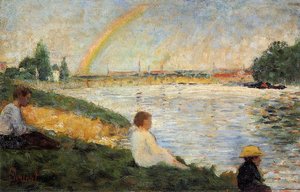
      Rainbow (1883) autorstwa Georges Seurat
      #26

      Rainbow

      1883 · National Gallery

      In the quietude of Georges Seurat’s 1883 masterpiece, "Rainbow," we find much more than a mere depiction of a tranquil riverside landscape. It is an immersive experience, a…

      Order this canvas →
      Woman with Umbrella (1884) autorstwa Georges Seurat
      #28

      Woman with Umbrella

      1884

      In the delicate dance between light and shadow, Georges Seurat’s 1884 masterpiece, "Woman with Umbrella," emerges as a breathtaking testament to the transformative power of scientific observation. This…

      Have it painted by hand →
      The Artist's Mother autorstwa Georges Seurat
      #29

      The Artist's Mother

      Georges Seurat's “The Artist’s Mother” is not merely a portrait; it’s an exquisitely rendered meditation on memory, familial connection, and the very nature of perception. Painted in 1883…

      Order this canvas →
      Portret Edmonda-François Aman-Jeana (1883) autorstwa Georges Seurat
      #31

      Portret Edmonda-François Aman-Jeana

      1883 · Metropolitan Museum of Art

      Intymny portret Edmonda-François Aman-Jeana autorstwa Georges’a Seurata: Okno na wizję symbolistyczną Georges Pierre Seurat (1859–1891), nazwisko będące synonimem naukowej precyzji i świetlistej teorii barw, nieodwracalnie zmienił bieg historii…

      Bring this light home →
      Port-en-Bessin, the Semaphore and Cliffs (1888) autorstwa Georges Seurat
      #32

      Port-en-Bessin, the Semaphore and Cliffs

      1888 · National Gallery of Art

      Georges Pierre Seurat's Port-en-Bessin, the Semaphore and Cliffs stands as a cornerstone of Impressionism’s evolution into Neo-Impressionism—a movement that championed scientific rigor alongside artistic vision. Created in 1888,…

      Order this canvas →
      La Grande Jatte (1884) autorstwa Georges Seurat
      #35

      La Grande Jatte

      1884

      A Pioneer of Luminous Precision: The Life and Art of Georges Seurat Georges Pierre Seurat, born in Paris on December 2, 1859, emerged as a pivotal figure in…

      Bring this light home →
      Artist at work (1884) autorstwa Georges Seurat
      #37

      Artist at work

      1884

      A Silent Dialogue with Creation: Unveiling Seurat’s “Artist at Work” Georges Pierre Seurat's 1884 work, *Artist at Work*, is not merely a depiction of an artist engaged in…

      Bring this light home →
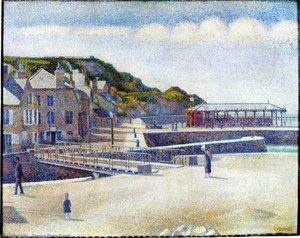
      Port-en-Bessin (1888) autorstwa Georges Seurat
      #38

      Port-en-Bessin

      1888

      The painting depicts a beach town featuring a pier that extends out into the water. Within this coastal setting, several people are seen walking along the pier while…

      Have it painted by hand →
      White dog (1885) autorstwa Georges Seurat
      #39

      White dog

      1885 · Galerie Rosengart

      In the quietude of an English garden, captured through the revolutionary lens of Georges Pierre Seurat, time seems to suspend itself in a shimmering dance of color. White…

      Order this canvas →
      Study for 'Invitation to the Sideshow' (1888) autorstwa Georges Seurat
      #40

      Study for 'Invitation to the Sideshow'

      1888 · Foundation E.G. Bührle Collection

      A Glimpse into Modern Life: Decoding Seurat’s ‘Study for 'Invitation to the Sideshow'' This captivating work by Georges Seurat, *Study for 'Invitation to the Sideshow'*, offers a compelling…

      Order this canvas →
      Rock-Breakers, Le Raincy (1882) autorstwa Georges Seurat
      #41

      Rock-Breakers, Le Raincy

      1882 · Norton Simon Museum

      Georges Seurat’s “Rock-Breakers, Le Raincy,” painted in 1882, isn't merely a depiction of manual labor; it’s an invitation into a fleeting moment of the French countryside. The painting…

      Have it painted by hand →
      Akt siedzący: Studium dla (1883) autorstwa Georges Seurat
      #42

      Akt siedzący: Studium dla

      1883 · Scottish National Gallery

      „Akt siedzący: Studium dla” autorstwa Georges’a Seurata to nie tylko rysunek; to skondensowana esencja rewolucyjnego podejścia artysty do sztuki, przejmujący wgląd w jego proces twórczy. Dzieło to, ukończone…

      Have it painted by hand →
      Cyrcusz (1891) autorstwa Georges Seurat
      #43

      Cyrcusz

      1891 · Musée d'Orsay

      Georges Seurat i „Cirque”: Symfonia Światła i Ruchu „Cirque” autorstwa Georga Seura, namalowany w 1891 roku, to nie tylko obraz – to fascynujące okno na świat rozrywki końca…

      Order this canvas →
      Boy with horse (1883) autorstwa Georges Seurat
      #44

      Boy with horse

      1883

      A Moment of Quietude: Exploring Seurat’s “Boy with Horse” This intimate painting by Georges Seurat, created in 1883, offers a captivating glimpse into a fleeting moment of connection…

      Have it painted by hand →
      Landscape autorstwa Georges Seurat
      #47

      Landscape

      In the quiet expanse of this breathtaking landscape, we find ourselves transported to a realm where nature and science converge in a delicate dance of light. Georges Seurat,…

      Have it painted by hand →
      untitled (4494) autorstwa Georges Seurat
      #48

      untitled (4494)

      Georges Pierre Seurat, a pivotal figure in Post-Impressionism and the originator of Pointillism, presents us with a remarkably intimate portrayal of domesticity in this untitled work (4494). While…

      Have it painted by hand →
      The Mower (1882) autorstwa Georges Seurat
      #49

      The Mower

      1882 · Metropolitan Museum of Art

      Georges Pierre Seurat, a name synonymous with innovation and meticulous observation within the Post-Impressionist movement, irrevocably altered the landscape of painting in late 19th century France. Born in…

      Bring this light home →
      Seascape (Gravelines) (1890) autorstwa Georges Seurat
      #50

      Seascape (Gravelines)

      1890 · National Gallery of Art

      The coastal landscape at Gravelines is rendered through chromoluminarism, a method utilizing small, distinct dots of color to achieve optical blending. The composition relies on a wide horizon…

      Bring this light home →
      The Models (1888) autorstwa Georges Seurat
      #51

      The Models

      1888

      In the quiet, sun-drenched corners of an artist’s studio, Georges Seurat captured more than just figures; he captured the very essence of a changing era. The Models (Les…

      Order this canvas →
      La Grande Jatte (Studium VI) (1884) autorstwa Georges Seurat
      #52

      La Grande Jatte (Studium VI)

      1884 · National Gallery

      Kompozycja rozpoczyna się od pierwszego planu wypełnionego ciemną, teksturowaną roślinnością, która zajmuje dolną krawędź kadru. Ten zacieniony obszar prowadzi wzrok ku centralnemu pasowi nasłonecznionej trawy. W tej środkowej…

      Have it painted by hand →
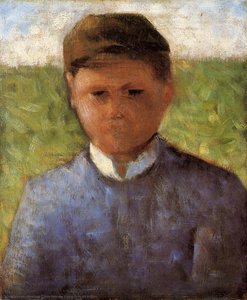
      Young Peasant in Blue (1881) autorstwa Georges Seurat
      #54

      Young Peasant in Blue

      1881 · Musée d'Orsay

      In the quietude of a sun-drenched meadow, Georges Seurat captures a moment that feels both fleeting and eternal. Young Peasant in Blue is not merely a portrait of…

      Order this canvas →
      Young Woman Powdering Herself (1890) autorstwa Georges Seurat
      #58

      Young Woman Powdering Herself

      1890 · Courtauld Gallery

      A Moment of Intimate Ritual: Delving into Seurat’s *Young Woman Powdering Herself* Georges Pierre Seurat's *Young Woman Powdering Herself*, painted between 1889 and 1890, is more than just…

      Bring this light home →
      Sidewalk Show (1884) autorstwa Georges Seurat
      #60

      Sidewalk Show

      1884

      A Moment Frozen in Parisian Light In the heart of 1884 Paris, Georges Seurat captured more than just a street corner; he captured the very pulse of an…

      Bring this light home →
      Gray Weather autorstwa Georges Seurat
      #62

      Gray Weather

      Georges Seurat's "Gray Weather," painted in 1886-88, isn’t merely a depiction of a river scene; it’s an invitation to pause and contemplate the subtle poetry of light and…

      Order this canvas →
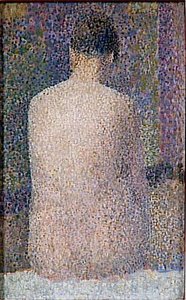
      MODELKA PLECY autorstwa Georges Seurat
      #63

      MODELKA PLECY

      Georges Seurat’s Revolutionary Return: Exploring ‘Poseuse de Dos’ Georges Pierre Seurat, born in Paris on December 2, 1859, stands as a monumental figure in the artistic landscape of…

      Have it painted by hand →
      Study for Bathers, Asnières autorstwa Georges Seurat
      #65

      Study for Bathers, Asnières

      Georges Pierre Seurat’s Study for Bathers, Asnières serves as a profound window into the genesis of Pointillism, capturing a tranquil moment along the Seine. This preparatory sketch, created…

      Order this canvas →
      View of Fort Samson (1885) autorstwa Georges Seurat
      #66

      View of Fort Samson

      1885 · Ermitaż

      In the quiet expanse of View of Fort Samson, Georges Seurat invites us to a serene corner of the French coastline, where the rhythmic pulse of the sea…

      Order this canvas →
      Une Perissoire (1884) autorstwa Georges Seurat
      #67

      Une Perissoire

      1884

      In the quietude of “Une Perissoire” (The Pond), we encounter more than just a landscape; we step into a revolutionary moment in art history. Painted between 1884 and…

      Have it painted by hand →
      Le Bec du Hoc, Grandcamp (1885) autorstwa Georges Seurat
      #68

      Le Bec du Hoc, Grandcamp

      1885

      In the quiet coastal reaches of Normandy, where the Atlantic Ocean meets the rugged cliffs of Grandcamp, lies a scene that Georges Seurat transformed into a timeless meditation…

      Order this canvas →
      The Riverside (1883) autorstwa Georges Seurat
      #69

      The Riverside

      1883

      Georges Pierre Seurat (1859-1891) stands as a singular figure in the artistic landscape of late 19th century France, marking a decisive break from the prevailing Impressionist movement and…

      Bring this light home →
      Sleeping Woman autorstwa Georges Seurat
      #72

      Sleeping Woman

      There is a profound stillness to be found here, a moment caught in the soft transition between wakefulness and rest. The painting presents a woman nestled peacefully upon…

      Bring this light home →
      Peasant with Hoe (1882) autorstwa Georges Seurat
      #73

      Peasant with Hoe

      1882

      To stand before Georges Seurat’s "Peasant with Hoe" is to witness a profound moment in the history of light. Painted in 1882, this masterpiece serves as a breathtaking…

      Have it painted by hand →
      Boy Sitting in a Meadow (1883) autorstwa Georges Seurat
      #74

      Boy Sitting in a Meadow

      1883 · Kelvingrove Art Gallery and Museum

      In the quietude of 1883, Georges Seurat captured something far more profound than a mere pastoral scene; he froze a moment of pure, introspective light. Boy Sitting in…

      Have it painted by hand →
      Young Girl Seated, Sewing autorstwa Georges Seurat
      #75

      Young Girl Seated, Sewing

      Georges Pierre Seurat (1859-1891) stands as a monumental figure in the artistic landscape of late 19th century France, irrevocably altering the trajectory of modern painting. More than just…

      Order this canvas →
      Low Tide at Grandcamp (1885) autorstwa Georges Seurat
      #78

      Low Tide at Grandcamp

      1885 · Pola Museum of Art

      In the quiet expanse of Georges Seurat’s “Low Tide at Grandcamp,” we find ourselves standing on the precipice of a revolution. Completed in 1885, this masterpiece serves as…

      Bring this light home →
      Beach at Gravelines (1890) autorstwa Georges Seurat
      #80

      Beach at Gravelines

      1890

      Georges Pierre Seurat (1859–1891) stands as a monumental figure in the artistic landscape of late 19th-century France, irrevocably altering the course of painting and establishing himself as one…

      Bring this light home →
      La Luzerne, Saint Denis (1885) autorstwa Georges Seurat
      #81

      La Luzerne, Saint Denis

      1885

      Painted in 1885, this captivating landscape transports viewers to the serene countryside near Saint-Denis, France. “La Luzerne, Saint Denis” offers a poignant glimpse into a sun-drenched meadow, brimming…

      Have it painted by hand →
      Part of the studio (1887) autorstwa Georges Seurat
      #82

      Part of the studio

      1887

      Georges Pierre Seurat’s “Part of the Studio,” completed in 1887, stands as a cornerstone of Post-Impressionism and exemplifies the revolutionary approach to painting championed by artists like Seurat.…

      Have it painted by hand →
      On the road (1882) autorstwa Georges Seurat
      #85

      On the road

      1882

      A Moment Frozen in Time: Exploring ‘On the Road’ by Georges Seurat Georges Pierre Seurat, born December 2nd, 1859, stands as a monumental figure in the artistic landscape…

      Bring this light home →
      Kanał w Gravelines, Grand-Fort-Philippe (1890) autorstwa Georges Seurat
      #86

      Kanał w Gravelines, Grand-Fort-Philippe

      1890 · National Gallery

      Spokojna wizja Georges'a Seurata: Eksploracja „Kanału w Gravelines” Georges Pierre Seurat (1859–1891) jawi się jako niepodważalny tytan późnego impresjonizmu, postać, która nieodwracalnie zmieniła trajektorię malarstwa i ugruntowała swoje…

      Order this canvas →
      Parade de cirque, Metropolitan (1888) autorstwa Georges Seurat
      #87

      Parade de cirque, Metropolitan

      1888

      In the heart of late nineteenth-century Paris, amidst the flickering gaslights and the vibrant energy of urban nightlife, Georges Seurat captured a moment of pure, structured enchantment. Parade…

      Order this canvas →
      Alfalfa, St. Denis (1886) autorstwa Georges Seurat
      #88

      Alfalfa, St. Denis

      1886

      Georges Pierre Seurat’s Alfalfa, St. Denis, painted in 1886, isn't merely a depiction of a rural French landscape; it’s an audacious experiment in perception and a cornerstone of…

      Order this canvas →
      Study for 'Une Baignade' (1883) autorstwa Georges Seurat
      #90

      Study for 'Une Baignade'

      1883

      In the quiet, meticulous moments before the grand unveiling of his masterpiece, Bathers at Asnières, Georges Seurat engaged in a profound dialogue with light and form. His study…

      Order this canvas →
      Man Reading on a Terrace autorstwa Georges Seurat
      #91

      Man Reading on a Terrace

      Georges Seurat's "Man Reading on a Terrace," painted between 1883 and 1884, isn’t merely a depiction of a gentleman lost in thought; it’s a meticulously constructed meditation on…

      Order this canvas →
      Forest Path, Barbizon (1883) autorstwa Georges Seurat
      #92

      Forest Path, Barbizon

      1883

      A Glimpse of Tranquility: Seurat’s “Forest Path, Barbizon” Georges Pierre Seurat's "Forest Path, Barbizon," painted in 1883, is more than just a depiction of a woodland scene; it’s…

      Order this canvas →
      Horses in the Water autorstwa Georges Seurat
      #94

      Horses in the Water

      A Moment of Leisure: Exploring Seurat’s “Horses in the Water” Georges Pierre Seurat's "Horses in the Water" offers a captivating glimpse into a leisurely scene, brimming with life…

      Have it painted by hand →
      Grassy Riverbank (1881) autorstwa Georges Seurat
      #95

      Grassy Riverbank

      1881

      In the quiet corners of art history, few moments are as transformative as the emergence of Georges Seurat’s Grassy Riverbank. Painted in 1881, this exquisite oil on canvas…

      Order this canvas →
      Port-en-Bessin autorstwa Georges Seurat
      #96

      Port-en-Bessin

      The painting is a representation of a beach area featuring a pier that extends out into the water. Several boats are seen floating on the surface of the…

      Bring this light home →
      Las w Pontaubert (1881) autorstwa Georges Seurat
      #97

      Las w Pontaubert

      1881

      Georges Pierre Seurat: A Pioneer of Neo-Impressionism Georges Pierre Seurat, a French post-Impressionist artist, is renowned for his innovative techniques and captivating landscapes. One such masterpiece that showcases…

      Have it painted by hand →
      Seated Woman (1882) autorstwa Georges Seurat
      #98

      Seated Woman

      1882

      A Moment of Quiet Contemplation: Exploring Seurat’s *Seated Woman* Georges Pierre Seurat's *Seated Woman*, painted in 1882, offers a captivating glimpse into the burgeoning world of Post-Impressionism. More…

      Have it painted by hand →
      Etude dans l'Ile (1883) autorstwa Georges Seurat
      #100

      Etude dans l'Ile

      1883

      Georges Pierre Seurat, a name synonymous with innovation in late 19th-century art, stands as one of the most influential figures to emerge from the Impressionist movement. His unwavering…

      Order this canvas →

      Georges Seurat's canvases, period by period

      What Georges Seurat painted most

      The four subjects that return most often on these canvases, each with its best-loved example.

      Where Georges Seurat's canvases hang

      8 muzeów, w których znajduje się najwięcej obrazów z tej strony.

      Muzeum Miasto Dzieła artysty Georges Seurat Obrazy z tej listy
      Musée d'Orsay, ParyżMusée d'Orsay Paryż 21 The circus, Studium "Un dimanche après midi na wyspie Grande Jatte", Study for 'A Sunday Afternoon on the Island of La Grande Jatte'
      National Gallery, LondynNational Gallery Londyn 13 Bañistas en Asnieres, Rainbow, La Grande Jatte (Studium VI)
      Metropolitan Museum of Art, Nowy JorkMetropolitan Museum of Art Nowy Jork 12 Pokaz Ciarskowy, The Seine at La Grande Jatte in the Spring, Portret Edmonda-François Aman-Jeana
      National Gallery of Art, WaszyngtonNational Gallery of Art Waszyngton 16 Łódź żaglowa, Port-en-Bessin, the Semaphore and Cliffs, Seascape (Gravelines)
      Art Institute of Chicago, ChicagoArt Institute of Chicago Chicago 4 Niedzielne popołudnie na wyspie La Grande Jatte, Ostateczny Szkic Malowania w Asnières, Study for 'La Grande Jatte'
      Courtauld Gallery, LondynCourtauld Gallery Londyn 12 Mostek przy Courbevoie, Young Woman Powdering Herself
      Kröller-Müller Museum, OtterloKröller-Müller Museum Otterlo 7 Chahut, Le Chahut
      Barnes Foundation, FiladelfiaBarnes Foundation Filadelfia 6 Models, Group of Figures (Study for "Un dimanche à la Grande Jatte")

      Year by year: Georges Seurat's most celebrated canvases

      From 1881 to 1891, about a decade of light and colour: Georges Seurat's dated canvases, followed year by year.

      1. 1881
        Stone breakers, Le-Raincy (1881) autorstwa Georges Seurat
        Canvas 27 of 100

        Stone breakers, Le-Raincy

        Wiek: 22

        In the quiet, dusty corners of rural France, Georges Seurat found a profound subject for his early explorations of light and form. "Stone breakers, Le-Raincy," created in 1881,…

      2. 1881
        Young Peasant in Blue (1881) autorstwa Georges Seurat
        54 of 100

        Young Peasant in Blue

        Wiek: 22 · Musée d'Orsay

        In the quietude of a sun-drenched meadow, Georges Seurat captures a moment that feels both fleeting and eternal. Young Peasant in Blue is not merely a portrait of…

      3. 1882
        Rock-Breakers, Le Raincy (1882) autorstwa Georges Seurat
        Canvas 41 of 100

        Rock-Breakers, Le Raincy

        Wiek: 23 · Norton Simon Museum

        Georges Seurat’s “Rock-Breakers, Le Raincy,” painted in 1882, isn't merely a depiction of manual labor; it’s an invitation into a fleeting moment of the French countryside. The painting…

      4. 1882
        The Mower (1882) autorstwa Georges Seurat
        Ranked 49 of 100

        The Mower

        Wiek: 23 · Metropolitan Museum of Art

        Georges Pierre Seurat, a name synonymous with innovation and meticulous observation within the Post-Impressionist movement, irrevocably altered the landscape of painting in late 19th century France. Born in…

      5. 1883
        Farm Women at Work - Żmujce się kobiety przy pracy (1883) autorstwa Georges Seurat
        Ranked 18 of 100

        Farm Women at Work - Żmujce się kobiety przy pracy

        Wiek: 24 · Solomon R. Guggenheim Museum

        Georges Pierre Seurat: A Pioneer of Luminous Precision Georges Pierre Seurat (1859–1891) stands as an undeniable titan amongst Impressionists, yet he irrevocably propelled painting beyond its aesthetic boundaries…

      6. 1883
        Village Road (1883) autorstwa Georges Seurat
        Canvas 23 of 100

        Village Road

        Wiek: 24 · Musée d'Orsay

        In the quiet transition between the fleeting impressions of Monet and the structured permanence of modern art, Georges Seurat’s "Village Road" emerges as a breathtaking testament to the…

      7. 1883
      8. 1884
        Bąbików przy Asnières (1884) autorstwa Georges Seurat
        6 of 100

        Bąbików przy Asnières

        Wiek: 25

        , stworzone przez Georges'a Seurata w 1884 roku, to monumentalne dzieło, które stanowi doskonały przykład pionierskiej techniki pointylizmu tego artysty. To wielkoformatowe malarstwo uchwyciło spokojną nadbrzeżną scenę niedaleko…

      9. 1884
        Studium "Un dimanche après midi na wyspie Grande Jatte" (1884) autorstwa Georges Seurat
        Ranked 8 of 100

        Studium "Un dimanche après midi na wyspie Grande Jatte"

        Wiek: 25 · Musée d'Orsay

        Georges Seurat: Odkrywanie Spokoju w "Studium do 'La Grande Jatte'" Georges Pierre Seurat’s *Studium do 'La Grande Jatte'* (1884) to nie tylko szkic, ale fascynujący portret chwili zamrożonej…

      10. 1884
        Ostateczny Szkic Malowania w Asnières (1884) autorstwa Georges Seurat
        9 of 100

        Ostateczny Szkic Malowania w Asnières

        Wiek: 25 · Art Institute of Chicago

        Georges Seurat i "Ostatne Studium do 'Pływania na Równinie Asnières'" – Moment Refleksji w Kolorze Georges Pierre Seurat, malarz wybitny i pionier, zrewolucjonizował świat sztuki dzięki swojemu nowatorskiemu…

      11. 1885
        Study for 'La Grande Jatte' (1885) autorstwa Georges Seurat
        Canvas 19 of 100

        Study for 'La Grande Jatte'

        Wiek: 26 · Art Institute of Chicago

        Georges Pierre Seurat's “Study for 'La Grande Jatte'" offers a captivating window into the artist’s meticulous process and his revolutionary approach to painting. Born in Paris in 1859,…

      12. 1885
        White dog (1885) autorstwa Georges Seurat
        39 of 100

        White dog

        Wiek: 26 · Galerie Rosengart

        In the quietude of an English garden, captured through the revolutionary lens of Georges Pierre Seurat, time seems to suspend itself in a shimmering dance of color. White…

      13. 1886
        Niedzielne popołudnie na wyspie La Grande Jatte (1886) autorstwa Georges Seurat
        1 of 100

        Niedzielne popołudnie na wyspie La Grande Jatte

        Wiek: 27 · Art Institute of Chicago

        Georges Seurat, postimpresjonistyczny geniusz, stworzył dzieło, które na zawsze zmieniło oblicze malarstwa. „Niedzielne popołudnie na wyspie La Grande Jatte”, monumentalna kompozycja powstała w latach 1884-1886, to nie tylko…

      14. 1886
        Les poseuses (1886) autorstwa Georges Seurat
        Ranked 10 of 100

        Les poseuses

        Wiek: 27

        A Summer’s Day Frozen in Time: Exploring Seurat's *Les Poseuses* Les Poseuses (The Posed Women), painted in 1886 by Georges Pierre Seurat, is a quintessential example of Neo-Impressionism…

      15. 1886
      16. 1887
        Models (1887) autorstwa Georges Seurat
        Ranked 4 of 100

        Models

        Wiek: 28 · Barnes Foundation

        Georges Pierre Seurat’s “Models,” completed in 1887, stands as an emblem of the Impressionist movement's final gasp before embracing the radical innovations of Post-Impressionism. Painted during a period…

      17. 1887
        Mostek przy Courbevoie (1887) autorstwa Georges Seurat
        Canvas 13 of 100

        Mostek przy Courbevoie

        Wiek: 28 · Courtauld Gallery

        Wprowadzenie do „Mostu w Courbevoie” – Arcydzieło Seurata „Most w Courbevoie” autorstwa Georga Pierre’a Seurata, namalowany w 1887 roku, to nie tylko obraz; to manifestacja nowej wizji malarstwa.…

      18. 1888
        Pokaz Ciarskowy (1888) autorstwa Georges Seurat
        3 of 100

        Pokaz Ciarskowy

        Wiek: 29 · Metropolitan Museum of Art

        Wprowadzenie do „Circus Sideshow” – Ognista Scena Seurata „Circus Sideshow” Georges’a Pierre’a Seurat’a to więcej niż tylko obraz; to przeniesienie w świat barwnych iluzji, ekscytacji i tajemniczej atmosfery…

      19. 1888
        The river Seine at La Grande-Jatte (1888) autorstwa Georges Seurat
        Canvas 21 of 100

        The river Seine at La Grande-Jatte

        Wiek: 29

        In the heart of the late nineteenth century, a revolution was quietly unfolding on the banks of the Seine, one that would forever alter the trajectory of modern…

      20. 1888
        The Seine at La Grande Jatte in the Spring (1888) autorstwa Georges Seurat
        Ranked 30 of 100

        The Seine at La Grande Jatte in the Spring

        Wiek: 29 · Metropolitan Museum of Art

        Georges Pierre Seurat’s “The Seine at La Grande Jatte in the Spring” isn't merely a depiction of a Parisian riverside scene; it’s an invitation to step into a…

      21. 1889
        Wieża Eiffla (1889) autorstwa Georges Seurat
        12 of 100

        Wieża Eiffla

        Wiek: 30 · Fine Arts Museums of San Francisco

        Dzieło Georges’a Pierre’a Seurata pt. Wieża Eiffla, namalowane w 1889 roku, to znacznie więcej niż tylko przedstawienie architektonicznego cudu Gustave’a Eiffla. To przełomowe dzieło ucieleśniające rodzący się ducha…

      22. 1889
        The Eiffel tower (1889) autorstwa Georges Seurat
        Ranked 15 of 100

        The Eiffel tower

        Wiek: 30

        Georges Pierre Seurat (1859 – 1891) stands as one of the most influential figures in late nineteenth-century art, a true innovator who irrevocably altered the course of painting.…

      23. 1890
        Chahut (1890) autorstwa Georges Seurat
        Canvas 14 of 100

        Chahut

        Wiek: 31 · Kröller-Müller Museum

        W samym sercu paryskiego przełomu wieków, pośród tętniącej energii Belle Époque, Georges Seurat uchwycił moment czystego, nieskrępowanego ruchu w swoim arcydziele, Chahut. Ta urzekająca scena, ukończona między 1889…

      24. 1890
        Le Chahut (1890) autorstwa Georges Seurat
        Ranked 20 of 100

        Le Chahut

        Wiek: 31 · Kröller-Müller Museum

        When Helene Kröller-Müller first laid eyes on Georges Seurat’s Le Chahut, she was so profoundly moved that she famously recounted her son's bewilderment at her desire to purchase…

      25. 1891
        Cyrcusz (1891) autorstwa Georges Seurat
        43 of 100

        Cyrcusz

        Wiek: 32 · Musée d'Orsay

        Georges Seurat i „Cirque”: Symfonia Światła i Ruchu „Cirque” autorstwa Georga Seura, namalowany w 1891 roku, to nie tylko obraz – to fascynujące okno na świat rozrywki końca…

      Your questions on Georges Seurat's paintings, answered

      Which is the most celebrated painting by Georges Seurat?Read the answer

      Niedzielne popołudnie na wyspie La Grande Jatte (1886), Art Institute of Chicago, Chicago. Bañistas en Asnieres and Pokaz Ciarskowy (1888) follow.

      How old was Georges Seurat at the time of Niedzielne popołudnie na wyspie La Grande Jatte?Read the answer

      Georges Seurat, born in 1859, was 27 years old: Niedzielne popołudnie na wyspie La Grande Jatte dates from 1886.

      Which ten paintings is Georges Seurat most famous for?Read the answer

      Niedzielne popołudnie na wyspie La Grande Jatte, Bañistas en Asnieres, Pokaz Ciarskowy, Models, Niedzielne Popołudnie na Wyspie La Grande Jatte, Bąbików przy Asnières, The circus, Studium "Un dimanche après midi na wyspie Grande Jatte", Ostateczny Szkic Malowania w Asnières i Les poseuses. Each canvas in the ranking above comes with its year and its museum.

      How many paintings by Georges Seurat are known?Read the answer

      438 works by Georges Seurat are in our catalogue, dated 1881 to 1891.

      Which museums hold Georges Seurat's best-known canvases?Read the answer

      Mostly in Musée d'Orsay (Paryż), National Gallery (Londyn) i Metropolitan Museum of Art (Nowy Jork); the list above names each museum and its canvases.

      In which years did Georges Seurat paint the most celebrated canvases?Read the answer

      In 1883, which gave 14 of the 100 works on this page, Farm Women at Work - Żmujce się kobiety przy pracy among them.

      What are the first and the last of Georges Seurat's famous canvases?Read the answer

      The earliest canvas here is Stone breakers, Le-Raincy (1881); the latest is Cyrcusz (1891).

      Which subjects return most often in Georges Seurat's paintings?Read the answer

      Landscape (28), Color theory (27) i Leisure (10), across the 100 works on this page.

      What did Georges Seurat usually paint with?Read the answer

      Oil On Canvas, used in 44 of the 100 works on this page.

      To which art movement does Georges Seurat belong?Read the answer

      Neo-impressionism, as the canvases on this page show.

      What can I see by Georges Seurat at the Musée d'Orsay?Read the answer

      The Musée d'Orsay, Paryż holds 6 of the works on this page, among them The circus, Studium "Un dimanche après midi na wyspie Grande Jatte" i Study for 'A Sunday Afternoon on the Island of La Grande Jatte'.

      Can I order a hand-painted copy of a painting by Georges Seurat?Read the answer

      Yes. Every painting on this page can be ordered from its own page as an oil reproduction painted by hand, or as a fine art print, in the size you choose.

      Georges Seurat: the painter's story

      Życie Georges Seurat

      Aby zrozumieć trajektorię nowoczesnego malarstwa, należy przyjrzeć się krótkiemu, lecz niezwykle intensywnemu życiu, jakie prowadził Georges Seurat. Urodzony w Paryżu we Francji 2 grudnia 1859 roku, był synem Ernestine Faivre oraz Antoine’a Chrysostome’a Seurata – człowieka, który przeszedł drogę od urzędnika prawnego do spekulanta nieruchomości w regionie Szampanii. To zaplecze zapewniło mu stabilizację niezbędną do błyskawicznego i zdyscyplinowanego awansu w paryskim świecie sztuki. On nie tylko malował; on projektował nowy sposób widzenia, który rzucił wyzwanie spontanicznym impulsom jego poprzedników.

      Jego kariera była sprintem, a nie maratonem. Zmarł w Paryżu we Francji 29 marca 1891 roku, mając zaledwie 31 lat. Ten przedwczesny koniec pozostawił po sobie dorobek, który sprawia wrażenie niezwykle skoncentrowanego i celowego, pozbawionego rozległej, swobodnej ewolucji, którą obserwowano u wielu jego współczesnych. Nawet jego ostatnie, niedokończone dzieła, takie jak Cyrk, ujawniają umysł pochłonięty strukturalną mechaniką światła i porządkiem społecznym. Zastąpił ulotne spojrzenie wyliczoną, trwałą precyzją.

      Wpływ jego krótkiego życia mierzy się ogromną gęstością jego innowacji technicznych. Odciągnął on sztukę od emocjonalnej spontaniczności chwili w stronę systematycznego, niemal matematycznego stosowania koloru. Jego obecność w historii XIX wieku pozostaje definiowana przez ten odmowny gest polegający na niechęci do polegania wyłącznie na intuicji. Szukał na płótnie logiki, która pozostaje widoczna w każdej kropce pigmentu, którą po sobie zostawił.

      Wczesne lata, rodzina i kształcenie

      Droga życiowa Georges Seurat rozpoczęła się w Paryżu, gdzie jego rodzina przeprowadziła się na Boulevard de Magenta krótko po jego narodzinach. Wychowanie artysty ukształtowało stabilne środowisko zapewnione przez ojca, Antoine'a Chrysostome'a Seurata, byłego urzędnika prawnego, który został spekulantem nieruchomościami. To zaplecze pozwoliło młodemu twórcy na dostęp do formalnej edukacji, niezbędnej do rzucenia wyzwania ustalonym normom końca XIX wieku. Nie polegał on na samej intuicji; jego rozwój opierał się na fundamencie rygorystycznego, systematycznego szkolenia.

      Jego formalna edukacja rozpoczęła się w École Municipale de Sculpture et Dessin, gdzie kształcił się pod okiem rzeźbiarza Justina Lequiena. Ta wczesna styczność z rzeźbą prawdopodobnie przyczyniła się do strukturalnej, niemal fryzowej jakości, którą odnajdujemy w jego późniejszych kompozycjach. Do 1878 roku wkroczył on w wyższe sfery francuskiej edukacji artystycznej, zapisując się do prestiżowej École des Beaux-Arts. Podczas studiów uczył się pod kierunkiem Henri'ego Lehmann'a – był to czas, który zaszczepił w nim tradycyjne techniki i dyscyplinę kompozycyjną, które z czasem postanowił poddać dekonstrukcji poprzez analizę naukową.

      Technika i Styl

      Georges Seurat zastąpił spontaniczne, intuicyjne pociągnięcia pędzla swoich poprzedników obliczeniowym, systematycznym podejściem do światła. Stworzył pointylizm – metodę definiowaną przez nakładanie na płótno małych, odrębnych kropek czystego koloru. Nie był to wybór czysto dekoracyjny, lecz funkcjonalny. Wykorzystując dywizjonizm, rozdzielił on kolor lokalny na pojedyncze punkty, polegając na oku widza, aby to ono dokonało optycznego mieszania barw. Ten proces, który nazwał chromoluminaryzmem, traktował kolor jako naukę, a nie jedynie przejaw emocji. Dążył do rekonstrukcji fizyki wzroku poprzez precyzyjne rozmieszczenie pigmentu.

      Jego niezwykła precyzja wykraczała daleko poza samo malowanie, obejmując również skrupulatną pracę przygotowawczą. Często używał kredki conté na papierze o chropowatej fakturze, aby starannie zaplanować kompozycje. Ta zdyscyplinowana metoda gwarantowała, że każda kropka w jego finalnych, monumentalnych dziełach stanowiła część większej, matematycznie zaplanowanej struktury. Powstałe w ten sposób powierzchnie posiadają rytmiczną, wibrującą jakość, która wynika z napięcia między poszczególnymi punktami koloru a jednolitym obrazem, jaki tworzą one na siatkówce oka. Jego twórczość pozostaje fascynującym studium tego, jak rygor techniczny może kształtować ludzką percepcję wizualną.

      Kluczowe dzieła i wizja artystyczna

      Wizja Georges'a Seurata opierała się na rygorystycznym, matematycznym podejściu do światła. Odrzucił on spontaniczne, pełne emocji pociągnięcia pędzla swoich poprzedników na rzecz systematycznej rekonstrukcji wzroku. Ta metoda przekształciła płótno w przestrzeń optycznych obliczeń, a nie tylko biernej obserwacji. Jego twórczość dążyła do uchwycenia esencjonalnej, niezmiennej struktury sceny poprzez precyzyjne zastosowanie teorii koloru. Nie malował on po prostu krajobrazu; on projektował doświadczenie wizualne, oparte na tym, w jaki sposób ludzkie oko przetwarza światło i pigment.

      Jego wielkoformatowe kompozycje stanowią dowód tego oddania porządkowi. Niedziela na wyspie Grande Jatte (1884-1886) wykorzystuje monumentalną skalę, aby przedstawić scenę paryskiego wypoczynku poprzez gęstą mozaikę kropek. Dzieło to funkcjonuje jako manifest neoimpresjonizmu, zastępując płynny ruch poczuciem trwałej, rzeźbiarskiej statyczności. Podobnie Kąpiący się w Asnières (1884) ukazuje jego wczesną zdolność do pogodzenia klasycznych, fryzowych typów postaci z nowoczesną, przemysłową rzeczywistością Sekwany. Te obrazy dowodzą, że jego zainteresowania tkwiły na styku naukowej precyzji i współczesnego życia.

      Nawet jego ostatnie, niedokończone próby ujawniają obsesję na punkcie napięcia między ruchem a strukturą. Cyrk (1890–91) wykorzystuje styl neoimpresjonistyczny do przedstawienia energii publicznego spektaklu, a jednak pozostaje zakotwiczony przez jego charakterystyczną kontrolę formy. W obrazie Młoda kobieta pudrująca się (1889-1890) zastosował swoją technikę do pojedynczego tematu, badając sztuczność ludzkiej próżności poprzez wysoce skonstruowaną scenerię. Jego dorobek był nieustannym wysiłkiem odnalezienia w świetle logiki, której ulotne spojrzenie impresjonizmu nie było w stanie dostarczyć.

      Dziedzictwo i wpływ

      Wpływ, jaki Georges Seurat wywarł na trajektorię sztuki nowoczesnej, można zmierzyć poprzez radykalne zmiany, jakie jego metody wymusiły na późniejszych nurtach. Zastępując intuicyjne pociągnięcia pędzla swoich poprzedników systematycznym, naukowym podejściem do koloru i światła, rozszerzył on granice tego, co malarstwo może osiągnąć. Ten intelektualny rygor oddalił sztukę od czystej reprezentacji, kierując ją ku ustrukturyzowanej analizie percepcji. Jego upór w dążeniu do optycznego mieszania się pigmentów zmienił fundamentalną mechanikę interakcji widza z płótnem.

      Echa jego technicznych innowacji sięgnęły daleko poza krąg neoimpresjonizmu. Fauwiści przejęli jego nacisk na odważny, nienaturalistyczny kolor, podczas gdy kubiści czerpali z jego zdolności do dekonstrukcji form na geometryczne komponenty. Nawet ekspresjoniści abstrakcyjni, skupieni na surowej energii gestu, zawdzięczają cząstkę swojej wolności sposobowi, w jaki Georges Seurat wyzwolił kolor z ograniczeń tradycyjnego mieszania barw na palecie. Udowodnił on, że sztuka może być jednocześnie rygorystycznym poszukiwaniem intelektualnym i metodą na uchwycenie samej esencji nowoczesnego życia.

      Wszystkie 438 dzieła artysty Georges Seurat →