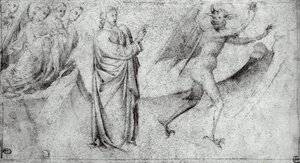
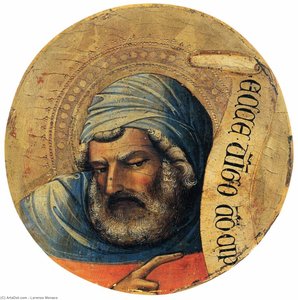
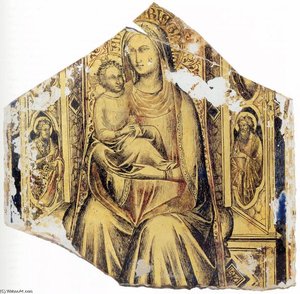
Pracownia — Bezpłatna wysyłka na cały świat — Czas dostawy: 2–6 tygodni
      Lorenzo Monaco, 1370 – 1425

      Lorenzo Monaco: 89 najsłynniejszych obrazów

      Spośród wszystkich obrazów Lorenzo Monaco, najbardziej znanym jest Antiphonary (Cod. Cor. 3, folio 59) (1410); znajduje się on w Bernard H. Breslauer w New York City. Tuż za nimi plasują się Nativity (1414) oraz Antiphonarz (Cod. Cor. 8, folio 134) (1395). Spośród 91 dzieł Lorenzo Monaco w naszym katalogu, tych 89 jest najbardziej znanych – każde z nich zostało przedstawione wraz z datą powstania, muzeum oraz historią.

      Ranking oparty na naszym wskaźniku popularności, który łączy liczbę wyszukiwań, wizyt oraz zamówień dla każdego dzieła. Aktualizacja: Październik 2026. Każdy obraz na tej stronie można zamówić jako ręcznie malowaną reprodukcję olejną na płótnie lnianym lub jako wysokiej jakości wydruk artystyczny, wykonany w wybranym przez Ciebie formacie.

      Portret Lorenzo Monaco
      Lorenzo Monaco · 1370 – 1425
      Urodzony · zmarł
      1370 – 1425, Siena
      Nurt
      Early renaissance
      Dzieła w naszym katalogu
      91
      Najsłynniejsze
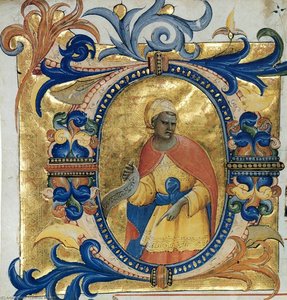
      Antiphonary (Cod. Cor. 3, folio 59) (1410)
      Najwięcej dzieł w
      Metropolitan Museum of Art

      10 najsłynniejszych obrazów artysty Lorenzo Monaco

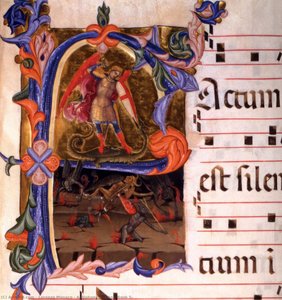
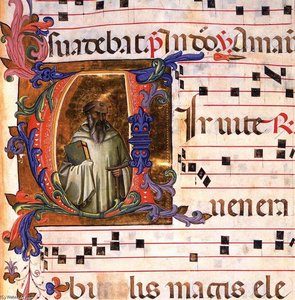
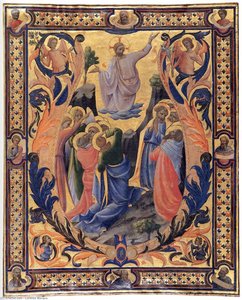
      Antiphonary (Cod. Cor. 3, folio 59) (1410) autorstwa Lorenzo Monaco
      1

      Antiphonary (Cod. Cor. 3, folio 59)

      1410 · Gold Leaf · Bernard H. Breslauer, New York City

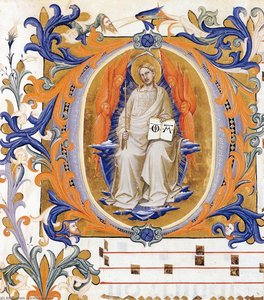
      Behold this breathtaking illumination, an Antiphonary page capturing the profound moment of the Ascension of Christ. It is not merely a depiction of a theological event; it is a vibrant portal into the spiritual fervor of the early Quattrocento. The composition immediately overwhelms the viewer with its sheer density of divine activity and meticulous artistry. Central to the narrative, Jesus ascends toward an ethereal heaven, bathed in a light that…

      Nativity (1414) autorstwa Lorenzo Monaco
      2

      Nativity

      1414 · Oil On Panel · Galleria degli Uffizi, Florencja

      Lorenzo Monaco (c. 1370-1425), a Florentine monk whose artistic vision stands as a pivotal bridge between the solemn grandeur of the Trecento and the burgeoning optimism of the Quattrocento, remains an artist shrouded in intriguing biographical obscurity. Yet, his oeuvre speaks volumes about his profound engagement with faith and his masterful assimilation of stylistic influences—a testament to the dynamism of Renaissance art’s formative years.

      Antiphonarz (Cod. Cor. 8, folio 134) (1395) autorstwa Lorenzo Monaco
      3

      Antiphonarz (Cod. Cor. 8, folio 134)

      1395 · Farba olejna · National Gallery of Art, Waszyngton

      W królestwie sztuki renesansowej rzadko spotyka się dzieło, które tak czule oddaje ducha pokory i piękna jak „Antyfony (Cod. Cor. 8, folio 134)” Lorenza Monaca. Ten imponujący obraz, stworzony w technice tempery na monumentalnej powierzchni 344 x 414 cm, jest świadectwem niezwykłego talentu artysty i religijnego zgiełku epoki. To nie tylko malowidło; to okno do duszy, przenoszące nas w świat wiary i duchowego oddania.

      The Coronation of the Virgin (1414) autorstwa Lorenzo Monaco
      4

      The Coronation of the Virgin

      1414 · Tempera On Panel · Galleria degli Uffizi, Florencja

      In the quiet, contemplative atmosphere of the early fifteenth century, Lorenzo Monaco breathed life into a celestial vision that continues to captivate the modern soul. The Coronation of the Virgin is not merely a painting; it is a profound window into the transition between the graceful, rhythmic elegance of the Gothic era and the burgeoning humanism of the Italian Renaissance. Created in 1414, this monumental polyptych serves as a breathtaking…

      The Last Supper (1394) autorstwa Lorenzo Monaco
      5

      The Last Supper

      1394 · Acrylic On Canvas · Berlińskie Muzea Państwowe, Berlin

      Leonardo da Vinci’s The Last Supper, housed within the refectory of Santa Maria delle Grazie in Milan, isn't merely a painting; it’s an immersive experience. Completed between 1495 and 1498, this monumental mural captures a pivotal moment from Christian scripture – the announcement by Jesus of his impending betrayal by one of his apostles. More than just a depiction of an event, it’s a profound exploration of human emotion, faith,…

      Antiphonary (Cod. Cor. 7, folio 124v) (1406) autorstwa Lorenzo Monaco
      6

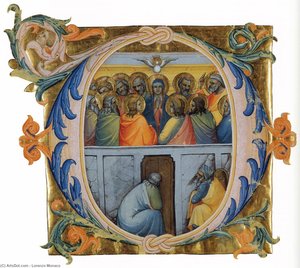
      Antiphonary (Cod. Cor. 7, folio 124v)

      1406 · Painting · Metropolitan Museum of Art, Nowy Jork

      To stand before Lorenzo Monaco's Antiphonary (Cod. Cor. 7, folio 124v) is to witness a moment suspended between worlds—a breathtaking confluence where the luminous spirituality of the Gothic tradition gracefully yields to the nascent intellectualism of the Renaissance. This magnificent illumination, dating from 1406, is far more than mere decoration; it is a profound theological narrative rendered in exquisite pigment and gold. The scene captures a gathering imbued with palpable…

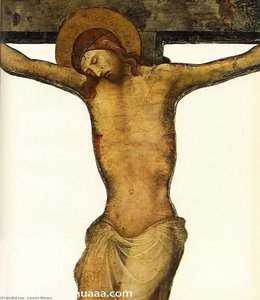
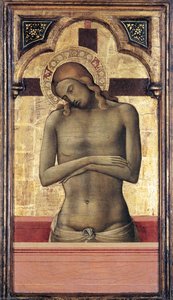
      Chrystus na krzyżu (1405) autorstwa Lorenzo Monaco
      8

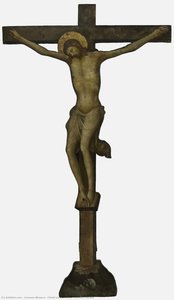
      Chrystus na krzyżu

      1405 · Obraz olejny na płycie · Lindenau-Museum, Altengau

      Lorenzo Monaco (c.1370 – c.1425) stands as an enigmatic figure in the annals of Florentine art, representing a crucial bridge between the solemn traditions of Gothic painting and the burgeoning dynamism of the Quattrocento. Though biographical details remain elusive—scholars debate his birthplace and early life—his artistic output speaks volumes about his unwavering devotion to monastic contemplation and his profound understanding of humanist ideals.

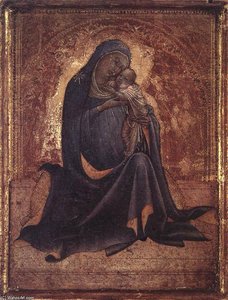
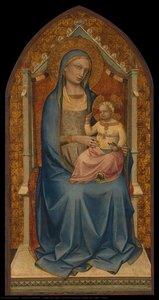
      Madonna and Child with Two Angels (1420) autorstwa Lorenzo Monaco
      9

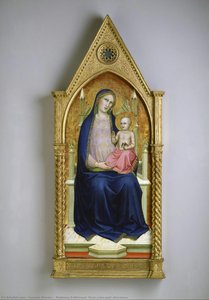
      Madonna and Child with Two Angels

      1420 · Oil On Panel · Liechtenstein Museum, Wiedeń

      This exquisite gilded panel painting, measuring 68 x 36 cm and dating back to 1420, offers a captivating glimpse into the artistic world of Lorenzo Monaco – a pivotal figure bridging the Gothic sensibilities of the Trecento with the burgeoning innovations of the Quattrocento. Created by this Florentine monk, originally Piero di Giovanni born in Siena around 1370, the artwork embodies a profound spirituality and represents a masterful synthesis of…

      The Visitation (1405) autorstwa Lorenzo Monaco
      10

      The Visitation

      1405 · Oil On Canvas · Courtauld Gallery, Londyn

      Lorenzo Monaco's "The Visitation," painted around 1405-1410, is more than just a religious depiction; it’s a poignant meditation on faith, family, and the profound mystery at the heart of Christian belief. Created during a pivotal transition in Florentine art – bridging the late Gothic with the nascent Renaissance – this tempera panel offers a glimpse into the deeply spiritual world of Lorenzo Monaco, a Camaldolese monk who profoundly shaped his…

      Obrazy artysty Lorenzo Monaco od miejsca 11 do 89

      Madonna (1403) autorstwa Lorenzo Monaco
      #11

      Madonna

      1403 · Rijksmuseum

      The Madonna emerges from a luminous gold background, her presence felt through a quiet, spiritual intensity. Created about 1403, this work by Lorenzo Monaco captures the Virgin Mary…

      Zabierz to światło do swojego domu →
      Antiphonary (Cod. Cor. 8, folio 102) (1395) autorstwa Lorenzo Monaco
      #13

      Antiphonary (Cod. Cor. 8, folio 102)

      1395 · Berlińskie Muzea Państwowe

      Lorenzo Monaco's "Antiphonary (Cod. Cor. 8, folio 102)," crafted in 1395, stands as a remarkable testament to the artistic and spiritual landscape of early Renaissance Italy. Housed within…

      Zamów to płótno →
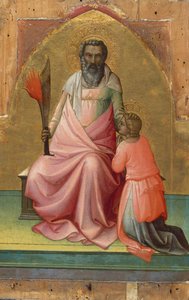
      Nativity (1390) autorstwa Lorenzo Monaco
      #15

      Nativity

      1390 · Berlińskie Muzea Państwowe

      In the quiet transition between the medieval world and the dawn of the Renaissance, few artists captured the intersection of divine mystery and human tenderness as poignantly as…

      Zamów to płótno →
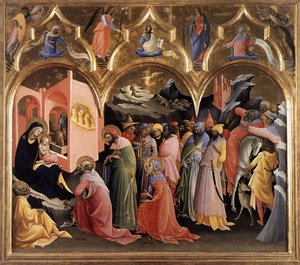
      Madonna and Child (1413) autorstwa Lorenzo Monaco
      #16

      Madonna and Child

      1413 · National Gallery of Art

      The painting Madonna and Child was created in 1413 by the Florentine artist Lorenzo Monaco. Born in Siena, Italy, the painter was known by the name Piero di…

      Zamów to płótno →
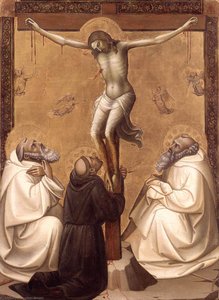
      Crucifixion (1387) autorstwa Lorenzo Monaco
      #18

      Crucifixion

      1387

      The Crucifixion by Lorenzo Monaco captures a moment of profound religious weight. This work of religious art centers on the figure of Jesus Christ, suspended in a moment…

      Zamów ręczne malowanie →
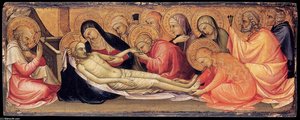
      Lamentation of Christ (1408) autorstwa Lorenzo Monaco
      #22

      Lamentation of Christ

      1408 · National Gallery Prague

      The 1408 panel presents a somber scene of mourning, framed within the elegant, pointed arch of the Gothic tradition. A group of figures gathers around the lifeless body…

      Zamów ręczne malowanie →
      Coronation of the Virgin (1414) autorstwa Lorenzo Monaco
      #30

      Coronation of the Virgin

      1414

      The Coronation of the Virgin is a tempera-on-panel polyptych created by the Italian late Gothic artist Lorenzo Monaco. Dated 1414, the work depicts the Coronation of the Virgin…

      Zamów to płótno →
      The Crucifixion (1415) autorstwa Lorenzo Monaco
      #32

      The Crucifixion

      1415 · Yale University Art Gallery

      The artwork titled The Crucifixion is a religious painting created by the artist Lorenzo Monaco. This specific work is dated 1415. The subject matter depicts the Crucifixion of…

      Zamów to płótno →
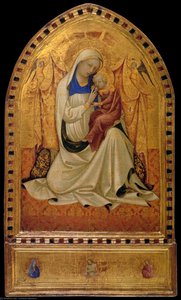
      Diptych: Madonna of Humility (1420) autorstwa Lorenzo Monaco
      #33

      Diptych: Madonna of Humility

      1420 · Muzeum Thorvaldsena

      Diptych: Madonna of Humility is a religious icon painted by Lorenzo Monaco. Created circa 1420, the work centers on the Virgin Mary and the infant Jesus. This pairing…

      Zamów to płótno →
      David (1408) autorstwa Lorenzo Monaco
      #34

      David

      1408 · Metropolitan Museum of Art

      Lorenzo Monaco’s “David,” painted in 1408, isn’t merely a depiction of the biblical hero; it’s a profound expression of spiritual contemplation born from the heart of a monastic…

      Zamów ręczne malowanie →
      Abraham (1408) autorstwa Lorenzo Monaco
      #35

      Abraham

      1408 · Metropolitan Museum of Art

      Lorenzo Monaco's "Abraham," painted in 1408, is more than just a depiction of a biblical scene; it’s a profound meditation on faith, devotion, and the enduring relationship between…

      Zamów to płótno →
      Studies (1417) autorstwa Lorenzo Monaco
      #37

      Studies

      1417 · Metropolitan Museum of Art

      Lorenzo Monaco's "Studies," painted in 1417, isn’t merely a depiction of biblical figures; it’s a profound meditation on faith, judgment, and the human condition rendered with an exquisite…

      Zamów ręczne malowanie →
      Christ on the Cross (1405) autorstwa Lorenzo Monaco
      #40

      Christ on the Cross

      1405 · Lindenau-Museum

      In the quiet, contemplative atmosphere of early fifteenth-century Florence, a profound spiritual drama unfolds upon the canvas of Lorenzo Monaco. His masterpiece, Christ on the Cross, serves as…

      Zamów to płótno →
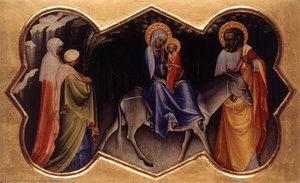
      The Flight into Egypt (1405) autorstwa Lorenzo Monaco
      #49

      The Flight into Egypt

      1405 · Lindenau-Museum

      In the delicate brushstrokes of Lorenzo Monaco’s The Flight into Egypt, we find ourselves transported to the dawn of the fifteenth century, a period where the ethereal elegance…

      Zamów ręczne malowanie →
      The Nativity (1405) autorstwa Lorenzo Monaco
      #51

      The Nativity

      1405 · Metropolitan Museum of Art

      Lorenzo Monaco’s Vision: Bridging Gothic Grace and Early Renaissance Innovation Lorenzo Monaco (1370-1425), a Florentine Monk’s Artistic Journey Lorenzo Monaco, born Piero di Giovanni around 1370 in Siena,…

      Zamów to płótno →
      Moses (1408) autorstwa Lorenzo Monaco
      #52

      Moses

      1408 · Metropolitan Museum of Art

      In the quiet, hallowed halls of the Metropolitan Museum of Art, there exists a window into the spiritual fervor of the early fifteenth century. Lorenzo Monaco’s Moses, painted…

      Zamów ręczne malowanie →
      Antiphonary (Choir Book 5) (1394) autorstwa Lorenzo Monaco
      #53

      Antiphonary (Choir Book 5)

      1394 · Biblioteca Medicea Laurenziana

      Lorenzo Monaco: Bridging Gothic Grace and Renaissance Awakening The Florentine artist Lorenzo Monaco (1370-1425) stands as an extraordinary figure in the artistic landscape of his era, embodying a…

      Zamów to płótno →
      Marriage of the Virgin (1420) autorstwa Lorenzo Monaco
      #59

      Marriage of the Virgin

      1420 · Santa Trinità

      In the hallowed halls of Santa Trinità in Florence, there exists a window into the spiritual fervor of the early fifteenth century. Lorenzo Monaco’s Marriage of the Virgin…

      Diptych: St Jerome (1420) autorstwa Lorenzo Monaco
      #60

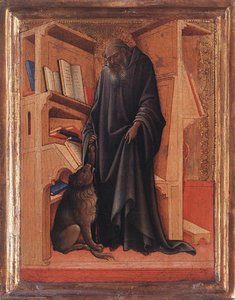
      Diptych: St Jerome

      1420 · Rijksmuseum

      Lorenzo Monaco’s “Diptych: St Jerome,” painted around 1420, stands as a testament to the burgeoning Renaissance spirit – specifically its reverence for monastic contemplation and intellectual pursuit. Produced…

      Zamów ręczne malowanie →
      Abraham (1408) autorstwa Lorenzo Monaco
      #66

      Abraham

      1408 · Metropolitan Museum of Art

      Lorenzo Monaco’s “Abraham,” painted around 1408-10 in Florence, isn't merely a depiction of a biblical scene; it’s a profound meditation on faith, sacrifice, and the enduring promise of…

      Zamów to płótno →
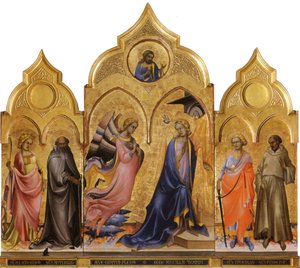
      The Annunciation (1410) autorstwa Lorenzo Monaco
      #72

      The Annunciation

      1410 · Galleria dell'Accademia di Firenze

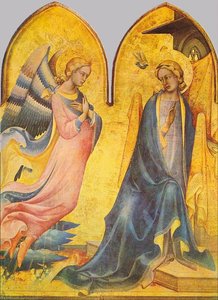
      In the quiet sanctity of the Galleria dell'Accademia in Florence, there exists a moment frozen in time, a celestial intersection between heaven and earth captured by the hand…

      Zamów to płótno →
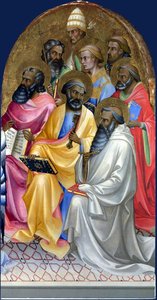
      Coronation of the Virgin (1407) autorstwa Lorenzo Monaco
      #73

      Coronation of the Virgin

      1407 · National Gallery

      Lorenzo Monaco's “Coronation of the Virgin and Adoring Saints,” painted in 1407, stands as a testament to the burgeoning Renaissance spirit—a masterful blend of Gothic tradition and humanist…

      Zamów ręczne malowanie →
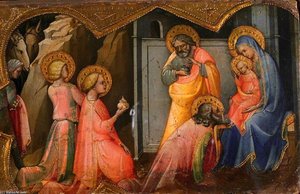
      Adoration of the Magi (detail) (1422) autorstwa Lorenzo Monaco
      #74

      Adoration of the Magi (detail)

      1422 · Galleria degli Uffizi

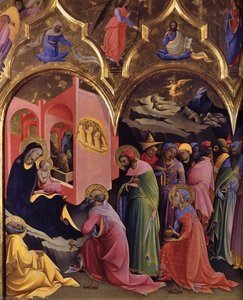
      Lorenzo Monaco (1370-1425) stands as a pivotal figure in the artistic landscape of Florence during the transition from the Late Gothic to Early Renaissance. While biographical details remain…

      Zamów to płótno →
      Altarpiece (1408) autorstwa Lorenzo Monaco
      #75

      Altarpiece

      1408 · Luwr

      The Altarpiece painted by Lorenzo Monaco in 1408 is a remarkable example of Gothic art, characterized by its intricate details and harmonious composition. This painting is housed in…

      Zabierz to światło do swojego domu →
      Madonna of Humility (1418) autorstwa Lorenzo Monaco
      #77

      Madonna of Humility

      1418 · Nelson-Atkins Museum of Art

      Lorenzo Monaco: Bridging Gothic Grace and Renaissance Awakening Lorenzo Monaco stands as an enigmatic figure in the artistic landscape of Florence during the transitional period between the late…

      Zamów to płótno →
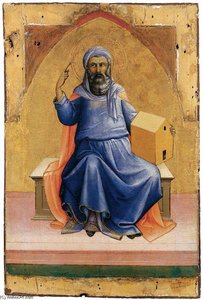
      Noah (1408) autorstwa Lorenzo Monaco
      #78

      Noah

      1408 · Metropolitan Museum of Art

      Lorenzo Monaco’s “Noah”: A Testament to Faith Amidst Gothic Elegance Lorenzo Monaco (1370–1425), a Florentine monk whose artistic vision bridged the Gothic tradition with the nascent Renaissance, stands…

      Zamów to płótno →
      Gradual (Cod. H 74, folio 43r) (1410) autorstwa Lorenzo Monaco
      #80

      Gradual (Cod. H 74, folio 43r)

      1410 · National Gallery of Art

      A Vision of Faith: Exploring Lorenzo Monaco’s Gradual Lorenzo Monaco's "Gradual" (Cod. H 74, folio 43r), created around 1410, stands as a remarkable testament to the burgeoning Renaissance…

      Zamów to płótno →
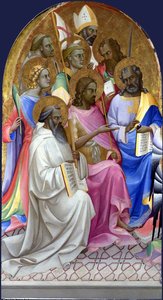
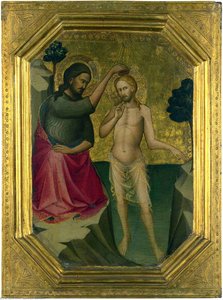
      The Baptism of Christ autorstwa Lorenzo Monaco
      #87

      The Baptism of Christ

      National Gallery

      In the delicate intersection where the ethereal grace of the Gothic era meets the dawn of Renaissance clarity, Lorenzo Monaco’s The Baptism of Christ stands as a profound…

      Zamów ręczne malowanie →

      Płótna Lorenzo Monaco epoka po epoce

      Co najczęściej malował Lorenzo Monaco

      Cztery tematy najczęściej pojawiające się na tych płótnach, z których każdy wraz z jego najbardziej cenionym przykładem.

      Gdzie wiszą płótna Lorenzo Monaco

      8 muzeów, w których znajduje się najwięcej obrazów z tej strony.

      Muzeum Miasto Dzieła artysty Lorenzo Monaco Obrazy z tej listy
      Metropolitan Museum of Art, Nowy JorkMetropolitan Museum of Art Nowy Jork 11 Antiphonary (Cod. Cor. 7, folio 124v), David, Abraham
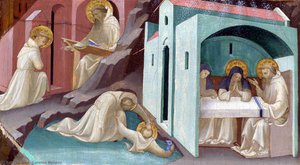
      National Gallery, LondynNational Gallery Londyn 8 The Death of Saint Benedict: Predella Panel, Coronation of the Virgin, Coronation of the Virgin and Adoring Saints
      Berlińskie Muzea Państwowe, BerlinBerlińskie Muzea Państwowe Berlin 6 The Last Supper, Antiphonary (Cod. Cor. 8, folio 102), Nativity
      Galleria degli Uffizi, FlorencjaGalleria degli Uffizi Florencja 4 Nativity, The Coronation of the Virgin, Adoration of the Magi
      Lindenau-Museum, AltengauLindenau-Museum Altengau 4 Chrystus na krzyżu, Christ on the Cross, The Flight into Egypt
      Luwr, ParyżLuwr Paryż 4 The Temptation of Christ, Virgin and Child Enthroned with Sts John the Baptist and John the Evangelist, Antiphonary (Cod. Cor. 1, folio 3)
      National Gallery of Art, WaszyngtonNational Gallery of Art Waszyngton 3 Antiphonarz (Cod. Cor. 8, folio 134), Madonna and Child, Gradual (Cod. H 74, folio 43r)
      Galleria dell'Accademia di Firenze, FlorencjaGalleria dell'Accademia di Firenze Florencja 3 Crucifixion, The Annunciation, Annunciation Triptych

      Dekada po dekadzie: najsłynniejsze płótna Lorenzo Monaco

      1. 1380s
        The Martyrdom of St. James the Greater (1387) autorstwa Lorenzo Monaco
        Płótno 17 z 89

        The Martyrdom of St. James the Greater

        Wiek 10 – 19

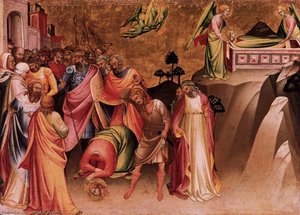
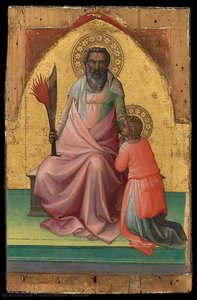
        The Martyrdom of St. James the Greater is a work by the artist Lorenzo Monaco. Created about 1387, this panel painting captures a moment of spiritual struggle. It…

      2. 1390s
        Antiphonarz (Cod. Cor. 8, folio 134) (1395) autorstwa Lorenzo Monaco
        Miejsce 3 z 89

        Antiphonarz (Cod. Cor. 8, folio 134)

        Wiek 20 – 29 · National Gallery of Art

        W królestwie sztuki renesansowej rzadko spotyka się dzieło, które tak czule oddaje ducha pokory i piękna jak „Antyfony (Cod. Cor. 8, folio 134)” Lorenza Monaca. Ten imponujący obraz,…

      3. 1400s
        Antiphonary (Cod. Cor. 7, folio 124v) (1406) autorstwa Lorenzo Monaco
        Miejsce 6 z 89

        Antiphonary (Cod. Cor. 7, folio 124v)

        Wiek 30 – 39 · Metropolitan Museum of Art

        To stand before Lorenzo Monaco's Antiphonary (Cod. Cor. 7, folio 124v) is to witness a moment suspended between worlds—a breathtaking confluence where the luminous spirituality of the Gothic…

      4. 1410s
        Antiphonary (Cod. Cor. 3, folio 59) (1410) autorstwa Lorenzo Monaco
        Miejsce 1 z 89

        Antiphonary (Cod. Cor. 3, folio 59)

        Wiek 40 – 49 · Bernard H. Breslauer

        Behold this breathtaking illumination, an Antiphonary page capturing the profound moment of the Ascension of Christ. It is not merely a depiction of a theological event; it is…

      5. 1420s
        Madonna and Child with Two Angels (1420) autorstwa Lorenzo Monaco
        Płótno 9 z 89

        Madonna and Child with Two Angels

        Wiek 50 – 55 · Liechtenstein Museum

        This exquisite gilded panel painting, measuring 68 x 36 cm and dating back to 1420, offers a captivating glimpse into the artistic world of Lorenzo Monaco – a…

      Odpowiedzi na pytania dotyczące obrazów Lorenzo Monaco

      Który obraz autorstwa Lorenzo Monaco jest najbardziej znany?Przeczytaj odpowiedź

      Antiphonary (Cod. Cor. 3, folio 59) (1410), Bernard H. Breslauer, New York City. Następują po nim Nativity (1414) oraz Antiphonarz (Cod. Cor. 8, folio 134) (1395).

      Ile lat miał(a) Lorenzo Monaco w czasie powstania Antiphonary (Cod. Cor. 3, folio 59)?Przeczytaj odpowiedź

      Lorenzo Monaco, urodzony/a w 1370, miał/a 40 lat: Antiphonary (Cod. Cor. 3, folio 59) pochodzi z 1410.

      Z jakich dziesięciu obrazów najbardziej słynie Lorenzo Monaco?Przeczytaj odpowiedź

      Antiphonary (Cod. Cor. 3, folio 59), Nativity, Antiphonarz (Cod. Cor. 8, folio 134), The Coronation of the Virgin, The Last Supper, Antiphonary (Cod. Cor. 7, folio 124v), Crucifixion, Chrystus na krzyżu, Madonna and Child with Two Angels i The Visitation. Każde płótno w powyższym rankingu zawiera informację o roku powstania oraz muzeum.

      Ile znanych obrazów namalował Lorenzo Monaco?Przeczytaj odpowiedź

      W naszym katalogu znajduje się 91 dzieł artysty Lorenzo Monaco, datowanych od 1387 do 1422.

      W których muzeach znajdują się najsłynniejsze płótna Lorenzo Monaco?Przeczytaj odpowiedź

      Większość znajduje się w Metropolitan Museum of Art (Nowy Jork), National Gallery (Londyn) i Berlińskie Muzea Państwowe (Berlin); powyższa lista wymienia każde muzeum oraz jego płótna.

      W których latach Lorenzo Monaco namalował swoje najsłynniejsze płótna?Przeczytaj odpowiedź

      W 1400s, który obejmuje 31 z 89 dzieł na tej stronie, wśród nich znajduje się Antiphonary (Cod. Cor. 7, folio 124v).

      Jakie są pierwsze i ostatnie słynne płótna Lorenzo Monaco?Przeczytaj odpowiedź

      Najwcześniejsze płótno pochodzi z The Martyrdom of St. James the Greater (1387), a najpóźniejsze z Adoration of the Magi (1422).

      Jakie tematy najczęściej powracają w obrazach Lorenzo Monaco?Przeczytaj odpowiedź

      Gold background (16), Medieval art (15) i Religious art (13), w ramach 89 dzieł na tej stronie.

      Czym zazwyczaj malował Lorenzo Monaco?Przeczytaj odpowiedź

      Tempera On Panel, użyte w 31 z 89 dzieł na tej stronie.

      Do jakiego nurtu artystycznego należy Lorenzo Monaco?Przeczytaj odpowiedź

      Early renaissance, co pokazują płótna na tej stronie.

      Co można zobaczyć od Lorenzo Monaco w Metropolitan Museum of Art?Przeczytaj odpowiedź

      Muzeum Metropolitan Museum of Art, Nowy Jork posiada 11 dzieł widocznych na tej stronie, w tym Antiphonary (Cod. Cor. 7, folio 124v), David i Abraham.

      Czy mogę zamówić ręcznie malowaną kopię obrazu autorstwa Lorenzo Monaco?Przeczytaj odpowiedź

      Tak. Każdy obraz na tej stronie można zamówić z jego własnej podstrony jako ręcznie malowaną reprodukcję olejną lub jako wysokiej jakości wydruk artystyczny w wybranym przez Ciebie rozmiarze.

      Lorenzo Monaco: historia artysty

      Lorenzo Monaco (1370-1425): A Florentine Monk’s Vision

      Lorenzo Monaco, born Piero di Giovanni around 1370 in Siena, occupies a fascinating and pivotal position in the transition from the Gothic grace of the Trecento to the burgeoning Renaissance ideals of the Quattrocento. Though biographical details remain scarce, his artistic journey reveals a compelling story of adaptation, innovation, and deeply felt spirituality. Apprenticed in Florence, he absorbed the lessons of masters like Giotto, Spinello Aretino, and Agnolo Gaddi – artists who established a foundation of narrative clarity and emotional resonance. However, it was his embrace of monastic life in 1390, joining the Camaldolese order at Santa Maria degli Angeli, that truly shaped both his artistic identity and earned him the name by which he is best known: Lorenzo Monaco, or “Lawrence the Monk.” This commitment to a contemplative existence profoundly influenced the character of his work, imbuing it with an introspective quality and a focus on devotional themes.

      Early Influences and Gothic Elegance

      Lorenzo Monaco’s artistic training began in Florence, where he honed his skills under the tutelage of prominent masters who championed the International Gothic style. Giotto di Bondone, Spinello Aretino, and Agnolo Gaddi – figures celebrated for their expressive narratives and meticulous attention to detail – instilled in him a profound understanding of how to convey emotion through visual representation. This formative period cemented Monaco’s stylistic preferences: he favored elongated figures draped in sinuous, flowing garments, prioritizing elegance and grace over strict anatomical accuracy. The International Gothic style, characterized by its shimmering luminescence and delicate linearism, served as an anchor for his early endeavors, establishing a framework of refined beauty that would persist throughout his career. He absorbed influences from contemporaries like Lorenzo Ghiberti and Gherardo Starnina, incorporating their sophisticated compositional techniques and masterful use of color palettes into his own artistic practice. The resulting paintings were imbued with a palpable sense of serenity and spiritual contemplation—a hallmark of Monaco’s distinctive aesthetic.

      The Camaldolese Order and Spiritual Transformation

      Joining the Camaldolese order in 1390 marked a decisive turning point in Lorenzo Monaco’s life, irrevocably shaping his artistic sensibilities and directing him toward themes of piety and devotion. This monastic vocation fostered an inner life characterized by contemplation and prayer—values that permeated his creative output. The austere environment of Santa Maria degli Angeli instilled in him a reverence for simplicity and spiritual purity, influencing his stylistic choices and informing the emotional tenor of his paintings. Unlike many artists of his time who sought to glorify worldly power or celebrate heroic narratives, Monaco consistently pursued artistic endeavors rooted in religious faith—a conscious decision that distinguished him from his peers and cemented his reputation as a champion of contemplative art.

      Evolution Towards Renaissance Style

      While firmly grounded in Gothic traditions, Lorenzo Monaco’s style gradually embraced elements foreshadowing the burgeoning Renaissance aesthetic. He subtly elongated figures, favoring drapery that flowed with graceful movement—a technique reminiscent of Giotto but imbued with an understated elegance. Furthermore, he experimented with sharper edges and brilliant colors – particularly the luxurious hues of gold and lapis lazuli – reflecting a growing fascination with classical ideals of beauty and proportion. Though eschewing radical innovations in perspective or anatomical realism, Monaco skillfully incorporated stylistic refinements that signaled the dawn of a new artistic era. His approach to spatial arrangement prioritized symbolic resonance over strict geometric accuracy—a deliberate departure from the conventions of his predecessors yet consistent with his unwavering commitment to conveying spiritual truths through visual art.

      Major Achievements and Legacy

      Lorenzo Monaco’s oeuvre comprises numerous masterpieces that exemplify both Gothic elegance and Renaissance sensibilities. Among his most celebrated works are *Pietà*, housed in Florence's Galleria dell'Accademia, showcasing a masterful depiction of sorrowful compassion; *Coronation of the Virgin*, gracing the Uffizi Gallery, demonstrating an exquisite command of color and drapery; and *Polyptych of Monteoliveto*, now residing in Siena Cathedral—a monumental testament to his artistic prowess. Perhaps his most enduring achievement is *Adoration of the Magi* (1420-1422), where Monaco’s innovative use of foreshortening creates a compelling visual experience while simultaneously conveying profound theological symbolism. Giorgio Vasari, writing in his *Lives of the Artists*, acknowledged Monaco's talent while noting his untimely death from an unidentified infection around 1425. Despite the brevity of his artistic life, Lorenzo Monaco left an indelible mark on Florentine art history—a legacy characterized by unwavering devotion to spiritual values and a singular stylistic vision that bridged the gap between Gothic tradition and Renaissance innovation. His paintings continue to inspire admiration for their beauty and grace, serving as enduring reminders of a pivotal moment in Western artistic culture.

      Wszystkie 91 dzieła artysty Lorenzo Monaco →