

 Visualizar na parede
 Compartilhar
 Compartilhar
 Detalhes
 Guia
Guia

 Baixar imagem
 Semelhantes
 Raio X
 Ver diaporama
 Perguntas e Respostas
 Estatísticas
Orchard in spring

- 54.0 x 72.0 cm


Explore Alfred Sisley’s ‘Orchard in Spring,’ a quintessential Impressionist landscape brimming with light & tranquility. Discover serene beauty & masterful brushwork in this 1881 oil painting.
 Ler mais
Alfred Sisley: mestre impressionista da serenidade, capturou luz e paisagens francesas com delicadeza e beleza atemporal. Descubra suas obras!
Giclée / Impressão de Arte
Impressão giclée ou em tela de qualidade de museu, com produção rápida e opções flexíveis de acabamento. ( Comprar pintura feita à mão Alternar para Imagem Digital)




P118B €10

P118H €10

P118W €10

P438Z €10

P508JH €12

P508YH €12

P805H €10

P805Z €10

P919BZ €10

P919G €10

P919XJ €10

P959ZH €10

P968JZ €12

W106C €8

W218G €10

W218JH €8

W218Y €10

W307PJ €10

W316G €10

W316PJ €8

W316Y €10

W398PJ €8

W4111J €10

W500HY €15

W500JH €15

W692G €12

W849H €8

W940BG €15

W953PJ €8




Tamanho padrão
personalizado
CM
INCH
Escolha entre os nossos tamanhos pré-definidos que respeitam as proporções originais da obra de arte.
Loading sizes...

largura
altura
Insira a largura e a altura desejadas para se ajustarem à sua moldura ou parede. Uma impressão pode ser apenas cortada, nunca ampliada além da imagem original; portanto, um tamanho com proporções diferentes resultará na perda de parte da imagem. Enviamos uma maquete digital para sua aprovação antes de realizarmos a impressão. A imagem exibida nesta página não mostra o corte real — apenas a maquete o faz.
Entrega mundial () em 2 semanas, em vez das 4/5 semanas padrão. (4 Novembro)

Envio expresso gratuito para todo o mundo

Tela de Linho de Alta Qualidade

Seguro de transporte completo

Garantia de Reembolso de Impostos Alfandegários

Garantia de Fidelidade Cromática

Política de Devolução em 100 Dias (Apenas para Defeitos)

Garantia de reembolso de 100%

Oferta de desconto por quantidade
 A opção de vidro está disponível apenas para tamanhos inferiores a 110 cm

Orchard in spring
Giclée / Impressão de Arte
Tamanho da Reprodução
-


Preço Total
€ 62
A Moment Frozen in Pastel Light: Exploring Alfred Sisley’s Orchard in Spring
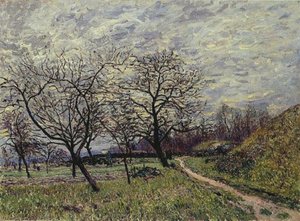
Alfred Sisley's "Orchard in Spring," painted in 1881, isn’t merely a depiction of a blossoming orchard; it’s an embodiment of the Impressionist ethos—a deliberate attempt to capture not just what is seen but how it feels. Created during a period of intense artistic experimentation and fueled by a fascination with capturing fleeting impressions of nature, this canvas stands as a testament to Sisley's unwavering dedication to portraying light and atmosphere above meticulous detail. Measuring 54 x 72 cm, the painting resides within the Musée des Beaux-Arts d’Angers /art/list/?Filter=A@D3APVK-Discover-the-Masterpieces-of-Musee-des-Beaux-Arts-d-Angers-(Angers-France), offering visitors a chance to experience firsthand the brilliance of Impressionist artistry.- Subject Matter & Composition: The scene unfolds with remarkable serenity—a grove of fruit trees laden with blossoms under a softly overcast sky. Sisley skillfully arranges elements to guide the viewer’s eye, establishing a layered composition that prioritizes mood over precise representation. Foreground wildflowers punctuate the grassy slope, while the dense tree line dominates the middle ground, culminating in distant hills hazy with atmospheric perspective.
- Impressionist Style & Technique: Sisley's approach aligns perfectly with Impressionism’s core tenets. Loose brushstrokes—a hallmark of the movement championed by artists like Camille Pissarro—are employed to convey the dappled sunlight filtering through the leaves and blossoms. The artist eschews blending colors extensively, allowing hues to mingle organically on the canvas, resulting in a luminous effect that captures the ephemeral beauty of springtime.
- Historical Context: Painted during the Belle Époque, “Orchard in Spring” reflects the broader cultural preoccupation with capturing sensory experience and celebrating the natural world. Impressionism emerged as a reaction against academic painting’s rigid conventions, advocating for artists to prioritize subjective perception rather than idealized realism.
- Symbolism & Emotional Impact: The orchard itself symbolizes renewal and fertility—themes central to Impressionist art's exploration of nature’s transformative power. Sisley’s masterful use of color and light evokes feelings of tranquility, peace, and wonder, inviting contemplation on the beauty of the natural world.
- Similar Works & Reproductions: Sisley’s dedication to capturing atmospheric effects is evident in other landscapes like “The Fields and Hills of Veneux Nadon,” which similarly prioritize light and color over detailed depiction. High-quality reproductions of these paintings—available on TopImpressionists.com—allow collectors and interior designers alike to appreciate the enduring legacy of Impressionist artistry.
Perguntas e Respostas
Qual é a intensidade das cores em "Orchard in spring", de Alfred Sisley?
As cores em "Orchard in spring", de Alfred Sisley possuem uma intensidade Vivid.
Quais temas aparecem em "Orchard in spring", de Alfred Sisley?
Os temas de "Orchard in spring" são orchard, springtime, landscape, impressionism, light, color, nature, tranquility.
Que tipo de obra é "Orchard in spring"?
No catálogo, "Orchard in spring", de Alfred Sisley está registrado como WallArt. A categoria ajuda a encontrar obras semelhantes.
Obras Relacionadas






Biografia do Artista
A Life Immersed in Light and Landscape
Alfred Sisley, a name often whispered alongside those of Monet, Renoir, and Pissarro, occupies a unique and profoundly beautiful space within the Impressionist movement. Born in Paris on October 30, 1839, to British parents—William Sisley, a silk merchant, and Felicia Sell, a music enthusiast—he carried a dual heritage that subtly informed his artistic vision. Though he would spend nearly his entire life in France, Sisley retained British citizenship, a fact that brought him personal disappointment later in life when applying for French naturalization was refused. His early years were comfortably bourgeois, affording him the opportunity to pursue studies initially intended for a commercial career in London at the age of eighteen. However, the allure of art proved too strong, and he returned to Paris in 1861, embarking on formal training under Swiss artist Marc-Charles-Gabriel Gleyre at the École des Beaux-Arts. It was here, amidst the burgeoning artistic ferment of the era, that Sisley forged crucial friendships with Monet, Renoir, and Bazille—relationships that would profoundly shape his artistic trajectory. These companions shared a rebellious spirit, rejecting the rigid conventions of academic painting in favor of capturing the fleeting effects of light and atmosphere directly from nature.The Quiet Master of Impressionism
Sisley’s dedication to *plein air* painting—working outdoors, directly observing the natural world—was unwavering. Unlike some of his contemporaries who experimented with diverse genres, Sisley remained steadfastly committed to landscape throughout his career. This focused devotion allowed him to refine a distinctive style characterized by tranquility, delicate color palettes, and a subtle rendering of light. His canvases are often awash in pale shades of green, pink, purple, dusty blue, and cream, creating an atmosphere of serene contemplation. While the early works remain largely lost to time, his mature paintings reveal a meticulous observation of nature combined with a poetic sensibility. He wasn’t interested in grand narratives or dramatic gestures; instead, he found beauty in the everyday—in the gentle flow of rivers, the dappled light filtering through trees, and the quiet charm of rural life. His early struggles for recognition were compounded by his father's financial difficulties following the Franco-Prussian War in 1870, forcing Sisley to rely solely on the sale of his art for sustenance—a precarious existence that shadowed much of his career. He was a true Impressionist, but one who often labored in relative obscurity during his lifetime.Rivers, Canals, and the Essence of Place
Recurring themes permeate Sisley’s oeuvre, most notably his fascination with water. River landscapes became a signature subject, exemplified by his series of paintings created during a trip to England in 1874 along the Thames near Molesey. These works, capturing the tranquil beauty of the river and its surroundings, are considered among his finest achievements—a “perfect moment of Impressionism,” as art historian Kenneth Clark described them. He also developed a deep connection with Moret-sur-Loing, where he lived for many years, immortalizing its canals, bridges, and surrounding countryside in numerous canvases. Paintings like "Watermill near Moret," "Barges on the Loing Canal, Spring", and “Fields around the Forest” showcase his ability to imbue ordinary scenes with a sense of poetic grace. He didn’t merely depict these places; he captured their *essence*, conveying not just what they looked like but how they felt—the gentle breeze, the warmth of the sun, the quiet murmur of the water. This sensitivity to atmosphere and mood is perhaps Sisley's most enduring legacy.Influences and a Lasting Legacy
Sisley’s artistic influences were multifaceted. Gleyre’s academic training provided a foundation in technique, while the camaraderie with Monet, Renoir, and Bazille fostered a shared commitment to Impressionist principles. He absorbed their emphasis on capturing fleeting moments of light and atmosphere but developed his own unique voice—one characterized by restraint and subtlety. Though he often labored in relative obscurity during his lifetime, Sisley’s work is now celebrated for its beauty, sensitivity, and unwavering dedication to portraying nature. His influence can be seen in the works of later landscape painters who sought to capture the ephemeral qualities of light and atmosphere with similar nuance. He was a true Impressionist, but one who often labored in relative obscurity during his lifetime.Historical Significance
Sisley’s historical significance extends beyond his technical skill and aesthetic sensibility. His unwavering commitment to *plein air* painting, even in the face of financial hardship and critical indifference, paved the way for future generations of artists who sought to break free from academic conventions and embrace a more direct engagement with nature. His paintings offer a glimpse into a rapidly changing world—a world on the cusp of modernity—and remind us of the enduring power of art to capture the beauty and tranquility that can be found even in the most humble of landscapes. He was, and remains, a master of light, atmosphere, and the quiet poetry of the natural world.- Major Themes: Landscapes, riverscapes, canals, rural life, atmospheric effects.
- Key Characteristics: Delicate color palettes, subtle rendering of light, tranquil mood, *plein air* painting.
- Influences: Marc-Charles-Gabriel Gleyre, Claude Monet, Pierre-Auguste Renoir, Frédéric Bazille, Barbizon school painters.

Alfred Sisley
1839 - 1899 , França
Dados Rápidos
- Artistic Movement Or Style: Impressionismo
- Artists Or Movements Influenced By This Artist: ['Barbizon']
- Artists Who Influenced This Artist:
- Gleyre
- Monet
- Renoir
- Date Of Birth: 1839-10-30
- Date Of Death: 1899-01-29
- Full Name: Alfred Sisley
- Nationality: Britânico-Francês
- Notable Artworks:
- Rio Sena
- Moinho
- Canteiros
- Place Of Birth: Paris, França
Artigos Relacionados

The Soft Magic of Chalk: Capturing Light, Texture, and the Ethereal Soul of Impressionist Masterpieces
Discover the ethereal beauty of pastel and chalk art. Explore how Impressionist masters like Van Gogh and Degas captured light and texture to create timeless, soulful masterpieces for the discerning collector.
Capturing Emotion: A Journey Through the Soul of Expressionist Landscapes
Explore the profound emotional depth of Expressionist landscapes. Discover how Post-Impressionist masters moved beyond light to capture the soul through vibrant color and form. A curated journey for true art lovers seeking the beauty of expressive mastery.
Explore obras de arte organizadas por temas, estilos e características.


