

Exibido: · Com a moldura:
 Visualizar na parede
 Compartilhar
 Compartilhar
 Detalhes
 Guia
Guia

 Baixar imagem
 Semelhantes
 Raio X
 Ver diaporama
 Perguntas e Respostas
 Estatísticas
- 158.0 x 106.0 cm


€ 240
Reprodução em Óleo Feita à Mão
Óleo sobre tela pintado à mão no tamanho e moldura de sua escolha, feito sob encomenda pelos nossos artistas. ( Alternar para Impressão Alternar para Imagem Digital)
Tamanho
·Tamanho padrão
personalizado
CM
INCH
Escolha entre os nossos tamanhos pré-definidos que respeitam as proporções originais da obra de arte.
Carregando tamanhos...

largura
altura
Insira a largura e a altura desejadas para se ajustarem à sua moldura ou parede. Como esta obra é pintada à mão, para um tamanho com proporções diferentes, o artista poderá pintar um pouco mais ao redor da imagem ou reduzir ligeiramente a composição — você escolhe. Enviamos uma maquete digital para sua aprovação antes de iniciar a pintura. A imagem exibida nesta página não representa o resultado real — apenas a maquete mostra o resultado final.
 Leia mais
Finalizar
·
Branco €1

Bordas esfumaçadas €1

Bordas estendidas €1

P118B €10

P118H €10

P118W €10

P438Z €10

P508JH €12

P508YH €12

P805H €10

P805Z €10

P919BZ €10

P919G €10

P919XJ €10

P959ZH €10

P968JZ €12

W106C €8

W218G €10

W218JH €8

W218Y €10

W307PJ €10

W316G €10

W316PJ €8

W316Y €10

W398PJ €8

W4111J €10

W500HY €15

W500JH €15

W692G €12

W849H €8

W940BG €15

W953PJ €8

H24-GOLD €30

H24-SILVER €30

H36-GOLD €45

H36-SILVER €45
Enviado em um tubo protetor, pronto para ser emoldurado por você.
Extras
opcionalO que os extras incluem?
Exemplos do que pode ser alterado: Substituir o rosto pela foto do cliente; Adicionar um animal de estimação (ex: substituir gato por cachorro); Incluir uma mensagem oculta no fundo; Alterar a paisagem ou elementos do fundo.
Após o pedido, a equipe da TopImpressionists.com enviará um e-mail ao cliente para instruções e fornecerá uma prévia da montagem
Após o pedido, a equipe da TopImpressionists.com enviará um e-mail ao cliente para instruções e fornecerá uma prévia da montagem
Entrega mundial () em 3 a 4 semanas, em vez das 5 semanas padrão. (3 Novembro). Sem comprometer a qualidade.
Verniz de Proteção
Etiqueta de identificação
Detalhes da Placa de Bronze Gravada
This elegant plaque features the artist's name and the title of the artwork, finely engraved for a timeless presentation.
It is made from bronze with a refined, elegant finish. The text is precisely laser-engraved for a sharp and permanent result. Measuring 9x2 cm, the plaque is compact yet easy to read. It's built to be durable and scratch-resistant, offering a professional, museum-quality look. Mounting is simple thanks to the included adhesive backing.
Detalhes da Placa de Acrílico Transparente
The plaque includes essential engraved details such as the artist's name, the title of the artwork, the date it was created, the type of media used-like oil on canvas or watercolor-a brief description of the piece, and a QR code that links to the complete artwork information.
It is crafted from clear acrylic, offering a sleek, modern appearance. The text is UV-engraved in black to ensure strong visual contrast. With a size of 10x15 cm, it ensures optimal readability. It comes equipped with two metal hooks for secure wall mounting. The plaque is designed to be weather-resistant, making it suitable for various environments, and it includes interactive features that work seamlessly with smartphone scanning.
Detalhes da Placa de Acrílico Preto
This elegant plaque includes engraved information such as the artist's name, the title of the artwork, the date it was created, the type of media used (like oil on canvas or watercolor), a short description of the artwork, and a QR code for quick access to more information.
The plaque itself is made from refined black acrylic with a premium finish. The text is laser-engraved in white for high contrast and readability. Its size is 10x15 cm, designed to be easy to read. It comes with two metal hooks for professional mounting. The design is sleek and fits any interior style. It is also weather-resistant and durable, with built-in digital integration for mobile compatibility.
A opção de vidro está disponível apenas para tamanhos inferiores a 110 cm
 A opção de vidro está disponível apenas para tamanhos inferiores a 110 cm
- Envio expresso gratuito para todo o mundo
- Tela de Linho de Alta Qualidade
- Seguro de transporte completo
- Garantia de Reembolso de Impostos Alfandegários
- Garantia de Fidelidade Cromática
- Política de Devolução em 100 Dias (Apenas para Defeitos)
- Garantia de reembolso de 100%
- Oferta de desconto por quantidade


Descrição do Item
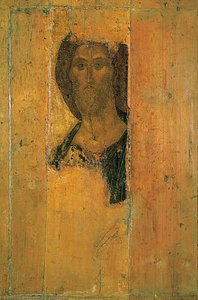
Contemplative portrait of Christ by Andrei Rublev (c. 1410), showcasing masterful Russian iconography; discover this timeless piece today.
Biografia do Artista
Andrey Rublyov (c. 1360-1428): Um mestre da iconografia russa, conhecido por obras místicas e emotivas como 'Anunciação' e 'Santíssima Trindade'. Explore a profundidade espiritual e as influências bizantinas.
Sobre a pintura
A Glimpse into Sacred Contemplation: The Aura of Rublev's Deesis
To stand before an image evocative of Andrei Rublev’s profound spiritual vision is to step across the threshold of time itself. This depiction, echoing the solemnity of a Deesis grouping, centers on a figure whose gaze seems to penetrate the veil between worlds. The subject, bearing the unmistakable gravitas associated with Christ or a deeply contemplative saint, commands attention through sheer emotional resonance. It is not merely a portrait; it is an encounter. The artist has captured that fleeting moment where introspection deepens into profound understanding, allowing the viewer to feel the weight of sacred thought emanating from the canvas.
Mastery in Pigment and Spirit: Technique and Craftsmanship
The technical brilliance evident in this work speaks volumes about Andrei Rublev’s unparalleled skill. Observe the meticulous handling of the paint; every visible brushstroke contributes to a tapestry of light and shadow that gives the figure an almost lifelike dimensionality. The contrast between the luminous quality of the face and the simplicity of the background—that striking yellow wall—is nothing short of masterful. This deliberate use of color serves not merely as decoration, but as a structural element guiding the eye directly to the emotional core: the man’s contemplative expression. For those who appreciate fine art reproduction, understanding this technique is key; it allows us to recreate the depth and subtlety that only painstaking hand-painting can achieve.
The Weight of History: Context in Russian Iconography
Dating back to 1410, this piece situates itself within a pivotal era for Russian art. Andrei Rublev was more than just a painter; he was the spiritual chronicler of his age. His work is deeply embedded in the tradition of Orthodox iconography, yet it possesses a unique psychological depth that elevates it beyond mere religious depiction into universal human experience. The style speaks to a period where Byzantine influences mingled with a burgeoning national artistic voice—a confluence that imbues the piece with both timeless sacredness and palpable human drama. Owning a reproduction allows one to bring this historical dialogue into a modern setting.
Symbolism of the Gaze: Emotional Impact for the Modern Collector
The most captivating element remains the subject’s gaze, directed slightly over the shoulder. This averted yet knowing look invites participation from the viewer. Symbolically, it speaks to themes of divine mystery, eternal watchfulness, and quiet wisdom. For collectors and interior designers alike, this piece offers more than just aesthetic beauty; it offers an atmosphere. It suggests a sanctuary within a room—a focal point that encourages pause, reflection, and a deeper appreciation for the enduring narratives of faith and humanity. The rich tones and profound subject matter ensure that this artwork will not merely hang on a wall, but rather inhabit the space with quiet dignity.
Perguntas e Respostas
Qual é a intensidade das cores em "Deesis Range: The Saviour", de Andrei Rublev?
As cores em "Deesis Range: The Saviour", de Andrei Rublev possuem uma intensidade Vivid.
"Deesis Range: The Saviour" apresenta contrastes fortes entre luz e sombra?
"Deesis Range: The Saviour", de Andrei Rublev apresenta um contraste Serene entre suas áreas claras e escuras.
Para que tipo de uso é recomendada uma reprodução de "Deesis Range: The Saviour", de Andrei Rublev?
Uma reprodução de "Deesis Range: The Saviour", de Andrei Rublev é recomendada para Focal. Esta sugestão decorre do tema, da atmosfera e das cores da obra.
Informações rápidas e quiz de arte
Sobre Andrei Rublev

Andrei Rublev
1360 - 1428, Rússia
Biografia do Artista
Andrei Rublev: A Alma da Iconografia Russa
Andrei Rublev (c. 1360 – c. 1430) permanece como uma das figuras mais enigmáticas e profundamente influentes na história da arte russa. Mais do que um simples pintor, ele personifica uma confluência de devoção espiritual, maestria artística e a própria essência da Rússia medieval — uma nação que buscava sua identidade em meio à influência bizantina e ao nascimento de uma consciência nacional. Embora os detalhes de sua vida permaneçam envoltos em mistério, seu legado como o principal iconógrafo de sua era é inegável, moldando não apenas a linguagem visual da arte ortodoxa russa, mas também impactando profundamente as gerações subsequentes de artistas.
Poucas informações concretas sobrevivem a respeito dos primeiros anos de Rublev. Acredita-se que ele tenha nascido em Moscou, embora alguns relatos sugiram uma possível origem no Mosteiro da Lavra de Trindade-São Sérgio, próximo à cidade — um local que teria influenciado profundamente seu desenvolvimento artístico. Seu aprendizado sob a tutela de Teófanes, o Grego, um renomado pintor de ícones bizantino que migrou para a Rússia, proporcionou-lhe uma base inestimável nas técnicas e convenções estilísticas da época. No entanto, Rublev rapidamente transcendeu a mera imitação, infundindo essas formas estabelecidas com uma sensibilidade unicamente russa — um senso palpável de humildade, profundidade espiritual e ressonância emocional que distinguiu sua obra de seus predecessores bizantinos.
- Início de Carreira no Kremlin: A carreira inicial de Rublev está inextricavelmente ligada ao Kremlin de Moscou. Em 1405, ele uniu forças com Teófanes e Prokhor de Gorodets para decorar a Catedral da Anunciação, um momento crucial na pintura de ícones russa. Esta colaboração expôs Rublev aos mais altos escalões do poder e proporcionou-lhe uma experiência inestimável trabalhando em grande escala. <
- O Ícone da Trindade: Possivelmente a obra mais celebrada de Rublev, o ícone da “Trindade” (c. 1420-1428) é um testemunho de seu gênio artístico. Esta obra-prima, agora guardada na Galeria Tretyakov em Moscou, afasta-se sutilmente da iconografia bizantina tradicional. As figuras de Abraão e Sara estão ausentes, substituídas por uma representação mais íntima da Trindade — Deus Pai, Deus Filho e o Espírito Santo — uma mudança que tem sido interpretada como um reflexo da própria compreensão espiritual de Rublev sobre a unidade divina.
- Mosteiro Andronikov: Após seu trabalho no Kremlin, Rublev passou a última parte de sua carreira no Mosteiro Andronikov, perto de Moscou. Aqui, ele continuou a pintar ícones e afrescos, incluindo uma série de murais deslumbrantes na Catedral do Salvador, exibindo seu estilo em evolução e sua profunda exploração espiritual.
A Fusão das Tradições Bizantina e Russa
A visão artística de Rublev não nasceu no isolamento; ela estava profundamente enraizada tanto nas tradições bizantinas quanto nas sensibilidades russas emergentes. A influência de Teófanes é inegável — o detalhe meticuloso, as cores ricas e a estrutura formal de suas composições são marcas registradas da pintura de ícones bizantina. No entanto, Rublev integrou habilmente esses elementos com uma estética distintamente russa — um profundo senso de humildade, uma ênfase na expressão emocional e uma conexão com a vida espiritual da comunidade monástica.
- Influência Bizantina: A influência da iconografia bizantina é prontamente perceptível no uso de composição hierárquica por Rublev, em sua renderização cuidadosa dos drapeados e em sua adesão às convenções iconográficas estabelecidas. Sua obra demonstra uma compreensão profunda dos princípios artísticos bizantindo, refletindo o intercâmbio cultural e religioso entre a Rússia e Bizâncio.
- <Espiritualidade Russa: Simultaneamente, Rublev infundiu sua arte com uma perspectiva espiritual unicamente russa. Suas figuras não são idealizadas ou heroicas; elas possuem uma dignidade silenciosa e uma aura de profunda humildade. Esta ênfase na espiritualidade interior ressoou profundamente com o ethos monástico de seu tempo — um período marcado por intenso fervor religioso e um anseio pela união divina.
- <Iconografia Novgorodiana: A estilo de Rublev também mostra traços da pintura de ícones de Novgorod, que era conhecida por seus rostos expressivos e intensidade emocional. Esta influência contribuiu para a profundidade psicológica e a ressonância emocional que caracterizam seu trabalho.
Simbolismo e Profundidade Espiritual
Os ícones de Rublev não são meramente imagens belas; eles são imbuídos de camadas de significado simbólico, refletindo uma compreensão profunda da teologia cristã e da prática espiritual. Suas composições frequentemente apresentam gestos sutis, expressões faciais e arranjos espaciais que transmitem ideias teológicas complexas.
- <O Ícone da Trindade: O ícone da “Trindade” é particularmente rico em simbolismo. Os três anjos representam o Pai, o Filho e o Espírito Santo, enquanto a figura central — um camponês humilde — simboliza a necessidade da humanidade pela graça divina. A ausência de Abraão e Sara na composição sugere um afastamento das narrativas tradicionais em direção a uma compreensão mais íntima e pessoal do relacionamento de Deus com a humanidade.
- <Outros Elementos Iconográficos: Rublev frequentemente empregava gestos simbólicos, como mãos postas em oração ou olhos voltados para o céu, para transmitir anseio espiritual e devoção. Seu uso da cor — particularmente os azuis e dourados ricos — também carrega um peso simbólico, evocando noções de divindade e transcendência.
Legado e Significância Histórica
Apesar de sua vida relativamente curta, Andrei Rublev deixou uma marca indelével na arte e na cultura russa. Sua obra influenciou profundamente as gerações subsequentes de iconógrafos, moldando o desenvolvimento da iconografia russa por séculos. O Stoglavi Sobor em 1551 proclamou oficialmente o estilo de Rublev como um modelo para a pintura de igrejas, consolidando seu status como um herói artístico nacional.
- <O Filme de Tarkovsky: O filme *Andrei Rublev*, de Andrei Tarkovsky (1966), desempenhou um papel crucial no renascimento do interesse pela vida e obra do artista. O filme, embora vagamente baseado em eventos históricos, capturou a profundidade espiritual e o gênio artístico de Rublev, apresentando-o a um público muito mais amplo.
- <Reconhecimento de Santidade: Em 1988, a Igreja Ortodoxa Russa canonizou Rublev como santo, reconhecendo sua profunda contribuição para a espiritualidade e a arte russas. Seu dia de celebração é comemorado em 29 de janeiro, lembrando tanto sua morte quanto seu legado duradouro.
- <Influência Duradoura: Hoje, Andrei Rublev permanece como um dos artistas mais amados da Rússia — um símbolo de devoção espiritual, maestria artística e o poder duradouro da fé. Seus ícones continuam a inspirar temor e reverência, oferecendo um vislumbre da alma da Rússia medieval e da beleza atemporal da iconografia cristã.
Informações rápidas sobre Andrei Rublev
- Artistic Movement Or Style: Pintura de Ícones Russos
- Artists Or Movements Influenced By This Artist:
- Ícones Bizantinos
- Arte Ortodoxa Russa
- Artists Who Influenced This Artist:
- Teófanes, o Grego
- Prochor de Gorodets
- Date Of Birth: c. 1360
- Date Of Death: c. 1428
- Full Name: Andrey Rublyov
- Nationality: Russo
- Notable Artworks:
- Ícone da Trindade
- Ícone da Anunciação
- Place Of Birth: Moscou, Rússia
Andrei Rublev
Deesis Range: The Saviour
() ·
Com a moldura: · Pintura a óleo sobre linho feita à mão
Total