

Exibido: · Com a moldura:
 Visualizar na parede
 Compartilhar
 Compartilhar
 Detalhes
 Guia
Guia

 Baixar imagem
 Semelhantes
 Raio X
 Ver diaporama
 Perguntas e Respostas
 Estatísticas


€ 240
Reprodução em Óleo Feita à Mão
Óleo sobre tela pintado à mão no tamanho e moldura de sua escolha, feito sob encomenda pelos nossos artistas. ( Alternar para Impressão Alternar para Imagem Digital)
Tamanho
·Tamanho padrão
personalizado
CM
INCH
Escolha entre os nossos tamanhos pré-definidos que respeitam as proporções originais da obra de arte.
Carregando tamanhos...

largura
altura
Insira a largura e a altura desejadas para se ajustarem à sua moldura ou parede. Como esta obra é pintada à mão, para um tamanho com proporções diferentes, o artista poderá pintar um pouco mais ao redor da imagem ou reduzir ligeiramente a composição — você escolhe. Enviamos uma maquete digital para sua aprovação antes de iniciar a pintura. A imagem exibida nesta página não representa o resultado real — apenas a maquete mostra o resultado final.
 Leia mais
Finalizar
·
Branco €1

Bordas esfumaçadas €1

Bordas estendidas €1

P118B €10

P118H €10

P118W €10

P438Z €10

P508JH €12

P508YH €12

P805H €10

P805Z €10

P919BZ €10

P919G €10

P919XJ €10

P959ZH €10

P968JZ €12

W106C €8

W218G €10

W218JH €8

W218Y €10

W307PJ €10

W316G €10

W316PJ €8

W316Y €10

W398PJ €8

W4111J €10

W500HY €15

W500JH €15

W692G €12

W849H €8

W940BG €15

W953PJ €8

H24-GOLD €30

H24-SILVER €30

H36-GOLD €45

H36-SILVER €45
Enviado em um tubo protetor, pronto para ser emoldurado por você.
Extras
opcionalO que os extras incluem?
Exemplos do que pode ser alterado: Substituir o rosto pela foto do cliente; Adicionar um animal de estimação (ex: substituir gato por cachorro); Incluir uma mensagem oculta no fundo; Alterar a paisagem ou elementos do fundo.
Após o pedido, a equipe da TopImpressionists.com enviará um e-mail ao cliente para instruções e fornecerá uma prévia da montagem
Após o pedido, a equipe da TopImpressionists.com enviará um e-mail ao cliente para instruções e fornecerá uma prévia da montagem
Entrega mundial () em 3 a 4 semanas, em vez das 5 semanas padrão. (7 Novembro). Sem comprometer a qualidade.
Verniz de Proteção
Etiqueta de identificação
Detalhes da Placa de Bronze Gravada
This elegant plaque features the artist's name and the title of the artwork, finely engraved for a timeless presentation.
It is made from bronze with a refined, elegant finish. The text is precisely laser-engraved for a sharp and permanent result. Measuring 9x2 cm, the plaque is compact yet easy to read. It's built to be durable and scratch-resistant, offering a professional, museum-quality look. Mounting is simple thanks to the included adhesive backing.
Detalhes da Placa de Acrílico Transparente
The plaque includes essential engraved details such as the artist's name, the title of the artwork, the date it was created, the type of media used-like oil on canvas or watercolor-a brief description of the piece, and a QR code that links to the complete artwork information.
It is crafted from clear acrylic, offering a sleek, modern appearance. The text is UV-engraved in black to ensure strong visual contrast. With a size of 10x15 cm, it ensures optimal readability. It comes equipped with two metal hooks for secure wall mounting. The plaque is designed to be weather-resistant, making it suitable for various environments, and it includes interactive features that work seamlessly with smartphone scanning.
Detalhes da Placa de Acrílico Preto
This elegant plaque includes engraved information such as the artist's name, the title of the artwork, the date it was created, the type of media used (like oil on canvas or watercolor), a short description of the artwork, and a QR code for quick access to more information.
The plaque itself is made from refined black acrylic with a premium finish. The text is laser-engraved in white for high contrast and readability. Its size is 10x15 cm, designed to be easy to read. It comes with two metal hooks for professional mounting. The design is sleek and fits any interior style. It is also weather-resistant and durable, with built-in digital integration for mobile compatibility.
A opção de vidro está disponível apenas para tamanhos inferiores a 110 cm
 A opção de vidro está disponível apenas para tamanhos inferiores a 110 cm
- Envio expresso gratuito para todo o mundo
- Tela de Linho de Alta Qualidade
- Seguro de transporte completo
- Garantia de Reembolso de Impostos Alfandegários
- Garantia de Fidelidade Cromática
- Política de Devolução em 100 Dias (Apenas para Defeitos)
- Garantia de reembolso de 100%
- Oferta de desconto por quantidade


Descrição do Item
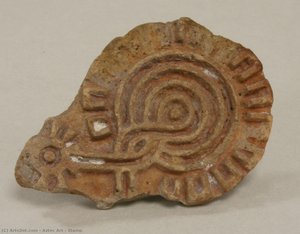
Hand-painted reproduction of 'Stamp' by Aztec Empire (1521). Explore this captivating piece from ancient Mexico – a unique symbol of Aztec artistry and culture. #AztecArt
Biografia do Artista
Explore a arte deslumbrante do Império Asteca! Descubra esculturas intrincadas, códices vibrantes e mosaicos simbólicos que refletem sua rica cultura e crenças religiosas. #AztecArt #Mexico
Sobre a pintura
The Echoes of Stone: Unveiling the ‘Stamp’
Within the realm of ancient Mesoamerica lies a deceptively simple object – a terracotta stamp, often referred to as a “stamp” in modern parlance. Yet, this unassuming artifact is far more than just a tool for marking textiles; it's a potent symbol of Aztec identity, religious belief, and the sophisticated artistry that flourished within their empire. This particular reproduction captures the essence of these ancient practices, offering a tangible connection to a civilization that once dominated central Mexico.

The piece itself is a testament to the skill of Aztec artisans. Crafted from fired clay – likely terracotta, judging by its texture and color – it’s a compact rectangle adorned with an intricate design. The dominant motif consists of three stylized figures, rendered in a manner that speaks volumes about Aztec cosmology and artistic conventions. These aren't realistic depictions; rather, they are abstracted representations, echoing the geometric patterns so prevalent throughout Mesoamerican art. Notice the parallel lines radiating outwards from the central figure’s crown – a deliberate element reminiscent of the shock of hair worn by the Mexican spider monkey, a creature deeply intertwined with Aztec mythology and associated with music, dance, and even the wind deity Ehecatl.
A Legacy Forged in Clay: Historical Context
To truly appreciate this stamp, one must understand its place within the broader context of Aztec society. The Aztecs, or Mexica as they called themselves, were a remarkably innovative people who built a vast empire on a foundation of military prowess and intricate social structures. Their art wasn’t merely decorative; it served as a powerful means of communication – conveying religious beliefs, political authority, and historical narratives. Ceramic stamps like this one were employed for a variety of purposes, from embellishing clothing and textiles to marking bark paper (amate), a crucial medium for writing and record-keeping. The practice dates back millennia, with roots in earlier Mesoamerican civilizations like the Olmecs and Maya, demonstrating a continuous artistic tradition.
The stamp’s creation aligns perfectly with the Aztec era of roughly 1300 to 1521 AD. During this time, the Aztecs were at their peak, controlling much of central Mexico through a complex system of alliances and tribute. The use of stamps was closely associated with elite culture, primarily crafted by scribes who held positions of high status within the empire. These objects were considered valuable possessions, often interred with the deceased – suggesting they held significant spiritual importance.
Symbolism and Meaning: Decoding the Design
The specific imagery on this stamp is rich in symbolic meaning. The stylized figures likely represent deities or cosmological concepts central to Aztec belief. While a definitive interpretation remains elusive, their abstracted forms align with the broader artistic conventions of the period – prioritizing geometric patterns and symbolic representation over realistic depiction. The spider monkey itself carries significant weight; as mentioned earlier, it was closely linked to Ehecatl, the wind deity, suggesting a connection between earthly existence and the celestial realm.
Furthermore, the stamp’s function as a tool for marking textiles speaks to the Aztec emphasis on ornamentation and visual display. Clothing and other fabrics were often adorned with intricate designs, reflecting social status, religious affiliation, and personal identity. The ‘stamp’ served as a means of adding these decorative elements efficiently and consistently.
A Timeless Masterpiece: Reproduction and Beyond
This hand-painted reproduction captures the spirit and artistry of this remarkable artifact. It offers a beautiful way to bring a piece of Aztec history into your home or studio, serving as a conversation starter and a reminder of the ingenuity and cultural richness of this ancient civilization. Consider it not just an image, but a portal – a window into the world of the Aztecs, where art, symbolism, and daily life were inextricably intertwined.
Perguntas e Respostas
Qual tamanho de reprodução é sugerido para "Stamp", de Império Asteca?
O tamanho de impressão recomendado para "Stamp", de Império Asteca é Medium.
Quão harmoniosas são as cores de "Stamp" entre si?
"Stamp", de Império Asteca apresenta uma harmonia de cores Unified Palette.
Onde posso baixar "Stamp", de Império Asteca?
Um download está disponível para "Stamp": a página de Download da obra oferece download de imagem digital em alta resolução.
Informações rápidas e quiz de arte
Sobre Império Asteca

Império Asteca
1300 - 1521, México
Biografia do Artista
Os Ecos da Pedra: Explorando a Arte e o Legado do Império Asteca
O nome “Asteca” – derivado da palavra náuatle ātl-ce-tlācati–tlān, que significa "povo de muitas formas" – evoca imagens de um império vasto e complexo que dominou a Mesoamérica por séculos. Mais do que meros guerreiros e conquistadores, os astecas eram indivíduos profundamente artísticos, tecendo uma beleza intrincada em cada faceta de suas vidas — da arquitetura monumental ao delicado trabalho com penas, dos rituais sagrados aos objetos cotidianos. Sua arte não era meramente decorativa; era uma linguagem vibrante, comunicando crenças religiosas, poder político, narrativas histólen e hierarquias sociais dentro de uma sociedade que era, ao mesmo tempo, rigidamente estruturada e notavelmente inovadora.
Nascidas no início do século XIV em Tenochtitlán, o coração do Império Asteca, as tradições artísticas dos astecas estavam profundamente enraizadas nos legados de civilizações mesoamericanas anteriores. Os olmecas, com suas cabeças colossais e sistemas calendáricos sofisticados; os teotihuacanos, renomados por suas pirâmides massivas e planejamento urbano; e os toltecas, mestres da metalurgia e da escultura, todos contribuíram para a rica tapeçaria artística que os astecas herdaram. No entanto, os astecas não foram meros imitadores; eles sintetizaram essas influências com suas próprias sensibilidades estéticas únicas, desenvolvendo um estilo distinto caracterizado por cores ousadas, padrões geométricos intrincados e representações simbólicas.
Uma Paleta de Poder: Materiais e Técnicas
A arte asteca era notavelmente diversa, empregando uma gama surpreendente de materiais e técnicas. A escultura em pedra ocupava um lugar de destaque, exemplificada por monumentos que retratavam divindades, governantes e criaturas míticas. A massiva Pedra do Sol (Calendário Asteca), descoberta em 1946, permanece como um testemunho de sua maestria neste meio — um relevo de pedra complexo e em camadas que combinava informações calendáرicas com simbolismo cosmológico. Artesãos habilidosos também trabalhavam com madeira, argila, penas – particularmente as vibrantes plumas de quetzal – jade, turquesa, obsidiana e ouro, refletindo tanto riqueza quanto status social.
O trabalho com penas era talvez o aspecto visualmente mais impactante da arte asteca. Cocares, mantos, escudos e outros itens decorativos intrincadamente elaborados eram criados usando milhares de penas meticulosamente organizadas — um processo que exigia imensa habilidade e paciência. Esses objetos não eram apenas belos; serviam como símbolos potentes de autoridade, devoção religiosa e posição social. As próprias cores carregavam significados específicos: o azul representava os céus, o verde simbolizava a fertilidade, o vermelho significava a guerra e o amarelo representava o sol.
Além disso, os artistas astecas eram mestres do mosaico, criando painéis decorativos deslumbrantes usando pequenas placas de pedra precisamente cortadas. Esses mosaicos adornavam templos, palácios e residências particulares, adicionando uma camada de riqueza visual ao ambiente construído. Sua cerâmica era igualmente impressionante, apresentando designs geométricos complexos e representações de animais e divindades.
A Linguagem dos Símbolos: Temas e Motivos
A arte asteca é repleta de simbolismo, com cada imagem carregando camadas de significado que exigiam uma interpretação cuidadosa por parte de sacerdotes, escribas e governantes. A divindade central, Huitzilopochtli, o deus da guerra e do sol, era frequentemente retratada em cocares elaborados, adornados com penas e pedras preciosas. Quetzalcoatl, a serpente emplumada associada ao conhecimento, à sabedoria e à criação, ocupava um lugar de destaque em seu panteão e aparecia em inúmeras representações artísticas.
O sistema de calendário — uma combinação notavelmente sofisticada de ciclos solares e rituais — era outro motivo recorrente. Imagens de calendários, glifos e símbolos astronômicos eram incorporados em esculturas, mosaicos e códices (livros ilustrados), refletindo a profunda compreensão dos astecas sobre o tempo e a cosmologia. Representações de milho, o alimento básico de sua dieta, simbolizavam sustento e fertilidade. A iconografia animal — particularmente jaguares, águias, serpentes e beija-flores — carregava um significado simbólico relacionado ao poder, à coragem e à divindade.
Um Legado em Fragmentos: Arte e Significância Histórica
O colapso repentino do Império Asteca pelas mãos dos conquistadores espanhóis em 1521 resultou em uma perda devastadora para a cultura mesoamericana. Tragicamente, grande parte de sua herança artística foi destruída durante a conquista — templos foram arrasados, esculturas despedaçadas e códices queimados. No entanto, apesar dessas perdas, fragmentos da arte asteca sobrevivem hoje, oferecendo visões inestimáveis sobre esta civilização extraordinária.
Exemplos notáveis incluem a Pedra do Sol, uma escultura monumental que demonstra o conhecimento avançado dos astecas em astronomia e matemática; cocares e mantos de penas intrincados preservados em museus ao redor do mundo; e os códices sobreviventes — livros manuscritos contendo relatos históricos, crenças religiosas e informações calendáricas. A Colección Andrés Blaisten, no México, abriga uma coleção significativa de arte latino-americana, incluindo exemplos que iluminam as tradições artísticas astecas.
A influência do legado artístico do Império Asteca ainda pode ser vista hoje, inspirando artistas e designers contemporâneos. Suas técnicas inovadoras, imagens simbólicas e a profunda conexão com a natureza continuam a ressoar com o público mundial. Explorar a arte dos astecas não é apenas um exercício de apreciação histórica; é uma jornada ao coração de uma civilização complexa e cativante — um testemunho da criatividade, engenhosidade e profundidade espiritual humana.
Para explorar mais obras de arte do Império Asteca e de outros artistas notáveis, visite TopImpressionists.com.
Informações rápidas sobre Império Asteca
- Artistic Movement Or Style: Arte mesoamericana
- Artists Or Movements Influenced By This Artist: ['Arte moderna']
- Artists Who Influenced This Artist:
- Olmeca
- Teotihuacan
- Tolteca
- Date Of Birth: 1300 (Tenochtitlan)
- Date Of Death: 1521
- Full Name: Império Asteca
- Nationality: Mexicano
- Notable Artworks:
- Calendário asteca
- Pirâmide do sol
- Arte plumária mexica
- Place Of Birth: Tenochtitlan, México
Explore obras de arte organizadas por temas, estilos e características.


Império Asteca
Stamp
() ·
Com a moldura: · Pintura a óleo sobre linho feita à mão
Total