Ateliê — Envio gratuito para todo o mundo — Entrega em 2–6 semanas
Pintura a partir de Foto Lista de desejos Carrinho
Visualizar em escalaVisualizar em escala Visualizar em RAVisualizar em RA Encomendar impressão Encomendar impressãoEncomendar reprodução pintada à mão Encomendar reprodução pintada à mão EnviarEnviar
Ver detalhesVer detalhes Adicionar aos favoritos Adicionar aos favoritos BaixarBaixar SemelhantesSemelhantes Raio XRaio X Apresentação de slidesApresentação de slides

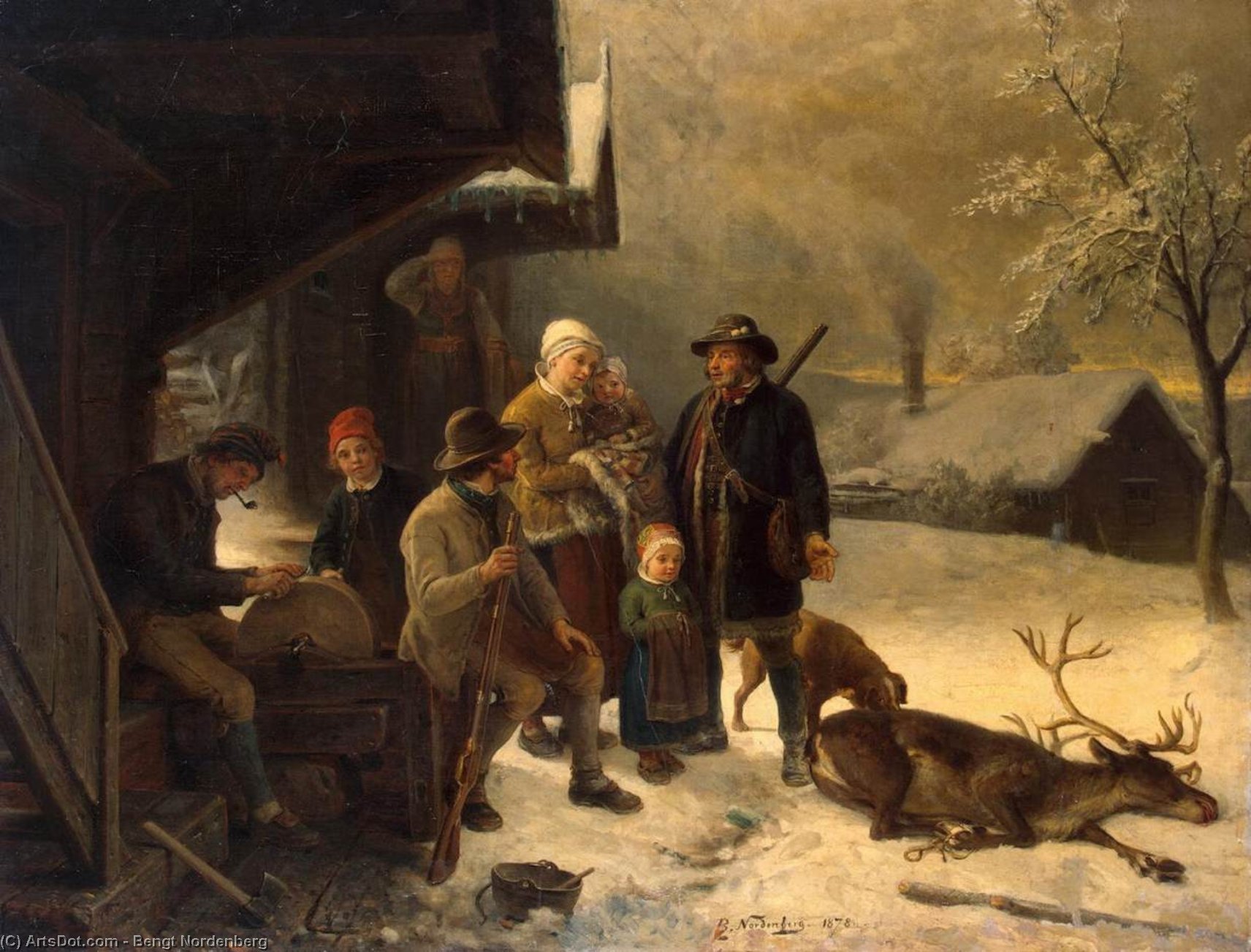
Dead Stag

Explore 'Dead Stag' by Bengt Nordenberg (1878). A dramatic oil painting of a hunting scene in a snowy landscape, showcasing realism & romanticism. Discover this Swedish masterpiece!

Discover Bengt Nordenberg (1822-1902), a Swedish Düsseldorf School artist famed for genre paintings of rural life in Dalarna, Skåne & Blekinge. Explore his scenes of 19th-century Sweden!

Adquira uma imagem digital de alta resolução e aprimorada, muito superior à prévia online.

Cada arquivo é meticulosamente preparado por nossos especialistas internos, utilizando ferramentas avançadas e retoques manuais de alta precisão. Garantimos que cada imagem apresente clareza excepcional, fidelidade de cores e detalhes minuciosos.

O arquivo final é entregue por e-mail em até 72 horas, otimizado para uso imediato em ambientes profissionais, editoriais e de impressão. Esta é a mesma qualidade utilizada por estúdios de design de alto nível, editoras e galerias.

Imagem Digital

Baixe um arquivo de alta resolução para exibição pessoal, impressão e projetos criativos. (Encomendar impressão Encomendar impressãoEncomendar reprodução pintada à mão Encomendar reprodução pintada à mão)

Preço Total

$ 24,90

Incluído em cada pedido de imagem digital

Entrega Digital Especializada e Garantida

Ao escolher o TopImpressionists.com, você não está apenas adquirindo uma imagem — você está recebendo uma obra de arte digital profissionalmente aprimorada, elaborada com precisão e com garantia de satisfação. Aqui está tudo o que acompanha seu pedido, automaticamente:

shipping_icon
Entrega rápida por e-mail

O seu arquivo de imagem digital em alta resolução será enviado por e-mail em até 72 horas após o pedido — pronto para uso imediato.

canvas_icon
Arquivo Digital com IA Otimizado

Sua obra de arte é otimizada profissionalmente por meio de ferramentas avançadas de IA e edição manual, garantindo o máximo de detalhes, clareza e precisão de cores.

insurance_icon
Reenvio gratuito vitalício

Apagou ou perdeu o seu ficheiro acidentalmente? Não se preocupe – nós reenviamos para si a qualquer momento, gratuitamente.

tax_icon
Sem Taxas de Importação - Sempre

Desfrute da sua obra de arte instantaneamente, sem taxas alfandegárias, impostos ou custos de entrega — downloads digitais são sempre isentos de taxas.

color_icon
Garantia de Precisão de Cores

Garantimos que sua imagem digital reflita as cores originais com a maior fidelidade possível, utilizando ferramentas profissionais e gerenciamento de cores.

return_icon
Garantia de Satisfação de 60 Dias

Se você não estiver satisfeito com sua imagem digital, nós a revisaremos ou reembolsaremos 100% dentro de 60 dias — sem perguntas.

guarantee_icon
Garantia de Reembolso 100%

Não está satisfeito? Receba o reembolso total em até 60 dias após o recebimento do seu arquivo digital — sem perguntas.

discount_icon
Descontos para pedidos em lote

Compre 3 imagens, economize 10% - Compre 5, economize 15% - Compre 10+, economize 20%. Ideal para projetos criativos, galerias e agências.

Detalhes Rápidos

  • Title: Dead Stag
  • Subject or theme: Hunting scene
  • Artistic style: Realism
  • Movement: Romanticism
  • Location: The Hermitage, St. Petersburg
  • Medium: Oil on canvas
  • Dimensions: 106 x 80 cm

Teste de Conhecimentos Artísticos

Cada pergunta possui apenas uma resposta correta.

Questão 1:
What artistic movement is predominantly represented in ‘Dead Stag’?
Questão 2:
Where was Bengt Nordenberg born?
Questão 3:
What is the primary subject matter depicted in this painting?
Questão 4:
Which technique is prominently used by Nordenberg to create texture and depth in ‘Dead Stag’?
Questão 5:
In what year was ‘Dead Stag’ created?

Descrição do Colecionável

Dead Stag by Bengt Nordenberg, 1878 – A Symphony of Rural Resilience

The painting “Dead Stag” by Bengt Nordenberg, completed in 1878, stands as a testament to the Düsseldorf School’s unwavering commitment to realism infused with Romantic sentiment. More than just a depiction of hunting activity, it's an exploration of mortality interwoven with celebration—a poignant reminder of life’s cyclical nature rendered in meticulous detail against the stark backdrop of a winter landscape. Located within The Hermitage Museum in St. Petersburg, this monumental oil on canvas (106 x 80 cm) captures not merely what was seen but what felt – an emotional resonance that continues to captivate viewers today.
  • Subject Matter: The scene portrays a hunting party commemorating the successful kill of a deer during a snowy winter day. Figures are arranged in a triangular composition around the stag’s carcass, emphasizing both the grandeur of the hunt and the solemnity of acknowledging death's inevitable presence.
  • Style & Technique: Nordenberg skillfully employs Impressionistic brushstrokes blended with Romantic ideals. Thick impasto technique dominates the surface, creating palpable textural depth and conveying a sense of immediacy—as if witnessing the event unfold before one’s eyes. The artist’s masterful use of glazing builds up layers of color, achieving luminosity and capturing the ethereal quality of winter light.
  • Historical Context: Painted during the Victorian era, “Dead Stag” reflects the prevailing fascination with genre painting – a genre dedicated to portraying everyday life with psychological insight. Nordenberg's work aligns perfectly with Düsseldorf’s artistic ethos, prioritizing observation and emotional expression over idealized representations.
  • Symbolism: The stag itself serves as a potent symbol of nobility, strength, and resilience—qualities celebrated by the hunters. Simultaneously, its lifeless form underscores the inescapable reality of mortality, prompting contemplation on life's transient beauty. The inclusion of a family group reinforces themes of community and familial bonds amidst the grandeur of the hunt.
  • Emotional Impact: Viewing “Dead Stag” evokes a profound sense of melancholy tempered by joy—a recognition of both loss and triumph. Nordenberg’s masterful composition guides the eye across the canvas, immersing the viewer in the wintry landscape and capturing the palpable atmosphere of the hunting party.
Artist Information: Bengt Nordenberg (1822–1902) was born in Jämshöga, Sweden, experiencing poverty as a formative influence on his artistic trajectory. He honed his skills as an apprentice painter in Sölvesborg before pursuing formal training at the Royal Swedish Academy of Arts in Stockholm. His subsequent travels to Düsseldorf and Rome solidified his stylistic development under influential mentors like Theodor Hildebrandt and Adolph Tidemand—artists who championed realism alongside Romantic fervor. Nordenberg’s prolific output encompassed genre paintings depicting rural life, religious compositions, and portraits reflecting the social landscape of his time. Additional Research:

Biografia do Artista

Bengt Nordenberg: A Life in Swedish Genre Painting

Early Life and Education

Bengt Nordenberg was born on April 22, 1822, in Jämshöga, a small village in southern Sweden. He experienced a childhood marked by poverty, which undoubtedly shaped his later artistic focus on everyday life. He began his artistic journey as an apprentice to a painter in Sölvesborg, gaining foundational skills before pursuing formal training.

In 1843, Nordenberg moved to Stockholm to study at the prestigious Royal Swedish Academy of Arts. This marked a crucial step in his development, providing him with access to academic instruction and exposure to contemporary artistic trends.

Düsseldorf Period and Influences

A pivotal moment in Nordenberg’s career came in 1851 when he traveled to Düsseldorf, Germany. This city was a major center for the Düsseldorf School of Painting, known for its realistic depictions of genre scenes and landscapes.

  • He initially studied under Theodor Hildebrandt, but later came under the significant influence of Adolph Tidemand.
  • Tidemand’s emphasis on portraying Norwegian rural life resonated deeply with Nordenberg, shaping both his style and subject matter.
  • For a period, Nordenberg even worked as an assistant to Tidemand, creating reproductions of his paintings – a valuable learning experience.

Artistic Development and Themes

Nordenberg’s artistic development was characterized by a commitment to realism and a deep interest in portraying the lives of ordinary people. While initially influenced by Tidemand, he gradually developed his own distinct style.

  • His early works focused on scenes from Dalarna, Skåne, and Blekinge – regions of Sweden known for their unique cultural traditions and picturesque landscapes.
  • He skillfully captured the essence of rural life, depicting everyday activities, customs, and social interactions with sensitivity and detail.
  • Later in his career, Nordenberg also painted portraits of middle-class and upper-class individuals, as well as religious paintings and altarpieces, demonstrating his versatility.

Travels and Later Life

In 1856, Nordenberg received a travel grant from the Swedish state, allowing him to broaden his artistic horizons.

  • He studied with Thomas Couture in Paris for a year and a half.
  • He made brief returns to Düsseldorf before settling there permanently in 1858.

Düsseldorf became his home for the rest of his life, where he continued to paint and exhibit his work until his death in 1902.

Major Achievements and Historical Significance

Although not as widely recognized today as some of his contemporaries, Bengt Nordenberg was a significant figure in Swedish art during the 19th century.

  • His genre paintings provide valuable insights into the social and cultural life of Sweden during this period.
  • He successfully blended elements of realism with romantic sensibilities, creating works that are both visually appealing and historically informative.
  • Notable works include Rowing to the Church, Dalarna (1854), The Veterans (1882), and Leaving Home (1876).

Nordenberg’s legacy lies in his ability to capture the spirit of Swedish life with authenticity and artistic skill, making him a notable representative of the Düsseldorf School and a valuable contributor to Swedish art history.

Bengt Nordenberg

Bengt Nordenberg

1822 - 1902 , Sweden

Informações Rápidas

  • Birth Date: April 22, 1822
  • Birth Place: Jämshöga, Sweden
  • Death Date: 1902
  • Influenced By: Adolph Tidemand, Theodor Hildebrandt
  • Movement: Düsseldorf School of Painting
  • Name: Bengt Nordenberg
  • Nationality: Swedish
  • Notable Works:
    • Rowing to the church, Dalarna
    • The veterans
    • A torn goatsheppard family with goats
    • Winter travel
    • Portrait of Pehr Hörberg
    • Leaving home
© TopImpressionists.com — Todos os direitos reservados  ·  100% Pintado à Mão · Satisfação Garantida · Frete Grátis para Todo o Mundo
VISA MASTERCARD