


 Visualizar em escala
 Enviar
 Compartilhar
 Ver detalhes
 Guia de Obras do Aluno

 Baixar imagem
 Semelhantes
 Raio X
 Apresentação de slides
 Estatísticas
The Old Bedford
 Oil
Oil- WallArt
- Impressionism
 1895
1895- 19th Century
 76.0 x 60.0 cm
 National Museums Liverpool
A moody black and white exploration of London nightlife, this 1895 painting by Bernard Sickert captures the raucous atmosphere of the Bedford Music Hall through masterful lighting and shadows for your collection.
 Ver mais
Explore Bernard Sickert's evocative urban scenes & portraits – a pivotal figure in modern British art. Discover his dark palettes, press photo influence & Camden Town legacy.
Reprodução em Óleo Feita à Mão
Óleo sobre tela pintado à mão no tamanho e moldura de sua escolha, feito sob encomenda pelos nossos artistas. ( Alternar para Impressão Ver Imagem Digital)




P118B €10

P118H €10

P118W €10

P438Z €10

P508JH €12

P508YH €12

P805H €10

P805Z €10

P919BZ €10

P919G €10

P919XJ €10

P959ZH €10

P968JZ €12

W106C €8

W218G €10

W218JH €8

W218Y €10

W307PJ €10

W316G €10

W316PJ €8

W316Y €10

W398PJ €8

W4111J €10

W500HY €15

W500JH €15

W692G €12

W849H €8

W940BG €15

W953PJ €8




Padrão
sob medida
CM
INCH
Escolha entre os nossos tamanhos pré-definidos que respeitam as proporções originais da obra de arte.
Loading sizes...

largura
altura
Digite a largura e a altura de que necessita, para se ajustar à sua moldura ou à sua parede. Esta obra é pintada à mão, por isso, para um tamanho com uma proporção diferente, o artista pode pintar um pouco mais ao redor da imagem ou cortar um pouco — você escolhe. Enviamos-lhe uma maquete digital para aprovação antes de a pintura começar. A imagem exibida nesta página não mostra o resultado real — apenas a maquete mostra.
Exemplos do que pode ser personalizado: Substituir o rosto pela foto do cliente; Adicionar um animal de estimação (ex: substituir gato por cão); Incluir uma mensagem oculta no fundo; Alterar a paisagem ou elementos do fundo.
Após o pedido, a equipa TopImpressionists.com enviará um e-mail ao cliente para solicitar instruções e fornecer uma prévia do esboço.
Após o pedido, a equipa TopImpressionists.com enviará um e-mail ao cliente para solicitar instruções e fornecer uma prévia do esboço.
Entrega mundial () em 3 a 4 semanas, em vez das 5 semanas padrão. (23 Outubro). Sem comprometer a qualidade.

Envio expresso gratuito para todo o mundo

Tela de Linho Premium

Seguro de transporte total

Garantia de Reembolso de Impostos Alfandegários

Garantia de Fidelidade de Cor

Política de Devolução em 100 Dias (Apenas para Defeitos)

Garantia de reembolso de 100%

Desconto para múltiplas unidades
 A opção de vidro está disponível apenas para tamanhos inferiores a 110 cm

The Old Bedford
Técnica de Reprodução
Dimensões da Reprodução
-


Preço Total
€ 236
Following the example of Édouard Manet (1832 – 1883) and Edgar Degas (1834 – 1917) and their paintings of Parisian cafes and theatres, Sickert painted the raucous nightlife of London’s music halls throughout his career. He was a regular visitor at the Bedford Music Hall in Camden Town, the subject of this painting. Sickert may have intended it as a sequel to his earlier picture of the child performer Little Dot Hetherington on the stage of the Bedford, in which she is shown pointing to this spot while singing the popular song, “The Boy I Love is up in the Gallery”. As well as recording vividly the atmosphere and setting of a late 19th century performance, this is a brilliant exercise in lighting and composition. Sickert exploits the contrast between the shadowy auditorium and the reflected glare of the stage, and creates tricks of space and perspective by means of the giant mirror on the left.
Perguntas e Respostas
Em que período da carreira de Bernard Sickert se situa "The Old Bedford"?
Dentro da carreira de Bernard Sickert, "The Old Bedford" pertence ao período Mature Period. Esta fase ajuda a compará-la com outras obras do artista.
Como é construída a composição cromática de "The Old Bedford" de Bernard Sickert?
A análise cromática de "The Old Bedford" de Bernard Sickert registra um contraste Gentle e uma harmonia Unified Palette.
Que tipo de obra de arte é "The Old Bedford" de Bernard Sickert?
"The Old Bedford" é uma peça de WallArt.
Obras Relacionadas


Biografia do Artista
Bernard Sickert: A Shadowed Vision of London
Bernard Sickert (1863–1932) remains a figure of enduring fascination and subtle controversy within the annals of British art. Born in Munich to a family deeply rooted in artistic tradition – his father, Oswald, was himself a painter – Sickert’s journey led him from the vibrant hues of Germany to the grimy, atmospheric streets of London, where he ultimately forged a uniquely powerful and unsettling vision of the city. His work, often characterized by its dark palettes, press photo influence, and exploration of marginalized figures, positioned him as a pivotal transitional figure between Impressionism and the burgeoning movements of Modernism, yet his methods and subject matter frequently provoked debate and suspicion.
Early influences shaped Sickert’s artistic trajectory. Initially drawn to acting, he eventually embraced painting under the tutelage of James McNeill Whistler, absorbing the latter's emphasis on tonal harmony and formal structure. This early training provided a foundation for his later explorations of composition and color. However, it was Edgar Degas who exerted the most profound impact, particularly in his approach to depicting urban life – capturing fleeting moments of movement and revealing the underlying structures of the city through carefully observed details. Sickert’s fascination with the visual language of photography, evident in his cropped compositions and stark lighting, further distinguished his work from more traditional approaches.
The Camden Town Group and a Darker Palette
Sickert's artistic development gained significant momentum during the late 1890s and early 1900s, coinciding with the rise of the Camden Town Group – a collective of artists who sought to capture the gritty reality of London’s East End. This group, which included Walter Sickert, Vanessa Bell, and Duncan Grant, rejected the idealized landscapes favored by many of their contemporaries and instead focused on portraying the lives of ordinary people in their working-class surroundings. Sickert's involvement with Camden Town marked a shift towards darker palettes, more direct depictions of urban decay, and an exploration of themes such as prostitution, poverty, and social alienation – subjects that were often considered taboo at the time.
His association with the New English Art Club (NEAC) provided a platform for his work to be exhibited alongside other progressive artists. However, it was his depiction of Katie Lawrence at Gatti’s in 1888, a scene from a music hall frequented by prostitutes, that ignited considerable controversy. The painting's unflinching portrayal of female performers and their environment sparked outrage among critics who deemed it vulgar and morally objectionable. Despite the criticism, this work established Sickert’s reputation as an artist willing to confront difficult subjects and challenge conventional artistic norms.
London as a Subject: Portraits and Urban Landscapes
Sickert's oeuvre is remarkably diverse, encompassing portraits of prominent figures – including Whistler, Aubrey Beardsley, and members of the Bloomsbury Group – alongside numerous urban landscapes and scenes of everyday life. He possessed an uncanny ability to capture the atmosphere of London, imbuing his paintings with a sense of melancholy, isolation, and underlying tension. His use of press photographs as compositional models—often cropping figures into starkly framed images—created a distinctly modern aesthetic, anticipating developments in photography and film.
His fascination with the city’s underbelly is particularly evident in works such as “The Horses of St Mark,” a series of paintings depicting prostitutes and streetwalkers. These images are not romanticized or idealized; rather, they offer a brutally honest portrayal of poverty, exploitation, and social marginalization. Similarly, his depictions of Camden Town—the area where he established his studio—are characterized by their atmospheric gloom and sense of urban decay.
Legacy and Controversy
Despite the controversy surrounding some of his subjects and methods, Bernard Sickert’s influence on British art is undeniable. He played a crucial role in bridging the gap between Impressionism and Modernism, paving the way for subsequent generations of artists to explore new forms of expression and challenge established conventions. However, his association with Jack the Ripper—a theory that has been repeatedly investigated but never definitively proven—continues to cast a shadow over his legacy, fueling speculation about his involvement in the infamous crimes.
Regardless of this persistent speculation, Sickert remains a compelling figure – an artist who dared to look beyond the surface of London’s glittering facade and reveal its darker secrets. His work continues to resonate with viewers today, offering a poignant and unsettling glimpse into the heart of a rapidly changing city and the lives of those often overlooked by history.

Bernard Sickert
1863 - 1932
Informações Rápidas
- Full Name: Bernard Sickert
- Nationality: British
- Date Of Birth: 1863
- Date Of Death: 1932
- Place Of Birth: Munich, Germany
- Notable Artworks:
- A Canal Scene
- Lincoln Cathedral
- The Horses of St Mark
- Artistic Movement Or Style: Post-Impressionism
- Artists Who Influenced This Artist:
- Walter Sickert
- James Whistler
- Artists Or Movements Influenced By This Artist: ['Camden Town Group']
Artigos Relacionados
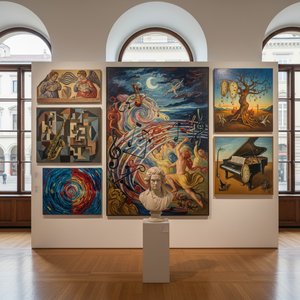
Harmonies on Canvas: Exploring the Visual Representation of Music in Art History
Explore the fascinating history of music's visual representation in art! From ancient symbolism to modern abstraction, discover how artists have captured sound and emotion on canvas. Expert insights & stunning examples.

Shadow & Soul: Why Black & White Photography Remains the Ultimate Power Move in Modern Art
Discover why black & white photography remains a powerful force in contemporary art. Explore the impact of light, shadow, and texture through a visual journey of monochrome mastery and learn how to elevate your space with timeless grayscale aesthetics.

Os 10 Quadros Mais Famosos Dominados pelo Branco: Arte e Decoração
Descubra os 10 quadros mais famosos dominados pelo branco, de Monet a Kandinsky! Explore a história da arte, técnicas e o poder da paleta neutra. Encontre reproduções de alta qualidade para sua decoração em TopImpressionists.com.

Monochrome Visions: Exploring the Aesthetic & Historical Significance of Black & White Photography
Explore the rich history & artistic power of black and white photography. From early techniques to iconic masters like Ansel Adams, discover why monochrome continues to captivate art lovers today. Expert insights for collectors.

As 10 Pinturas Mais Famosas Dominadas pelo Preto: Arte, História e Decoração
Descubra as 10 pinturas mais icônicas dominadas pelo preto! Explore a história, técnica e emoção por trás de obras-primas do Romantismo, Realismo e Expressionismo. Encontre reproduções de arte exclusivas na TopImpressionists.com.