

 Visualizar na parede
 Compartilhar
 Compartilhar
 Detalhes
 Guia
Guia

 Baixar imagem
 Semelhantes
 Raio X
 Ver diaporama
 Perguntas e Respostas
 Estatísticas
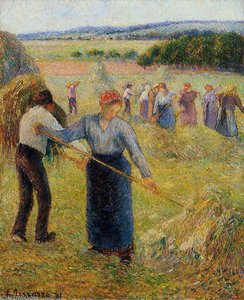
Haymaking 1


Experience Camille Pissarro’s idyllic Haymaking 1, a vibrant Impressionist scene capturing rural teamwork and the beauty of harvest time – perfect for art lovers and collectors seeking a timeless pastoral masterpiece.
 Ler mais
Explore a vida e obra de Camille Pissarro, um dos fundadores do Impressionismo. Paisagens urbanas e rurais, cenas da vida cotidiana e influência em artistas como Van Gogh e Cézanne.
Obtenha um arquivo pronto para impressão que vai muito além da visualização na web. Cada imagem digital que vendemos provém de um arquivo mestre de alta resolução em nosso banco de dados — geralmente entre 5.000 e 15.000 pixels de largura — para que você possa imprimir em grandes formatos, realizar cortes precisos ou reproduzir detalhes minuciosos com total confiança.
Nenhum arquivo sai do nosso estúdio sem passar por um cuidadoso processo de revisão. Um especialista digital verifica as cores em relação à pintura original e as corrige se necessário, aumentando então a clareza e o detalhe com ferramentas profissionais de retoque — sempre mantendo a fidelidade às pinceladas e ao estilo do artista. O resultado é uma imagem que se assemelha à pintura, e não a um scan com filtros.
Aprovação antes da finalização: nosso especialista enviará a imagem por e-mail em até 72 horas para sua revisão. Não ficou satisfeito? Solicite melhorias ou correções, ou peça o reembolso caso a qualidade não atenda às suas expectativas.
Esta é a qualidade em que confiam editoras, estúdios de design, galerias e gráficas.
Imagem Digital
Baixe um arquivo de alta resolução para exibição pessoal, impressão e projetos criativos. ( Alternar para Impressão Comprar pintura feita à mão)
Incluído em cada compra de imagem digital
Entrega Digital Especializada e Garantida
Ao escolher o TopImpressionists.com, você não está apenas adquirindo uma imagem — você está recebendo uma obra de arte digital profissionalmente aprimorada, elaborada com precisão e com garantia de satisfação. Aqui está tudo o que acompanha seu pedido, automaticamente:

Entrega rápida por e-mail
O seu arquivo de imagem digital em alta resolução será enviado por e-mail em até 72 horas após o pedido — pronto para uso imediato.

Arquivo Digital com IA Otimizado
Sua obra de arte é otimizada profissionalmente por meio de ferramentas avançadas de IA e edição manual, garantindo o máximo de detalhes, clareza e precisão de cores.

Reenvio gratuito vitalício
Apagou ou perdeu o seu ficheiro acidentalmente? Não se preocupe – nós reenviamos para si a qualquer momento, gratuitamente.

Sem Taxas de Importação - Sempre
Desfrute da sua obra de arte instantaneamente, sem taxas alfandegárias, impostos ou custos de entrega — downloads digitais são sempre isentos de taxas.

Garantia de Fidelidade de Cores
Garantimos que sua imagem digital reflita as cores originais com a maior fidelidade possível, utilizando ferramentas profissionais e gerenciamento de cores.

Garantia de satisfação de 100 dias
Se não estiver satisfeito com a sua imagem digital, nós a revisaremos ou reembolsaremos 100% dentro de 100 dias — sem perguntas.

Garantia de Reembolso 100%
Não está satisfeito? Receba o reembolso total em até 100 dias após o recebimento do seu arquivo digital — sem perguntas.

Descontos para pedidos em lote
Compre 3 imagens, economize 10% - Compre 5, economize 15% - Compre 10+, economize 20%. Ideal para projetos criativos, galerias e agências.
Camille Pissarro’s ‘Haymaking 1’: A Symphony of Rural Labor
Haymaking 1, a captivating depiction of rural life by Camille Pissarro, offers a poignant glimpse into the heart of Impressionist observation. Painted around 1892, this artwork transcends a simple representation of agricultural work; it’s an exploration of human connection, community, and the enduring rhythms of nature. The scene unfolds with remarkable clarity – a bustling farmyard bathed in the warm light of a summer afternoon. Nine figures, rendered with Pissarro's characteristic loose brushstrokes and vibrant palette, are engaged in the meticulous task of gathering hay, their movements suggesting both industry and camaraderie. The sheer abundance of golden hay, meticulously scattered across the field, immediately draws the eye, creating a visual feast that speaks to the bounty of the land.
Impressionist Technique and Color
Pissarro’s mastery lies in his ability to capture fleeting moments and atmospheric effects. Executed with the hallmark Impressionistic technique, Haymaking 1 showcases broken color applied in short, visible strokes. This method wasn't merely a stylistic choice; it was a deliberate attempt to record the way light interacts with surfaces – the shimmering reflections on the hay, the subtle gradations of tone in the sky, and the warmth radiating from the figures themselves. The artist’s use of complementary colors—the blues and oranges—intensifies the vibrancy of the scene, creating a dynamic visual experience. The loose brushwork contributes to an overall sense of movement and immediacy, as if we are witnessing this rural activity unfold before our eyes.
Historical Context: Pissarro and the Rise of Impressionism
Painted in the late 1890s, Haymaking 1 reflects Pissarro’s pivotal role in the development of Impressionism. Having initially embraced Realist principles, he gradually shifted his focus towards capturing the subjective experience of light and color. This work aligns with a period where Pissarro was increasingly interested in depicting everyday scenes of rural life – a departure from the grand historical or mythological subjects favored by earlier generations of artists. His connection to the Société des Artistes Indépendants, a group that championed independent artistic expression, further solidified his position as a key figure in challenging established artistic conventions. The painting’s subject matter—a common, unromanticized view of peasant labor—was deliberately chosen to reflect the burgeoning interest in social realism within the Impressionist movement.
Symbolism and Emotional Impact
Beyond its technical brilliance, Haymaking 1 carries a profound symbolic weight. The act of haymaking itself represents more than just harvesting; it embodies hard work, community cooperation, and the cyclical nature of life. The figures’ engaged postures and shared task evoke a sense of unity and purpose. The painting's emotional impact is one of quiet contentment and appreciation for the simple pleasures of rural existence. It’s a reminder of a time when labor was inextricably linked to sustenance and connection – values increasingly absent in modern society. This artwork offers a serene and evocative portrayal of a timeless scene, inviting viewers to contemplate the beauty and significance of everyday life.
Perguntas e Respostas
"Haymaking 1", de Camille Pissarro é uma obra de arte clara ou escura?
Em termos de luminosidade percebida, "Haymaking 1", de Camille Pissarro é bright.
Qual é a situação dos direitos autorais de "Haymaking 1", de Camille Pissarro?
O status de direitos autorais de "Haymaking 1" - em domínio público — seus direitos autorais expiraram - decorre do falecimento do artista em 1903.
"Haymaking 1" está em domínio público?
Quanto aos direitos autorais, "Haymaking 1" está em em domínio público — seus direitos autorais expiraram.
Obras Relacionadas





Biografia do Artista
A Life Rooted in Observation: The World of Camille Pissarro
Camille Pissarro, um nome sinônimo tanto do nascimento quanto da evolução do Impressionismo, foi um artista cuja vida refletiu os paisagens em constante mudança que ele tão devotadamente capturava em suas telas. Nascido Jacob Abraham Camille Pissarro em 10 de julho de 1830, em Charlotte Amalie, São Tomás – então parte das Índias Ocidentais Dinamarquesas, hoje as Ilhas Virgens Americanas – suas origens eram tão diversas e vibrantes quanto as cenas que mais tarde definiriam sua visão artística. Seu pai, um comerciante português judeu com nacionalidade francesa, e sua mãe, de uma família judaica francesa na ilha, lhe infundiram uma herança cultural única, algo relativamente incomum devido a complexidades familiares. Essa criação, em certa medida não convencional devido a complexidades familiares, fomentou uma sensibilidade precoce ao mundo ao seu redor, uma qualidade que se tornaria o alicerce de sua prática artística. Sua formação inicial na Savary Academy perto de Paris forneceu-lhe uma base em técnicas tradicionais, mas foi seu retorno a São Tomás e seu trabalho subsequente como copeiro que realmente acendeu sua paixão pela observação. O porto movimentado, a vida local vibrante e a beleza bruta do cenário caribenho tornaram-se seus primeiros temas, moldando um olhar aguçado para as nuances da existência cotidiana.Da Realidade à Revolução: Desenvolvimento Artístico
A jornada artística de Pissarro foi uma exploração e refinamento constantes. Após um período auxiliando o pintor dinamarquês Anton Melbye em Paris, ele mergulhou nos trabalhos de mestres como Gustave Courbet, Jean-Baptiste-Camille Corot e Honoré Daumier – artistas que defendiam o realismo e os comentários sociais. Inicialmente, buscou aceitação no mundo da arte estabelecido, expondo na Salon de Paris, mas logo encontrou suas restrições sufocantes. Um momento decisivo veio com sua adoção da pintura *plein air* – trabalhando ao ar livre diretamente da natureza – uma prática incentivada por Corot que se tornaria central para o Impressionismo. Essa mudança não era meramente técnica; representava uma mudança filosófica, um desejo de capturar os efeitos passageiros da luz e da atmosfera, a própria essência de uma cena em vez de sua representação precisa. Ele começou a experimentar com pinceladas mais soltas e paletas mais vibrantes, afastando-se das convenções acadêmicas em direção a um estilo mais subjetivo e expressivo. Seu trabalho inicial de paisagens, embora ainda ancorado no realismo, prenunciava o caminho revolucionário que ele estava prestes a trilhar. Esse período viu-o lutando para encontrar sua própria voz em meio à fermentação artística crescente de Paris, uma cidade em rápida transformação que fornecia inspiração ilimitada.O Pai Figura do Impressionismo
Camille Pissarro não era simplesmente *um* Impressionista; ele foi, sem dúvida, a força unificadora e mais constante do movimento. De forma única, ele expôs em todas as oito exposições impressionistas de Paris entre 1874 e 1886, atuando como uma presença estável dentro de um grupo frequentemente caracterizado por discordâncias internas e ambições individuais. Ele não estava simplesmente presente – ele incentivava ativamente seus colegas artistas, oferecendo apoio, orientação e um senso de camaradagem muito necessário. Isso lhe rendeu o carinhoso apelido de “pai figura” do movimento. Seu compromisso com a liberdade artística e a inovação foi inabalável, mesmo diante da desaprovação crítica e da indiferença pública. Acreditava no poder da ação coletiva e defendia a ideia de artistas expondo independentemente das restrições das regras do Salon. Além de seu próprio trabalho, a influência de Pissarro se estendeu à nova geração de artistas, incluindo Paul Cézanne, Vincent van Gogh e Paul Gauguin, aos quais ele mentorou e impactou profundamente. Ele forneceu a eles não apenas conselhos técnicos, mas também uma estrutura filosófica para suas explorações artísticas. Sua disposição para experimentar levou-o brevemente ao Neo-Impressionismo, influenciado pelas técnicas de pontilhismo de Georges Seurat e Paul Signac, antes de retornar finalmente a um estilo mais pessoal que combinava suas influências anteriores com novas descobertas.Paisagens de Vida: Temas e Legado
A produção artística de Pissarro foi notavelmente diversa, mas consistentemente focada no mundo ao seu redor. Ele é celebrado por suas representações tanto de paisagens rurais quanto urbanas, muitas vezes retratando cenas de vida cotidiana – camponeses trabalhando em campos, ruas parisienses movimentadas, praças de vilarejo tranquilas. Suas pinturas não eram simplesmente vistas pitorescas; elas eram comentários sociais, refletindo sua profunda empatia pela classe trabalhadora e seu compromisso em retratá-los com dignidade e respeito.- Paisagens: Reconhecido por capturar a beleza tanto da paisagem rural quanto urbana.
- Cenas de vida parisiense: Representações vívidas de uma metrópole em rápida transformação.
- Vida camponesa: Refletindo sua consciência social e empatia pela classe trabalhadora.

Camille Pissarro
1830 - 1903 , Dinamarca
Breve Biografia
- Artistic Movement Or Style: Impressionismo, Neo-Impressionismo
- Artists Or Movements Influenced By This Artist:
- Cézanne
- Van Gogh
- Gauguin
- Artists Who Influenced This Artist:
- Courbet
- Corot
- Daubigny
- Date Of Birth: 10 Jul 1830
- Date Of Death: 13 Nov 1903
- Full Name: Camille Pissarro
- Nationality: Dano-Francês
- Notable Artworks:
- Boulevard Montmartre
- Jardim Les Mathurins
- Place Of Birth: Charlotte Amalie, St. Thomas