

Exibido: · Com a moldura:
 Visualizar na parede
 Compartilhar
 Compartilhar
 Detalhes
 Guia
Guia

 Baixar imagem
 Semelhantes
 Raio X
 Ver diaporama
 Perguntas e Respostas
 Estatísticas

€ 240
Reprodução em Óleo Feita à Mão
Óleo sobre tela pintado à mão no tamanho e moldura de sua escolha, feito sob encomenda pelos nossos artistas. ( Alternar para Impressão Alternar para Imagem Digital)
Tamanho
·Tamanho padrão
personalizado
CM
INCH
Escolha entre os nossos tamanhos pré-definidos que respeitam as proporções originais da obra de arte.
Carregando tamanhos...

largura
altura
Insira a largura e a altura desejadas para se ajustarem à sua moldura ou parede. Como esta obra é pintada à mão, para um tamanho com proporções diferentes, o artista poderá pintar um pouco mais ao redor da imagem ou reduzir ligeiramente a composição — você escolhe. Enviamos uma maquete digital para sua aprovação antes de iniciar a pintura. A imagem exibida nesta página não representa o resultado real — apenas a maquete mostra o resultado final.
 Leia mais
Finalizar
·
Branco €1

Bordas esfumaçadas €1

Bordas estendidas €1

P118B €10

P118H €10

P118W €10

P438Z €10

P508JH €12

P508YH €12

P805H €10

P805Z €10

P919BZ €10

P919G €10

P919XJ €10

P959ZH €10

P968JZ €12

W106C €8

W218G €10

W218JH €8

W218Y €10

W307PJ €10

W316G €10

W316PJ €8

W316Y €10

W398PJ €8

W4111J €10

W500HY €15

W500JH €15

W692G €12

W849H €8

W940BG €15

W953PJ €8

H24-GOLD €30

H24-SILVER €30

H36-GOLD €45

H36-SILVER €45
Enviado em um tubo protetor, pronto para ser emoldurado por você.
Extras
opcionalO que os extras incluem?
Exemplos do que pode ser alterado: Substituir o rosto pela foto do cliente; Adicionar um animal de estimação (ex: substituir gato por cachorro); Incluir uma mensagem oculta no fundo; Alterar a paisagem ou elementos do fundo.
Após o pedido, a equipe da TopImpressionists.com enviará um e-mail ao cliente para instruções e fornecerá uma prévia da montagem
Após o pedido, a equipe da TopImpressionists.com enviará um e-mail ao cliente para instruções e fornecerá uma prévia da montagem
Entrega mundial () em 3 a 4 semanas, em vez das 5 semanas padrão. (4 Novembro). Sem comprometer a qualidade.
Verniz de Proteção
Etiqueta de identificação
Detalhes da Placa de Bronze Gravada
This elegant plaque features the artist's name and the title of the artwork, finely engraved for a timeless presentation.
It is made from bronze with a refined, elegant finish. The text is precisely laser-engraved for a sharp and permanent result. Measuring 9x2 cm, the plaque is compact yet easy to read. It's built to be durable and scratch-resistant, offering a professional, museum-quality look. Mounting is simple thanks to the included adhesive backing.
Detalhes da Placa de Acrílico Transparente
The plaque includes essential engraved details such as the artist's name, the title of the artwork, the date it was created, the type of media used-like oil on canvas or watercolor-a brief description of the piece, and a QR code that links to the complete artwork information.
It is crafted from clear acrylic, offering a sleek, modern appearance. The text is UV-engraved in black to ensure strong visual contrast. With a size of 10x15 cm, it ensures optimal readability. It comes equipped with two metal hooks for secure wall mounting. The plaque is designed to be weather-resistant, making it suitable for various environments, and it includes interactive features that work seamlessly with smartphone scanning.
Detalhes da Placa de Acrílico Preto
This elegant plaque includes engraved information such as the artist's name, the title of the artwork, the date it was created, the type of media used (like oil on canvas or watercolor), a short description of the artwork, and a QR code for quick access to more information.
The plaque itself is made from refined black acrylic with a premium finish. The text is laser-engraved in white for high contrast and readability. Its size is 10x15 cm, designed to be easy to read. It comes with two metal hooks for professional mounting. The design is sleek and fits any interior style. It is also weather-resistant and durable, with built-in digital integration for mobile compatibility.
A opção de vidro está disponível apenas para tamanhos inferiores a 110 cm
 A opção de vidro está disponível apenas para tamanhos inferiores a 110 cm
- Envio expresso gratuito para todo o mundo
- Tela de Linho de Alta Qualidade
- Seguro de transporte completo
- Garantia de Reembolso de Impostos Alfandegários
- Garantia de Fidelidade Cromática
- Política de Devolução em 100 Dias (Apenas para Defeitos)
- Garantia de reembolso de 100%
- Oferta de desconto por quantidade


Descrição do Item
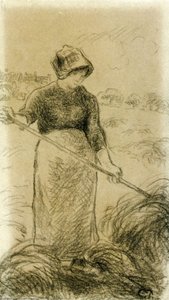
A serene watercolor by Camille Pissarro depicting cows being milked in a peaceful pastoral scene, capturing the essence of Impressionism's focus on light and daily life – discover this timeless artwork.
Biografia do Artista
Explore a vida e obra de Camille Pissarro, um dos fundadores do Impressionismo. Paisagens urbanas e rurais, cenas da vida cotidiana e influência em artistas como Van Gogh e Cézanne.
Sobre a pintura
A Pastoral Symphony: Camille Pissarro's "Milking Cows"
Camille Pissarro’s “Milking Cows” offers a serene glimpse into the heart of rural life, a quintessential Impressionist scene rendered with a delicate mastery of watercolor. This painting, depicting a group of farmers tending to their livestock in a sun-drenched field, is more than just a snapshot; it's an embodiment of Pissarro’s lifelong dedication to capturing the fleeting moments and subtle nuances of the natural world. The work speaks volumes about his deep connection to the land and his ability to translate that relationship onto canvas with remarkable sensitivity.
- Subject Matter: The scene is dominated by a group of cows – some standing, others resting or lying down – engaged in the daily ritual of milking. Human figures are interwoven within this pastoral tableau, highlighting the symbiotic relationship between man and beast that was central to agricultural life during Pissarro’s time.
- Style & Technique: Characteristic of Pissarro's mature Impressionist style, “Milking Cows” employs broken color and loose brushstrokes to convey a sense of atmosphere and light. The watercolor medium is skillfully utilized to create luminous washes that evoke the warmth of the sun and the freshness of the air. Notice how he avoids sharp outlines, favoring instead soft edges that contribute to the painting’s overall feeling of tranquility.
Historical Context & Impressionist Roots
Painted circa 1890, “Milking Cows” firmly places itself within the late phase of Pissarro's artistic career. By this period, he had become a pivotal figure in the development of Impressionism, having initially embraced Manet’s innovations and later evolving alongside Monet and Renoir. The painting reflects the broader shift occurring within the art world – a move away from academic realism towards capturing subjective impressions of light and color. Pissarro's focus on everyday subjects, like this rural scene, aligned with the Impressionists' desire to depict modern life rather than historical or mythological themes.
The painting’s creation coincided with a time of significant social change in France, as industrialization began to transform the landscape and displace traditional agricultural practices. Pissarro’s depiction of this vanishing world offers a poignant reminder of a simpler way of life, imbued with a quiet dignity and beauty.
Symbolism & Emotional Resonance
Beyond its straightforward representation of farming activity, “Milking Cows” is rich in symbolic meaning. The cows themselves represent fertility, abundance, and the connection to the earth – fundamental themes within Impressionist art. The presence of the horse further reinforces this connection to nature and labor. The inclusion of two suitcases adds a subtle layer of narrative, perhaps suggesting a temporary escape or a return to the land.
The overall mood is one of profound peace and contentment. Pissarro masterfully evokes a sense of timelessness, inviting the viewer to share in the quiet beauty of this rural scene. The painting’s emotional impact lies in its ability to transport us to a place of serenity and contemplation – a testament to Pissarro's artistic skill and his deep understanding of human emotion.
Collecting & Reproduction
A hand-painted reproduction of Camille Pissarro’s “Milking Cows” offers an exceptional opportunity to bring this iconic Impressionist masterpiece into your home or office. TopImpressionists.com provides meticulously crafted reproductions using the highest quality materials and techniques, ensuring that you receive a faithful representation of the original painting's beauty and detail. This artwork is ideal for collectors seeking to expand their Impressionist collection, interior designers looking to add a touch of pastoral elegance, or anyone who appreciates the timeless appeal of Pissarro’s vision.
Perguntas e Respostas
Que atmosfera uma reprodução de "Milking Cows", de Camille Pissarro traria para um ambiente?
"Milking Cows", de Camille Pissarro possui uma atmosfera Earthy e é recomendado para um(a) Living Room. O clima é o que a obra traz para o espaço ao seu redor.
Como "Milking Cows", de Camille Pissarro pode ser utilizado na decoração de interiores?
As recomendações de uso para "Milking Cows", de Camille Pissarro são (Accent) e o ambiente (Living Room).
Qual cor predomina na composição de "Milking Cows", de Camille Pissarro?
A cor que mais se destaca em "Milking Cows" é Rosy Brown (#c9bd8c). A cor dominante é útil ao combinar uma obra de arte com um ambiente interno.
Informações rápidas e quiz de arte
Sobre Camille Pissarro

Camille Pissarro
1830 - 1903, Dinamarca
Biografia do Artista
A Life Rooted in Observation: The World of Camille Pissarro
Camille Pissarro, um nome sinônimo tanto do nascimento quanto da evolução do Impressionismo, foi um artista cuja vida refletiu os paisagens em constante mudança que ele tão devotadamente capturava em suas telas. Nascido Jacob Abraham Camille Pissarro em 10 de julho de 1830, em Charlotte Amalie, São Tomás – então parte das Índias Ocidentais Dinamarquesas, hoje as Ilhas Virgens Americanas – suas origens eram tão diversas e vibrantes quanto as cenas que mais tarde definiriam sua visão artística. Seu pai, um comerciante português judeu com nacionalidade francesa, e sua mãe, de uma família judaica francesa na ilha, lhe infundiram uma herança cultural única, algo relativamente incomum devido a complexidades familiares. Essa criação, em certa medida não convencional devido a complexidades familiares, fomentou uma sensibilidade precoce ao mundo ao seu redor, uma qualidade que se tornaria o alicerce de sua prática artística. Sua formação inicial na Savary Academy perto de Paris forneceu-lhe uma base em técnicas tradicionais, mas foi seu retorno a São Tomás e seu trabalho subsequente como copeiro que realmente acendeu sua paixão pela observação. O porto movimentado, a vida local vibrante e a beleza bruta do cenário caribenho tornaram-se seus primeiros temas, moldando um olhar aguçado para as nuances da existência cotidiana.Da Realidade à Revolução: Desenvolvimento Artístico
A jornada artística de Pissarro foi uma exploração e refinamento constantes. Após um período auxiliando o pintor dinamarquês Anton Melbye em Paris, ele mergulhou nos trabalhos de mestres como Gustave Courbet, Jean-Baptiste-Camille Corot e Honoré Daumier – artistas que defendiam o realismo e os comentários sociais. Inicialmente, buscou aceitação no mundo da arte estabelecido, expondo na Salon de Paris, mas logo encontrou suas restrições sufocantes. Um momento decisivo veio com sua adoção da pintura *plein air* – trabalhando ao ar livre diretamente da natureza – uma prática incentivada por Corot que se tornaria central para o Impressionismo. Essa mudança não era meramente técnica; representava uma mudança filosófica, um desejo de capturar os efeitos passageiros da luz e da atmosfera, a própria essência de uma cena em vez de sua representação precisa. Ele começou a experimentar com pinceladas mais soltas e paletas mais vibrantes, afastando-se das convenções acadêmicas em direção a um estilo mais subjetivo e expressivo. Seu trabalho inicial de paisagens, embora ainda ancorado no realismo, prenunciava o caminho revolucionário que ele estava prestes a trilhar. Esse período viu-o lutando para encontrar sua própria voz em meio à fermentação artística crescente de Paris, uma cidade em rápida transformação que fornecia inspiração ilimitada.O Pai Figura do Impressionismo
Camille Pissarro não era simplesmente *um* Impressionista; ele foi, sem dúvida, a força unificadora e mais constante do movimento. De forma única, ele expôs em todas as oito exposições impressionistas de Paris entre 1874 e 1886, atuando como uma presença estável dentro de um grupo frequentemente caracterizado por discordâncias internas e ambições individuais. Ele não estava simplesmente presente – ele incentivava ativamente seus colegas artistas, oferecendo apoio, orientação e um senso de camaradagem muito necessário. Isso lhe rendeu o carinhoso apelido de “pai figura” do movimento. Seu compromisso com a liberdade artística e a inovação foi inabalável, mesmo diante da desaprovação crítica e da indiferença pública. Acreditava no poder da ação coletiva e defendia a ideia de artistas expondo independentemente das restrições das regras do Salon. Além de seu próprio trabalho, a influência de Pissarro se estendeu à nova geração de artistas, incluindo Paul Cézanne, Vincent van Gogh e Paul Gauguin, aos quais ele mentorou e impactou profundamente. Ele forneceu a eles não apenas conselhos técnicos, mas também uma estrutura filosófica para suas explorações artísticas. Sua disposição para experimentar levou-o brevemente ao Neo-Impressionismo, influenciado pelas técnicas de pontilhismo de Georges Seurat e Paul Signac, antes de retornar finalmente a um estilo mais pessoal que combinava suas influências anteriores com novas descobertas.Paisagens de Vida: Temas e Legado
A produção artística de Pissarro foi notavelmente diversa, mas consistentemente focada no mundo ao seu redor. Ele é celebrado por suas representações tanto de paisagens rurais quanto urbanas, muitas vezes retratando cenas de vida cotidiana – camponeses trabalhando em campos, ruas parisienses movimentadas, praças de vilarejo tranquilas. Suas pinturas não eram simplesmente vistas pitorescas; elas eram comentários sociais, refletindo sua profunda empatia pela classe trabalhadora e seu compromisso em retratá-los com dignidade e respeito.- Paisagens: Reconhecido por capturar a beleza tanto da paisagem rural quanto urbana.
- Cenas de vida parisiense: Representações vívidas de uma metrópole em rápida transformação.
- Vida camponesa: Refletindo sua consciência social e empatia pela classe trabalhadora.
Informações rápidas sobre Camille Pissarro
- Artistic Movement Or Style: Impressionismo, Neo-Impressionismo
- Artists Or Movements Influenced By This Artist:
- Cézanne
- Van Gogh
- Gauguin
- Artists Who Influenced This Artist:
- Courbet
- Corot
- Daubigny
- Date Of Birth: 10 Jul 1830
- Date Of Death: 13 Nov 1903
- Full Name: Camille Pissarro
- Nationality: Dano-Francês
- Notable Artworks:
- Boulevard Montmartre
- Jardim Les Mathurins
- Place Of Birth: Charlotte Amalie, St. Thomas
Obras Relacionadas




Explore obras de arte organizadas por temas, estilos e características.


Camille Pissarro
Milking Cows
() ·
Com a moldura: · Pintura a óleo sobre linho feita à mão
Total