


 Visualizar na parede
 Compartilhar
 Compartilhar
 Detalhes
 Guia
Guia

 Baixar imagem
 Semelhantes
 Raio X
 Ver diaporama
 Estatísticas
Coríntes e Akroníortes
 Acrílico sobre tela
- Arte de Parede
- Romantic Landscape Painting
 1847
1847 162.0 x 206.0 cm
 Neue Pinakothek
Admire 'Coríntes e Akroníortes' de Carl Rottmann! Uma paisagem bávara impressionante iluminada pelo artista alemão, membro da Escola Rottmann. Explore a beleza do Romantismo Alemão!
 Ler mais
Explore the evocative landscapes of Carl Rottmann – German Romanticism master! Discover his mythical scenes & Bavarian vistas. A key figure in 19th-century art.
Giclée / Impressão de Arte
Impressão giclée ou em tela de qualidade de museu, com produção rápida e opções flexíveis de acabamento. ( Comprar pintura feita à mão Alternar para Imagem Digital)




P118B €10

P118H €10

P118W €10

P438Z €10

P508JH €12

P508YH €12

P805H €10

P805Z €10

P919BZ €10

P919G €10

P919XJ €10

P959ZH €10

P968JZ €12

W106C €8

W218G €10

W218JH €8

W218Y €10

W307PJ €10

W316G €10

W316PJ €8

W316Y €10

W398PJ €8

W4111J €10

W500HY €15

W500JH €15

W692G €12

W849H €8

W940BG €15

W953PJ €8




Tamanho padrão
personalizado
CM
INCH
Escolha entre os nossos tamanhos pré-definidos que respeitam as proporções originais da obra de arte.
Loading sizes...

largura
altura
Insira a largura e a altura desejadas para se ajustarem à sua moldura ou parede. Uma impressão pode ser apenas cortada, nunca ampliada além da imagem original; portanto, um tamanho com proporções diferentes resultará na perda de parte da imagem. Enviamos uma maquete digital para sua aprovação antes de realizarmos a impressão. A imagem exibida nesta página não mostra o corte real — apenas a maquete o faz.
Entrega mundial () em 2 semanas, em vez das 4/5 semanas padrão. (27 Outubro)

Envio expresso gratuito para todo o mundo

Tela de Linho de Alta Qualidade

Seguro de transporte completo

Garantia de Reembolso de Impostos Alfandegários

Garantia de Fidelidade Cromática

Política de Devolução em 100 Dias (Apenas para Defeitos)

Garantia de reembolso de 100%

Oferta de desconto por quantidade
 A opção de vidro está disponível apenas para tamanhos inferiores a 110 cm

Coríntes e Akroníortes
Giclée / Impressão de Arte
Tamanho da Reprodução
-


Preço Total
€ 61
Corinth with Akrocorinth: A Bavarian Romantic Vision
Carl Anton Joseph Rottmann’s “Corinth with Akrocorinth” stands as a cornerstone of Bavarian Romanticism, capturing not merely a picturesque landscape but also the profound emotional resonance characteristic of the era. Painted in 1847, this monumental canvas—measuring 162 x 206 cm—represents more than just a visual depiction; it embodies Ludwig I’s fascination with classical grandeur intertwined with untamed natural beauty.
- Subject Matter: The painting portrays a dramatic desert vista dominated by towering mountains, bathed in the diffused glow of an overcast sky. Scattered figures – likely explorers—add a human element to this expansive scene, emphasizing the scale and majesty of the environment. Notably, two horses punctuate the composition, conveying movement and vitality against the backdrop of stillness.
- Style & Technique: Rottmann’s masterful command of encaustic painting distinguishes him from many contemporaries. This technique—using heated beeswax mixed with pigments—allowed for unparalleled luminosity and textural richness, capturing the subtle nuances of light and shadow with remarkable precision. The artist meticulously rendered the mountainous terrain, utilizing atmospheric perspective to convey depth and realism.
- Historical Context: Rottmann’s work emerged during Ludwig I's reign, a period marked by ambitious architectural projects and a fervent embrace of classical ideals. Inspired by his travels to Greece—particularly Pompeii—Rottmann sought to emulate the grandeur of antiquity while simultaneously expressing the sublime power of nature. This juxtaposition reflects the Romantic preoccupation with confronting both beauty and terror.
- Symbolism: The mountainous landscape itself symbolizes strength, permanence, and spiritual aspiration – themes central to Romantic thought. The horses represent freedom and dynamism, contrasting with the solidity of the mountains. Rottmann’s deliberate use of light—particularly its dramatic interplay across the peaks—creates a sense of awe and elevates the scene beyond mere representation.
- Emotional Impact: “Corinth with Akrocorinth” evokes feelings of grandeur, contemplation, and wonder. The painting invites viewers to immerse themselves in the sublime beauty of the natural world while simultaneously pondering its immensity and power. It’s a testament to Rottmann's ability to translate emotion into visual form—a skill that cemented his legacy as one of Bavaria’s most celebrated landscape painters.
This impressive reproduction captures the essence of Rottmann’s artistic vision, allowing you to experience the breathtaking beauty and intellectual depth of this iconic Romantic masterpiece in your own home.
Perguntas e Respostas
Por que o status de direitos autorais de "Coríntes e Akroníortes" é como é?
"Coríntes e Akroníortes", de Carl Anton Joseph Rottmann está em em domínio público — seus direitos autorais expiraram. O período de direitos autorais conta a partir do falecimento do artista, ocorrido em 1850.
Quais são as dimensões de "Coríntes e Akroníortes", de Carl Anton Joseph Rottmann na vida real?
As dimensões registradas de "Coríntes e Akroníortes", de Carl Anton Joseph Rottmann são 162 x 206 cm. Reproduções podem ser encomendadas em outros tamanhos, mantendo as mesmas proporções.
Qual paleta de cores é utilizada em "Coríntes e Akroníortes", de Carl Anton Joseph Rottmann?
A paleta de "Coríntes e Akroníortes", de Carl Anton Joseph Rottmann é descrita como Tons terrosos. Trata-se de uma descrição concisa das cores da obra.
Biografia do Artista
The Visionary Landscapes of Carl Rottmann
Born in the tranquil setting of Handschuhsheim, Germany, in 1797, Carl Anton Joseph Rottmann emerged as a profound voice within the movement of German Romanticism. His life and artistry were deeply intertwined with the shifting landscapes of 19th-century Europe, reflecting a period where the sublime beauty of nature met the burgeoning spirit of national identity. Unlike many of his contemporaries who focused on the intimate or the domestic, Rottmann possessed an expansive vision, seeking to capture the monumental scale of the world through sweeping vistas and mythic atmospheres. His journey was one of constant movement, traveling through the rugged terrains of Greece, Italy, and the Bavarian Alps, each location leaving an indelible mark on his palette and his perception of the divine within the natural world.
The development of Rottmann’s style was a masterful evolution from classical precision to a more emotive, atmospheric approach. Influenced by the grand traditions of landscape painting, he moved beyond mere topographical accuracy to embrace the sublime—that specific Romantic quality of awe and terror inspired by the vastness of nature. His technique involved a sophisticated understanding of light and shadow, using them not just to define form, and shape, but to evoke a sense of historical weight and mythic presence. In his hands, a mountain range was never just stone and ice; it was a silent witness to antiquity, a stage for the legends of old. This ability to infuse physical geography with spiritual and historical narrative became the hallmark of his mature period.
A Legacy of Light and Myth
Rottmann’s achievements are most notably seen in his ability to bridge the gap between the tangible world and the realm of imagination. His works often serve as windows into a lost era, where the ruins of ancient civilizations seem to breathe under the soft glow of a Mediterranean sun or the misty shroud of a northern forest. Through his meticulous attention to the interplay of light upon textures—the roughness of weathered stone, the translucency of water, and the softness of clouds—he achieved a level of luminosity that captivated the art world of his time.
The historical significance of his oeuvre lies in its role as a cornerstone of Romantic landscape art. His contributions can be summarized through several key artistic pillars:
- The Synthesis of History and Nature: He pioneered a method of painting where the landscape itself acts as a vessel for historical memory, blending archaeological interest with poetic expression.
- Mastery of Atmospheric Perspective: His use of color temperature and clarity to create depth allowed viewers to feel immersed in the vastness of his depicted scenes.
- Cultural Documentation: Through his travels, he provided a visual record of the European landscapes that were central to the Romantic identity, particularly the Greek and Bavarian vistas.
Ultimately, the work of Carl Rottmann remains a testament to the power of the gaze to transform the ordinary into the extraordinary. He did not merely paint what he saw; he painted what he felt in the presence of greatness. His legacy continues to resonate with those who find beauty in the monumental and meaning in the silent, enduring features of our earth, ensuring his place as a vital figure in the tapestry of 19th-century European art.

Carl Anton Joseph Rottmann
1797 - 1850 , Germany
Dados Rápidos
- Full Name: Joseph Wright of Derby
- Nationality: English
- Date Of Birth: 1797
- Date Of Death: 1850
- Place Of Birth: Handschuhsheim, Germany
- Notable Artworks:
- An Experiment on a Bird in the Air Pump
- The Slaughtered Horse
- A Man Defending His Cart
- Artistic Movement Or Style: Romanticism, Neoclassicism
- Artists Who Influenced This Artist:
- Janys Zedres
- Rembrandt
- Artists Or Movements Influenced By This Artist:
- Joshua Reynolds
- Romanticism
Artigos Relacionados
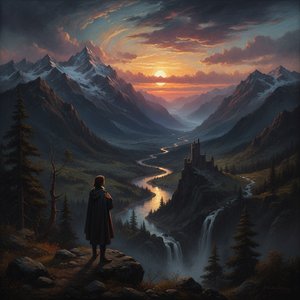
Capturing the Soul: The Emotional Majesty and Sublime Power of Romantic Landscape Painting
Explore the profound emotional depth of Romantic landscape painting. Discover how masters like Turner and Friedrich captured the sublime power of nature through intuition and imagination in this expert art history retrospective.

Capturing the Soul: The Emotional Magic and Sublime Grandeur of Romantic Landscape Painting
Explore the profound emotional depth of Romantic landscape painting. Discover how masters like Friedrich and Turner captured the sublime through light, shadow, and nature's power in this expert art history retrospective for discerning collectors.
Explore obras de arte organizadas por temas, estilos e características.


