

Exibido: · Com a moldura:
 Visualizar na parede
 Compartilhar
 Compartilhar
 Detalhes
 Guia
Guia

 Baixar imagem
 Semelhantes
 Raio X
 Ver diaporama
 Perguntas e Respostas
 Estatísticas
- 99.0 x 200.0 cm


€ 240
Reprodução em Óleo Feita à Mão
Óleo sobre tela pintado à mão no tamanho e moldura de sua escolha, feito sob encomenda pelos nossos artistas. ( Alternar para Impressão Alternar para Imagem Digital)
Tamanho
·Tamanho padrão
personalizado
CM
INCH
Escolha entre os nossos tamanhos pré-definidos que respeitam as proporções originais da obra de arte.
Carregando tamanhos...

largura
altura
Insira a largura e a altura desejadas para se ajustarem à sua moldura ou parede. Como esta obra é pintada à mão, para um tamanho com proporções diferentes, o artista poderá pintar um pouco mais ao redor da imagem ou reduzir ligeiramente a composição — você escolhe. Enviamos uma maquete digital para sua aprovação antes de iniciar a pintura. A imagem exibida nesta página não representa o resultado real — apenas a maquete mostra o resultado final.
 Leia mais
Finalizar
·
Branco €1

Bordas esfumaçadas €1

Bordas estendidas €1

P118B €10

P118H €10

P118W €10

P438Z €10

P508JH €12

P508YH €12

P805H €10

P805Z €10

P919BZ €10

P919G €10

P919XJ €10

P959ZH €10

P968JZ €12

W106C €8

W218G €10

W218JH €8

W218Y €10

W307PJ €10

W316G €10

W316PJ €8

W316Y €10

W398PJ €8

W4111J €10

W500HY €15

W500JH €15

W692G €12

W849H €8

W940BG €15

W953PJ €8

H24-GOLD €30

H24-SILVER €30

H36-GOLD €45

H36-SILVER €45
Enviado em um tubo protetor, pronto para ser emoldurado por você.
Extras
opcionalO que os extras incluem?
Exemplos do que pode ser alterado: Substituir o rosto pela foto do cliente; Adicionar um animal de estimação (ex: substituir gato por cachorro); Incluir uma mensagem oculta no fundo; Alterar a paisagem ou elementos do fundo.
Após o pedido, a equipe da TopImpressionists.com enviará um e-mail ao cliente para instruções e fornecerá uma prévia da montagem
Após o pedido, a equipe da TopImpressionists.com enviará um e-mail ao cliente para instruções e fornecerá uma prévia da montagem
Entrega mundial () em 3 a 4 semanas, em vez das 5 semanas padrão. (7 Novembro). Sem comprometer a qualidade.
Verniz de Proteção
Etiqueta de identificação
Detalhes da Placa de Bronze Gravada
This elegant plaque features the artist's name and the title of the artwork, finely engraved for a timeless presentation.
It is made from bronze with a refined, elegant finish. The text is precisely laser-engraved for a sharp and permanent result. Measuring 9x2 cm, the plaque is compact yet easy to read. It's built to be durable and scratch-resistant, offering a professional, museum-quality look. Mounting is simple thanks to the included adhesive backing.
Detalhes da Placa de Acrílico Transparente
The plaque includes essential engraved details such as the artist's name, the title of the artwork, the date it was created, the type of media used-like oil on canvas or watercolor-a brief description of the piece, and a QR code that links to the complete artwork information.
It is crafted from clear acrylic, offering a sleek, modern appearance. The text is UV-engraved in black to ensure strong visual contrast. With a size of 10x15 cm, it ensures optimal readability. It comes equipped with two metal hooks for secure wall mounting. The plaque is designed to be weather-resistant, making it suitable for various environments, and it includes interactive features that work seamlessly with smartphone scanning.
Detalhes da Placa de Acrílico Preto
This elegant plaque includes engraved information such as the artist's name, the title of the artwork, the date it was created, the type of media used (like oil on canvas or watercolor), a short description of the artwork, and a QR code for quick access to more information.
The plaque itself is made from refined black acrylic with a premium finish. The text is laser-engraved in white for high contrast and readability. Its size is 10x15 cm, designed to be easy to read. It comes with two metal hooks for professional mounting. The design is sleek and fits any interior style. It is also weather-resistant and durable, with built-in digital integration for mobile compatibility.
A opção de vidro está disponível apenas para tamanhos inferiores a 110 cm
 A opção de vidro está disponível apenas para tamanhos inferiores a 110 cm
- Envio expresso gratuito para todo o mundo
- Tela de Linho de Alta Qualidade
- Seguro de transporte completo
- Garantia de Reembolso de Impostos Alfandegários
- Garantia de Fidelidade Cromática
- Política de Devolução em 100 Dias (Apenas para Defeitos)
- Garantia de reembolso de 100%
- Oferta de desconto por quantidade


Descrição do Item
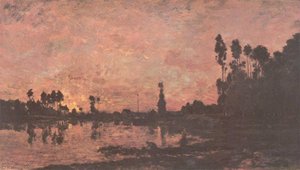
Experience Charles-François Daubigny’s serene ‘Evening on the Oise,’ a captivating 1863 landscape painting showcasing atmospheric impressionism and a tranquil river scene perfect for art lovers to admire or own.
Biografia do Artista
Explore as obras de Charles-François Daubigny (1817-1878), um precursor da Escola de Barbizon e do Impressionismo. Descubra paisagens evocativas e sua inovadora técnica de luz no TopImpressionists.
Sobre a pintura
Charles-François Daubigny’s “Evening on the Oise”: A Symphony of Light and Leisure
Evening on the Oise, painted in 1863 by Charles-François Daubigny, is more than just a depiction of a riverbank; it's a carefully constructed meditation on light, atmosphere, and the simple pleasures of rural life. Measuring 99 x 200 cm, this canvas captures a quintessential French scene – the Oise River meandering through a verdant landscape, dotted with figures engaged in quiet pursuits. Daubigny, a pivotal figure in the development of Atmospheric Impressionism, masterfully translates his observations of nature into a work brimming with nuanced color and a palpable sense of tranquility.
- A Pioneer’s Vision: Daubigny's artistic journey was marked by a deliberate rejection of rigid academic conventions. Influenced by his travels to Italy – particularly the landscapes of the region – he sought to represent nature not as an idealized subject for historical or mythological narratives, but as it existed in its raw, fleeting beauty.
- Technique and Color: The painting’s remarkable luminosity stems from Daubigny's innovative use of color and brushwork. He employed broken strokes and juxtaposed complementary hues – blues and oranges, greens and purples – to create a shimmering effect, mimicking the play of light on water and foliage. This technique, anticipating the later developments of Impressionism, prioritizes the immediate sensory experience over precise representation.
The Essence of Atmospheric Impressionism
Daubigny’s approach aligns perfectly with the burgeoning movement of Atmospheric Impressionism, which sought to capture not just the subject matter but also the *impression* of a scene – its mood, light, and atmosphere. Unlike earlier landscape painters who meticulously rendered every detail, Daubigny focused on conveying the ephemeral qualities of the environment. The hazy evening light, diffused through the trees, is particularly striking, creating a sense of depth and mystery. Notice how he uses subtle gradations of color to suggest the movement of water and the shifting shadows cast by the foliage.
- Plein Air Painting: Daubigny was a fervent advocate for *plein air* painting – working directly outdoors – believing it essential for accurately capturing natural light. This commitment is evident in the freshness and immediacy of his brushwork.
- Social Context: The mid-19th century witnessed a growing interest in leisure activities and the beauty of the French countryside. Daubigny’s painting reflects this trend, depicting figures enjoying a peaceful evening by the river – a scene that resonated with the aspirations of a burgeoning middle class.
Symbolism and Emotional Impact
Beyond its technical brilliance, Evening on the Oise possesses a quiet emotional resonance. The scattered figures, engaged in simple activities like boating and sketching, evoke a sense of serenity and connection with nature. The river itself symbolizes fluidity, change, and the passage of time – themes frequently explored in art throughout history. The composition invites the viewer to step into the scene, to share in the tranquility and contemplate the beauty of the natural world. Daubigny’s ability to evoke such a profound sense of peace is a testament to his artistic skill and his deep understanding of the human condition.
- Historical Significance: This painting represents a crucial moment in the development of French landscape art, foreshadowing the innovations of Impressionism.
- Perfect for Your Space: A hand-painted reproduction of this artwork will bring a touch of timeless elegance and tranquility to any interior space – from a formal living room to a serene bedroom.
Perguntas e Respostas
Para que tipo de uso se recomenda uma impressão de "Evening on the Oise"?
Uma reprodução de "Evening on the Oise", de Charles-François Daubigny é recomendada para Accent. Esta sugestão decorre do tema, da atmosfera e das cores da obra.
Que harmonia de cores apresenta "Evening on the Oise", de Charles-François Daubigny?
"Evening on the Oise", de Charles-François Daubigny apresenta uma harmonia de cores Unified Palette.
Qual cor mais se destaca em "Evening on the Oise"?
A cor que mais se destaca em "Evening on the Oise" é Gray (#8e826b). A cor dominante é útil ao combinar uma obra de arte com um ambiente interno.
Informações rápidas e quiz de arte
Sobre Charles-François Daubigny

Charles-François Daubigny
1817 - 1878, França
Biografia do Artista
A Pioneer of Atmospheric Impressionism: The Life and Art of Charles-François Daubigny
Charles-François Daubigny, nascido em Paris em 1817, emergiu de uma família profundamente enraizada na tradição artística – seu pai, Edmé François Daubigny, e seu tio, Pierre Daubigny, ambos pintores, lançaram as bases para sua formação inicial. No entanto, o jovem Charles logo buscou trilhar seu próprio caminho, transcendendo as restrições acadêmicas em direção a um engajamento mais direto com o mundo natural. Seus primeiros estudos sob Paul Delaroche forneceram habilidade técnica, mas uma jornada à Itália em 1836, realizada independentemente com o artista Henri Mignan, acendeu verdadeiramente sua visão artística. Essa experiência lhe infundiu uma profunda apreciação pela paisagem e um desejo de capturá-la não como uma cena idealizada, mas como uma entidade viva e pulsante. Retornando a Paris, Daubigny equilibrou trabalho comercial – ilustrando livros e painéis decorativos – com sua crescente paixão pela pintura *en plein air*, uma prática que definiria sua carreira. Ele fazia parte de uma comunidade artística na Rue des Amandiers-Popincourt, fomentando colaboração e exploração compartilhada de novas abordagens à arte.O Círculo de Barbizon e a Adoção da Natureza
A trajetória artística de Daubigny tomou um ponto crucial em 1843 quando se estabeleceu em Barbizon, uma pequena aldeia aninhada na Floresta de Fontainebleau. Isso marcou sua associação formal com a Escola de Barbizon, um grupo de artistas que rejeitaram o artifício polido da pintura acadêmica em favor da observação direta e da representação honesta da vida rural e da paisagem. Ao contrário dos pintores de paisagem anteriores que frequentemente esboçavam ao ar livre e completavam suas obras em estúdio, os artistas da Barbizon – incluindo Théodore Rousseau, Jean-François Millet e Camille Corot – abraçaram a pintura *en plein air* como um princípio fundamental. A amizade de Daubigny com Corot provou ser particularmente influente; juntos eles exploraram as florestas de Fontainebleau, capturando as sutis nuances da luz e da atmosfera. Foi durante este período que Daubigny concebeu seu inovador “Botin”, uma embarcação estúdio que ele usava para navegar pelos rios da França – o Sena e o Oise, em particular – permitindo-lhe acesso incomparável a paisagens diversas e fomentando uma conexão íntima com a natureza. Esta embarcação móvel tornou-se sinônimo de sua prática artística, simbolizando seu compromisso com a pintura diretamente do dia a dia.Uma Ponte Entre o Realismo e o Impressionismo
O trabalho de Daubigny ocupa uma posição única na história da arte do século XIX, servindo como uma ponte crucial entre o realismo da Escola de Barbizon e o surgimento do movimento impressionista. Embora firmemente enraizado na tradição da Barbizon de representar a natureza com fidelidade e sinceridade, suas pinturas cada vez mais enfatizaram os efeitos atmosféricos, momentos fugazes de luz e percepção subjetiva – qualidades que prenunciavam as inovações de Monet, Renoir e seus contemporâneos. Ele experimentou técnicas como *cliché verre*, um processo que combinava fotografia e gravura, demonstrando uma abertura a novas tecnologias e possibilidades artísticas. Suas paisagens são caracterizadas por pinceladas amplas e soltas, paleta suave e foco na captura das qualidades efêmeras da luz e do tempo. Pinturas como “Harvest” (1857) e “The Ponds of Gylieu” (1864) exemplificam sua capacidade de evocar um senso de humor e atmosfera, transportando o espectador para o coração do campo francês. Ele não estava simplesmente registrando o que via; ele estava transmitindo *como* era estar presente naquele momento.Legado e Influência Duradoura
Charles-François Daubigny faleceu em Paris em 1878, deixando um rico legado artístico que continua a ressoar hoje. Sua influência se estendeu além de seu círculo imediato de alunos – incluindo seu filho Karl, Achille Oudinot e Hippolyte Camille Delpy – para inspirar gerações de pintores de paisagem. Ele foi fundamental para fomentar conexões entre a Escola de Barbizon e o movimento impressionista emergente, apresentando Claude Monet e Paul Cézanne a novas maneiras de ver e pintar. Seu compromisso com a pintura *en plein air*, sua exploração dos efeitos atmosféricos e sua disposição em abraçar a inovação pavimentaram o caminho para as transformações artísticas radicais que definiriam o final do século XIX. As pinturas de Daubigny são hoje mantidas em importantes museus ao redor do mundo, incluindo o Musée d'Orsay em Paris e o Cincinnati Art Museum, servindo como um testemunho de sua contribuição duradoura à história da arte. Ele permanece uma figura fundamental – um mestre da paisagem atmosférica que antecipou a chegada do Impressionismo e ajudou a moldar o curso da pintura moderna.Principais Obras
- Harvest (1857): Um exemplo essencial de sua capacidade de capturar a vida rural e a atmosfera, agora alojado no Musée d'Orsay.
- The Ponds of Gylieu (1864): Demonstra sua maestria na pintura de paisagem e perspectiva atmosférica, atualmente no Cincinnati Art Museum.
- Moonlight (1865): Apresenta sua habilidade em representar cenas noturnas com efeitos de luz sutis.
- Auvers-sur-Oise (1868): Uma representação cativante da paisagem francesa, refletindo seu profundo vínculo com a região.
- Seascape (1876): Uma representação impressionista de ondas e beleza costeira.
Informações rápidas sobre Charles-François Daubigny
- Artistic Movement Or Style: Barbizon e Impressionismo
- Artists Or Movements Influenced By This Artist: ['Impressionismo']
- Artists Who Influenced This Artist:
- Corot
- Courbet
- Date Of Birth: 15 Feb 1817
- Date Of Death: 19 Feb 1878
- Full Name: Charles-François Daubigny
- Nationality: Francês
- Notable Artworks:
- Harvest
- Ponds Gylieu
- Moonlight
- Place Of Birth: Paris, França
Obras Relacionadas


Explore obras de arte organizadas por temas, estilos e características.


Charles-François Daubigny
Evening on the Oise
() ·
Com a moldura: · Pintura a óleo sobre linho feita à mão
Total