

 Enviar
 Compartilhar
 Ver detalhes
 Guia de Obras do Aluno

 Baixar imagem
 Semelhantes
 Apresentação de slides
 Estatísticas
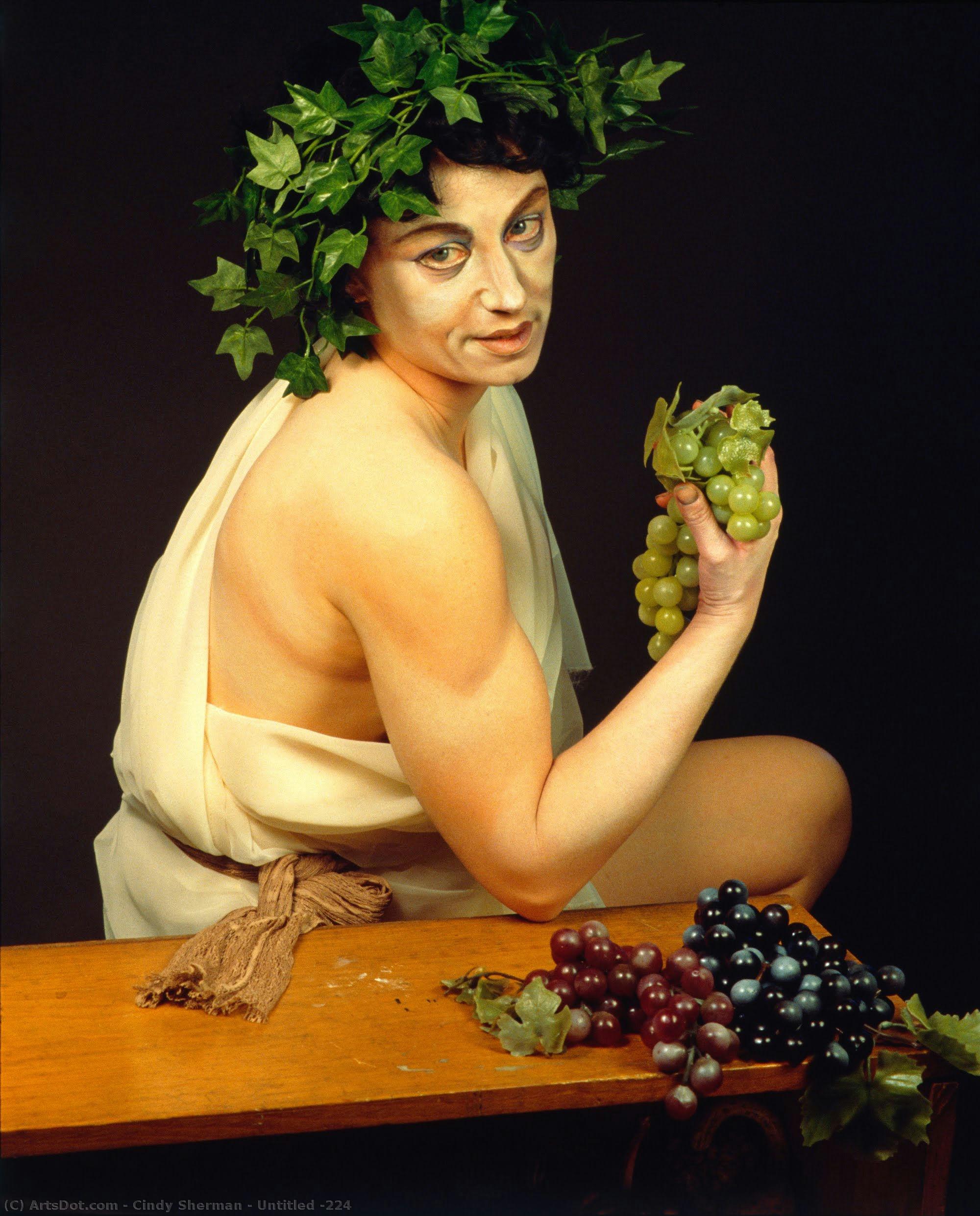
Untitled #224
 Black and White Photography
- Photo
- Contemporary Art
 1990
1990- Contemporary
 121.0 x 96.0 cm
 The Feminist Institute
A haunting black and white photograph of a woman with a crown of leaves and grapes by Cindy Sherman captures a sense of profound unease, inviting you to explore this powerful deconstruction of identity.
 Ver mais
Explore as transformadoras autorretratos de Cindy Sherman, fotógrafa americana icônica. Desconstruindo identidade e gênero, seus trabalhos desafiam a representação na arte e mídia.
A obra de arte exibida nesta página é protegida por leis de direitos autorais, o que significa que não podemos criar ou vender legalmente uma reprodução idêntica. Esta proteção é aplicada por meio de acordos internacionais, tais como a Convenção de Berna e pelas leis nacionais, incluindo as estabelecidas por Lei de Direitos Autorais dos EUA - Título 17.
Como uma alternativa respeitosa e legal, oferecemos obras de arte personalizadas e pintadas à mão, inspiradas na obra original. Nossos artistas profissionais e experientes estudam cuidadosamente o estilo, a atmosfera e a essência artística da obra original para criar uma peça nova e única que evoque a mesma sensação — permanecendo como uma criação original por direito próprio.
Este método cumpre plenamente as regulamentações de direitos autorais, pois não envolve a cópia ou duplicação da obra protegida. Em vez disso, trata-se de uma reinterpretação criativa — uma nova pintura que é influenciada pela original, mas não idêntica a ela.
Reprodução em Óleo Feita à Mão
Óleo sobre tela pintado à mão no tamanho e moldura de sua escolha, feito sob encomenda pelos nossos artistas. ( Alternar para Impressão Ver Imagem Digital)




































Padrão
sob medida
CM
INCH
Escolha entre os nossos tamanhos pré-definidos que respeitam as proporções originais da obra de arte.
Loading sizes...

largura
altura
Digite a largura e a altura de que necessita, para se ajustar à sua moldura ou à sua parede. Esta obra é pintada à mão, por isso, para um tamanho com uma proporção diferente, o artista pode pintar um pouco mais ao redor da imagem ou cortar um pouco — você escolhe. Enviamos-lhe uma maquete digital para aprovação antes de a pintura começar. A imagem exibida nesta página não mostra o resultado real — apenas a maquete mostra.
Exemplos do que pode ser personalizado: Substituir o rosto pela foto do cliente; Adicionar um animal de estimação (ex: substituir gato por cão); Incluir uma mensagem oculta no fundo; Alterar a paisagem ou elementos do fundo.
Após o pedido, a equipa TopImpressionists.com enviará um e-mail ao cliente para solicitar instruções e fornecer uma prévia do esboço.
Após o pedido, a equipa TopImpressionists.com enviará um e-mail ao cliente para solicitar instruções e fornecer uma prévia do esboço.
Entrega mundial () em 3 a 4 semanas, em vez das 5 semanas padrão. (23 Outubro). Sem comprometer a qualidade.

Envio expresso gratuito para todo o mundo

Tela de Linho Premium

Seguro de transporte total

Garantia de Reembolso de Impostos Alfandegários

Garantia de Fidelidade de Cor

Política de Devolução em 100 Dias (Apenas para Defeitos)

Garantia de reembolso de 100%

Desconto para múltiplas unidades
 A opção de vidro está disponível apenas para tamanhos inferiores a 110 cm

Untitled #224
Técnica de Reprodução
Dimensões da Reprodução
-


Preço Total
€ 236
A Shadowed Feast
The camera captures a moment frozen in monochrome, where a woman sits amidst an abundance of fruit that feels both heavy and unsettling. A crown of leaves rests upon her head, its organic edges pressing against her brow as she holds clusters of grapes with a grip that seems more burdened than celebratory. Around her, the table is scattered with more dark, ripe bunches, their textures rendered in sharp, silvered tones. There is a palpable sense of unease in her gaze, an expression that drifts away from the viewer toward something unseen and perhaps troubling. The light falls across the scene in stark contrasts, highlighting the smooth skin of the fruit against the deeper shadows of the composition.
Every element in this frame feels carefully placed to disrupt a sense of classical peace. While the presence of grapes and leaves suggests a pastoral or mythological setting, the atmosphere remains thick with tension. The woman does not appear as a figure of leisure, but rather as someone caught in a state of profound discomfort. This tension pulls at the edges of the image, making the natural elements feel strangely artificial, as if the entire scene is a carefully constructed stage where the actors are momentarily lost in their own private anxieties.
The Weight of Representation
This work emerges from a period of intense exploration into how images are built and perceived. Created in 1990, it belongs to a series that looks back at the traditions of historical portraiture only to pull them apart. The composition alludes to much older visual languages, specifically referencing the way masters like Caravaggio depicted figures such as his Young Sick Bacchus. By using these familiar motifs—the crown, the fruit, the classical arrangement—the photograph engages with a long history of painting, yet it does so through the lens of contemporary photography and deliberate artifice.
The use of black and white strips away the distraction of color, forcing the eye to focus on the raw textures of the leaves, the skin, and the woman's face. This technique emphasizes the construction of the scene, making the props and costumes feel visible and intentional. It is a study in how identity can be performed through external objects. The discomfort felt by the subject becomes a tool to question the very idea of the portrait, turning a moment that looks like a classical painting into a modern interrogation of what it means to be seen.
Perguntas e Respostas
Quem vende cópias pintadas à mão de "Untitled #224" de Cindy Sherman?
"Untitled #224" está disponível como uma reprodução a óleo pintada à mão sobre tela de linho. O pedido pode ser feito em sua página de Reprodução Pintada à Mão, com escolha de tamanhos.
A qual estilo pertence "Untitled #224"?
"Untitled #224" é uma obra do Contemporary Art. O movimento indica a tradição artística da qual a obra faz parte.
Que harmonia de cores apresenta "Untitled #224" de Cindy Sherman?
"Untitled #224" de Cindy Sherman apresenta uma harmonia de cores Strong Color Unity.
Biografia do Artista
A Deconstruction of Identity: The World of Cindy Sherman
Nascida em Glen Ridge, Nova Jersey, em 1954, Cynthia Morris Sherman emergiu como uma figura central no final do século XX e início do século XXI da arte, não através de retratos tradicionais, mas sim por meio de sua desconstrução deliberada. Mais conhecida como Cindy Sherman, ela não buscava capturar a semelhança; em vez disso, procurava expor a natureza construída da própria identidade – como ela é formada pela mídia, expectativas sociais e o próprio ato de ser observado. Sua obra não se trata *de quem* alguém é, mas sim *de como* nós os percebemos, e os papéis que atribuímos com base em pistas superficiais. Crescendo em um ambiente relativamente rígido, com um pai engenheiro e uma mãe que trabalhava com crianças com dificuldades de aprendizagem, a vida inicial de Sherman forneceu um pano de fundo silencioso para uma mente que mais tarde se concentraria intensamente na observação e no desempenho. Esse período formativo inculcou nela uma percepção aguçada das dinâmicas sociais e das pressões sutis da conformidade – temas que permeariam sua prática artística.Da Pintura às Performances Fotográficas
A jornada artística de Sherman começou com a pintura na Universidade Estadual de Buffalo em 1972, mas ela logo se frustrou com o que percebia como as limitações do meio. Não era suficiente simplesmente *representar* a realidade; ela queria desmembrá-la, expor seus mecanismos subjacentes. A fotografia ofereceu-lhe uma nova linguagem – uma que permitia um engajamento direto na representação e na manipulação da imagem. Essa mudança marcou um ponto de virada, levando às suas séries inovadoras, Bus Riders (1976), onde ela começou a experimentar com disfarces e caracterizações, observando e incorporando pessoas comuns no transporte público. No entanto, foi a Untitled Film Stills (1977-1980) que catapultou Sherman para o reconhecimento internacional. Essa série seminal de 70 fotografias em preto e branco apresentava Sherman mesma como personagens arquetípicos femininos retirados diretamente do vocabulário visual do cinema B e da televisão. Não eram reproduções, mas sim evocações – cenários cuidadosamente construídos que insinuavam narrativas sem nunca totalmente revelá-las. Cada imagem era simultaneamente familiar e perturbadora, provocando os espectadores a questionarem suas próprias suposições sobre papéis de gênero e tropos cinematográficos. A série não se tratava simplesmente *de* esses personagens; era um comentário sobre o próprio ato de representação, expondo como as imagens moldam nossa compreensão da identidade.Explorando Arquetipos e Papéis Sociais
Ao longo dos anos 80 e além, Sherman continuou a explorar os temas da identidade construída e das expectativas sociais por meio de diversas séries. Sua Centerfolds & Fashion Series confrontou diretamente a objetificação das mulheres na mídia, recriando imagens semelhantes às propagandas de revistas com um olhar crítico. Fairy Tales and Disasters (meados dos anos 80) viu-a mover-se para um território mais fantástico e grotesco, utilizando próteses e maquiagem elaborada para criar imagens perturbadoras que desafiavam as noções convencionais de beleza e narrativa. Os History Portraits (início dos anos 90) foram particularmente marcantes – recriações de pinturas históricas com sutis, mas significativos, ajustes, questionando a autenticidade e as dinâmicas de poder inerentes à pintura tradicional. Ela não estava simplesmente copiando essas obras; estava interrogando-as, expondo sua natureza construída e desafiando a própria noção de "obras-primas" artísticas. Obras posteriores continuaram essa exploração, frequentemente incorporando fotografia em grande formato e manipulação digital para desfocar ainda mais as linhas entre realidade e ilusão.Influências e Legado Duradouro
A obra de Sherman está profundamente enraizada na Arte Conceitual, priorizando ideias sobre habilidades artísticas tradicionais. Ela se vale fortemente da Teoria Feminista, engajando-se com críticas à representação e ao olhar masculino, particularmente como articuladas por Laura Mulvey em seu influente ensaio "Prazer Visual e Cinema Narrativo". O conceito de Mulvey de "ser observado" – a objetificação das mulheres nas estruturas cinematográficas – tornou-se uma preocupação central no trabalho de Sherman. Embora seja difícil apontar influências diretas, é possível ver ecos do Surrealismo em sua exploração do inconsciente e na justaposição perturbadora de imagens. Seu impacto na arte contemporânea tem sido profundo. Ela é considerada uma figura-chave da "Pictures Generation", um grupo de artistas que explorou o impacto da mídia de massa na cultura. O reconhecimento veio com prêmios prestigiosos como o MacArthur Fellowship (1995), e suas fotografias são agora mantidas por importantes museus em todo o mundo, incluindo o MoMA e o Nelson-Atkins Museum of Art. A abordagem inovadora de Sherman à autorretratística não apenas redefiniu o gênero, mas também continua a provocar um diálogo crítico sobre identidade, representação e o poder onipresente das imagens na formação de nossas percepções de nós mesmos e do mundo ao nosso redor. Sua obra permanece notavelmente relevante hoje em dia, provocando discussões contínuas sobre autenticidade, desempenho e a natureza em constante evolução da autoidentidade em uma sociedade saturada por mídia.
Cindy Sherman
1954 - , Estados Unidos da América
Informações Rápidas
- Artistic Movement Or Style: Arte conceitual
- Artists Or Movements Influenced By This Artist: ['Pictures Generation']
- Artists Who Influenced This Artist: ['Mulvey']
- Date Of Birth: 1954-01-19
- Full Name: Cindy Sherman
- Nationality: Americana
- Notable Artworks:
- Untitled Film Stills
- Bus Riders
- Centerfolds
- Place Of Birth (City And Country): Glen Ridge, EUA
Artigos Relacionados

Shadow & Soul: Why Black & White Photography Remains the Ultimate Power Move in Modern Art
Discover why black & white photography remains a powerful force in contemporary art. Explore the impact of light, shadow, and texture through a visual journey of monochrome mastery and learn how to elevate your space with timeless grayscale aesthetics.

Monochrome Visions: Exploring the Aesthetic & Historical Significance of Black & White Photography
Explore the rich history & artistic power of black and white photography. From early techniques to iconic masters like Ansel Adams, discover why monochrome continues to captivate art lovers today. Expert insights for collectors.

Os 10 Quadros Mais Famosos Dominados pelo Branco: Arte e Decoração
Descubra os 10 quadros mais famosos dominados pelo branco, de Monet a Kandinsky! Explore a história da arte, técnicas e o poder da paleta neutra. Encontre reproduções de alta qualidade para sua decoração em TopImpressionists.com.

As 10 Obras Mais Famosas Dominadas pelo Preto Marsala: Arte e Decoração
Descubra as 10 pinturas mais icônicas dominadas pelo preto marsala! Explore a história, artistas e técnicas por trás de obras-primas do barroco ao expressionismo. Encontre reproduções de arte exclusivas para decorar seu lar com elegância em TopImpressionists.com.

As 10 Pinturas Mais Famosas Dominadas pelo Preto: Arte, História e Decoração
Descubra as 10 pinturas mais icônicas dominadas pelo preto! Explore a história, técnica e emoção por trás de obras-primas do Romantismo, Realismo e Expressionismo. Encontre reproduções de arte exclusivas na TopImpressionists.com.
Explore obras de arte organizadas por temas, estilos e características.


