

Shown: · With its frame:
 Visualizar na parede
 Compartilhar
 Compartilhar
 Detalhes
 Guia
Guia

 Baixar imagem
 Semelhantes
 Raio X
 Ver diaporama
 Q&A
Q&A Estatísticas

€ 239
Reprodução em Óleo Feita à Mão
Óleo sobre tela pintado à mão no tamanho e moldura de sua escolha, feito sob encomenda pelos nossos artistas. ( Alternar para Impressão Alternar para Imagem Digital)
Size
·Tamanho padrão
personalizado
CM
INCH
Escolha entre os nossos tamanhos pré-definidos que respeitam as proporções originais da obra de arte.
Loading sizes...

largura
altura
Insira a largura e a altura desejadas para se ajustarem à sua moldura ou parede. Como esta obra é pintada à mão, para um tamanho com proporções diferentes, o artista poderá pintar um pouco mais ao redor da imagem ou reduzir ligeiramente a composição — você escolhe. Enviamos uma maquete digital para sua aprovação antes de iniciar a pintura. A imagem exibida nesta página não representa o resultado real — apenas a maquete mostra o resultado final.
 Leia mais
Finish
·
White €1

Blurside €1

Extended €1

P118B €10

P118H €10

P118W €10

P438Z €10

P508JH €12

P508YH €12

P805H €10

P805Z €10

P919BZ €10

P919G €10

P919XJ €10

P959ZH €10

P968JZ €12

W106C €8

W218G €10

W218JH €8

W218Y €10

W307PJ €10

W316G €10

W316PJ €8

W316Y €10

W398PJ €8

W4111J €10

W500HY €15

W500JH €15

W692G €12

W849H €8

W940BG €15

W953PJ €8

H24-GOLD €30

H24-SILVER €30

H36-GOLD €45

H36-SILVER €45
Shipped in a protective tube, ready for your own framer.
Above 105 cm the frame is shipped as a kit for a professional framer — read the details.
Extras
optionalWhat do the extras include?
Examples of what can be changed: Replace face with customer photo; Add pet (e.g., replace cat with dog); Include hidden message in background; Change background landscape or elements.
After order, TopImpressionists.com team will email client for instructions and provide a mockup preview
After order, TopImpressionists.com team will email client for instructions and provide a mockup preview
Entrega mundial () em 3 a 4 semanas, em vez das 5 semanas padrão. (31 Outubro). Sem comprometer a qualidade.
Verniz de Proteção
Etiqueta de identificação
Detalhes da Placa de Bronze Gravada
This elegant plaque features the artist's name and the title of the artwork, finely engraved for a timeless presentation.
It is made from bronze with a refined, elegant finish. The text is precisely laser-engraved for a sharp and permanent result. Measuring 9x2 cm, the plaque is compact yet easy to read. It's built to be durable and scratch-resistant, offering a professional, museum-quality look. Mounting is simple thanks to the included adhesive backing.
Detalhes da Placa de Acrílico Transparente
The plaque includes essential engraved details such as the artist's name, the title of the artwork, the date it was created, the type of media used-like oil on canvas or watercolor-a brief description of the piece, and a QR code that links to the complete artwork information.
It is crafted from clear acrylic, offering a sleek, modern appearance. The text is UV-engraved in black to ensure strong visual contrast. With a size of 10x15 cm, it ensures optimal readability. It comes equipped with two metal hooks for secure wall mounting. The plaque is designed to be weather-resistant, making it suitable for various environments, and it includes interactive features that work seamlessly with smartphone scanning.
Detalhes da Placa de Acrílico Preto
This elegant plaque includes engraved information such as the artist's name, the title of the artwork, the date it was created, the type of media used (like oil on canvas or watercolor), a short description of the artwork, and a QR code for quick access to more information.
The plaque itself is made from refined black acrylic with a premium finish. The text is laser-engraved in white for high contrast and readability. Its size is 10x15 cm, designed to be easy to read. It comes with two metal hooks for professional mounting. The design is sleek and fits any interior style. It is also weather-resistant and durable, with built-in digital integration for mobile compatibility.
A opção de vidro está disponível apenas para tamanhos inferiores a 110 cm
 A opção de vidro está disponível apenas para tamanhos inferiores a 110 cm
- Envio expresso gratuito para todo o mundo
- Tela de Linho de Alta Qualidade
- Seguro de transporte completo
- Garantia de Reembolso de Impostos Alfandegários
- Garantia de Fidelidade Cromática
- Política de Devolução em 100 Dias (Apenas para Defeitos)
- Garantia de reembolso de 100%
- Oferta de desconto por quantidade


Descrição do Item
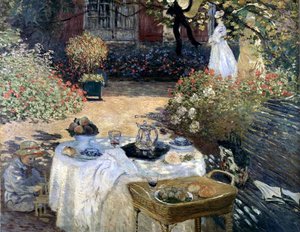
Experience the sunlit brilliance of Claude Monets Impressionist masterpiece The Luncheon where dappled light and garden serenity merge in a breathtaking display of color inviting you to bring this timeless moment home.
Biografia do Artista
Explore o mundo de Claude Monet, o mestre impressionista renomado por capturar a luz e as cores fugazes através de paisagens icônicas como 'Nenúfares' e 'Palheiros'.
About the painting
A Symphony of Light and Leisure
In the gentle embrace of a sun-drenched garden pavilion, Claude Monet captures a moment of profound tranquility in "The Luncheon 1." This exquisite oil on canvas serves as a window into the heart of Impressionism, where the boundaries between reality and perception begin to dissolve. The scene unfolds with an inviting warmth, presenting a group of figures gathered for a leisurely meal amidst the dappled shade of lush foliage. Monet does not merely depict a social gathering; he orchestrates a sensory experience, inviting the viewer to feel the soft warmth of the afternoon sun and the refreshing coolness of the garden shadows. The table, set with wine glasses and bowls brimming with fruit, acts as the focal point of this idyllic retreat, creating an atmosphere of abundance and peaceful coexistence with nature.
The artistry within this piece is defined by Monet’s revolutionary approach to light and atmosphere. Eschewing the rigid, dark shadows of traditional academic painting, he employs short, broken brushstrokes that dance across the canvas, simulating the shimmering effect of reflected sunlight. The palette is a masterclass in subtle nuance, dominated by muted greens and yellows that evoke the vibrant yet soft essence of a summer afternoon. By layering these colors directly onto the canvas, Monet achieves a remarkable depth of texture and tone, allowing the light to appear as if it is vibrating within the very fabric of the painting itself. This technique captures the ephemeral—the fleeting movement of light through leaves and the transient beauty of a moment frozen in time.
The Spirit of Plein Air and Artistic Innovation
At the core of "The Luncheon 1" lies the radical philosophy of en plein air painting. Driven by his dedication to working outdoors, Monet sought to capture the immediate, unadulterated experience of the natural world. This commitment to direct observation allowed him to move beyond mere representation, instead focusing on how light alters the perception of color and form throughout the day. The garden setting, with its potted plants and scattered figures, provides a quintessential Impressionist backdrop where the atmosphere is as much a subject as the people themselves. For the collector or interior designer, this work offers more than just visual beauty; it brings an element of organic vitality and luminous energy into any space.
The emotional resonance of the painting lies in its ability to evoke nostalgia and a sense of serene escapism. There is a profound intimacy in the way the figures are integrated into the landscape, suggesting a harmonious rhythm between humanity and the environment. As an investment in fine art reproduction, "The Luncheon 1" stands as a testament to a transformative era in art history. It remains a captivating piece for those who appreciate the delicate balance of color, the mastery of light, and the enduring charm of a summer afternoon captured with unparalleled brilliance.
Perguntas e Respostas
"The Luncheon 1" é típico do que Claude Monet costumava criar?
Os temas recorrentes de Claude Monet incluem eugène boudin influence, plein air technique, capturing fleeting light, everyday life scenes, impressionist movement foundation; "The Luncheon 1" foca em people, garden, dining table, wine glasses, fruit bowls, plants, greenery, sunlight.
Posso ver "The Luncheon 1", de Claude Monet na minha própria parede antes de comprar?
Visualize "The Luncheon 1", de Claude Monet na sua própria parede através da página de Prévia em RA da obra, utilizando realidade aumentada em um dispositivo compatível.
A que movimento e a que época pertence "The Luncheon 1", de Claude Monet?
"The Luncheon 1" pertence ao movimento Impressionism, e seu criador atuou na era Século XIX.
Quick facts and art quiz
About Claude Monet

Claude Monet
1840 - 1926, França
Biografia do Artista
Uma Vida Imersa na Luz: O Mundo de Claude Monet
Oscar-Claude Monet, um nome sinônimo do Impressionismo, não era meramente um pintor de paisagens; ele era um cronista de momentos fugazes, um poeta da luz e da cor. Nascido em Paris em 14 de novembro de 1840, sua vida inicial tomou uma reviravolta inesperada quando sua família se mudou para Le Havre, na Normandia, aos cinco anos de idade. Embora inicialmente destinado a uma carreira comercial por seu pai, o talento artístico inato do jovem Claude logo surgiu, manifestando-se primeiro em caricaturas a carvão vendidas localmente – um testemunho tanto de sua habilidade quanto de seu espírito empreendedor. No entanto, foi seu encontro com Eugène Boudin que se provou crucial. Boudin não apenas ensinou Monet como pintar; ele instilou nele a ideia revolucionária de pintar en plein air—diretamente da natureza—uma prática que definiria toda sua jornada artística.
O treinamento formal de Monet começou em Paris, brevemente na Académie Suisse e, mais tarde, sob a tutela de Charles Gleyre. Foi aqui que ele forjou amizades duradouras com colegas artistas como Auguste Renoir, um vínculo construído sobre frustrações artísticas compartilhadas e o desejo de libertar-se das restrições da pintura acadêmica tradicional. Suas primeiras obras, embora demonstrassem proficiência técnica, careciam da voz distinta que logo caracterizaria seu estilo. Um período de turbulência se seguiu – a Guerra Franco-Prussiana forçou Monet a buscar refúgio em Londres, onde mergulhou na obra de mestres da paisagem inglesa, como J.M.W. Turner, absorvendo seus efeitos atmosféricos e o uso inovador da cor.
O Nascimento de uma Revolução Estética
Ao retornar à França, Monet tornou-se uma figura central em uma rebelião artística emergente. Insatisfeito com os padrões conservadores do Salão, ele uniu forças com outros artistas de pensamento semelhante para organizar exposições independentes. A exposição de 1874 provou ser um momento divisor de águas, não apenas para Monet, mas para todo o mundo da arte. Foi ali que sua pintura “Impression, soleil levant” (Impressão, Nascer do Sol) – uma representação nebulosa do porto de Le Havre ao amanhecer – foi exibida, e de onde originou o termo depreciativo "Impressionismo". No entanto, o nome permaneceu, evoluindo para um emblema de honra para um movimento que buscava capturar a impressão subjetiva de uma cena, em vez de sua representação precisa.
O estilo característico de Monet floresceu durante este período: pinceladas soltas e visíveis, cores vibrantes e muitas vezes não misturadas aplicadas lado a lado (uma técnica conhecida como “cor fragmentada”), e um foco inabalável em capturar as qualidades efêmeras da luz. Ele perseguiu incansavelmente sua prática en plein air, trabalhando rapidamente para registrar suas percepções imediatas antes que as condições mutáveis alterassem a cena. Essa dedicação não era simplesmente sobre retratar o que ele via, mas sim como ele se sentia em resposta a isso – um afastamento radical das convenções artísticas.
Giverny: Um Paraíso de Luz e Reflexo
Em 1883, Monet estabeleceu-se em Giverny, ao noroeste de Paris, criando um lar e um jardim que se tornariam tanto seu santuário quanto sua maior fonte de inspiração. Ele transformou meticulosamente a propriedade em um paraíso elaborado, repleto de flores exóticas, salgueiros chorões e, o mais famoso, um lago de ninféias atravessado por uma ponte japonesa. Este não era apenas um jardim decorativo; era um laboratório vivo onde Monet podia estudar os efeitos da luz sobre a água, a folhagem e os reflexos em condições controladas.
As últimas décadas de sua vida foram quase inteiramente dedicadas à pintura do lago de ninféias em Giverny. Ele embarcou na monumental série Nymphéas (Nenúfares), criando vastas telas que retratavam a superfície do lago como uma tapeçaria de cor e luz em constante mutação. Estas não eram simplesmente pinturas de flores; eram experiências imersivas, projetadas para envolver o espectador em um mundo de beleza serena e quietude contemplativa. A escala dessas obras é de tirar o fôlego, desafiando os limites da pintura tradicional e antecipando o expressionismo abstrato.
Legado: Um Impacto Duradouro na História da Arte
O impacto de Claude Monet na história da arte é imensurável. Ele não foi apenas o fundador do Impressionismo; ele alterou fundamentalmente a maneira como os artistas percebiam e representavam o mundo ao seu redor. Sua ênfase na experiência subjetiva, sua adoção da pintura en plein air e suas técnicas inovadoras pavimentaram o caminho para a exploração da abstração e das formas não representacionais na arte moderna.
Monet alcançou um sucesso comercial considerável durante sua vida – uma raridade para os artistas de vanguarda de sua era. Sua obra continua a inspirar admiração e a cativar públicos em todo o mundo, consolidando seu lugar como uma das figuras mais importantes da arte ocidental. Ele faleceu em 5 de dezembro de 1926, deixando um legado que ressoa através de gerações de artistas e amantes da arte. Coleções significativas de suas obras-primas estão guardadas em instituições prestigiadas, como o Musée d'Orsay e o Musée Marmottan Monet em Paris, garantindo que sua visão continue a iluminar o mundo.
Principais Técnicas Artísticas
- Pintura Plein Air: Central para seu desenvolvimento, permitindo a observação direta da luz e da atmosfera. <
- Cor Fragmentada: Aplicação de pequenas pinceladas de cor pura lado a lado para a mistura óptica.
- Pintura de Séries: Representação do mesmo tema sob diferentes condições de iluminação e clima – demonstrando o poder transformador do tempo e da luz.
Quick facts about Claude Monet
- Artistas Que O Influenciaram:
- Eugène Boudin
- J.M.W. Turner
- Artistas/Movimentos Influenciados: ['Arte Moderna']
- Data Da Morte: 5 de dezembro de 1926
- Data De Nascimento: 14 de novembro de 1840
- Local De Nascimento: Paris, França
- Movimento Artístico: Impressionismo
- Nacionalidade: Francês
- Nome Completo: Oscar-Claude Monet
- Obras Notáveis:
- Impressão, nascer do sol
- Série Nenúfares
- Almofadas de feno
Obras Relacionadas




Explore obras de arte organizadas por temas, estilos e características.


Claude Monet
The Luncheon 1
() ·
With its frame: · Hand-painted in oil on linen
Total