

 Visualizar na parede
 Compartilhar
 Compartilhar
 Detalhes
 Guia
Guia

 Baixar imagem
 Semelhantes
 Raio X
 Ver diaporama
 Perguntas e Respostas
 Estatísticas
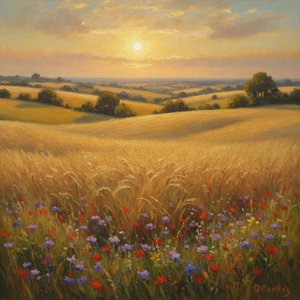
Meadow Lands


A serene impressionistic meadow filled with sunlit grass and lush trees by American Impressionist Dennis Miller Bunker captures a tranquil countryside mood, inviting you to bring this peaceful landscape into your home.
 Ler mais
Dennis Miller Bunker (1861-1890): Pintor impressionista americano conhecido por paisagens luminosas e retratos refinados. Influenciado pelo Barbizon e Sargent, sua breve vida deixou um legado duradouro na arte do final do século XIX.
Giclée / Impressão de Arte
Impressão giclée ou em tela de qualidade de museu, com produção rápida e opções flexíveis de acabamento. ( Comprar pintura feita à mão Alternar para Imagem Digital)




P118B €10

P118H €10

P118W €10

P438Z €10

P508JH €12

P508YH €12

P805H €10

P805Z €10

P919BZ €10

P919G €10

P919XJ €10

P959ZH €10

P968JZ €12

W106C €8

W218G €10

W218JH €8

W218Y €10

W307PJ €10

W316G €10

W316PJ €8

W316Y €10

W398PJ €8

W4111J €10

W500HY €15

W500JH €15

W692G €12

W849H €8

W940BG €15

W953PJ €8




Tamanho padrão
personalizado
CM
INCH
Escolha entre os nossos tamanhos pré-definidos que respeitam as proporções originais da obra de arte.
Loading sizes...

largura
altura
Insira a largura e a altura desejadas para se ajustarem à sua moldura ou parede. Uma impressão pode ser apenas cortada, nunca ampliada além da imagem original; portanto, um tamanho com proporções diferentes resultará na perda de parte da imagem. Enviamos uma maquete digital para sua aprovação antes de realizarmos a impressão. A imagem exibida nesta página não mostra o corte real — apenas a maquete o faz.
Entrega mundial () em 2 semanas, em vez das 4/5 semanas padrão. (6 Novembro)

Envio expresso gratuito para todo o mundo

Tela de Linho de Alta Qualidade

Seguro de transporte completo

Garantia de Reembolso de Impostos Alfandegários

Garantia de Fidelidade Cromática

Política de Devolução em 100 Dias (Apenas para Defeitos)

Garantia de reembolso de 100%

Oferta de desconto por quantidade
 A opção de vidro está disponível apenas para tamanhos inferiores a 110 cm

Meadow Lands
Giclée / Impressão de Arte
Tamanho da Reprodução
-


Preço Total
€ 62
A Symphony of Light and Serenity
In the quietude of Meadow Lands, painted in 1890, we encounter a masterclass in American Impressionism that feels less like a static image and more like a captured breath. Dennis Miller Bunker, an artist whose brilliance was tragically extinguished at the age of twenty-nine, possessed a rare ability to translate the ephemeral qualities of light into enduring visual poetry. This particular landscape invites the viewer into a lush, verdant sanctuary where the boundaries between earth and sky seem to soften under a warm, golden glow. The composition is anchored by a sprawling field of grass, rendered with such sensitivity that one can almost feel the gentle sway of the blades in a summer breeze. Scattered throughout this idyllic setting are trees and bushes that provide structural depth, acting as silent sentinels within a landscape that celebrates the harmonious coexistence of flora and sunlight.
The technique employed in Meadow Lands reflects the profound influence of the Barbizon school and the sophisticated brushwork of contemporaries like John Singer Sargent. Bunker utilizes a delicate interplay of color to evoke texture; the greenery is not merely a single shade of emerald, but a complex tapestry of moss, lime, and deep forest tones that catch the light at varying angles. His approach to the meadow's flowers and shrubs adds a layer of intricate detail that rewards close inspection, revealing a painterly touch that prioritizes atmosphere over rigid anatomical precision. This soft-focus brilliance is a hallmark of the Impressionist movement, where the goal was not to document reality, but to capture the sensory experience of a fleeting moment in time.
An Invitation to Tranquility and Timeless Elegance
Beyond its technical mastery, this artwork serves as a profound emotional vessel. The symbolism within the piece is rooted in the concept of the pastoral ideal—a nostalgic return to a state of nature that remains untouched by the industrial anxieties of the late 19th century. The warmth radiating from the sun-drenched meadow evokes feelings of peace, nostalgia, and a deep-seated connection to the natural world. It is a painting that does not demand attention through loud or jarring colors, but rather earns it through a subtle, rhythmic beauty that settles the soul.
For the discerning collector or interior designer, Meadow Lands offers an unparalleled opportunity to introduce a sense of calm and historical prestige into a living space. As a high-quality reproduction, this piece functions as a sophisticated focal point that complements both classical and contemporary decor. Whether placed in a sunlit library, a quiet study, or a grand hallway, the painting brings with it the luminous spirit of the American Impressionist era. It is more than a mere decoration; it is an atmospheric window into a lost era of pastoral grace, offering any room a sense of enduring light and restorative harmony.
Perguntas e Respostas
Para qual ambiente se sugere "Meadow Lands", de Dennis Miller Bunker?
O espaço recomendado para "Meadow Lands", de Dennis Miller Bunker é uma Living Room. A sugestão pode, naturalmente, ser adaptada ao seu interior.
A que movimento e a que época pertence "Meadow Lands", de Dennis Miller Bunker?
"Meadow Lands", de Dennis Miller Bunker insere-se no movimento American Impressionism, dentro da era Século XIX de seu criador.
Com que idade Dennis Miller Bunker criou "Meadow Lands"?
Dennis Miller Bunker tinha 29 anos quando criou "Meadow Lands" em 1890. A idade é calculada a partir do ano de nascimento do artista, 1861.
Obras Relacionadas


Biografia do Artista
Dennis Miller Bunker (1861-1890): American Impressionist Painter of Luminous Landscapes & Refined Portraits
Dennis Miller Bunker, a name perhaps less immediately recognized than those of his contemporaries like Sargent or Cassatt, nevertheless occupies a pivotal position in the narrative of American Impressionism. His tragically short life – he succumbed to meningitis at just twenty-nine years old – belies an artistic output brimming with innovation and sensitivity, a testament to a talent that burned intensely but briefly. Born in New York City in 1861, Bunker’s path toward becoming a significant painter was nurtured by a supportive family background; his father held a position with the Union Ferry Company, while his mother came from a lineage of artistic inclination through her brother, the celebrated illustrator Sol Eytinge Jr. This early exposure to creative pursuits undoubtedly played a role in shaping young Dennis's aspirations. He formally began his training at the Art Students League and the National Academy of Design in 1876, laying a foundation steeped in academic tradition that would later be beautifully disrupted by his embrace of more modern techniques.From Barbizon to Brilliance: Artistic Development and Influences
Bunker’s artistic journey was marked by a constant evolution, a willingness to absorb influences and synthesize them into something uniquely his own. A crucial period in this development came with his travels to Paris in 1882, where he studied at the École nationale supérieure des beaux-arts under Jean-Léon Gérôme. However, it wasn’t within the confines of the studio that Bunker truly found his artistic voice. Rather, it was during excursions through France and Brittany alongside fellow artists Charles A. Platt and Kenneth R. Cranford that he encountered the Barbizon school – a group renowned for their direct observation of nature and naturalistic approach to painting. This exposure proved transformative, instilling in Bunker a deep appreciation for *plein air* painting and a commitment to capturing the subtleties of light and atmosphere. He began his artistic career with meticulous sketches of landscapes and portraits, reflecting the influence of academic training while simultaneously preparing him for bolder explorations of Impressionist techniques. His early works often depicted marine subjects like beached boats with painstaking detail honed through preparatory studies—a testament to his dedication to mastering traditional methods before venturing into more experimental territory. The Brittany period (1883-1884) witnessed a significant shift toward softer atmospheric effects and tonal subtleties in scenes featuring church spires, cemetery crosses, and solitary trees against expansive skies. This careful observation of natural light—a hallmark of the Barbizon school—would continue to inform his artistic vision throughout his career.A Pivotal Friendship & Artistic Inspiration
Bunker’s artistic trajectory gained further momentum through a formative relationship with John Singer Sargent. Their meeting in Boston during Sargent’s visit in 1887 proved instrumental in propelling him toward Impressionism, as Sargent encouraged Bunker to embrace brighter hues and looser brushwork—a decisive step away from purely academic considerations. This influence extended beyond mere stylistic preference; Sargent’s presence fostered a spirit of intellectual exchange and artistic camaraderie that profoundly shaped Bunker’s creative process. The summer spent together at Calcot Mill in England solidified this connection, providing invaluable experience in capturing the immediacy of outdoor painting under challenging conditions. During this period, Bunker experimented with new palettes and techniques—abandoning the muted tones favored by academic painters for bolder colors and expressive brushstrokes that mirrored the Impressionist movement’s emphasis on capturing fleeting moments of beauty. He brought these newfound sensibilities back to Boston, where he was recognized for his innovative approach to landscape painting and portraiture.Recognition & Patronage: Establishing a Career in Boston
Bunker’s talent did not go unnoticed by the art community. He was elected to the Society of American Artists in 1885—a prestigious acknowledgment of his growing reputation—and swiftly established himself as a respected instructor at Cowles Art School, where he taught figure and cast drawing, artistic anatomy, and composition from 1885 to 1889. This period allowed him to refine his skills while simultaneously nurturing the next generation of American artists. Simultaneously, he secured the invaluable support of Isabella Stewart Gardner—a prominent art collector and patroness who recognized Bunker’s exceptional talent and fostered a collaborative relationship that enriched both his artistic endeavors and his personal life. Gardner’s patronage provided financial stability and encouragement, enabling Bunker to pursue ambitious projects and explore new avenues in his work without constraint. His 1890 exhibition at the St. Botolph Club showcased his evolving Impressionistic landscapes—a culmination of years of experimentation and refinement—further cementing his position as a rising star within Boston’s artistic landscape.A Legacy Illuminated: Bunker’s Enduring Influence
Though his life was tragically curtailed by meningitis at the age of twenty-nine, Dennis Miller Bunker left an indelible mark on late 19th-century American art. He stands as a key figure in bridging traditional academic training with emerging modern artistic trends—a testament to his ability to synthesize influences and forge a distinctive artistic voice. His masterful blending of Barbizon observation with Impressionistic vibrancy resulted in works that are both technically accomplished and emotionally resonant, capturing the essence of fleeting moments and conveying profound atmospheric sensations. Bunker’s paintings continue to inspire artists today, demonstrating a transformative journey from meticulous academic sketches to expressive landscapes imbued with luminous color—a legacy illuminated by brilliance despite its brevity.
Dennis Miller Bunker
1861 - 1890 , Estados Unidos da América
Dados Rápidos
- Artistic Movement Or Style: American Impressionism
- Artists Who Influenced This Artist:
- Jean-Léon Gérôme
- John Singer Sargent
- Date Of Birth: November 6, 1861
- Date Of Death: December 28, 1890
- Full Name: Dennis Miller Bunker
- Nationality: American
- Notable Artworks:
- Eleanor Hardy Bunker
- Marshland, Medfield
- The Station
- Place Of Birth: New York City, USA
Artigos Relacionados
Golden Fields & Sun-Drenched Meadows: Capturing the Soul of Impressionist Landscapes
Immerse yourself in the luminous world of Impressionist landscapes. Discover how masters like Monet and Gauguin captured ephemeral light through plein air painting, and learn to bring the soul of sun-drenched meadows into your home with exquisite, hand-painted oil reproductions.

Capturing the Soul: The Most Emotionally Moving Impressionist and Post-Impressionist Masterpieces
Discover the profound emotional depth of Impressionist and Post-Impressionist masterpieces. Explore how legends like Monet, Van Gogh, and Gauguin captured light and soul through evocative landscapes and vibrant brushwork for a timeless connection to art history.

Whispers of the Meadow: Capturing the Serenity of the Quiet Countryside in Impressionist Masterpieces
Embark on a visual journey through Impressionist masterpieces. Discover how masters like Monet and Renoir captured the serene beauty of the countryside through light, color, and emotion. Explore timeless landscapes designed to bring tranquility and cultural elegance to your home sanctuary.

The Beauty of Impermanence: Capturing Decay through Impressionist Eyes
Explore the profound beauty of impermanence through Impressionist and Post-Impressionist eyes. Discover how masters like Monet and Van Gogh captured fleeting light and the poetic essence of nature's transitions in our deep dive into art history and emotional landscapes.

Beyond the Light: Capturing Raw Emotion and Subjective Vision in Post-Impressionist Landscapes
Explore the profound emotional depth of Post-Impressionist landscapes. Discover how masters like Van Gogh moved beyond light to capture raw human feeling through vibrant color and expressive texture in this expert art history retrospective.