


 Visualizar em escala
 Enviar
 Compartilhar
 Ver detalhes
 Guia de Obras do Aluno

 Baixar imagem
 Semelhantes
 Raio X
 Apresentação de slides
 Estatísticas
The Lomond Hills
 Impressionism
 1926
1926 51.0 x 61.0 cm
Admire Douglas Gordon Shields’ "The Lomond Hills" (1926). This impressionistic landscape captures serene Scottish hills & village life with visible brushstrokes & atmospheric depth.
Explore the evocative portraits & landscapes of Douglas Gordon Shields, renowned Scottish painter capturing Victorian society & natural beauty. Discover his legacy!
 Ver mais
A obra de arte exibida nesta página é protegida por leis de direitos autorais, o que significa que não podemos criar ou vender legalmente uma reprodução idêntica. Esta proteção é aplicada por meio de acordos internacionais, tais como a Convenção de Berna e pelas leis nacionais, incluindo as estabelecidas por Lei de Direitos Autorais dos EUA - Título 17.
Como uma alternativa respeitosa e legal, oferecemos obras de arte personalizadas e pintadas à mão, inspiradas na obra original. Nossos artistas profissionais e experientes estudam cuidadosamente o estilo, a atmosfera e a essência artística da obra original para criar uma peça nova e única que evoque a mesma sensação — permanecendo como uma criação original por direito próprio.
Este método cumpre plenamente as regulamentações de direitos autorais, pois não envolve a cópia ou duplicação da obra protegida. Em vez disso, trata-se de uma reinterpretação criativa — uma nova pintura que é influenciada pela original, mas não idêntica a ela.
Reprodução em Óleo Feita à Mão
Óleo sobre tela pintado à mão no tamanho e moldura de sua escolha, feito sob encomenda pelos nossos artistas. ( Alternar para Impressão Ver Imagem Digital)




































Padrão
sob medida
CM
INCH
Escolha entre os nossos tamanhos pré-definidos que respeitam as proporções originais da obra de arte.
Loading sizes...

largura
altura
Digite a largura e a altura de que necessita, para se ajustar à sua moldura ou à sua parede. Esta obra é pintada à mão, por isso, para um tamanho com uma proporção diferente, o artista pode pintar um pouco mais ao redor da imagem ou cortar um pouco — você escolhe. Enviamos-lhe uma maquete digital para aprovação antes de a pintura começar. A imagem exibida nesta página não mostra o resultado real — apenas a maquete mostra.
Exemplos do que pode ser personalizado: Substituir o rosto pela foto do cliente; Adicionar um animal de estimação (ex: substituir gato por cão); Incluir uma mensagem oculta no fundo; Alterar a paisagem ou elementos do fundo.
Após o pedido, a equipa TopImpressionists.com enviará um e-mail ao cliente para solicitar instruções e fornecer uma prévia do esboço.
Após o pedido, a equipa TopImpressionists.com enviará um e-mail ao cliente para solicitar instruções e fornecer uma prévia do esboço.
Entrega mundial () em 3 a 4 semanas, em vez das 5 semanas padrão. (22 Outubro). Sem comprometer a qualidade.

Envio expresso gratuito para todo o mundo

Tela de Linho Premium

Seguro de transporte total

Garantia de Reembolso de Impostos Alfandegários

Garantia de Fidelidade de Cor

Política de Devolução em 100 Dias (Apenas para Defeitos)

Garantia de reembolso de 100%

Desconto para múltiplas unidades
 A opção de vidro está disponível apenas para tamanhos inferiores a 110 cm

The Lomond Hills
Técnica de Reprodução
Dimensões da Reprodução
-


Preço Total
€ 236
Obras Relacionadas


Biografia do Artista
The Visionary of the Highlands: The Life and Art of Douglas Gordon Shields
In the tapestry of Scottish art history, few threads are as richly colored or as evocative as those woven by Douglas Gordon Shields. Born in Glasgow in 1888, Shields emerged during a transformative era, a time when the lingering romanticism of the Victorian age began to dance with the burgeoning light and movement of modernism. His life, spanning from the late nineteenth century to his passing in 1940, serves as a bridge between two worlds: the disciplined, academic traditions of the Glasgow School of Art and the ethereal, atmospheric freedom of Impressionism. To look upon a Shields canvas is to witness a profound dialogue between the meticulous observation of reality and the emotional resonance of the Scottish landscape.
Shields’ artistic foundation was laid within the prestigious halls of the Glasgow School of Art, where he immersed himself in the rigorous techniques of academic painting. This period of his life was defined by a disciplined pursuit of mastery, learning to render textures, light, and form with an almost scientific precision. His early training instilled in him a reverence for detail that would later allow him to excel in the demanding genre of portraiture. As he began to establish his reputation, Shields became a sought-after chronicler of the Scottish elite. His portraits were far more than mere likenesses; they were psychological studies imbued with dignity and grace. Whether capturing the stern resolve of an industrialist or the delicate elegance of a lady, such as in his hauntingly beautiful The Lady in the Blue Cloak, Shields possessed a rare ability to translate the very essence of his subjects onto the canvas through subtle tonal gradations and masterful handling of fabric.
A Symphony of Light and Landscape
While the structured world of portraiture provided him with professional prominence, it was the wild, untamed beauty of the Scottish Highlands that truly captured Shields’ soul. As his career progressed, a stylistic metamorphosis began to take hold, driven by an undeniable passion for the fleeting moments of nature. Influenced by the luminous innovations of Claude Monet and Frédéric Bazille, Shields moved away from the rigid boundaries of academic realism toward the soft, breathing edges of Impressionism. He began to prioritize the way light dances across a glen or how mist clings to a mountain peak, favoring loose, expressive brushstrokes over exacting lines.
This shift allowed him to create works that felt less like static images and more like living memories. His depictions of the Lomond Hills stand as quintessential examples of this late-period mastery. In these landscapes, one can sense the atmospheric depth and the vibrant, shifting color palettes that convey a profound sense of immediacy. He did not merely paint the land; he painted the air surrounding it, the moisture in the breeze, and the quiet, rhythmic pulse of Highland life. This ability to blend the structural integrity of his early training with an Impressionistic sensitivity to light is what elevates his landscape work from mere scenery to poetic expression.
Legacy and Artistic Significance
The oeuvre of Douglas Gordon Shields, comprising approximately 150 significant paintings, remains a testament to a life dedicated to the pursuit of visual truth. His significance lies in his unique position as a transitional figure who could navigate the complexities of both the formal and the fluid. He honored the traditions of his predecessors—the Pre-Raphaelite aesthetics and Romantic idealism that shaped his youth—while fearlessly embracing the modern impulse to capture the ephemeral.
Today, his work continues to resonate with those who seek the sublime in the natural world and the profound in the human countenance. His legacy is found in:
- The mastery of texture: His ability to render the weight of velvet and the roughness of stone with equal brilliance.
- Atmospheric storytelling: The way his landscapes evoke the specific, haunting moods of the Scottish climate.
- Cultural preservation: His role in documenting the faces and the vistas of a Scotland caught between the Victorian era and the modern age.
Through his eyes, we are invited to rediscover the Highlands not just as a geographical location, but as an emotional landscape of light, shadow, and enduring beauty.

Informações Rápidas
- Artistic Movement Or Style: Victorian Art
- Artists Or Movements Influenced By This Artist: ['Impressionism']
- Artists Who Influenced This Artist: ['Pre-Raphaelites']
- Date Of Birth: 1888
- Full Name: Douglas Gordon Shields
- Nationality: Scottish
- Notable Artworks:
- The Lady in the Blue Cloak
- Glassford Walker
- The Lomond Hills
- Place Of Birth: Glasgow, Scotland
Artigos Relacionados
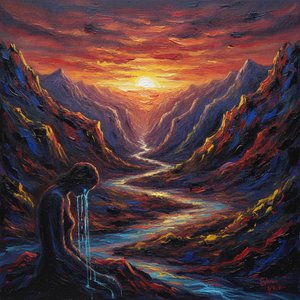
Capturing Emotion: A Journey Through the Soul of Expressionist Landscapes
Explore the profound emotional depth of Expressionist landscapes. Discover how Post-Impressionist masters moved beyond light to capture the soul through vibrant color and form. A curated journey for true art lovers seeking the beauty of expressive mastery.

Whispers of the Meadow: Capturing the Serenity of the Quiet Countryside in Impressionist Masterpieces
Embark on a visual journey through Impressionist masterpieces. Discover how masters like Monet and Renoir captured the serene beauty of the countryside through light, color, and emotion. Explore timeless landscapes designed to bring tranquility and cultural elegance to your home sanctuary.

Beyond the Light: Capturing Raw Emotion and Subjective Vision in Post-Impressionist Landscapes
Explore the profound emotional depth of Post-Impressionist landscapes. Discover how masters like Van Gogh moved beyond light to capture raw human feeling through vibrant color and expressive texture in this expert art history retrospective.

Capturing the Soul: The Most Emotionally Moving Impressionist and Post-Impressionist Masterpieces
Discover the profound emotional depth of Impressionist and Post-Impressionist masterpieces. Explore how legends like Monet, Van Gogh, and Gauguin captured light and soul through evocative landscapes and vibrant brushwork for a timeless connection to art history.