


 Visualizar em escala
 Enviar
 Compartilhar
 Ver detalhes
 Guia de Obras do Aluno

 Baixar imagem
 Semelhantes
 Raio X
 Apresentação de slides
 Estatísticas
Summer


Vibrant Post-Impressionist colors and Japanese-inspired patterns define this joyful 1891 summer scene by Edward Atkinson Hornel featuring figures in a lush landscape, inviting you to explore this Scottish masterpiece.
 Ver mais
Discover Edward Atkinson Hornel: Scottish painter of landscapes & florals, influenced by Japonisme & the Glasgow Boys. Explore his vibrant style & legacy at Art UK.
Reprodução em Óleo Feita à Mão
Óleo sobre tela pintado à mão no tamanho e moldura de sua escolha, feito sob encomenda pelos nossos artistas. ( Alternar para Impressão Ver Imagem Digital)




P118B €10

P118H €10

P118W €10

P438Z €10

P508JH €12

P508YH €12

P805H €10

P805Z €10

P919BZ €10

P919G €10

P919XJ €10

P959ZH €10

P968JZ €12

W106C €8

W218G €10

W218JH €8

W218Y €10

W307PJ €10

W316G €10

W316PJ €8

W316Y €10

W398PJ €8

W4111J €10

W500HY €15

W500JH €15

W692G €12

W849H €8

W940BG €15

W953PJ €8




Padrão
sob medida
CM
INCH
Escolha entre os nossos tamanhos pré-definidos que respeitam as proporções originais da obra de arte.
Loading sizes...

largura
altura
Digite a largura e a altura de que necessita, para se ajustar à sua moldura ou à sua parede. Esta obra é pintada à mão, por isso, para um tamanho com uma proporção diferente, o artista pode pintar um pouco mais ao redor da imagem ou cortar um pouco — você escolhe. Enviamos-lhe uma maquete digital para aprovação antes de a pintura começar. A imagem exibida nesta página não mostra o resultado real — apenas a maquete mostra.
Exemplos do que pode ser personalizado: Substituir o rosto pela foto do cliente; Adicionar um animal de estimação (ex: substituir gato por cão); Incluir uma mensagem oculta no fundo; Alterar a paisagem ou elementos do fundo.
Após o pedido, a equipa TopImpressionists.com enviará um e-mail ao cliente para solicitar instruções e fornecer uma prévia do esboço.
Após o pedido, a equipa TopImpressionists.com enviará um e-mail ao cliente para solicitar instruções e fornecer uma prévia do esboço.
Entrega mundial () em 3 a 4 semanas, em vez das 5 semanas padrão. (24 Outubro). Sem comprometer a qualidade.

Envio expresso gratuito para todo o mundo

Tela de Linho Premium

Seguro de transporte total

Garantia de Reembolso de Impostos Alfandegários

Garantia de Fidelidade de Cor

Política de Devolução em 100 Dias (Apenas para Defeitos)

Garantia de reembolso de 100%

Desconto para múltiplas unidades
 A opção de vidro está disponível apenas para tamanhos inferiores a 110 cm

Summer
Técnica de Reprodução
Dimensões da Reprodução
-


Preço Total
€ 236
The painting Summer by Edward Atkinson Hornel is a stunning representation of the season, characterized by vibrant colors and a sense of joy. Created in 1891, this oil on canvas piece is a prime example of Hornel's unique style, which blends elements of Post-Impressionism with a distinctive Scottish flair.
The Summer painting by Edward Atkinson Hornel is a beautiful representation of the season, characterized by its vibrant colors and sense of joy. As a masterpiece of Scottish art, it continues to inspire and delight audiences today. For those interested in learning more about Hornel's work, visit Wikipedia or explore the collection at Walker Art Gallery.
The Artist's Inspiration
Edward Atkinson Hornel was a Scottish artist known for his captivating depictions of landscapes and figures. His work often featured women and children in natural settings, showcasing his ability to capture the beauty of the human form. In Summer, Hornel has symbolized the season through the figure of a girl chasing a butterfly, surrounded by lush greenery and vibrant flowers.The Painting's Style and Technique
The painting's style is reminiscent of Japanese art, with its flat, decorative design and emphasis on pattern and color. The use of bold brushstrokes and vivid hues creates a sense of energy and movement, drawing the viewer into the scene. As noted by TopImpressionists.com, Hornel's technique is characterized by a focus on capturing the emotional and psychological depth of his subjects.Notable Features and Similar Works
Some notable features of Summer include its use of symbolism, with the butterfly representing freedom and joy. The painting is also notable for its sense of movement and energy, created through the use of bold brushstrokes and vibrant colors. Similar works by Edward Atkinson Hornel can be found at the Walker Art Gallery in Liverpool, including A Galloway Idyll and Blossom Time, Brighouse Bay. For more information on these paintings, visit TopImpressionists.com.- Key elements of the painting: vibrant colors, sense of movement and energy, symbolism
- Influences: Post-Impressionism, Japanese art
- Similar works: A Galloway Idyll, Blossom Time, Brighouse Bay
The Summer painting by Edward Atkinson Hornel is a beautiful representation of the season, characterized by its vibrant colors and sense of joy. As a masterpiece of Scottish art, it continues to inspire and delight audiences today. For those interested in learning more about Hornel's work, visit Wikipedia or explore the collection at Walker Art Gallery.
Perguntas e Respostas
Que sentimento transmite "Summer" de Edward Atkinson Hornel?
"Summer" de Edward Atkinson Hornel transmite um sentimento Joyful dentro de uma atmosfera geral Playful.
Qual é o tom emocional de "Summer" de Edward Atkinson Hornel?
"Summer" de Edward Atkinson Hornel transmite um tom emocional Joyful.
Como "Summer" se encaixa nos temas e no estilo de Edward Atkinson Hornel?
"Summer" pertence à obra Post-Impressionism de Edward Atkinson Hornel, cujos temas recorrentes incluem post-impressionism, japanese art influence, japonisme aesthetics, glasgow boys movement, nature and seasonal joy.
Obras Relacionadas


Biografia do Artista
The Vibrant Legacy of Edward Atkinson Hornel
Edward Atkinson Hornel stands as a luminous figure in the tapestry of late Victorian and early twentieth-century Scottish art, a painter whose brush captured the delicate intersection of nature and culture. Though his journey began in Bacchus Marsh, Victoria, Australia, his soul was deeply rooted in the rugged beauty of Scotland. Following his family's return to Kirkcudbright in 1866, Hornel’s artistic identity began to coalesce through rigorous formal training at the Edinburgh Art School and later in Antwerp under the guidance of Professor Verlat. This foundational period instilled in him a profound respect for botanical precision and the structural integrity of landscape, elements that would remain central even as his style evolved toward the more experimental and atmospheric.
Upon returning to Scotland in 1885, Hornel found a kindred spirit in George Henry, a partnership that would become a cornerstone of the influential Glasgow Boys movement. Together, they sought to break away from the stale academic traditions of the era, favoring instead a bold, expressive approach to color and texture. Their collaborative masterpiece, “Druids Bringing In The Mistletoe” (1890), serves as a testament to this period of radical experimentation. In this work, Hornel demonstrated an extraordinary mastery over the paint surface itself, utilizing techniques such as layering, scraping, roughening, and staining to create a tactile, rhythmic quality that prioritized emotional resonance and expressive effect over mere photographic accuracy.
The Influence of Japonisme and Aesthetic Refinement
A transformative epoch in Hornel’s career arrived between 1893 and 1894, when he and Henry embarked on a journey to Japan. This immersion into Japanese culture acted as a profound catalyst, reshaping his artistic sensibilities through the lens of Japonisme. The principles of decorative design, flattened spatial arrangements, and the poetic use of negative space found in Japanese prints began to permeate his canvases. His work transitioned from the heavy textures of his earlier years toward a more refined, atmospheric aesthetic characterized by harmonious color palettes and a nuanced approach to drawing.
This period of refinement is beautifully captured in works such as “Japanese Figures in a Garden” (1896) and “Dancing Geisha.” In these paintings, the artist moves beyond simple representation to evoke a sense of serene, fleeting beauty. He masterfully employs soft colors and gentle brushstrokes to depict traditional Japanese attire and tranquil garden settings, creating scenes that feel both intimate and otherworldly. The influence of the East allowed Hornel to blend the lushness of the Scottish landscape with a sophisticated, decorative elegance, making his work uniquely recognizable within the broader Impressionist movement.
A Life Immersed in Art and Heritage
Hornel’s commitment to his craft was matched by his devotion to his home and community. His residence, Broughton House in Kirkcudbright, became more than just a dwelling; it was a sanctuary where architecture and aesthetic passion were inextricably linked. Having remodeled the townhouse in 1901, he lived within a space that reflected his own artistic evolution—a blend of Victorian grandeur and personal, decorative flair. Despite his growing fame, Hornel remained a dedicated member of the Glasgow Art Club, choosing to exhibit there annually rather than seeking the formal validation of the Royal Scottish Academy.
The historical significance of Edward Atkinson Hornel lies in his ability to bridge the gap between traditional landscape painting and the modern, decorative impulses of the early twentieth century. His legacy is defined by several key artistic contributions:
- Textural Innovation: The pioneering use of manipulation techniques like scraping and staining to create expressive, tactile surfaces.
- Cultural Synthesis: The seamless integration of Japanese aesthetic principles—such as spatial arrangement and color harmony—into the Scottish landscape tradition.
- The Glasgow Boys Movement: His role in revitalizing Scottish art by moving away from academic realism toward a more vibrant, impressionistic vision.
- Botanical Sensibility: A lifelong dedication to capturing the intricate beauty of flora and foliage with both scientific detail and poetic grace.
Through his evocative depictions of gardens, flowers, and figures, Hornel left behind a body of work that continues to enchant viewers with its sense of peace, movement, and enduring beauty.

Edward Atkinson Hornel
1864 - 1933 , Australia
Informações Rápidas
- Full Name: Edward Atkinson Hornel
- Nationality: Scottish
- Date Of Birth: 1864
- Date Of Death: 1933
- Place Of Birth: Australia
- Notable Artworks:
- Japanese Figures in a Garden
- Dancing Geisha
- Artistic Movement Or Style: Glasgow Boys
- Artists Who Influenced This Artist:
- James Hornell
- George Henry
- Artists Or Movements Influenced By This Artist:
- Impressionism
- Japonisme
Artigos Relacionados

Beyond the Light: Discovering the Soul and Emotional Depth of Post-Impressionism
Embark on a cultural journey through Post-Impressionism. Discover the profound emotional depth of masters like Van Gogh and Cézanne, exploring how they moved beyond light to capture the very soul of human experience through vibrant color and symbolic form.
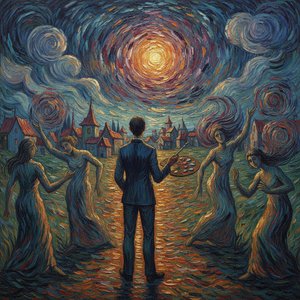
Beyond the Light: Capturing Emotion Through the Expressive Soul of Post-Impressionism
Explore the profound emotional depth of Post-Impressionism. Discover how masters like Van Gogh and Cézanne moved beyond light to capture raw feeling through color and texture. A journey into art history for the true connoisseur.