Visualizar na parede
 Compartilhar
 Compartilhar
 Detalhes
 Guia
Guia

 Baixar imagem
 Semelhantes
 Raio X
 Ver diaporama
 Perguntas e Respostas
 Estatísticas
el palacio


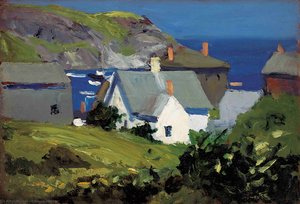
Edward Hopper's "El Palacio" captures urban solitude with striking realism—a black-and-white depiction of a city street, evoking quiet contemplation and the essence of American modern life.
 Ler mais
Edward Hopper: mestre do realismo americano, captura solidão e vida urbana com luzes e sombras evocativas. Explore suas obras icônicas como Nighthawks e Monhegan Houses.
A obra de arte exibida nesta página é protegida por leis de direitos autorais, o que significa que não podemos criar ou vender legalmente uma reprodução idêntica. Esta proteção é aplicada por meio de acordos internacionais, tais como a Convenção de Berna e pelas leis nacionais, incluindo as estabelecidas por Lei de Direitos Autorais dos EUA - Título 17.
Este método cumpre plenamente as regulamentações de direitos autorais, pois não envolve a cópia ou duplicação da obra protegida. Em vez disso, trata-se de uma reinterpretação criativa — uma nova pintura que é influenciada pela original, mas não idêntica a ela.
Giclée / Impressão de Arte
Impressão giclée ou em tela de qualidade de museu, com produção rápida e opções flexíveis de acabamento. ( Comprar pintura feita à mão Alternar para Imagem Digital)




P118B €10

P118H €10

P118W €10

P438Z €10

P508JH €12

P508YH €12

P805H €10

P805Z €10

P919BZ €10

P919G €10

P919XJ €10

P959ZH €10

P968JZ €12

W106C €8

W218G €10

W218JH €8

W218Y €10

W307PJ €10

W316G €10

W316PJ €8

W316Y €10

W398PJ €8

W4111J €10

W500HY €15

W500JH €15

W692G €12

W849H €8

W940BG €15

W953PJ €8




Tamanho padrão
personalizado
CM
INCH
Escolha entre os nossos tamanhos pré-definidos que respeitam as proporções originais da obra de arte.
Loading sizes...

largura
altura
Insira a largura e a altura desejadas para se ajustarem à sua moldura ou parede. Uma impressão pode ser apenas cortada, nunca ampliada além da imagem original; portanto, um tamanho com proporções diferentes resultará na perda de parte da imagem. Enviamos uma maquete digital para sua aprovação antes de realizarmos a impressão. A imagem exibida nesta página não mostra o corte real — apenas a maquete o faz.
Entrega mundial () em 2 semanas, em vez das 4/5 semanas padrão. (7 Novembro)

Envio expresso gratuito para todo o mundo

Tela de Linho de Alta Qualidade

Seguro de transporte completo

Garantia de Reembolso de Impostos Alfandegários

Garantia de Fidelidade Cromática

Política de Devolução em 100 Dias (Apenas para Defeitos)

Garantia de reembolso de 100%

Oferta de desconto por quantidade
 A opção de vidro está disponível apenas para tamanhos inferiores a 110 cm

el palacio
Giclée / Impressão de Arte
Tamanho da Reprodução
-


Preço Total
€ 62
A Silent Cityscape: Unveiling Edward Hopper's "El Palacio"
Edward Hopper’s 1946 painting, “El Palacio,” isn’t merely a depiction of a city street; it’s a carefully constructed tableau of urban solitude and the quiet anxieties of modern life. Rendered in stark black and white, the image immediately draws the viewer into a scene brimming with understated tension. The composition is dominated by towering buildings on either side, their windows like watchful eyes observing the few figures that populate the street below. The painting’s power lies not in dramatic action or vibrant color—rather, it resides in the subtle details and the palpable sense of detachment that permeates every element.
Hopper masterfully employs light and shadow to create a mood of melancholic introspection. The strong directional lighting emphasizes the textures of the buildings and casts deep shadows, contributing to the painting’s overall feeling of confinement. The open windows invite glimpses into private lives, yet they simultaneously reinforce the sense that these individuals are isolated within their own worlds. The signs visible in the scene—including the prominent “El Palacio”—add a layer of mystery, hinting at a grand establishment and perhaps suggesting a world beyond the immediate view.
The Painter’s Palette: Technique and Style
“El Palacio” exemplifies Hopper's signature style – a blend of realism and psychological insight. He was known for his ability to capture fleeting moments of human experience, often focusing on scenes of loneliness or alienation. Hopper’s technique is characterized by precise observation and meticulous detail. The buildings are rendered with remarkable accuracy, capturing their architectural forms and the subtle variations in surface texture. His use of line is particularly noteworthy; he employs clean, confident lines to define shapes and create a sense of solidity, while simultaneously suggesting movement through the arrangement of elements within the composition.
The painting’s monochromatic palette—a deliberate choice by Hopper—heightens its emotional impact. The absence of color forces the viewer to focus on form, light, and shadow, intensifying the feeling of isolation and emphasizing the starkness of the urban environment. Hopper's approach was rooted in a desire to represent reality as he perceived it, unburdened by sentimentality or romanticism. He sought to capture the essence of American life—its beauty, its challenges, and its inherent loneliness—with unflinching honesty.
Historical Context: The Post-War Landscape
“El Palacio” was created in 1946, a period marked by significant social and cultural shifts following World War II. America was grappling with the aftermath of conflict, experiencing rapid urbanization, and confronting new anxieties about identity and purpose. Hopper’s work resonated deeply with this mood, reflecting the growing sense of alienation and disillusionment that characterized the post-war era. The painting can be seen as a commentary on the changing nature of American society—a world increasingly defined by anonymity, isolation, and the breakdown of traditional social structures.
Interestingly, Hopper himself described the scene as “suggested by a restaurant on Greenwich Avenue where two streets meet.” This anecdote reveals his meticulous approach to composition and his desire to capture not just a literal representation but also an emotional truth. The painting’s enduring appeal lies in its ability to evoke a sense of familiarity—a recognition of the quiet, often overlooked moments that shape our lives.
Symbolism and Emotional Resonance
Beyond its realistic depiction of a city street, “El Palacio” is rich in symbolic meaning. The towering buildings represent the impersonal forces of urban life, while the open windows symbolize both opportunity and isolation. The figures within the scene—their faces obscured by shadow—suggest a sense of anonymity and detachment. Hopper’s masterful use of light and shadow creates a powerful emotional atmosphere, evoking feelings of loneliness, longing, and perhaps even a touch of melancholy.
Ultimately, “El Palacio” is a poignant meditation on the human condition – a reminder that even in the midst of bustling urban environments, we can still experience profound solitude. It’s a painting that invites contemplation and encourages us to consider our own place within the larger narrative of American life.
Perguntas e Respostas
Quão saturada é a paleta de "el palacio"?
As cores de "el palacio", de Edward Hopper possuem uma saturação Subtle Color. A saturação descreve o quão vívidas ou suaves são as cores.
Existem obras semelhantes a "el palacio"?
Obras semelhantes a "el palacio" estão listadas na página de Obras semelhantes desta obra.
Onde posso comprar reproduções pintadas à mão de "el palacio", de Edward Hopper?
Reproduções pintadas à mão de "el palacio", de Edward Hopper podem ser adquiridas no este site: uma reprodução a óleo pintada à mão sobre tela de linho, através da sua página de encomendas Reprodução Pintada à Mão.
Biografia do Artista
A Solitude Observed: The Life and Art of Edward Hopper
Edward Hopper, um nome inextricavelmente ligado à quietude e à melancolia sutil que permeavam a vida americana do século XX, não foi simplesmente um pintor de cenas; ele foi um poeta da luz e das sombras, um cronista da solidão moderna. Nascido em Nyack, Nova York, em 1882, filho de pais de origem holandesa de classe média, os primeiros anos de Hopper foram marcados por uma criação estável que nutria suas inclinações artísticas. Desde esboços infantis meticulosamente datados e assinados, tornou-se evidente que a observação aguçada e o talento inato para o desenho eram centrais em sua essência. Embora inicialmente encorajado a seguir uma carreira como ilustrador comercial – uma sugestão pragmática de seus pais –, as ambições de Hopper se inclinavam à arte fina, levando-o à New York School of Art, onde estudou sob William Merritt Chase e Robert Henri. Esses anos formativos não apenas lhe transmitiram habilidade técnica, mas também um apreço pelo realismo e um compromisso em retratar o mundo como ele o via – sem adornos e honesto. As escritas de Ralph Waldo Emerson ressoaram profundamente com Hopper, reforçando seu senso de individualismo e observação aguda – qualidades que se tornariam marcas registradas de sua visão artística. Viagens iniciais a Paris expuseram Hopper ao Impressionismo, mas ele rapidamente divergiu de suas pinceladas fugazes, forjando um caminho singularmente seu.Encontrando Sua Voz: Realismo e a Cena Americana
A jornada artística de Hopper não foi imediata nem fácil. Ele lutou para descobrir sua voz distinta, experimentando com vários estilos antes de se estabelecer no realismo que definiria sua carreira. Isso não era mera reprodução da realidade; era uma destilação de sua essência, removendo detalhes desnecessários para revelar verdades emocionais subjacentes. Seus quadros começaram a se concentrar em cenas cotidianas – casas, lanchonetes, escritórios, quartos de hotel – imbuídas de um senso de quietude e, frequentemente, solidão. Ele possuía uma capacidade extraordinária de capturar os estados psicológicos de seus sujeitos, insinuando narrativas sem declará-las explicitamente. A renderização precisa da luz e das sombras tornou-se crucial, não apenas como elementos descritivos, mas como pistas emocionais, criando atmosferas que eram ao mesmo tempo cativantes e perturbadoras. *House by the Railroad* (1925), uma obra-prima precoce, exemplifica essa abordagem – uma composição aparentemente simples irradiando um profundo senso de isolamento e mistério. A influência de Robert Henri, um dos seus professores, foi fundamental para Hopper, encorajando-o a usar as suas artes para “fazer um movimento no mundo”. Os estudantes de Henri, muitos dos quais desenvolveram-se artistas importantes, tornaram-se conhecidos como Escola Ashcan de arte norte-americana.Visões Icônicas: Nighthawks e Além
Embora a carreira de Hopper tenha se desenvolvido gradualmente, certos quadros catapultaram-no para o reconhecimento generalizado. *Nighthawks* (1942), possivelmente sua obra mais famosa, tornou-se um ícone da cultura americana instantaneamente. A cena noturna do restaurante, banhada em luz fluorescente forte, encapsula perfeitamente a alienação e a anonimidade da vida urbana moderna. As figuras dentro estão perdidas em seus próprios pensamentos, desconectadas umas das outras apesar de sua proximidade – um comentário pungente sobre a condição humana. *Gas* (1940), com sua representação marcante de uma posto de gasolina, demonstra a fascinação de Hopper por paisagens americanas e pela cultura automobilística emergente. Outras obras notáveis como *Automat*, *Office in a Small City* e *Summertime* oferecem cada uma insights únicos sobre as complexidades da sociedade americana do século XX. Esses quadros não eram meras representações de lugares; eles eram explorações de humor, psicologia e os dramas sutis que se desenrolavam em ambientes cotidianos. Sua esposa, Josephine Nivison Hopper, desempenhou um papel vital não apenas como sua companheira de vida, mas também como modelo frequente, contribuindo significativamente para a caracterização de suas figuras femininas.Temas e Legado: Uma Influência Duradoura
Vários temas recorrentes permeiam a obra de Hopper. A solidão urbana é talvez o mais proeminente – o senso de isolamento experimentado por indivíduos mesmo em meio à multidão. Ele explorou a paisagem americana, tanto rural quanto urbana, frequentemente enfatizando sua severidade e vazio. Sua obra investiga o realismo psicológico, sondando as vidas interiores de seus sujeitos com uma sensibilidade que transcende a mera representação. Há também um pressentimento de nostalgia por um passado mais simples, contraposto à consciência das complexidades e ansiedades da vida moderna. Hopper não foi apenas um pintor; ele foi um filósofo visual, oferecendo insights profundos sobre a condição humana através de seu domínio único da luz, sombra e composição. Sua capacidade de capturar a essência da vida americana com honestidade, sensibilidade e um estilo artístico distinto garante seu lugar como um dos artistas mais importantes do século XX.- Sua herança não reside apenas na beleza de seus quadros, mas também em sua capacidade duradoura de provocar o pensamento, evocar emoções e nos lembrar da solidão silenciosa que muitas vezes define nossas vidas.
- A obra de Hopper continua a cativar públicos porque fala sobre temas universais de solidão, isolamento e a busca por significado em um mundo em rápida mudança.
- Seus quadros tornaram-se representações icônicas da cultura americana, frequentemente usados para simbolizar as ansiedades e aspirações do século XX – e além.
- A estética de Hopper influenciou artistas subsequentes, incluindo Pierre Sanford Ross, e continua a ressoar com artistas contemporâneos que buscam capturar a essência da experiência humana.

Edward Hopper
1931 - 1967 , Estados Unidos da América
Dados Rápidos
- Artistic Movement Or Style: Realismo
- Artists Or Movements Influenced By This Artist: ['Ross']
- Artists Who Influenced This Artist:
- Chase
- Henri
- Date Of Birth: 22 de julho de 1882
- Date Of Death: 15 de maio de 1967
- Full Name: Edward Hopper
- Nationality: Americano
- Notable Artworks:
- Nighthawks
- House
- Gas
- Place Of Birth: Nyack, EUA
Artigos Relacionados
The Ashcan School: Capturing the Raw, Unfiltered Soul of Urban Life through American Realism
Discover the raw beauty of the Ashcan School. Explore how masters like Bellows and Henri captured the gritty, vibrant soul of early 20th-century New York through profound American Realism and evocative urban landscapes.

The Unvarnished Truth: A Cultural Journey Through the Soul of American Realism
Explore the profound beauty of American Realism. From the Ashcan School's urban grit to intimate portraits, discover how artists captured the authentic soul of a nation through unvarnished truth and masterful observation.
Explore obras de arte organizadas por temas, estilos e características.