

Exibido: · Com a moldura:
 Visualizar na parede

 Compartilhar
 Compartilhar
 Detalhes
 Guia


 Baixar imagem
 Semelhantes
 Raio X
 Ver diaporama
 Perguntas e Respostas
 Estatísticas

€ 62
Giclée / Impressão de Arte
Impressão giclée ou em tela de qualidade de museu, com produção rápida e opções flexíveis de acabamento. ( Comprar pintura feita à mão Alternar para Imagem Digital)
Esta obra está protegida por direitos autorais
A obra de arte exibida nesta página é protegida por leis de direitos autorais, o que significa que não podemos criar ou vender legalmente uma reprodução idêntica. Esta proteção é aplicada por meio de acordos internacionais, tais como a Convenção de Berna e pelas leis nacionais, incluindo as estabelecidas por Lei de Direitos Autorais dos EUA - Título 17.
Como uma alternativa respeitosa e legal, oferecemos obras de arte personalizadas e pintadas à mão, inspiradas na obra original. Nossos artistas profissionais e experientes estudam cuidadosamente o estilo, a atmosfera e a essência artística da obra original para criar uma peça nova e única que evoque a mesma sensação — permanecendo como uma criação original por direito próprio.
Este método cumpre plenamente as regulamentações de direitos autorais, pois não envolve a cópia ou duplicação da obra protegida. Em vez disso, trata-se de uma reinterpretação criativa — uma nova pintura que é influenciada pela original, mas não idêntica a ela.
 Leia mais
Técnica e Material
A opção de vidro está disponível apenas para tamanhos inferiores a 110 cm
Tamanho
·Tamanho padrão
personalizado
CM
INCH
Escolha entre os nossos tamanhos pré-definidos que respeitam as proporções originais da obra de arte.
Carregando tamanhos...

largura
altura
Insira a largura e a altura desejadas para se ajustarem à sua moldura ou parede. Uma impressão pode ser apenas cortada, nunca ampliada além da imagem original; portanto, um tamanho com proporções diferentes resultará na perda de parte da imagem. Enviamos uma maquete digital para sua aprovação antes de realizarmos a impressão. A imagem exibida nesta página não mostra o corte real — apenas a maquete o faz.
Finalizar
·
Branco €1

Bordas esfumaçadas €1

Bordas estendidas €1

P118B €10

P118H €10

P118W €10

P438Z €10

P508JH €12

P508YH €12

P805H €10

P805Z €10

P919BZ €10

P919G €10

P919XJ €10

P959ZH €10

P968JZ €12

W106C €8

W218G €10

W218JH €8

W218Y €10

W307PJ €10

W316G €10

W316PJ €8

W316Y €10

W398PJ €8

W4111J €10

W500HY €15

W500JH €15

W692G €12

W849H €8

W940BG €15

W953PJ €8

H24-GOLD €30

H24-SILVER €30

H36-GOLD €45

H36-SILVER €45
Enviado em um tubo protetor, pronto para ser emoldurado por você.
Extras
opcionalO que os extras incluem?
Entrega mundial () em 2 semanas, em vez das 4/5 semanas padrão. (23 Novembro)
Verniz de Proteção
Etiqueta de identificação
Detalhes da Placa de Bronze Gravada
This elegant plaque features the artist's name and the title of the artwork, finely engraved for a timeless presentation.
It is made from bronze with a refined, elegant finish. The text is precisely laser-engraved for a sharp and permanent result. Measuring 9x2 cm, the plaque is compact yet easy to read. It's built to be durable and scratch-resistant, offering a professional, museum-quality look. Mounting is simple thanks to the included adhesive backing.
Detalhes da Placa de Acrílico Transparente
The plaque includes essential engraved details such as the artist's name, the title of the artwork, the date it was created, the type of media used-like oil on canvas or watercolor-a brief description of the piece, and a QR code that links to the complete artwork information.
It is crafted from clear acrylic, offering a sleek, modern appearance. The text is UV-engraved in black to ensure strong visual contrast. With a size of 10x15 cm, it ensures optimal readability. It comes equipped with two metal hooks for secure wall mounting. The plaque is designed to be weather-resistant, making it suitable for various environments, and it includes interactive features that work seamlessly with smartphone scanning.
Detalhes da Placa de Acrílico Preto
This elegant plaque includes engraved information such as the artist's name, the title of the artwork, the date it was created, the type of media used (like oil on canvas or watercolor), a short description of the artwork, and a QR code for quick access to more information.
The plaque itself is made from refined black acrylic with a premium finish. The text is laser-engraved in white for high contrast and readability. Its size is 10x15 cm, designed to be easy to read. It comes with two metal hooks for professional mounting. The design is sleek and fits any interior style. It is also weather-resistant and durable, with built-in digital integration for mobile compatibility.
A opção de vidro está disponível apenas para tamanhos inferiores a 110 cm
 A opção de vidro está disponível apenas para tamanhos inferiores a 110 cm
- Envio expresso gratuito para todo o mundo
- Tela de Linho de Alta Qualidade
- Seguro de transporte completo
- Garantia de Reembolso de Impostos Alfandegários
- Garantia de Fidelidade Cromática
- Política de Devolução em 100 Dias (Apenas para Defeitos)
- Garantia de reembolso de 100%
- Oferta de desconto por quantidade


Descrição do Item
Edward Hopper's 'Intermission' captures a solitary woman in a theater aisle, evoking quiet contemplation and the poignant beauty of modern isolation. A timeless masterpiece.
Biografia do Artista
Realista americano do isolamento urbano e da luz evocativa, capturando a quietude de uma lanchonete de madrugada ou de um posto de gasolina solitário.
Sobre a obra de arte
The Quiet Drama of a Waiting Room
Edward Hopper’s Intermission, painted in 1963, isn't merely a depiction of a theater lobby; it’s a meticulously crafted tableau of human isolation and the poignant beauty of unspoken moments. The painting immediately draws the viewer into a scene steeped in a muted, almost melancholic atmosphere – a stark contrast to the vibrant energy typically associated with theatrical performances. Hopper masterfully employs his signature style, characterized by simplified forms, precise lines, and an astute observation of light and shadow, to create a space that feels both familiar and profoundly unsettling.
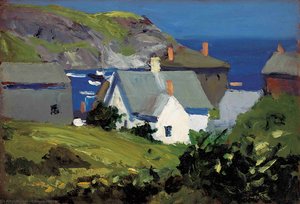
The composition itself is a study in restraint and suggestion. A woman, seated alone in a green aisle seat, dominates the foreground, her posture conveying a quiet contemplation that invites speculation about her thoughts and experiences. The surrounding chairs, arranged in neat rows, contribute to a sense of impersonal order, emphasizing her solitude within this public space. Hopper’s use of horizontal lines – the walls, the floor, the seats – creates a feeling of stillness, while subtle variations in tone and texture hint at the underlying complexity of the scene.
A Masterclass in Light and Shadow
Hopper's technical skill is evident in his precise rendering of light. The diffused illumination emanating from the unseen stage casts soft shadows that subtly define the forms, creating a sense of depth without resorting to dramatic contrasts. This delicate handling of light isn’t merely aesthetic; it serves to heighten the painting’s emotional impact, suggesting both vulnerability and resilience. Notice how the light catches the woman's dress, highlighting her form while simultaneously obscuring details, adding to the air of mystery surrounding her.
The color palette—predominantly muted greens, grays, and blacks—further reinforces the painting’s somber mood. The subtle shifts in tone within these hues create a sense of visual richness, preventing the scene from feeling flat or lifeless. Hopper's choice of colors is deliberate, evoking the atmosphere of a late-night theater lobby – a space often associated with anticipation, reflection, and perhaps even a touch of melancholy.
Symbolism and the Poetics of Modern Life
Intermission resonates deeply because it taps into universal themes of loneliness, isolation, and the passage of time. The woman’s solitary presence in the theater lobby speaks to the human condition—the feeling of being present yet detached, observing life from a distance. The clock visible in the background subtly reinforces this sense of temporal awareness, reminding us that time continues to move forward even as we remain suspended in these moments of quiet contemplation.
Hopper’s work is often interpreted as a reflection on the alienation and anonymity of modern urban life. The theater itself can be seen as a metaphor for the human drama—a stage upon which we all play our roles, often feeling like solitary figures amidst a vast audience. The painting's enduring appeal lies in its ability to capture these complex emotions with remarkable subtlety and grace.
A Legacy of Quiet Observation
Intermission stands as a testament to Edward Hopper’s extraordinary talent for capturing the essence of American life—its beauty, its loneliness, and its quiet moments of introspection. Painted in his later years, it represents a culmination of his artistic vision, demonstrating his mastery of light, composition, and symbolism. Reproductions of this iconic work continue to captivate viewers, inviting us to pause, reflect, and contemplate the universal themes that resonate within its carefully constructed scene.
Perguntas e Respostas
Qual é o nível de contraste de "Intermission", de Edward Hopper?
O nível de contraste de "Intermission", de Edward Hopper é Statement.
De que forma as cores de "Intermission", de Edward Hopper se relacionam com a sua emoção?
"Intermission", de Edward Hopper combina uma paleta Neutrals com um tom Melancholic.
Qual é a técnica utilizada em "Intermission", de Edward Hopper?
A técnica de "Intermission", de Edward Hopper é Oil On Canvas. As reproduções visam reproduzir a aparência desta técnica.
Informações rápidas e quiz de arte
Sobre Edward Hopper

Edward Hopper
1882 - 1967, Estados Unidos da América
Biografia do Artista
A Quietude da Cena Americana
Edward Hopper nasceu em Upper Nyack, Estados Unidos da América. Seus primeiros anos foram dedicados a observar o mundo com um olhar atento, um hábito que começou com esboços de infância meticulosamente datados e assinados. Embora seus pais tenham sugerido um caminho prático na ilustração comercial, seu foco permaneceu nas belas artes. Ele estudou na New York School of Art sob a orientação de William Merritt Chase e Robert Henri. Esses anos lhe conferiram a habilidade técnica necessária para retratar o mundo de forma crua e honesta. Ele não buscou as pinceladas fugazes dos Impressionistas que encontrou em Paris; em vez disso, desenvolveu uma forma de ver que privilegiava a quietude de um momento em detrimento do movimento de uma multidão.
Sua obra frequentemente se concentra no cotidiano. Ele observava casas, lanchonetes, escritórios e quartos de hotel, despojando as cenas de detalhes desnecessários para encontrar a verdade emocional subjacente. Em House by the Railroad (1925), uma composição simples revela um senso de mistério e isolamento. Ele utilizava a luz e a sombra não apenas para descrever um ambiente, mas para estabelecer um estado de espírito. A renderização precisa de uma sombra em uma parede ou a maneira como a luz incide sobre uma janela tornou-se sua forma de comunicar o estado psicológico de seus sujeitos.
Luz e o Interior Urbano
A maneira como a luz penetra em um espaço é um personagem central em suas pinturas. Em Nighthawks (1942), a luz fluorescente e crua de uma lanchonete de madrugada corta a escuridão de uma rua urbana deserta. As figuras no interior estão fisicamente próximas, mas parecem perdidas em seus próprios pensamentos, desconectadas umas das outras. Esse senso de anonimato em uma cidade lotada tornou-se um tema recorrente. Ele capturou a tensão de estar sozinho em um lugar público, um sentimento que ressoa em obras como Automat e Office in a Small City. Ele estava interessado na forma como a luz artificial interage com a escuridão natural da noite.
Sua esposa, Josephine Nivison Hopper, era uma presença constante. Ela era uma artista e frequentemente servia como sua modelo, e sua presença é sentida na caracterização de muitas de suas figuras femininas. Juntos, eles levavam uma vida modesta, passando frequentemente os verões na Nova Inglaterra, o que influenciou as paisagens que ele pintava. Suas representações da paisagem americana, tanto rurais quanto urbanas, frequentemente enfatizam uma certa austeridade ou vazio. Seja em um posto de gasolina à beira da estrada em Gas (1940) ou em um quarto silencioso de um hotel, o tema é sempre a intersecção entre um lugar físico e uma experiência interna e privada.
Um Legado de Observação
A influência de Hopper estende-se à linguagem visual do cinema e da literatura. Sua capacidade de criar uma sensação de tensão psicológica através da composição foi notada por muitos que estudam a forma como histórias são contadas por meio de imagens. Suas pinturas permanecem em grandes museus ao redor do mundo, integradas a coleções como a do Whitney Museum of American Art e do Museum of Fine Arts, em Boston. Ele não buscava grandes narrativas históricas; encontrou seu tema nos cantos silenciosos da vida cotidiana, transformando uma janela simples ou um estranho que passa em um estudo da condição humana. Sua obra permanece como um estudo do silêncio que existe entre as pessoas.
Informações rápidas sobre Edward Hopper
- Artistas Ou Movimentos Influenciados Por Este Artista: ['Pierre Sanford Ross']
- Artistas Que Influenciaram Este Artista:
- William Merritt Chase
- Robert Henri
- Edgar Degas
- Édouard Manet
- Data De Morte: 1967
- Data De Nascimento: 1931
- Local De Nascimento: Upper Nyack, Estados Unidos da América
- Movimento Ou Estilo Artístico: Realismo americano
- Nacionalidade: Americano
- Nome Completo: Edward Hopper
- Obras De Arte Notáveis:
- Nighthawks
- Gas
- House by the Railroad
- Automat
- Office in a Small City
- Summertime
Explore obras de arte organizadas por temas, estilos e características.




Edward Hopper
Intermission
() ·
Com a moldura: ·
Total