

Shown: · With its frame:
 Visualizar na parede
 Compartilhar
 Compartilhar
 Detalhes
 Guia
Guia

 Baixar imagem
 Semelhantes
 Raio X
 Ver diaporama
 Q&A
Q&A Estatísticas
 Acrylic On Canvas
- WallArt
- American Realism
 1931
1931 127.0 x 81.0 cm
€ 239
Reprodução em Óleo Feita à Mão
Óleo sobre tela pintado à mão no tamanho e moldura de sua escolha, feito sob encomenda pelos nossos artistas. ( Alternar para Impressão Alternar para Imagem Digital)
Esta obra está protegida por direitos autorais
A obra de arte exibida nesta página é protegida por leis de direitos autorais, o que significa que não podemos criar ou vender legalmente uma reprodução idêntica. Esta proteção é aplicada por meio de acordos internacionais, tais como a Convenção de Berna e pelas leis nacionais, incluindo as estabelecidas por Lei de Direitos Autorais dos EUA - Título 17.
Como uma alternativa respeitosa e legal, oferecemos obras de arte personalizadas e pintadas à mão, inspiradas na obra original. Nossos artistas profissionais e experientes estudam cuidadosamente o estilo, a atmosfera e a essência artística da obra original para criar uma peça nova e única que evoque a mesma sensação — permanecendo como uma criação original por direito próprio.
Este método cumpre plenamente as regulamentações de direitos autorais, pois não envolve a cópia ou duplicação da obra protegida. Em vez disso, trata-se de uma reinterpretação criativa — uma nova pintura que é influenciada pela original, mas não idêntica a ela.
 Leia mais
Size
·Tamanho padrão
personalizado
CM
INCH
Escolha entre os nossos tamanhos pré-definidos que respeitam as proporções originais da obra de arte.
Loading sizes...

largura
altura
Insira a largura e a altura desejadas para se ajustarem à sua moldura ou parede. Como esta obra é pintada à mão, para um tamanho com proporções diferentes, o artista poderá pintar um pouco mais ao redor da imagem ou reduzir ligeiramente a composição — você escolhe. Enviamos uma maquete digital para sua aprovação antes de iniciar a pintura. A imagem exibida nesta página não representa o resultado real — apenas a maquete mostra o resultado final.
Finish
·
White €1

Blurside €1

Extended €1

P118B €10

P118H €10

P118W €10

P438Z €10

P508JH €12

P508YH €12

P805H €10

P805Z €10

P919BZ €10

P919G €10

P919XJ €10

P959ZH €10

P968JZ €12

W106C €8

W218G €10

W218JH €8

W218Y €10

W307PJ €10

W316G €10

W316PJ €8

W316Y €10

W398PJ €8

W4111J €10

W500HY €15

W500JH €15

W692G €12

W849H €8

W940BG €15

W953PJ €8

H24-GOLD €30

H24-SILVER €30

H36-GOLD €45

H36-SILVER €45
Shipped in a protective tube, ready for your own framer.
Above 105 cm the frame is shipped as a kit for a professional framer — read the details.
Extras
optionalWhat do the extras include?
Examples of what can be changed: Replace face with customer photo; Add pet (e.g., replace cat with dog); Include hidden message in background; Change background landscape or elements.
After order, TopImpressionists.com team will email client for instructions and provide a mockup preview
After order, TopImpressionists.com team will email client for instructions and provide a mockup preview
Entrega mundial () em 3 a 4 semanas, em vez das 5 semanas padrão. (30 Outubro). Sem comprometer a qualidade.
Verniz de Proteção
Etiqueta de identificação
Detalhes da Placa de Bronze Gravada
This elegant plaque features the artist's name and the title of the artwork, finely engraved for a timeless presentation.
It is made from bronze with a refined, elegant finish. The text is precisely laser-engraved for a sharp and permanent result. Measuring 9x2 cm, the plaque is compact yet easy to read. It's built to be durable and scratch-resistant, offering a professional, museum-quality look. Mounting is simple thanks to the included adhesive backing.
Detalhes da Placa de Acrílico Transparente
The plaque includes essential engraved details such as the artist's name, the title of the artwork, the date it was created, the type of media used-like oil on canvas or watercolor-a brief description of the piece, and a QR code that links to the complete artwork information.
It is crafted from clear acrylic, offering a sleek, modern appearance. The text is UV-engraved in black to ensure strong visual contrast. With a size of 10x15 cm, it ensures optimal readability. It comes equipped with two metal hooks for secure wall mounting. The plaque is designed to be weather-resistant, making it suitable for various environments, and it includes interactive features that work seamlessly with smartphone scanning.
Detalhes da Placa de Acrílico Preto
This elegant plaque includes engraved information such as the artist's name, the title of the artwork, the date it was created, the type of media used (like oil on canvas or watercolor), a short description of the artwork, and a QR code for quick access to more information.
The plaque itself is made from refined black acrylic with a premium finish. The text is laser-engraved in white for high contrast and readability. Its size is 10x15 cm, designed to be easy to read. It comes with two metal hooks for professional mounting. The design is sleek and fits any interior style. It is also weather-resistant and durable, with built-in digital integration for mobile compatibility.
A opção de vidro está disponível apenas para tamanhos inferiores a 110 cm
 A opção de vidro está disponível apenas para tamanhos inferiores a 110 cm
- Envio expresso gratuito para todo o mundo
- Tela de Linho de Alta Qualidade
- Seguro de transporte completo
- Garantia de Reembolso de Impostos Alfandegários
- Garantia de Fidelidade Cromática
- Política de Devolução em 100 Dias (Apenas para Defeitos)
- Garantia de reembolso de 100%
- Oferta de desconto por quantidade


Descrição do Item
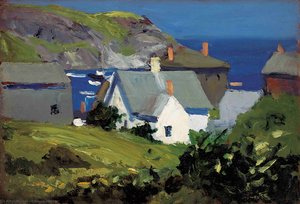
Edward Hopper's 'The Camel’s Hump' captures a serene American landscape with a solitary car amidst towering mountains, reflecting themes of isolation and modern life. Explore the iconic realism of this 1931 masterpiece.
Biografia do Artista
Edward Hopper: mestre do realismo americano, captura solidão e vida urbana com luzes e sombras evocativas. Explore suas obras icônicas como Nighthawks e Monhegan Houses.
About the painting
The Camel’s Hump: A Silent Landscape of Modern Isolation
Edward Hopper's "The Camel’s Hump," painted in 1931, isn’t merely a depiction of a mountain range; it’s a distilled essence of American loneliness and the quiet drama unfolding within the vastness of the modern world. This oil on canvas transports us to a remote corner of Vermont, yet the scene resonates with a profound sense of solitude that speaks volumes about Hopper's masterful ability to capture the unspoken anxieties of his time. The painting’s enduring appeal lies in its deceptively simple composition – a winding road cutting through a rugged landscape dominated by towering, yellowish-hued mountains – and the subtle narrative it suggests, hinting at journeys both literal and metaphorical.
Hopper's New Realism style is powerfully evident here. He eschews romanticized landscapes in favor of an objective portrayal of reality, prioritizing light, shadow, and form over emotional embellishment. The meticulous attention to detail—the texture of the road surface, the subtle variations in color across the mountainsides, the slight curve of the distant trees—creates a remarkably convincing illusion of depth and space. The use of muted tones, punctuated by the warm glow of the sunlight, contributes significantly to the painting’s melancholic atmosphere. It's a world rendered with precision but imbued with an underlying sense of detachment.
A Road Less Traveled: Symbolism and Context
The presence of a solitary car on the road is arguably the most significant element within "The Camel’s Hump." It immediately establishes a theme of travel, not necessarily towards a destination, but rather as an act of seeking—or perhaps fleeing. The car's diminutive size in relation to the immense mountains reinforces this feeling of isolation and vulnerability. It suggests a human presence dwarfed by the power and indifference of nature. This motif aligns perfectly with Hopper’s broader exploration of themes of alienation and urban loneliness, prevalent concerns during the interwar period.
The painting's setting—the Green Mountains of Vermont—adds another layer of meaning. These rugged peaks have a long history as symbols of wilderness and escape, yet here they are presented with a certain stoicism, reflecting the challenges faced by those who venture into them. The choice of this specific location speaks to Hopper’s fascination with the American landscape and his desire to capture its inherent beauty alongside its underlying sense of melancholy. Interestingly, the painting's title itself—borrowed from a prominent Vermont mountain—further anchors it within the regional context, grounding the abstract themes in a tangible place.
The Poetics of Light and Shadow
Hopper’s masterful manipulation of light is central to the painting’s emotional impact. The strong directional lighting casts deep shadows across the mountainsides, creating a dramatic interplay between illumination and darkness. This technique not only enhances the sense of depth but also subtly emphasizes the isolation of the figures within the landscape. The warm glow emanating from the sun suggests a fleeting moment of beauty amidst an otherwise bleak scene, hinting at a transient joy that is quickly overshadowed by the pervasive feeling of solitude.
Furthermore, Hopper’s use of color—primarily earthy tones punctuated by hints of yellow and blue—contributes to the painting's overall mood. The muted palette evokes a sense of quiet contemplation, while the subtle variations in hue create a visually engaging experience for the viewer. The careful orchestration of these elements transforms "The Camel’s Hump" into more than just a landscape; it becomes a poignant meditation on the human condition.
A Timeless Masterpiece: Reproduction and Beyond
"The Camel's Hump" remains one of Edward Hopper’s most iconic works, captivating audiences with its evocative portrayal of American life. TopImpressionists offers meticulously crafted hand-painted reproductions that faithfully capture the painting’s original beauty and emotional depth. These reproductions are not merely copies; they are artistic interpretations created by skilled artisans who understand Hopper's techniques and vision.
Whether you’re an art enthusiast, a collector seeking to expand your collection, or simply someone drawn to Hopper’s timeless aesthetic, a TopImpressionists reproduction of "The Camel’s Hump" provides a stunning way to experience this masterpiece in your own home. It's a piece that invites contemplation, sparking conversations about loneliness, isolation, and the enduring beauty of the American landscape.
Perguntas e Respostas
Como o movimento e a época se encontram em "The Camel's Hump", de Edward Hopper?
Em "The Camel's Hump", de Edward Hopper, o movimento American Realism encontra a era Modernismo.
Posso ver "The Camel's Hump" como um slideshow em tela cheia?
"The Camel's Hump", de Edward Hopper pode ser visualizada em formato de slideshow na página de Apresentação de imagens da obra.
A qual artista "The Camel's Hump" é atribuída?
"The Camel's Hump" foi criado por Edward Hopper. As informações nesta página descrevem a obra original de Edward Hopper.
Quick facts and art quiz
About Edward Hopper

Edward Hopper
1931 - 1967, Estados Unidos da América
Biografia do Artista
A Solitude Observed: The Life and Art of Edward Hopper
Edward Hopper, um nome inextricavelmente ligado à quietude e à melancolia sutil que permeavam a vida americana do século XX, não foi simplesmente um pintor de cenas; ele foi um poeta da luz e das sombras, um cronista da solidão moderna. Nascido em Nyack, Nova York, em 1882, filho de pais de origem holandesa de classe média, os primeiros anos de Hopper foram marcados por uma criação estável que nutria suas inclinações artísticas. Desde esboços infantis meticulosamente datados e assinados, tornou-se evidente que a observação aguçada e o talento inato para o desenho eram centrais em sua essência. Embora inicialmente encorajado a seguir uma carreira como ilustrador comercial – uma sugestão pragmática de seus pais –, as ambições de Hopper se inclinavam à arte fina, levando-o à New York School of Art, onde estudou sob William Merritt Chase e Robert Henri. Esses anos formativos não apenas lhe transmitiram habilidade técnica, mas também um apreço pelo realismo e um compromisso em retratar o mundo como ele o via – sem adornos e honesto. As escritas de Ralph Waldo Emerson ressoaram profundamente com Hopper, reforçando seu senso de individualismo e observação aguda – qualidades que se tornariam marcas registradas de sua visão artística. Viagens iniciais a Paris expuseram Hopper ao Impressionismo, mas ele rapidamente divergiu de suas pinceladas fugazes, forjando um caminho singularmente seu.Encontrando Sua Voz: Realismo e a Cena Americana
A jornada artística de Hopper não foi imediata nem fácil. Ele lutou para descobrir sua voz distinta, experimentando com vários estilos antes de se estabelecer no realismo que definiria sua carreira. Isso não era mera reprodução da realidade; era uma destilação de sua essência, removendo detalhes desnecessários para revelar verdades emocionais subjacentes. Seus quadros começaram a se concentrar em cenas cotidianas – casas, lanchonetes, escritórios, quartos de hotel – imbuídas de um senso de quietude e, frequentemente, solidão. Ele possuía uma capacidade extraordinária de capturar os estados psicológicos de seus sujeitos, insinuando narrativas sem declará-las explicitamente. A renderização precisa da luz e das sombras tornou-se crucial, não apenas como elementos descritivos, mas como pistas emocionais, criando atmosferas que eram ao mesmo tempo cativantes e perturbadoras. *House by the Railroad* (1925), uma obra-prima precoce, exemplifica essa abordagem – uma composição aparentemente simples irradiando um profundo senso de isolamento e mistério. A influência de Robert Henri, um dos seus professores, foi fundamental para Hopper, encorajando-o a usar as suas artes para “fazer um movimento no mundo”. Os estudantes de Henri, muitos dos quais desenvolveram-se artistas importantes, tornaram-se conhecidos como Escola Ashcan de arte norte-americana.Visões Icônicas: Nighthawks e Além
Embora a carreira de Hopper tenha se desenvolvido gradualmente, certos quadros catapultaram-no para o reconhecimento generalizado. *Nighthawks* (1942), possivelmente sua obra mais famosa, tornou-se um ícone da cultura americana instantaneamente. A cena noturna do restaurante, banhada em luz fluorescente forte, encapsula perfeitamente a alienação e a anonimidade da vida urbana moderna. As figuras dentro estão perdidas em seus próprios pensamentos, desconectadas umas das outras apesar de sua proximidade – um comentário pungente sobre a condição humana. *Gas* (1940), com sua representação marcante de uma posto de gasolina, demonstra a fascinação de Hopper por paisagens americanas e pela cultura automobilística emergente. Outras obras notáveis como *Automat*, *Office in a Small City* e *Summertime* oferecem cada uma insights únicos sobre as complexidades da sociedade americana do século XX. Esses quadros não eram meras representações de lugares; eles eram explorações de humor, psicologia e os dramas sutis que se desenrolavam em ambientes cotidianos. Sua esposa, Josephine Nivison Hopper, desempenhou um papel vital não apenas como sua companheira de vida, mas também como modelo frequente, contribuindo significativamente para a caracterização de suas figuras femininas.Temas e Legado: Uma Influência Duradoura
Vários temas recorrentes permeiam a obra de Hopper. A solidão urbana é talvez o mais proeminente – o senso de isolamento experimentado por indivíduos mesmo em meio à multidão. Ele explorou a paisagem americana, tanto rural quanto urbana, frequentemente enfatizando sua severidade e vazio. Sua obra investiga o realismo psicológico, sondando as vidas interiores de seus sujeitos com uma sensibilidade que transcende a mera representação. Há também um pressentimento de nostalgia por um passado mais simples, contraposto à consciência das complexidades e ansiedades da vida moderna. Hopper não foi apenas um pintor; ele foi um filósofo visual, oferecendo insights profundos sobre a condição humana através de seu domínio único da luz, sombra e composição. Sua capacidade de capturar a essência da vida americana com honestidade, sensibilidade e um estilo artístico distinto garante seu lugar como um dos artistas mais importantes do século XX.- Sua herança não reside apenas na beleza de seus quadros, mas também em sua capacidade duradoura de provocar o pensamento, evocar emoções e nos lembrar da solidão silenciosa que muitas vezes define nossas vidas.
- A obra de Hopper continua a cativar públicos porque fala sobre temas universais de solidão, isolamento e a busca por significado em um mundo em rápida mudança.
- Seus quadros tornaram-se representações icônicas da cultura americana, frequentemente usados para simbolizar as ansiedades e aspirações do século XX – e além.
- A estética de Hopper influenciou artistas subsequentes, incluindo Pierre Sanford Ross, e continua a ressoar com artistas contemporâneos que buscam capturar a essência da experiência humana.
Quick facts about Edward Hopper
- Artistic Movement Or Style: Realismo
- Artists Or Movements Influenced By This Artist: ['Ross']
- Artists Who Influenced This Artist:
- Chase
- Henri
- Date Of Birth: 22 de julho de 1882
- Date Of Death: 15 de maio de 1967
- Full Name: Edward Hopper
- Nationality: Americano
- Notable Artworks:
- Nighthawks
- House
- Gas
- Place Of Birth: Nyack, EUA
Obras Relacionadas


Explore obras de arte organizadas por temas, estilos e características.




Edward Hopper
The Camel's Hump
() ·
With its frame: · Hand-painted in oil on linen
Total