Atelier — Complimentary worldwide shipping — Entrega em 2–6 semanas
Wishlist Carrinho
Encomendar pintura Encomendar pinturaComprar imagem em alta resolução Comprar imagem em alta resolução EnviarEnviar
Detalhes da obraDetalhes da obra Adicionar aos favoritos Adicionar aos favoritos BaixarBaixar SemelhantesSemelhantes Raio XRaio X SlideshowSlideshow

untitled (6005)

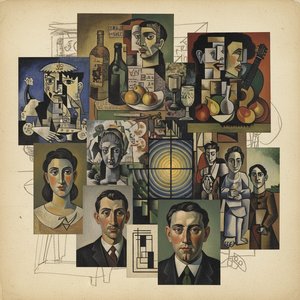
Explore Fernand Léger's 'untitled (6005)': A dynamic grid of faces and abstract forms reflecting the machine age, embodying Cubism & Pop Art’s influence.

Descubra Fernand Léger (1881-1955): Pioneiro do Cubismo & 'Tubismo'! Explore obras vibrantes que celebram a vida moderna, máquinas e a forma humana – um precursor da Pop Art.

Giclê / Impressão de Arte

Impressão giclée ou em tela de qualidade de museu, com produção rápida e opções flexíveis de acabamento.

P118B $10
P118H $10
P118W $10
P438Z $10
P508JH $12
P508YH $12
P805H $10
P805Z $10
P919BZ $10
P919G $10
P919XJ $10
P959ZH $10
P968JZ $12
W106C $8
W218G $10
W218JH $8
W218Y $10
W307PJ $10
W316G $10
W316PJ $8
W316Y $10
W398PJ $8
W4111J $10
W500HY $15
W500JH $15
W692G $12
W849H $8
W940BG $15
W953PJ $8

Standard
custom
CM
INCH

Escolha entre os nossos tamanhos pré-definidos que respeitam as proporções originais da obra de arte.

largura
altura

Você pode inserir suas próprias dimensões para se ajustar a uma moldura ou espaço específico. Se o tamanho selecionado não corresponder às proporções da imagem original, iremos recortar a obra de arte ou estender a imagem com uma borda espelhada ou preenchimento sólido. Um mockup digital será enviado para sua aprovação antes do início da produção.
Por favor, observe que a visualização na tela não reflete o recorte ou a extensão real. Apenas o mockup mostrará com precisão a composição final.
Embora tamanhos personalizados estejam disponíveis, recomendamos selecionar uma dimensão da lista predefinida para preservar as proporções originais.

Entrega mundial () em 2 semanas, em vez das 4/5 semanas padrão. (19 Julho)

why_choose_icon
Envio Expresso Gratuito para todo o Mundo
why_choose_icon
Tela de Linho Premium
why_choose_icon
Seguro de envio completo
why_choose_icon
Garantia de Reembolso de Impostos Alfandegários
why_choose_icon
Garantia de Fidelidade de Cores
why_choose_icon
Política de Devolução de 60 Dias (Apenas para Defeitos)
why_choose_icon
Garantia de 100% de Reembolso
why_choose_icon
Desconto para múltiplas unidades

Preço Total

-

reproduction

untitled (6005)

Giclê / Impressão de Arte

Dimensões da Reprodução

-

Preço Total Final

-

Dados Rápidos

  • Artist: Fernand Léger
  • Influences: Cubitism
  • Subject or theme: Humanity, Form
  • Movement: Cubism
  • Notable elements: Faces, grid
  • Medium: Ink on paper

Teste de Arte

Cada pergunta possui apenas uma resposta correta.

Pergunta 1:
What artistic movement is most closely associated with Fernand Léger’s style as depicted in ‘untitled (6005)’?
Pergunta 2:
The monochromatic color palette of the artwork primarily emphasizes:
Pergunta 3:
The repetition of faces in ‘untitled (6005)’ could be interpreted as a commentary on:
Pergunta 4:
Fernand Léger’s early life in rural Normandy influenced his artistic approach by:

Descrição da Obra

A Symphony of Faces: Unpacking Fernand Léger’s “Untitled (6005)”

Fernand Léger's "Untitled (6005)" isn’t merely a painting; it’s a visceral exploration of the modern condition, a fragmented portrait of humanity grappling with the burgeoning complexities of the 20th century. Created in 1926, during his most prolific and influential period, this work embodies Léger's signature style – a bold synthesis of Cubism, Tubism, and a fascination with industrial forms. The image immediately commands attention: a dense field of black ink faces stacked upon one another, creating an unsettling yet compelling grid above a simpler, more abstract lower section. It’s a scene that simultaneously evokes the anonymity of urban life and the inherent human desire for connection, a duality that lies at the heart of Léger's artistic vision.

The Language of Tubism and Modernity

Léger developed his distinctive “Tubism” – a contraction of "tube," referring to the cylindrical forms he favored – as a way to represent the dynamism and geometric precision of machines and modern life. This approach moved beyond traditional Cubist fragmentation, seeking to capture not just the *appearance* of objects but their underlying structure and movement. In "Untitled (6005)," this is evident in the simplified, almost schematic rendering of each face – eyes, noses, mouths reduced to essential lines and angles. The repetition of these basic forms creates a rhythmic effect, mirroring the relentless pace of industrial progress. The stark black and white palette further emphasizes this mechanical quality, stripping away any superfluous detail and focusing solely on form and line. It’s a deliberate rejection of Romantic notions of beauty in favor of an honest depiction of the world as it was rapidly changing.

A Visual Commentary on Conformity and Anonymity

The sheer number of faces within the composition is profoundly significant. Léger himself described his work as reflecting “the face of the crowd,” suggesting a commentary on the increasing anonymity of modern urban life. The overlapping, almost suffocating arrangement speaks to the pressures of conformity – the feeling of being lost in a sea of similar individuals. Each face, though simplified, retains a subtle individuality, hinting at the unique experiences and emotions beneath the surface. Yet, collectively they form a homogenous mass, suggesting a loss of identity within the larger societal structure. The chaotic arrangement isn’t random; it's carefully constructed to convey a sense of unease and disorientation – a visual representation of the anxieties associated with rapid social change.

Technique and Historical Context

Léger executed "Untitled (6005)" using direct ink drawing, applying pigment directly to the paper with a brush or pen. This technique lends the work a raw, immediate quality, emphasizing the artist’s hand and process. The bold lines are deliberately thick and assertive, creating a strong visual impact that dominates the composition. The painting emerged during a period of immense social and technological upheaval – the aftermath of World War I, the rise of mass production, and the increasing urbanization of Europe. Léger's work reflects this turbulent era, grappling with themes of modernity, industrialization, and the human condition in the face of unprecedented change. It’s important to note that Léger was not simply documenting these changes; he was actively engaging with them through his art, seeking to find a new visual language for the modern age.

Symbolism and Emotional Resonance

Beyond its formal qualities, "Untitled (6005)" resonates with a powerful emotional depth. The repetition of faces evokes feelings of both alienation and connection – a recognition of our shared humanity amidst the anonymity of the crowd. The abstract lower section, comprised of geometric shapes reminiscent of machinery or architectural elements, provides a counterpoint to the densely populated upper portion, suggesting a potential escape from the pressures of urban life. Ultimately, the painting invites viewers to contemplate their own place within the modern world – to consider the challenges and opportunities presented by progress, and to reflect on the enduring importance of individual identity in an increasingly complex society. It’s a work that continues to provoke thought and inspire dialogue nearly a century after its creation.

Biografia do Artista

A Life Forged in Form: The World of Fernand Léger

Fernand Léger, born Joseph Fernand Henri Léger em 1881, emergiu das paisagens rurais de Argentan, Normandia, como uma figura central na evolução da arte moderna. Sua jornada das fazendas de sua juventude para o centro da vanguarda parisiense é um testemunho de uma visão artística inabalável e de uma busca incessante por capturar o espírito da era da máquina. Diferentemente de muitos de seus contemporâneos que abraçaram a abstração como um refúgio da representação, Léger buscou *integrar* a modernidade – sua dinâmica, suas formas mecânicas, sua própria essência – em uma nova linguagem visual que era ao mesmo tempo poderosamente abstrata e profundamente enraizada no mundo observável. Sua vida inicial, imersa na fisicalidade do trabalho agrícola, forneceu um contraste de base para o futuro industrializado que ele tanto apaixonadamente retrataria. Inicialmente destinado à arquitetura, o caminho de Léger se desviou para a pintura após chegar a Paris por volta de 1900, sustentando-se através do trabalho de desenho enquanto aperfeiçoava suas habilidades artísticas. Este período foi marcado por treinamento acadêmico tradicional, mas não foi até encontrar o trabalho inovador de Paul Cézanne que uma verdadeira transformação começou a se desenrolar.

The Birth of ‘Tubism’ and the Section d’Or

A retrospectiva de Cézanne em 1907 atuou como um catalisador, libertando Léger das representações convencionais e impulsionando-o em direção a uma abordagem mais geométrica e estrutural. Ele começou a desmontar formas, analisando suas estruturas subjacentes e reconstruindo-as sobre tela com uma nova ênfase na solidez e no volume. Esta exploração levou-o rapidamente ao círculo de Cubismo, mas Léger não estava contente em simplesmente replicar os estilos de Picasso ou Braque. Em vez disso, ele desenvolveu seu próprio idioma distinto – uma forma pessoal de Cubismo que os críticos apelidaram carinhosamente de “Tubismo”. Caracterizado por formas cilíndricas, planos achatados e contrastes de cores ousadas, Tubismo celebrou a estética da máquina muito antes de se tornar uma preocupação artística generalizada. Era uma arte nascida da observação do mundo industrial em ascensão, reconhecendo beleza em suas formas funcionais e ritmos mecânicos. Este período viu Léger participando ativamente da cena vanguardista, juntando-se a artistas como Jean Metzinger, Henri Le Fauconnier, Francis Picabia e Marcel Duchamp dentro do Grupo Puteaux, também conhecido como a Section d’Or (A Seção de Ouro). O grupo explorava princípios matemáticos de harmonia e proporção, buscando infundir sua arte com um senso de ordem e racionalidade. Suas investigações coletivas ultrapassaram os limites da expressão artística, pavimentando o caminho para o desenvolvimento futuro da arte abstrata.

War, Mechanization, and a New Aesthetic

O estopim da Primeira Guerra Mundial teve um impacto profundo na vida e obra de Léger. Servir na frente de 1914 a 1916 expôs-o às realidades brutais da guerra moderna – bombardeios de artilharia, combate aéreo e os efeitos desumanizadores do conflito mecanizado. Esta experiência não levou à desilusão ou ao abandono da modernidade; na verdade, solidificou sua fascinação por máquinas e seu poder. Esboços feitos durante seu serviço documentaram a beleza austera da tecnologia militar, transformando instrumentos de destruição em assuntos de contemplação artística. Após retornar à vida civil, a estética de Léger passou por uma evolução adicional. Suas pinturas começaram a refletir uma sensibilidade mais aerodinâmica e mecanizada, celebrando a dinâmica e a eficiência do mundo industrial. *Soldier with a Pipe* (1916) exemplifica esta mudança, apresentando formas simplificadas e cores ousadas que evocam a sensação de precisão mecânica. Não se tratava apenas de uma escolha estética; era uma declaração filosófica – uma afirmação do potencial da modernidade para o progresso e a renovação, mesmo em face da devastação causada pelo conflito.

The Evolution of Tubism and Figurative Work

Following the war, Léger continued to explore the intersection of art and industry, developing his style further. He moved away from the strict geometric forms of early Tubism, incorporating more figurative elements into his work while retaining a fascination with machine aesthetics. He began to paint scenes of urban life, factories, and transportation systems, often depicting them in a stylized manner that combined abstraction and representation. This period saw him experimenting with color palettes and techniques, seeking to capture the energy and dynamism of the modern world. Léger’s work became increasingly popular during the 1920s and 30s, exhibiting at major galleries and museums throughout Europe and America. His paintings were praised for their bold colors, simplified forms, and innovative approach to subject matter.

Legacy and Lasting Influence

In his post-war years, Léger continued to explore the intersection of art and industry, creating works that celebrated modern life with a unique blend of abstraction and figuration. His *Paysages animés* (Animated Landscapes) series from 1921 showcased figures and animals seamlessly integrated into streamlined compositions, blurring the boundaries between organic and inorganic forms. He also experimented with sculpture and filmmaking, expanding his artistic practice beyond the confines of traditional painting. Léger’s influence on subsequent generations of artists is undeniable. His bold simplification of form, his embrace of industrial imagery, and his celebration of popular culture anticipated the emergence of Pop Art decades later. Artists like Roy Lichtenstein and Andy Warhol owe a clear debt to Léger's pioneering work. He bridged the gap between abstract art and figurative representation, demonstrating that it was possible to create works that were both intellectually rigorous and visually engaging. Today, Fernand Léger’s paintings are held in major museums worldwide, including the Musée d'Art et d'Histoire in France and the Musée National Fernand Léger, dedicated solely to his work. He remains a towering figure of 20th-century art – a visionary who dared to find beauty in the machine age and to translate its energy onto canvas with unparalleled boldness and originality. His legacy is not merely as a painter, but as a prophet of modernity. *A true pioneer whose work continues to resonate with audiences today.*

Fernand Léger

Fernand Léger

1881 - 1955 , França

Informações Rápidas

  • Artistic Movement Or Style: Cubismo, Tubismo
  • Artists Or Movements Influenced By This Artist: ['Pop Art']
  • Artists Who Influenced This Artist: ['Paul Cézanne']
  • Date Of Birth: 4 de fevereiro de 1881
  • Date Of Death: 17 de agosto de 1955
  • Full Name: Fernand Léger
  • Nationality: Francês
  • Notable Artworks:
    • A Grande Parada
    • Soldado com cano
    • Elemento Máquina
  • Place Of Birth: Argentan, França
Explore obras de arte organizadas por temas, estilos e características.
© TopImpressionists.com — Todos os direitos reservados  ·  100% Pintado à Mão · Satisfação Garantida · Frete Grátis para Todo o Mundo
VISA MASTERCARD