


 Visualizar em escala
 Enviar
 Compartilhar
 Ver detalhes
 Guia de Obras do Aluno

 Baixar imagem
 Semelhantes
 Raio X
 Apresentação de slides
 Estatísticas
triptych, august, 1972 a


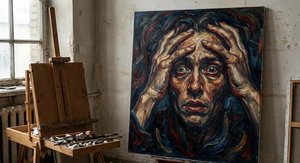
Triptych, August 1972 A - This unsettling painting depicts a man slumped on a chair with his head bowed, capturing Bacon's signature exploration of psychological torment and visceral emotion. Influenced by Surrealism and Expressionism, it showcases a haunting gaze and a desolate interior.
 Ver mais
Explore Francis Bacon (1909-1992)'s obras expressionistas e perturbadoras que exploram o sofrimento humano e a angústia existencial. Um artista inovador cuja influência persiste na arte moderna.
A obra de arte exibida nesta página é protegida por leis de direitos autorais, o que significa que não podemos criar ou vender legalmente uma reprodução idêntica. Esta proteção é aplicada por meio de acordos internacionais, tais como a Convenção de Berna e pelas leis nacionais, incluindo as estabelecidas por Lei de Direitos Autorais dos EUA - Título 17.
Como uma alternativa respeitosa e legal, oferecemos obras de arte personalizadas e pintadas à mão, inspiradas na obra original. Nossos artistas profissionais e experientes estudam cuidadosamente o estilo, a atmosfera e a essência artística da obra original para criar uma peça nova e única que evoque a mesma sensação — permanecendo como uma criação original por direito próprio.
Este método cumpre plenamente as regulamentações de direitos autorais, pois não envolve a cópia ou duplicação da obra protegida. Em vez disso, trata-se de uma reinterpretação criativa — uma nova pintura que é influenciada pela original, mas não idêntica a ela.
Reprodução em Óleo Feita à Mão
Óleo sobre tela pintado à mão no tamanho e moldura de sua escolha, feito sob encomenda pelos nossos artistas. ( Alternar para Impressão Ver Imagem Digital)




P118B €10

P118H €10

P118W €10

P438Z €10

P508JH €12

P508YH €12

P805H €10

P805Z €10

P919BZ €10

P919G €10

P919XJ €10

P959ZH €10

P968JZ €12

W106C €8

W218G €10

W218JH €8

W218Y €10

W307PJ €10

W316G €10

W316PJ €8

W316Y €10

W398PJ €8

W4111J €10

W500HY €15

W500JH €15

W692G €12

W849H €8

W940BG €15

W953PJ €8




Padrão
sob medida
CM
INCH
Escolha entre os nossos tamanhos pré-definidos que respeitam as proporções originais da obra de arte.
Loading sizes...

largura
altura
Digite a largura e a altura de que necessita, para se ajustar à sua moldura ou à sua parede. Esta obra é pintada à mão, por isso, para um tamanho com uma proporção diferente, o artista pode pintar um pouco mais ao redor da imagem ou cortar um pouco — você escolhe. Enviamos-lhe uma maquete digital para aprovação antes de a pintura começar. A imagem exibida nesta página não mostra o resultado real — apenas a maquete mostra.
Exemplos do que pode ser personalizado: Substituir o rosto pela foto do cliente; Adicionar um animal de estimação (ex: substituir gato por cão); Incluir uma mensagem oculta no fundo; Alterar a paisagem ou elementos do fundo.
Após o pedido, a equipa TopImpressionists.com enviará um e-mail ao cliente para solicitar instruções e fornecer uma prévia do esboço.
Após o pedido, a equipa TopImpressionists.com enviará um e-mail ao cliente para solicitar instruções e fornecer uma prévia do esboço.
Entrega mundial () em 3 a 4 semanas, em vez das 5 semanas padrão. (25 Outubro). Sem comprometer a qualidade.

Envio expresso gratuito para todo o mundo

Tela de Linho Premium

Seguro de transporte total

Garantia de Reembolso de Impostos Alfandegários

Garantia de Fidelidade de Cor

Política de Devolução em 100 Dias (Apenas para Defeitos)

Garantia de reembolso de 100%

Desconto para múltiplas unidades
 A opção de vidro está disponível apenas para tamanhos inferiores a 110 cm

triptych, august, 1972 a
Técnica de Reprodução
Dimensões da Reprodução
-


Preço Total
€ 236
A Visceral Encounter with the Human Condition
In the hauntingly profound Triptych, August 1972 A, Francis Bacon invites the viewer into a space where the boundaries between the physical body and psychological torment dissolve. This masterpiece serves as a visceral confrontation with fear, vulnerability, and the inescapable awareness of mortality. Rather than offering the comfort of traditional portraiture, which seeks to capture a stable likeness, Bacon presents a fragmented reality. The central figure, seated in a state of profound isolation, appears caught in a moment of existential crisis, his posture slumped and his expression obscured by a sense of deep-seated dread. It is an artwork that does not merely ask to be seen, but demands to be felt, pulling the observer into a silent dialogue with the shadows of the human psyche.
The technique employed in this triptych is nothing short of masterful, characterized by a deliberate abrasiveness that mirrors the artist's internal struggles. Bacon utilizes a heavy, gestural application of oil paint, where thick impasto meets frantic scraping and manipulation with palette knives. This creates a rugged, fleshy surface texture that evokes the very sensation of decaying skin or wounded muscle. The color palette is intentionally somber, dominated by earthy ochres, bruised crimsons, and ghostly greys. These muted tones are not merely aesthetic choices; they act as conduits for an atmosphere of unease, ensuring that every brushstroke contributes to the pervasive sense of isolation and the weight of time passing.
The Echoes of History and Symbolism
To understand the profound emotional impact of this work, one must look toward the historical shadows that loomed over Bacon’s life. The pervasive atmosphere of dread within the triptych is inextricably linked to the collective trauma of the mid-2tem century, particularly the devastation witnessed during the London Blitz and the broader horrors of World War II. The distorted, fragmented figures are symbolic of a world shattered by conflict, reflecting a generation grappling with unprecedented uncertainty. In this work, the human form becomes a canvas for the scars of history, where the physical distortion of the subject serves as a metaphor for the psychological fragmentation caused by war and loss.
For the discerning collector or interior designer, Triptych, August 1972 A offers more than just a striking visual; it provides a profound intellectual and emotional anchor for a space. As a high-quality reproduction, this piece brings a sophisticated, avant-garde energy to any curated collection. It is an ideal selection for those who appreciate art that challenges the status quo and explores the deeper, often darker, layers of existence. Whether placed in a contemplative study or as a bold centerpiece in a modern gallery setting, this work continues to provoke thought, serving as a timeless testament to the power of expressionistic truth and the enduring complexity of the human spirit.
Perguntas e Respostas
A imagem de "triptych, august, 1972 a" de Francis Bacon pode ser reproduzida livremente?
A informação de direitos autorais para "triptych, august, 1972 a" de Francis Bacon: a obra está em ainda protegido por direitos autorais. Isso determina se reproduções da imagem podem ser feitas livremente.
Que tipo de cores "triptych, august, 1972 a" utiliza?
As cores de "triptych, august, 1972 a" formam uma paleta Earthy. Esta classificação descreve as famílias de cores dominantes.
Qual é a cor predominante de "triptych, august, 1972 a" de Francis Bacon?
A cor dominante de "triptych, august, 1972 a" de Francis Bacon é Walnut (#684934).
Biografia do Artista
Uma Vida Imersa no Visceral
Francis Bacon, um nome sinônimo da mais crua emotividade na arte do século XX, nasceu em Dublin, Irlanda, em 1909. No entanto, seu espírito artístico encontrou sua expressão mais verdadeira na paisagem turbulenta da Grã-Bretanha pós-guerra. Sua infância foi longe de estável; mudanças frequentes devido à saúde precária de sua mãe instilaram um senso de deslocamento que moldaria profundamente sua visão de mundo e, em última análise, permeá-lo-ia nas telas. Um relacionamento complexo com seu pai severo e uma forte ligação com sua governanta, Jessie Lightfoot, coloriram ainda mais o terreno emocional de seus anos formativos. Inicialmente atraído por corridas de cavalos e uma vida de jogos de azar, Bacon vagou por várias ocupações antes de finalmente se dedicar à pintura no final dos vinte anos – um começo tardio que talvez intensificasse a urgência e intensidade de seu trabalho posterior. Ele não teve treinamento formal, mas forjou seu próprio caminho, absorvendo influências diversas e desenvolvendo uma linguagem visual singularmente inquietante.O Crisol das Primeiras Influências
O despertar artístico de Bacon não foi imediato, mas sim uma acumulação gradual de impressões. As obras de Pablo Picasso, particularmente as figuras distorcidas de seu período cubista inicial, foram cruciais para libertá-lo da representação tradicional. Encontrou ainda inspiração na fotografia assombrosa de Egon Schiele, cujas distorções expressivas da forma humana ressoaram com a crescente fascinação de Bacon pela fragilidade e vulnerabilidade da existência. No entanto, foi um encontro casual com o filme *Batalha de Potemkin* de Sergei Eisenstein que forneceu um catalisador crucial. A imagem visceral do filme, particularmente um close-up de um rosto gritando, tornou-se um motivo duradouro na obra de Bacon, representando terror primordial e as profundezas do sofrimento humano. Ele também admirava profundamente os Velhos Mestres, notavelmente Diego Velázquez, cujo *Retrato de Inocêncio X* ele reinterpretaria famosa ao longo de sua carreira, transformando a figura papal autoritária em um espectro atormentado. Essas influências não foram meras apropriações estilísticas; elas foram absorvidas e transmutadas através da sensibilidade única de Bacon, resultando em uma visão artística que era profundamente pessoal e universalmente ressonante.Forjando um Estilo Marcante: Distorção e Isolamento
O avanço de Bacon chegou com *Três Estudos para Figuras na Base de uma Crucificação* (1944), uma obra que chocou e cativou o público em Londres no pós-guerra. Este tríptico estabeleceu seu estilo característico – figuras distorcidas, fragmentadas isoladas em espaços claustrofóbicos. Não eram representações de martírio religioso, mas explorações viscerais da angústia humana, despojadas de qualquer narrativa reconfortante ou consolo espiritual. Suas pinturas apresentam frequentemente formas borradas ou dissolvidas, transmitindo uma sensação de turbulência psicológica e vulnerabilidade física. Ele empregava com frequência estruturas geométricas – gaiolas, caixas – para confinar seus sujeitos, enfatizando seu isolamento e impotência. A paleta de Bacon era tipicamente discreta e sombria, refletindo os temas obscuros que explorava, embora pontuada por explosões de cor intensa que intensificavam o impacto emocional. O uso dessas gaiolas não era meramente um dispositivo composicional; simbolizava as limitações inerentes e restrições impostas à existência humana. Ele procurou capturar não apenas *como* as coisas pareciam, mas *como se sentiam*, traduzindo estados internos de ansiedade, medo e desespero para a tela com brutal honestidade.Temas da Mortalidade, Angústia e da Condição Humana
Ao longo de sua prolífica carreira, Bacon retornou repetidamente a certos motivos: a crucificação como símbolo do sofrimento; retratos que investigaram a intensidade psicológica de seus sujeitos, frequentemente amigos e amantes como George Dyer; e autorretratos que serviram como explorações introspectivas da identidade e mortalidade. Sua série *Estudo Após o Retrato de Inocêncio X de Velázquez* (1953) é talvez uma de suas maiores conquistas, transformando o retrato digno de Velázquez em uma aparição gritante, incorporando o medo existencial. Os retratos de George Dyer, seu amante volátil, são particularmente pungentes, capturando tanto a intensidade de sua conexão quanto a sombra iminente da tragédia. A obra de Bacon não era sobre retratar indivíduos específicos; era sobre explorar temas universais de vulnerabilidade humana, isolamento e inevitabilidade da morte. Ele não evitou os aspectos mais sombrios da existência, mas os confrontou diretamente, forçando os espectadores a confrontar sua própria mortalidade e ansiedades.Um Legado Duradouro: Desafiando Convenções
O impacto de Francis Bacon na arte do século XX é inegável. Ele desafiou as noções tradicionais de representação, rejeitando a beleza idealizada em favor de um retrato cru e implacável da condição humana. Seu trabalho influenciou profundamente gerações de artistas, abrindo caminho para novas formas de expressão e desafiando os limites artísticos convencionais.- Expressionismo Pós-Guerra: Bacon é considerado uma figura chave neste movimento, influenciando artistas com seu estilo ousado e profundidade psicológica.
- Recordes de Leilão & Exposições em Museus: Suas pinturas continuam a comandar altos preços em leilões e são exibidas em grandes museus em todo o mundo, solidificando seu lugar na história da arte.
- Confrontando Verdades: O legado de Bacon reside em sua capacidade de confrontar verdades desconfortáveis sobre a existência humana e traduzir essas experiências em imagens poderosas e inesquecíveis.

Francis Bacon
1909 - 1992 , Irlanda
Informações Rápidas
- Artistas Que O Influenciaram:
- Picasso
- Egon Schiele
- Artistas/Movimentos Influenciados: ['Pós-Guerra Expressionismo']
- Data Da Morte: 28 de abril de 1992
- Data De Nascimento: 28 de outubro de 1909
- Local De Nascimento: Dublin, Irlanda
- Movimento Artístico: Expressionismo
- Nacionalidade: Irlandês-Britânico
- Nome Completo: Francis Bacon
- Obras Notáveis:
- Três Estudos...
- Série Pope
- Retrato Dyer
Artigos Relacionados

Lucian Freud: A Psychological Portraiture of Post-War Existence
Explore the profound psychological depth of Lucian Freud's portraits. Discover his unique realism, artistic evolution, and lasting influence on modern art. A collector’s guide to a master.

Surrealist Expressionism: A Definitive Guide to the Intersection of Dream Logic and Raw Emotion
Explore the profound history of Surrealist Expressionism. Discover how artists blended dream logic with raw emotion to navigate post-war trauma through masterful, evocative imagery and psychological depth.

Unveiling Inner Worlds: Exploring Psychological Depth in 20th & 21st Century Art
Explore the profound psychological themes within 20th & 21st-century art. Discover Expressionism, Surrealism & more – and learn how to collect impactful pieces with confidence. Expert insights for discerning collectors.
Figurative Expressionism: Emotional Intensity & Subjective Reality in 20th-Century Art
Explore the powerful world of Figurative Expressionism with TopImpressionists. Discover key artists like Kirchner & Beckmann, understand its emotional depth, and learn how to collect this influential 20th-century art movement.

Francis Bacon: As 25 Obras Essenciais do Mestre da Angústia – TopImpressionists
Descubra as 25 obras mais impactantes de Francis Bacon, o mestre da angústia e do expressionismo. Explore a história por trás dos retratos icônicos, cores vibrantes e emoções intensas. Encontre reproduções de arte exclusivas para transformar sua casa em TopImpressionists.com!
Explore obras de arte organizadas por temas, estilos e características.


